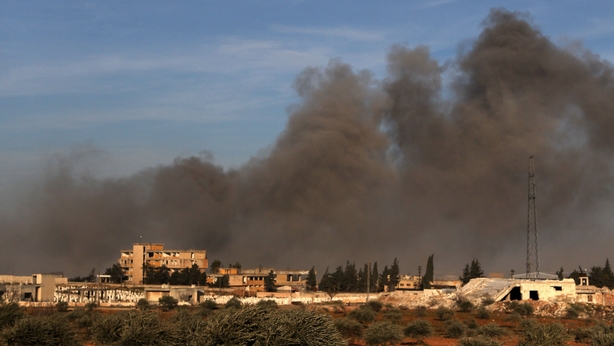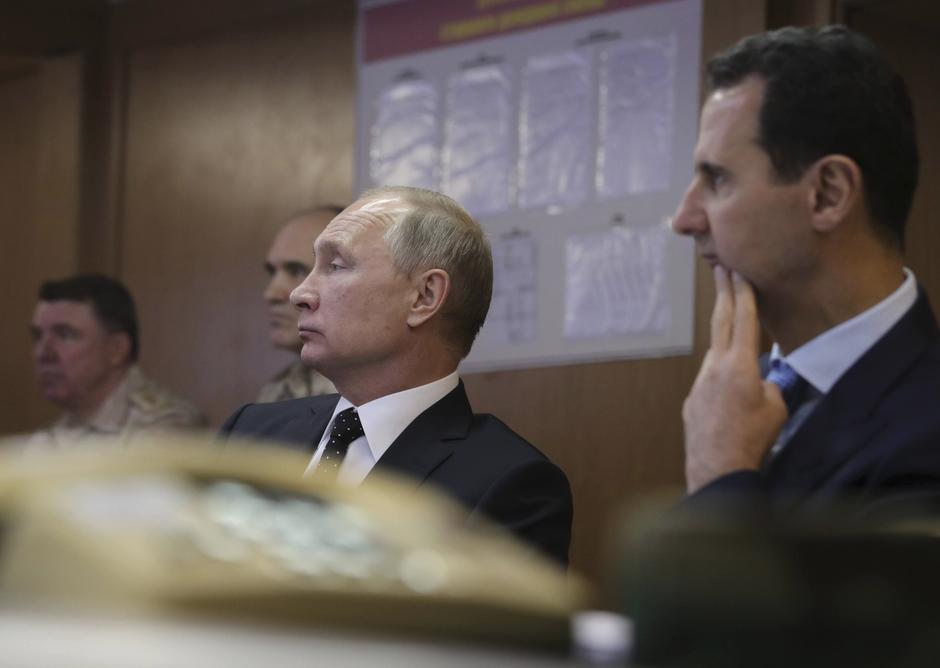
Wednesday, 13 May 2020

Assad becoming an expensive client for Moscow


 'In several media interviews last week, James Jeffrey, the US special envoy to Syria, signaled that Washington had taken part in talks with the Russians. Whereas in the past such talks were mostly about the deconfliction of military operations, they now seem to be aimed at finding an end to the conflict through diplomatic channels.

 On Thursday, Jeffrey made a reserved statement about Russia cooperating to end the crisis in Syria. And he said in another interview that the Russians know “what kind of ally” they have in Syria. Jeffrey also pointed out the media campaign launched against Bashar Assad by Russia, while the majority of the Syrian people are lingering in poverty. There is no clear indication that Russia is yet willing to let go of Assad, but the facts nonetheless signal an important issue: Assad is becoming too expensive a client for Moscow.


 Despite a generally inconsistent US foreign policy, there has been a consistent attitude regarding the Russian intervention in Syria. Barack Obama, as well as Donald Trump, wanted the intervention to become too costly for Moscow to handle. This is why the Americans have been reluctant to put any serious offer on the table for Russia regarding letting Assad go.

 When Russia first intervened in 2015, Obama told Vladimir Putin that he was going to sink in a “quagmire,” the same way the US sank in Iraq. Putin banked on his intervention bolstering Russia’s position as a superpower and being able to use it to leverage business deals with countries in the Middle East, as well as to present himself as a key powerbroker in Syria and the region. Because of their positions on Syria, the Gulf countries, Turkey and Israel want to court the Russians, but the US is trying to limit those relations.

 After Turkey bought the S-400 missile defense system from Moscow, America pressured Ankara to keep the Russian missiles in their boxes and not deploy them. In return, it offered Turkey US-made Patriot missiles to protect its borders. Therefore, the US policy has been to limit the influence Russia can garner regionally from its position in Syria. Meanwhile, the US is watching Russia incur very high costs, knowing that it cannot support such an expensive venture for too long and that it needs to start recouping the costs, especially now the coronavirus pandemic and low oil prices are taking their toll on the Russian economy. As for keeping the Iranians in check, Israel is doing that job by bombing Iranian targets in Syria with Russian acquiescence.


 The US is not in a rush, as long as Assad is contained as a regional problem. It is happy to see Russia bleeding cash and scrambling for a way out. Washington wants to negotiate with Russia, but from a position of power and not a position of weakness, while ensuring minimum military involvement, which is in line with Trump’s isolationist foreign policy.

 Syria is not a country with important natural resources. The lease of the port of Tartus for 49 years and contracts to exploit Syrian phosphate resources are not enough to pay for Moscow’s expenses in Syria. Unlike Iraq, which has the potential to pay for its own reconstruction, Syria needs international donors to start the process. Russia is hoping to get an important chunk of those contracts. Nevertheless, the West is firm in its position on the conflict: There will be no reconstruction until there is a clear political transition, which is not very likely with Assad in power.

 Meanwhile, Russia has reached a cap on the deals it can close in the region, or at least on the deals the US will allow. And every day in Syria means additional staggering expenses for the Russian military. Needless to say, the Russian intervention has also been costly in terms of lives. It has lost at least 19 manned aircraft.


 On the other hand, Assad has not changed his behavior in a manner that would allow Syrians to accept his rule. His brutality is unaltered. He does not commit to any settlements brokered by the Russians with the opposition, nor has he been able to provide any basic services. According to a Russian source of mine, Moscow is fed up with Assad’s free rider attitude. Obsessed with victory and with reconquering all territories, he is totally divorced from reality. The Russians are realizing that Assad is becoming increasingly expensive and that he is putting them in an unsustainable situation. Despite media campaigns and cracks in the house of Assad — with Bashar’s cousin, Rami Makhlouf, denouncing in a YouTube video what he described as being wrongly targeted by the régime — Russia is not yet ready to let Assad go.

 Removing Assad prior to stabilizing the country might lead to a total collapse of the régime, with Russia left to bring order to an even more chaotic situation. So the Kremlin is trying hard to restrain him and pressure him in order to minimize its costs. Few expected the most recent cease-fire in Idlib to hold. Nevertheless, it is holding and Jeffrey said he is expecting it to hold for a few more months. It is probably because of Russian pressure that Assad is refraining from a full-fledged assault on the province.


 The months to come will be even more difficult for Russia. America’s Caesar Act will come into effect on June 17, inflicting biting sanctions on Russian companies that deal with Assad. In addition to finding a proper alternative that can keep most of the régime together, Putin does not want to be seen as giving up on his ally. More importantly, he does not want to look as though he is bowing to Western pressure. Putin’s central narrative is anti-Western; hyping up the breakup of the Soviet Union and the way the West reneged on its promises, leaving Russia to linger in dire economic conditions.'

Author

Sunday, 10 May 2020

Iftar amid the rubble a symbol of Syria's revolution


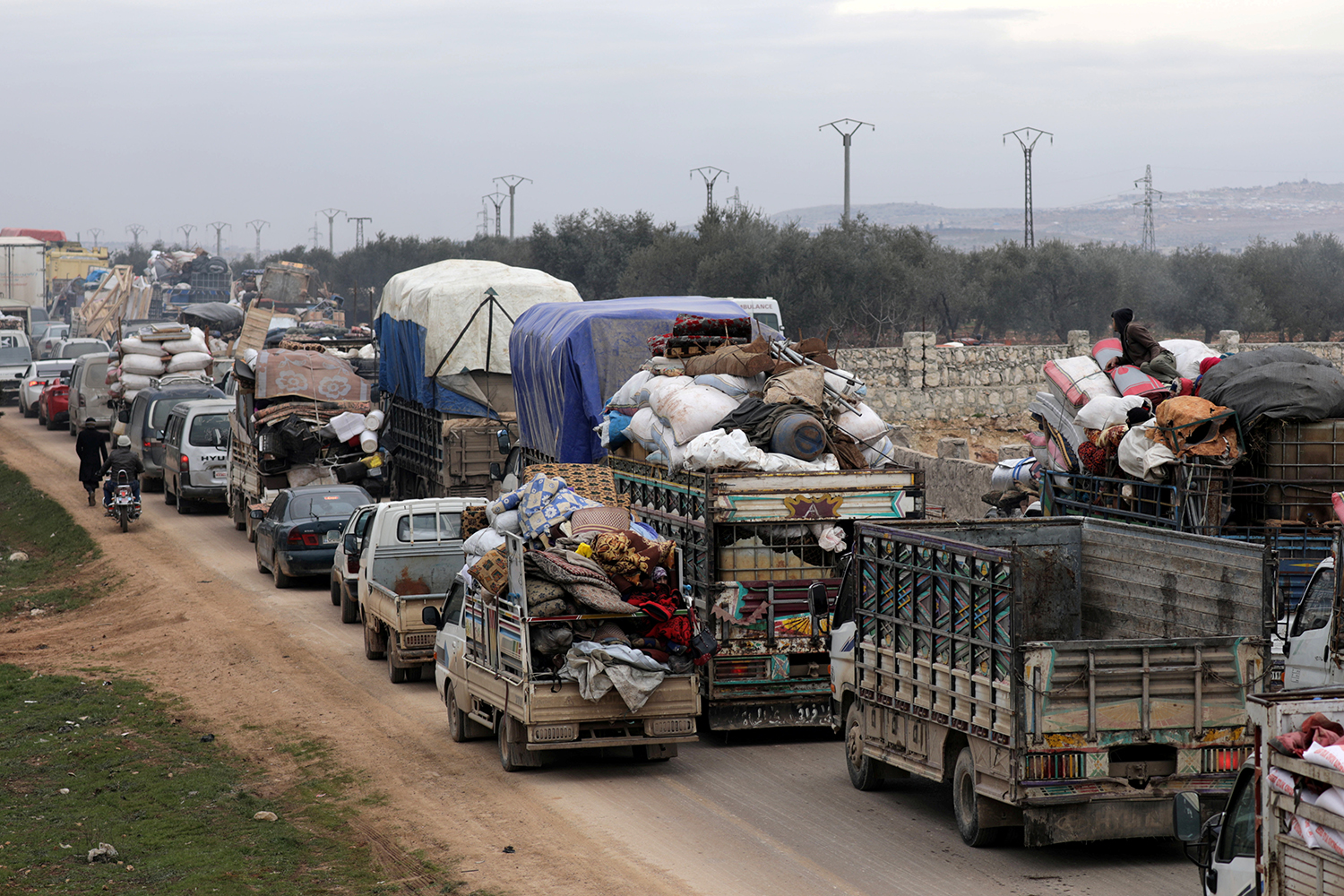
 'Nearly 100 people attended an iftar, the meal breaking the daytime fast observed by Muslims during the holy month of Ramadan, set up in the town of Atarib in the western Aleppo countryside that was devastated by the Russian-backed régime offensive earlier this year. A 3 March ceasefire reached between Turkey and Russia has allowed those displaced by the fighting to return home. Régime forces control territory just four kilometres away.

 The preparation for the banquet was carried out by volunteers from the civil defence, who also sterilised the area.

 The iftar organisers said they wanted to show the continuance of the Syrian revolution. "We chose the town of Atarib for its revolutionary symbolism after the regime tried to advance on it recently," said Abdullah Tuimi, director of the community association which ran the iftar.

 Seventy-three thousand people have returned to the city and have started repairing their homes and shops while trying to rebuild their lives.

 "We returned after fleeing the bombing to find our homes flattened and destroyed. We wanted to attend this iftar because it would allow us all to meet again after our displacement," said Mustafa al-Shun, a resident of the town who attended the banquet.'


Thursday, 30 April 2020

Syria's long road to justice and the man hoping to walk it


 'It is 10:30am on April 22; a sunny Wednesday morning.

 Anwar al-Bunni, a 61-year-old with small dark eyes beneath bushy brows, is standing outside Berlin Hauptbahnhof, the German city's main train station, in a light grey jacket and dark pants. Where travellers and commuters usually hurry in and out of the large glass and steel building, all is quiet today. Whoever can, is staying at home because of the coronavirus.

 The renowned Syrian human rights lawyer is making his way to Koblenz's Higher Regional Court, where he will testify in a case due to begin the next day. But al-Bunni is more than just a witness at the trial. He is, many of those connected to the trial agree, one of the people who made it possible.


 In the landmark trial, Anwar Raslan and Eyad al-Gharib - alleged members of Branch 251 of the Syrian military intelligence service in Damascus - stand accused of committing crimes against humanity.

 The accusations against al-Gharib relate to the brutal assault and torture of 30 anti-government demonstrators he allegedly rounded up in the autumn of 2011.

 But it is Raslan's case that is seen as the most significant. The former senior military official stands accused of being the head of Branch 251's investigations and thereby responsible for at least 4,000 cases of torture, 58 deaths and two cases of rape or sexual assault between April 2011 and September 2012. If found guilty, he could receive a life sentence.

 Both men ultimately defected - Raslan in 2012 and al-Gharib in 2014. They fled Syria and started new lives in Germany - where they were arrested in 2019.


 Since 2011, when protests against Syrian President Bashar al-Assad's government broke out, the German Federal Prosecutor has been collecting evidence about crimes committed in Syria.

 Now, it is using the principle of universal jurisdiction to hold the world's first criminal trial on torture in Syria.

 The German Code of Crimes against International Law, implemented in 2002, allows the German authorities to prosecute anyone who commits crimes against humanity, even if they have no direct connection to Germany.


 The train carriage is almost empty as al-Bunni takes his seat in it. Travelling with him is a Syrian survivor of torture, her mother and a Syrian journalist.

 Concealed behind sunglasses, the young woman, who asked to remain anonymous, is on the verge of tears.

 "This man has been looking after me like a father," she says. "He is the only one who is really on our side."

 Like tens of thousands of Syrians, she was tortured in al-Assad's notorious prisons, where she was detained for about a year in 2012.

 Now a refugee in Germany, she has not recovered from the physical and psychological damage done to her. Despite several operations, her kidneys are still seriously damaged and she needs psychotherapy. "I really want to support the trial by testifying," she says. "But I cannot speak about the details of what they did to me."


 As important as this trial is, according to al-Bunni, it is just the beginning of Syria's long road to justice, at the end of which may stand the prosecution of al-Assad himself.

 "We already submitted a lawsuit against him to the German Federal Prosecutor in 2018," he explains. "The evidence heard at the trial in Koblenz will support our case against al-Assad by exposing the whole Syrian régime."


 It has been a long time coming for al-Bunni, who began defending political prisoners in Syria in 1986.

 He was born and raised in Hama in a family that gave him every reason to become a lawyer.

 "All together, my siblings and their spouses have spent almost 70 years in Syria's prisons," he laughs.

 But, al-Bunni actually started his working life doing something entirely different. In the early 1980s, he was an assistant engineer on the construction of Saydnaya Prison, a place Amnesty International labelled a "human slaughterhouse" in 2017 because of the mass executions of prisoners that have taken place there.

 But at the age of 21, after three of his siblings were arrested, he decided to return to university to study law.

 His oldest brother was the first to be detained in 1977; others followed.

 "My brothers and sisters as well as many of my friends were political activists. I was not, so I decided to become a lawyer: at least I would be able to contribute by defending them," he explains.


 Arbitrary arrests of political activists and opposition members, like torture, was commonplace under the rule of Bashar al-Assad's father, Hafez al-Assad.

 Al-Bunni spent almost 20 years defending Syrian inmates: political prisoners pro bono, criminals to make a living.

 Finally, in 2006, he, too, was arrested. He was sentenced to five years in prison for spreading seditious false news.

 "The prison guards tried to kill me twice, but I survived with the help of other inmates," he recalls. "I tried to make the best of my time there. I started working out and devised plans for Syria's political future that I later wrote down and published."

 In 2011 he was released, just in time to see the first months of Syria’s uprising. In 2014, however, he fled from Syria to Lebanon, where he and his family received humanitarian visas from the German embassy.

 "I wanted to stay in Syria as long as possible to defend the increasing number of political prisoners," he says. "But at some point it became clear that being arrested was tantamount to death. Not just one's own death, but the death of the whole family. So we left."


 In Germany, al-Bunni founded the Syrian Center for Legal Studies and Research, where he and his colleagues collect information about Syrian régime members and build cases around them.

 Even though he is not licensed to work as a lawyer in Germany, he has cooperated with the European Center for Constitutional and Human Rights (ECCHR) to prepare lawsuits and put the German prosecution in touch with many witnesses.

 Their statements give detailed accounts of Syria's detention centres and what happens inside them. They are among the most important pieces of evidence in this groundbreaking case.

 Many of the witnesses knew al-Bunni from Syria, where he had already defended them during their detention. Others have met him in Germany, where a large Syrian exile community has formed since around one million refugees arrived in 2015.

 Because al-Bunni is well known and trusted within the community, he and his fellow activists were able to locate former inmates and torture survivors in Germany and encourage them to testify with the Federal Prosecution.

 "He is of great value to our work," explains Patrick Kroker, one of the lawyers at ECCHR who are representing the Syrian plaintiffs at the trial.

 "He has an incredibly large network and standing among the Syrian community. He and other Syrian lawyers such as Mazen Darwish and Jumana Saif have been the link between the Syrian witnesses and the German judiciary."


 As the high-speed train rushes past green meadows, wheat fields and forests, al-Bunni gives one media interview after another. He says he does not mind; on the contrary, he is delighted by all the media attention the trial has received across the world.

 "The media is our strongest weapon," he says. "The whole world needs to understand that these people can never play a part in Syria's future."

 In English and Arabic, he patiently answers the same questions over and over again: Yes, it is true that he ran into the accused Anwar Raslan a few years ago at the refugee accommodation centre in Berlin Marienfelde. Yes, he did recognise him as the man who had arrested him in 2006. No, this trial is not his own personal vendetta against him. It is much bigger than that.

 "He arrested them, tortured them, killed them under torture," al-Bunni almost shouts into his phone during one interview about Raslan.

 After hanging up, he smiles apologetically, and looks around to see whether he has bothered other passengers. Then he explains: "Our goal is not to convict a small cog of the infernal machinery that continues to murder people. Instead, we want to use this small cog to prove the existence of the machinery and to show the extent of its infernality."

 Al-Bunni has had to explain many times why he is backing the trial. He has been criticised for it, even by friends and colleagues who believe that putting two defectors on trial, while high-ranking Syrian officials are still free, is the wrong approach.


 For al-Bunni, however, it makes no difference, whether or not they defected.

 "In Islam we have this principle that whoever becomes a Muslim is absolved of any sins he may have committed before," he explains. "But justice does not work like that outside of religion. Just because they defected, they cannot be considered innocent. Justice must always be served in accordance with the needs of the victims, not the perpetrators."

 Several victims will participate as joint plaintiffs in the trial against Raslan. This allows them to play a more active role in shaping the trial instead of just testifying once in front of the court. They can attend every hearing, summon witnesses and file motions.

 Others who were incarcerated and tortured in Syria will testify like al-Bunni or attend the hearings as spectators.


 Al-Bunni hopes the trial will be the first step towards change.

 "Usually, when violent conflicts end the winner sets the framework for transitional justice," he says, after the first two trial days have ended and he is again on the train, back to Berlin for the weekend.

 "But in this case, justice is served while the crimes continue to be committed. Justice will set the framework for how the conflict in Syria will develop."

 This trial is just one element of that. Syrian activists and NGOs across Europe have prompted their federal prosecutors to issue international arrest warrants against the highest-ranking members of the Syrian régime.

 It will take patience to see the results, but right now Anwar al-Bunni is optimistic.

 "I had no doubts that this moment would come," he says. "But this trial is not our final goal. It is just one step on the way to bringing all criminals to justice." '

Saturday, 25 April 2020

'Assad wants them to die of coronavirus'


 'The families of people missing in Syria’s notorious prison system say they fear they will never see their loved ones again due to the spread of coronavirus, as a landmark trial over state-sponsored torture gets under way.

 It is estimated that anywhere between 75,000 and over 200,000 people are missing in Syria, with many thought to be either dead or forcibly detained.

 Families say little is being done to hold the regime to account and that the international community has failed to protect the Syrian people.

 It comes as two alleged former Syrian intelligence officers appeared in a German court on Thursday, charged with crimes against humanity for the treatment of detainees in their care in the first court case over state-sponsored torture by Bashar al-Assad's regime.

 While the case offers some hope, it is being held on the principle of universal jurisdiction, which allows a foreign country to prosecute crimes against humanity, as the International Criminal Court is hamstrung by vetoes from Russia and China. Defendants Anwar Raslan and Eyad al-Gharib are accused of multiple counts of murder, rape and torture.


 “It is not just [our family members] who are being tortured, we are being tortured, too,” said Garam Zarim, whose four uncles have been missing since they were detained by the regime in 2013.

 “Where are my loved ones? Just give us information, you don’t even need to let them go.”

 The project manager, 30, originally from the north-eastern city of Latakia but now living in southern Turkey, said that with no news of her uncles’ whereabouts and unable to confirm their deaths to hold a funeral, the lack of closure casts a long shadow over everyone in the family.

 The wife of one uncle attempted to sell her home for the US$2,000 needed to bribe prison guards for information. Paying for news of a friend or relative is a common occurrence among those who can scrape together the cash, said Ms Zarim, but that is not easy in a country stricken by almost a decade of war and the economic problems that go with it.

 “I have now heard rumours that coronavirus is in Daraa jail. There are as many as 50 people per cell there and he (Assad) wants them to die.”


 Umm Muhammad, 45, a farmer who now also lives in Turkey’s Hatay province, was detained for six months in 2013 alongside two of her sons, and has not seen or heard news from them since.

 “I underwent the most severe torture, causing anxiety and extreme fear. I was subjected to beatings that led to a severe nervous breakdown and was locked up in a prison cell with 60 other women,” she said.

 “We shared one bathroom in the cell and drank polluted water from the toilet. The food they gave us was rotten and spoiled. There was no soap in the bathroom. Cleansing hygiene was very poor. It was indescribable.”

 She said she is now especially worried about her sons and other detainees because not only is coronavirus highly contagious and conditions in prison dire, the measures in place to combat the spread of the disease means that it is almost impossible to continue her search for them.

 “Prisoners where I was held had head lice. No medication was available and people suffered from diarrhoea until they died,” she said.

 “If one inmate gets infected, it will be passed on to all the others and cause a humanitarian disaster.”


 For some families, the pain of not knowing is worsened by inaccurate information. Ms Zarim said that although the Syrian government has pronounced one of her uncle’s dead, the family do not believe it was true.

 “Parents do not trust the information handed to them by civil departments, which should be a trustworthy source. Some people are being released alive when their civil documents say they are dead,” said Amal al-Nassim, chief executive of Amal’s Healing and Advocacy Centre, which represents the families of Syria’s missing people.

 Ms al-Nassim said that one family found their son to be alive two years after they were told he was dead, had been presented with a death certificate and held a funeral for him.

 “Survivors of torture have spoken about the lack of health and food care and the most important life necessities in prison, and now families have to add to that the threat that their relatives may die from coronavirus.”


 Several Syrians said that the recorded number of deaths from heart attacks, even in teenagers, and pneumonia has grown at an unusually high rate in the last few months, while the official number of deaths and cases of Covid-19 in the country remain relatively low.

 Families say they not only worry the regime will not protect their loved ones – who are mostly held under loosely defined and politically motivated charges – from the pandemic, but that it is a convenient ‘get out of jail free’ card for a regime with many unexplained deaths to account for.

 “Our objective is that it is important the regime reveal the state of our missing persons and allow international commissions and medical commissions to offer health care in detention centres, that families be allowed to see their children, and that dead bodies are surrendered,” said Ms al-Nassim.

 “The mothers of the martyrs can sleep while the mothers of the detained and the missing cannot.” '

Friday, 24 April 2020

Russia needs to reconsider its Syria policy

Turkish and Russian soldiers wearing face masks are pictured during a joint patrol in the northern Idlib province, Syria, April 15. (Reuters)

 'There has been much talk about Russia’s supposed intent to abandon Syrian President Bashar Assad. This theory was backed by Russian media reports of Moscow being disappointed by Assad and his entourage’s inability to maintain control of areas that the régime had regained thanks to the Russian military effort beginning in September 2015.


 The Syrian war went through several stages, including a crucial juncture in 2012 and another in 2015.

 The near collapse of the Syrian régime began in 2012 when major cities, one by one, started rejecting the régime. The revolution started with the south-western city of Daraa rebelling after a group of its youth were killed in retaliation by the régime’s security forces. And yet, Daraa was always pro-régime, even though it is a Sunni city with some Christian and Druze presence. It is more of a rural town than anything else and quite different from Damascus, Homs, Hama and Aleppo. Daraa was home to a real bourgeoisie, for which Hafez Assad always had a strong dislike. But, Hafez Assad was very skilled at establishing internal alliances in order to surround the Sunni communities of the large cities. He also began to remove senior Sunni officers from the army quite early in his reign, as the Alawites marched on Latakia from the countryside and mountains in order to change the demographic and cultural character of the city, which was originally Sunni-Christian.

 In 2012, Damascus was in serious danger of falling to the revolution. The alternative Alawite project based on the concept of the “Useful Syria” was not a viable one, despite the efforts made since 1970 to surround the city with Alawite neighbourhoods. That’s when Iran intervened after discovering that the régime forces were not skilled at urban warfare. Iran’s Islamic Revolutionary Guard Corps (IRGC), with its experience in suppressing popular movements in Iranian cities in 2009, did not stop at just training Syrian forces to suppress the turmoil in Syrian cities. It took the extra step of sending its forces to Syria, while Iranian Supreme Leader Ayatollah Ali Khamenei asked Hezbollah Secretary-General Hassan Nasrallah to send forces into the Syrian interior.

 Arab diplomatic circles recount that Nasrallah told Khamenei that the price of such an intervention would be enormous, to which the supreme leader responded that this was required of Hezbollah regardless of the price it would have to pay.

 Enter Qassem Soleimani, commander of the IRGC’s Quds Force. His assignment was to save Bashar Assad and his régime. He succeeded to a great extent but, in 2015, it became clear that he and Assad needed Russia’s help. Russia submitted to them its conditions and Soleimani immediately flew to Moscow to meet with Russian officials. Likewise, Assad flew to Moscow and met with President Vladimir Putin.


 Russia’s direct military intervention quickly changed the rules of the game in Syria. The Assad régime regained the initiative militarily. It regained full control of Damascus and surrounding areas, recaptured Aleppo and Hama, and destroyed a good part of Homs, arriving finally at Daraa.

 The Russians resorted mainly to air strikes, using modern Sukhoi bombers to hit both civilian and military targets. On the ground, however, they had to rely on the régime’s forces, which had no qualms about using explosive barrels against civilians, and on the Iranians and their various sectarian militias.

 In the meantime, the US administration was willing, since the summer of 2013, to overlook any violations in Syria in order to accommodate Iran. In August 2013, the Syrian régime used chemical weapons in Ghouta, despite previous warnings against crossing any such “red lines” by then US President Barack Obama. But in the end, the Americans did nothing.

 It is undeniable that, before 2015, the Syrian régime had benefited tremendously from the secret US-Iranian negotiations under Obama in order to reach an agreement regarding its nuclear programme. Throughout these negotiations, which later became public, the Obama administration had been careful not to anger Iran, especially in Syria.

 Russia went on to consolidate its presence in Syria. It neutralised Turkey and reached some understandings with Israel. But now, fewer than five years after its direct intervention to save the Syrian régime, the Russians are showing signs that they are fed up with it. They have realised that there are limits to Iran’s ability to continue assisting this régime in light of its own economic hardships at home, suffered at the hands of US economic sanctions and the decline of oil and gas prices. Russia is not doing great economically itself either after engaging in an oil-price war with Saudi Arabia. Despite agreements reached recently between both sides following an American request, there are no indications that oil prices are likely to recover in the foreseeable future. This explains to a large extent why Russia has had to find understandings with Turkey in Syria. On top of all of that, the COVID-19 pandemic has revealed that Russia is not immune to a major crisis coming its way – one that has already caused devastating blows to more developed countries with better infrastructure.


 Iran’s intervention in Syria was contrary to common sense and nature. It was bound to be rejected by the majority of Syrians. No matter how much land it buys or how many demographic changes it carries out, Iran will not change the profound character of Syrian society. As for Russia, there are limits to what it can accomplish in Syria, especially in the absence of the tools that it can rely on to build a new professional army possessing a mental orientation that will be completely different from the one instilled in Assad’s army.

 Several factors will push Russia to seriously consider a change of strategy in Syria: First, the fact that it no longer shares a common objective with Iran, and second, that it can no longer rely on a régime that does not possess a viable political project for Syria.

 Moscow discovered rather late that the régime it was protecting needed to have some kind of legitimacy while the Damascus rulers were only interested in remaining in power at any cost.

 At some stage, the régime decided to play the Iranian card, then at another, it played the Russian card. It even managed to play both cards at the same time. But, in the end, there is a price for any military intervention. With the drastic changes in the oil market, and in light of a looming COVID-19 pandemic, Russia needs to reconsider its Syrian policy.'

Tensions mount in Syria after strike on Turkish troops - Atlantic ...

Wednesday, 22 April 2020

Fearing attacks, Syrian children live stunted lives in caves


 'Syrian children taking shelter in caves with their families to protect themselves from Assad régime attacks are growing up without the benefit of daylight, fresh air, or playing games.

 The Assad régime and its supporters are ignoring international agreements which were reached to protect some 4 million civilians in Idlib, northwestern Syria.

 Cease-fires reached in Idlib since fall 2018, spearheaded by Turkey, have been plagued by the attacks of the Assad régime and its allies, flouting the cease-fire rules.

 Civilians targeted in Idlib since the civil war erupted took shelter in caves in order to survive.

 Although this has not protected them from heavy airstrikes, it does protect them from régime artillery fire.

 Using this method, they have chosen darkness in order to stay alive.


 This situation has a huge effect on children. Children are suffering from physical deficiencies and mental disorders due to a lack of sunshine, fresh air, and the chance to socialize.

 Speaking from his cave, Muhammed Hudeyri, who has five children, said he lost two of his sons in artillery attacks and in an airstrike.

 After two attacks which wounded his two sons and destroyed his home, they had to resort to taking shelter in a cave.

 Saying they went into a cave to “protect my family,” he added: “We live here. They carry out artillery, mortar and ground attacks more than 50 times a day. I can’t live anywhere else. I can’t trust anyone. I tried to live in camps but couldn’t stand it there. There are no jobs. You may die of starvation.”


 Hudeyri said when they hear sounds from an explosion, they flee into the caves.

 “The caves can protect us from bullets or artillery attacks but they can’t protect us from bombardment by Russian jets. My neighbors died in their caves and they were buried there. This cave could become my family’s grave,” he added.

 Stating that children want to play outside, Hudeyri said: “The kid in my arms wants to play outside but once he hears the sound of an attack he runs back into the cave. He has no friends to play with.

 "He should have spoken by now but he has a speaking deficiency. He lives 13 hours a day inside the cave. Is this his fault?”


 Mustafa Hadari, 42, also said they had to take shelter in a cave after régime attacks destroyed their homes.

 “My life is here. I haven’t gone to camps, I won’t,” he said.

 “I lost a daughter in a drone attack. My wife was wounded. The cave can protect us from artillery and mortar attacks but can’t protect from airstrikes.”

 Rene Hadari, a 7-year-old girl, said that her mother doesn’t let her go out due to the threat of bombardment.

 “My friends are far away from here. I only have a cousin in the cave and I can only play with him,” she said.

 Hayyan Hattab, just 6 years old, said everyone left the village due to bombardment where he used to live.

 “I study in the cave because schools are suspended due to attacks. When the situation gets back to normal I can play with my friends,” he said.

 Sara Hattab, 7 years old, also said she used to play with her friends, but now her mother does not allow her to go out of the cave.


 Idlib, which is home to over 3 million people and falls in a de-escalation zone, has been the subject of multiple cease-fire agreements over the years but the deals have been frequently violated by Syrian regime forces and their allies.'


Thursday, 16 April 2020

South Syria: The return of state failure


 'Recent coverage of southern Syria’s Daraa province has focused heavily on small-scale protests and tit-for-tat violence between the Bashar al-Assad régime and former rebels, now a common occurrence in the area since the latter “reconciled” with the régime in 2018.

 At root, these clashes are driven less by new phenomena than by a return to inept methods of governance with origins stretching back decades prior to the outbreak of war. In 2011, the régime’s neglect and plunder of the southern region provided the fodder for Syria’s nascent protest movement. Today, they guarantee further misery amidst simultaneous economic and public health crises.


 The régime’s relationship with Daraa was not always this way. In the 1960s and ‘70s, the ruling Baath Party was closely connected with historically-marginalized rural parts of the country, such as Syria’s Hawran region—a fertile plain stretching south from Damascus across modern-day Daraa, Suwayda, and Quneitra provinces. Back then, Hawran benefited from the state’s investment in agriculture, and in return served as a vital social and economic link between Damascus and its Jordanian neighbors to the south. The integration of Hawran into Baathist politics was as social as it was economic—several early Baath Party members hailed from the region, as did one of its founding fathers, Akram al-Hawrani (though he was born and raised in Hama).

 In the 1980s, by contrast, the Baath Party undertook an extensive modernization campaign, which fueled industrialization and the growth of urban centers as well as a new, urban elite. In parallel, services and state support to more rural areas of the country such as Hawran dwindled. Investment in the countryside was replaced by a narrowly self-serving form of governance which prioritized Syria’s burgeoning economic elite at the expense of the rural and urban poor. In many cases, such neglect was paired with the plunder of vital resources: perhaps one of the starkest examples was the mismanagement of underground water resources in the northeast, which led to five consecutive years of drought from 2006 to 2011, sparking one of modern Syria’s worst humanitarian crises before the outbreak of the war.

 In the face of this neglect, Hawran residents grew more self-reliant. Farmers and traders turned to the black market, and smuggling routes became an integral facet of Daraa’s local economy. Sentiments of neglect by the ruling elite helped fuel the early protest movement, of which Daraa assumed center stage in 2011.


 Old policies of isolation and favoritism are once again at play in Hawran today. As residents navigate one compounding crisis after another—most recently the prospect of a Coronavirus pandemic—such dynamics propel the region further into a state of destitution.

 The reopening of the Syrian-Jordanian border in 2018 brought hopes of a revitalization of Daraa’s economy. Instead, local traders are stuck between two larger, isolationist trade agendas. Hefty customs fees on the Syrian side are paired with outright bans on many Syrian products, such as olive oil and cigarettes, in Jordan. In early 2020, one owner of a shipping company in Daraa’s eastern countryside described how olive oil confiscated on the Jordanian side is not returned to Daraa but instead simply poured out onto the ground by Jordanian officials. He described, with some exaggeration, the double standards at play: “The most important thing to the Jordanians is that we don’t interfere with their markets […] meanwhile Jordanian trucks are able to come and go as they please.” He went on to explain how Damascus’ lack of progress on the issue with Amman had had serious repercussions on his business. Even the return of state-funded grain subsidies is no more than a dead-end for many farmers in Hawran today. Farmers may only purchase discounted seeds from the state on condition that they sell the crops to the government, forcing them to sell at prices lower than the market rate.


 These factors, combined with Syria’s nationwide economic downturn, have turned Daraa’s local economy into one of subsistence. Meanwhile, illicit economies abound. The so-called “detention economy” is one of the few flourishing today—residents in Daraa report paying tens of thousands of dollars to military personnel, government fixers, and lawyers for information about their detained relatives.

 Neglect and outright plunder of this kind do indeed provide impetus for violent outbursts in a region of Syria which remains heavily armed. The régime has likewise shown willingness to make an example of insubordinate areas of the province, as in the case of the town of al-Sanamayn, where the régime raided opposition positions in early March, killing three civilians. Opposition fighters responded with retaliatory attacks on régime positions in other parts of Daraa. Such tit-for-tat violence only fuels further instability, while most in Daraa turn not to retaliation but sheer survival. One resident of al-Tayba, a small town southeast of Daraa, described how he and other residents followed these developments in early March closely, hoping above all that the régime’s response wouldn’t cause major disruptions to locals’ lives.

 Since their “reconciliation” with Damascus, most Daraa residents have adopted new forms of self-reliance. Families subsist on less and less, and many depend on support from relatives abroad to make ends meet. In the absence of funding for anything more than the most marginal forms of rebuilding, community dignitaries coordinate repairs using funds raised by Daraa natives at home and in the diaspora. Such self-reliance seems, in many ways, the only option: “If we waited for the government to repair the school, the school year would end and the next one would begin before the repair plan even arrived,” said the resident from al-Tayba. Daraa’s traders likewise adapt, hiring Jordanian drivers to transport their products through Jordan; engaging in smuggling; and shifting to importing products that face lower customs fees.


 The above dynamics are not unique to Daraa, but rather represent an extreme version of the realities experienced throughout all of régime-controlled Syria today. Nowhere is this status quo more apparent than in the response to Covid-19: throughout Syria, instead of measures to actually curb the virus’ spread, such as stocking hospitals and quarantine centers and preparing medical staff for an outbreak, the régime downplays the scale of the crisis and prioritizes cosmetic actions that merely give the impression of mobilization. Local administrations spray chemical mixtures onto the street, sometimes multiple times a week; residents are urged to report neighbors exhibiting symptoms; and local authorities shutter pharmacies selling medical supplies at inflated prices. Meanwhile, obtaining support for those most in need, stocking hospitals, and navigating the inevitable economic repercussions of the crisis are once again put on the backs of civilians themselves. This is all too familiar to Syrians, tasked time and again with picking up the pieces of a broken system.'

Thursday, 9 April 2020

73,000 Syrians have returned to Idlib after ceasefire


 'Around 73,000 Syrians have returned to the Syrian governorate of Idlib following the ceasefire agreement reached between Turkey and Russia in early March.

 The Director of the Syrian Response Coordinators, Muhammad Hallaj, said “Some of the displaced Syrians have returned to their homes immediately after the Syrian régime operations ceased.”

 Hallaj explained that many of the displaced people preferred to stay in the camps near the Syrian-Turkish border due to the régime forces’ control over their villages and towns.Civilians started to return from densely populated camps to fix their houses and shops

 According to Hallaj nearly one million Syrians have been displaced from since October 2019, as a result of the Syrian régime’s bombing of the area.


 Turkey and Russia agreed on a ceasefire commencing on 12 January. However, the Assad régime and its allies defied the agreement and launched continuous attacks.

 In response, the Turkish and Russian presidents gathered in Moscow on 5 March to reach a new deal, and a fresh ceasefire went into effect the following day. Although régime forces have violated the deal at several points, the parties currently remain loyal to the ceasefire.

 Russia supports Assad's forces, while Turkey backs militants who have opposed him for nearly nine years.


 Following the Astana talks of 2017, Turkey, Russia, and Iran agreed to turn Idlib province and three other regions into “de-escalation zones”, where acts of aggression were prohibited.

 However, the régime and Iran-backed foreign terror groups captured three of the zones with support of Russian airstrikes, and Idlib became their new target.

 The régime forces intensified its military deployment in September 2018, which paved the way for the Sochi agreement between Turkey and Russia the same month.

 Later on, the Syrian régime, after pausing its aggression, launched a ground offensive in May 2019 and captured south and southeastern Idlib, northern parts and eastern rural areas of Hama, and many settlements of southern and western rural parts of Aleppo.


 Since the Sochi deal, the regime and allies’ attacks killed over 1,800 civilians, and nearly two million people have been displaced due to aggression since early 2019.'


Wednesday, 25 March 2020

Meet Syria’s female doctors


 'Amid indiscriminate shelling by the Assad régime and its allies in northern Syria, many of those who worked in the medical field, including doctors, pharmacists and nurses, fled the country at a time when their areas were in dire need of medical attention. This has prompted a number of women to fill the medical void by forming medical points and field hospitals in Idlib and its countryside and in Aleppo’s western countryside.

 Alia al-Ahmad, a nurse at the Idlib National Hospital, never expected to work in the medical field. “In the past, I could not bear to see injuries and blood, but things changed after witnessing the regime’s daily violence against civilians. I decided to be courageous because I felt I had a responsibility,” she said.

 Ahmad said she and her colleagues are working to develop their expertise in the areas of internal and external medicine, physical therapy and lab work by participating in medical training and workshops set up by medical organizations, such as the Independent Doctors Association, in Aleppo’s western countryside through an internal education system in the hospitals where they work.

 The important role of women in the medical field appeared in light of the shelling, the ongoing battles and the absence of sufficient numbers of medical staff in hospitals, which prevented all patients from being treated in a timely, urgent manner. While three wounded people are treated, a fourth injured person will be left to die in the absence of quick treatment.


 Abdel Karim Yassin, head of the primary health care department in the Free Aleppo Health Directorate in Aleppo, said that women’s work in the medical field at the beginning of the revolution was on a smaller scale, specifically between 2014 and 2015, and then steadily increased, so the number of female workers in the medical field doubled, whether they were doctors or nurses, community health workers, nutritionists or psychological support workers.

 He said women's roles in the medical field are as significant as that of men; most workers in the nursing field were able to succeed and do all the work entrusted to them to the fullest extent, as well as with regard to the nutrition sector through monitoring cases of malnutrition among children and pregnant women.

 Yassin said women also recently entered the psychological support domain “and were better [equipped] than men when it came to the ability to deal with displaced women and to listen to the issues they faced during their recent displacements." Women also excelled at "providing treatment and solutions," said Yassin, noting that women’s participation in the medical field has helped fill the gap and contributed to improving medical services.

 Not only did Syrian women enter the medical field, but they also threw themselves into the Syrian Civil Defense and were able to help save the lives of civilians, as female volunteers took on the task of saving women and children from bombing sites and evacuated them to safe places while accompanying male volunteers who assisted injured men.


 Director of the media office in the Syrian Civil Defense in Idlib province Ahmed Sheikho said there are 264 female volunteers in 33 centers in Idlib province alone who are working to provide the families of the area with medical relief, psychological support and awareness services.

 He said female volunteers are chosen after taking exams, and those who have diplomas from medical institutes or certificates from medical courses are selected.

 These volunteers provide multiple services inside the fixed centers, including measuring blood pressure and blood sugar levels, giving ultrasound scans for pregnant women, weight control, dressing wounds and burns, giving sessions to adults and children on the proper use of inhalers, installing serums, first aid response, and providing community and health awareness for children and mothers.

 Sheikho said the most difficult issue facing the civil defense volunteers was the systematic bombing campaigns directly targeting the fixed centers and the teams while working; these bombings have killed a number of volunteers who were performing their humanitarian work and seriously injured others.


 Salwa al-Qadi, a civil defense volunteer from the city of Jisr al-Shughour, said why she joined the civil defense: “When the warplanes targeted our home and our roof fell over our heads, my family and I would have died had it not been for the civil defense’s immediate response. [The volunteers] were operating with primitive means under the bombing of the warplanes that target the same place again when the civil defense teams arrived.”

 She added, “They risked their lives trying to help me and my family from inevitable death. My gratefulness pushed me to volunteer just so I can feel worthy thanks to the important humanitarian work we do when saving the lives of innocent people.”

 Qadi underwent extensive courses in medical relief, nursing and first aid at Bab al-Hawa Hospital; she admitted she initially faced criticism from her conservative community because this type of work was new for women, but she overcame it with patience and persistence.

 The medical sector in Syria suffers under miserable conditions amid severe bombing and direct targeting of health care facilities. The World Health Organization (WHO) reported back in March 2018 that years of war in Syria have destroyed the health care system, so more than half of the public hospitals and other health care centers are closed or are not working at full capacity. WHO noted that 3.11 million people are in need of medical care, 3 million of whom live with chronic diseases, serious injuries and disabilities.

 In spite of the war and targeting of medical facilities, Syrian women working in the medical and civil defense fields are alleviating the pain of the injured and filling the massive gap of human resources in this vital sector. They carry out their humanitarian work in the most challenging, difficult conditions.'

Sunday, 15 March 2020

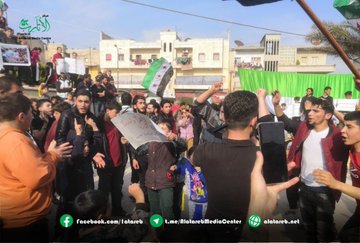
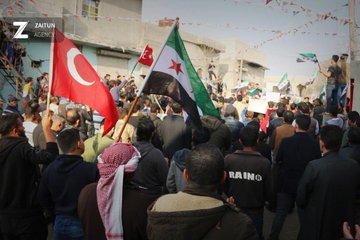
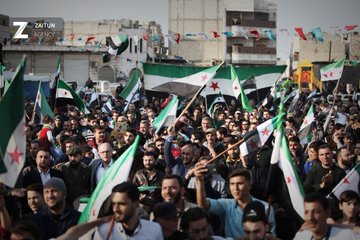
Demonstrations on 9th. Anniversary of the Revolution


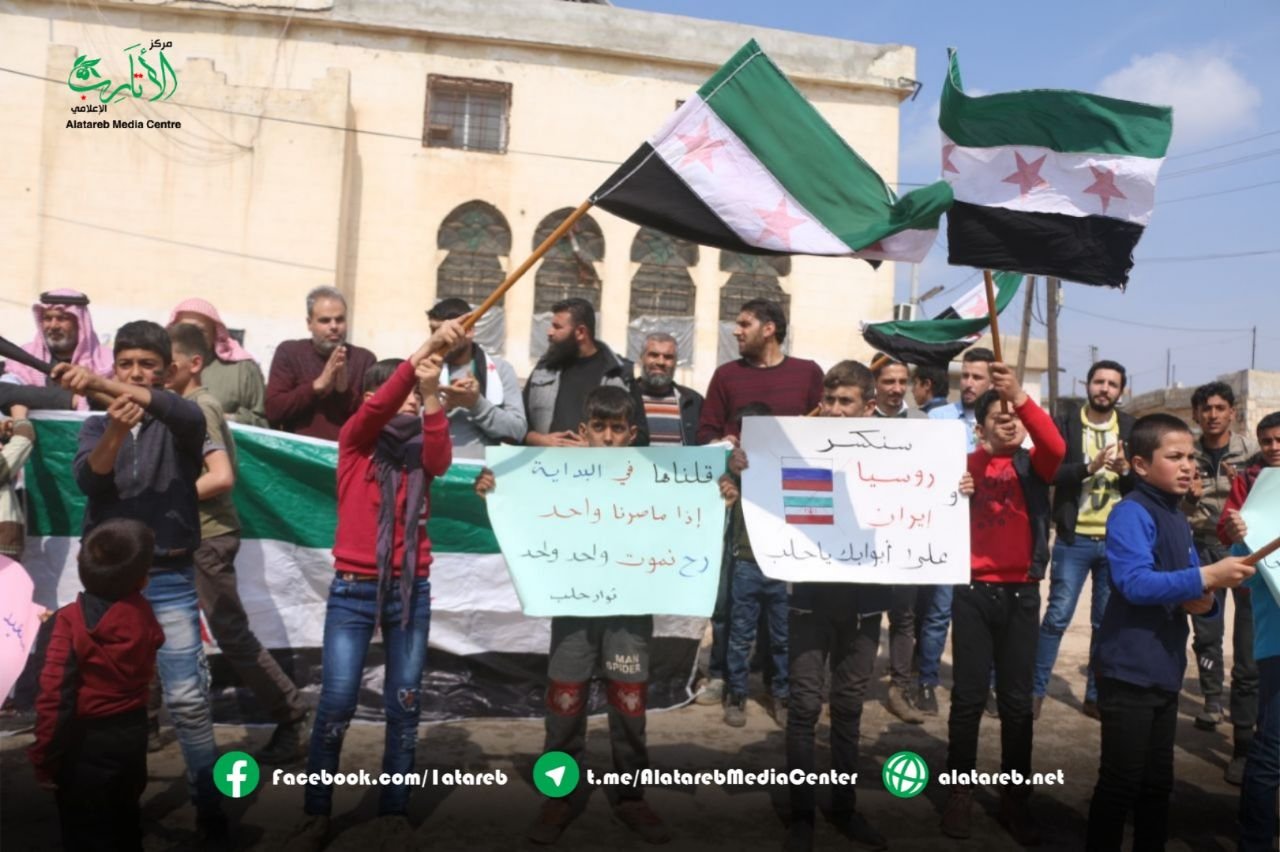
 'Several popular demonstrations took place today, Sunday, on the occasion of the ninth anniversary of the start of the Syrian revolution in the regions of northern Syria.

Syrians set out today on demonstrations in the city of Idlib and Maarat Misrin and on the "M4" road near Ariha in its countryside, along with other demonstrations in Batbu, Afrin and Al-Bab in Aleppo countryside and Saluk in Raqqa countryside and other areas.

The demonstrators stressed the continuation of the Syrian revolution until it fulfilled its demands to expel the forces of aggression and gain freedom.

They chanted revolutionary songs and chants condemning the criminality of Russia, Iran, and the Assad régime, and they paid tribute to the martyrs of the revolution and renewed their solidarity with the detainees.

Today, Sunday, marks the ninth anniversary of the start of the Syrian revolution that erupted on March 15, 2011, calling for freedom and dignity. The Assad régime has responded since the early days with excessive violence and massacres, and it has also brought Russia and Iran in to try to suppress Syrians.'

ImageImageImage
ImageImageImage


 Note 19/8/25, link broken.

The Syrian uprising and the birth of an idea


 Zouhir al-Shimale:

 'Supporters of the revolution against the Assad régime take stock of the toll the war has taken nine years after it started.

 Fared Alhor from Maarat al Nouman is 26 years old and has known nothing but war for the entirety of his adult life.

 He was in high school before the Syrian uprising started, and had a part time job helping out with local publishing companies.

 That experience would later come in handy by photographing the atrocities carried out by the Assad régime and the resulting humanitarian crisis in northern Syria.

 Alhor has more than skin in the game when it comes to the conflict, having had his home destroyed in régime bombardments. He lost his aunt, and was forced to flee for the relative safety of north east Idlib when régime forces took his hometown.

 Maarat al Nouman was recently captured from Syrian opposition fighters by régime forces backed by heavy bombardment from Russian warplanes.


 Despite the toll the war has had, however, Alhor has no regrets about the uprising.

 “Many people won’t understand why I say the Syrian uprising was worth it,” he said.

 “Even though I was young when it kicked off, I am very privileged that I got to live through it. It made us young people understand the meaning of freedom and equality…something that did not exist before.”

 Alhor believes that there will one day be peace in Syria but not in the foreseeable future. He believes the lack of international support for the revolution is the main reason why the régime of Bashar al Assad remains.

 “The international community bears a large responsibility towards what’s happening in our country,” Alhor said. “They turned a blind eye towards the relentless régime attacks against people, schools, hospitals, and even camps for the displaced.”


 While youths like Alhor have no regrets over the uprising, there’s no escaping the impact the war has had on their development.

 Many Syrians have spent their formative years knowing nothing but war, at the expense of experiencing the kind of things other young people around the world get to experience.

 Nazir Abbas, a 27-year-old human rights activist from Kafranbel, which was recently lost to régime forces, rued the years of his life lost to war.

 “I have lost a decade of my life,” he said from a camp for the displaced near the border with Turkey.

 “I should have had a family by now and enjoyed spending my youth with family and friends in our hometown.”

 Unlike Alhor, Abbas is not optimistic about the future, admitting that the future is not ‘very bright’.

 But like his compatriot, Abbas has no regrets about the Syrian revolution.

 “We’ve grown up from within...the seed of freedom is ten years old now and it will continue to grow and thrive within us and in the generations to come. What keeps me strong is the hope that the Baath régime will be dismantled.”


 The war in Syria has left more than 500,000 people dead and led to the displacement of more than 11 million people, including six million as refugees outside of the country.

 Assad’s campaign to keep his régime in place has seen him level civilian neigbourhoods, use chemical weapons on children, and torture tens of thousands to death.

 Nevertheless, Syrians have stressed that while the moment of physical freedom from the Assad régime appears distant at the moment, mentally there will be no return to life under dictatorship.

 Sanaa al Ali, a 30-year-old mother who fled from Ghouta to northern Idlib said the past nine years of revolution have been as if she was born again.

 “After a lifetime of having to chirp praise for the ‘eternal leader’, Syrians have gone out and said no (we won’t),” she said.

 Adding: “The revolution was the first time we heard our own voice, and we will never abandon it or give up our cause, no matter what.”

 To further explain this mindset, Ali described what life was like under Assad’s Syria. She recalled how parents would remind their children not to say anything sensitive too loud for fear of being heard by the state surveillance apparatus.

 “Whisper, the walls have ears,” she remembers her parents warning. Now, however, the “kingdom of fear has crumbled,” she added.


 A theme that ran across the conversations we had with the Syrians was that any notion of Assad winning the conflict were premature and pyrrhic.

 Ali described the notion as an illusion, arguing that Syria had changed forever and would never fully be in control of the régime.

 That - she insisted- was because Assad was fighting for territory while for Syrians it was a battle of ideas.

 “We need to understand and restate that the essence of Assad’s battles against Syrians is a battle against an idea, the idea of freedom that we need to continue spreading,” Ali said.

 “The revolt is an idea, and ideas do not die.” '

Saturday, 14 March 2020

Syrian refugee's plea: 'Stop the river of blood'

Syrian refugee Sahar, 26, was just a teenager when conflict began

 'Close to five million Syrians are now living as refugees beyond the country's borders, but an estimated six million are displaced within their own country, many of whom have had to flee the conflict multiple times.

 Half of those displaced are in the northwest, trapped in a shrinking rebel-held area centred around Idlib, that has been battered by months of deadly bombardments.

 Among them is 26-year-old Sahar, originally from the southern suburbs outside Idlib where her family home was partially destroyed by airstrikes.


 Sahar was just a teenager when the Syrian conflict first began and since then she and her family have had to uproot and flee from the ongoing fighting at least three times.

 "I cannot describe those moments, it was one of the hardest moments because we had to leave the house that I was raised in," she recalled.

 "We had to leave everything in order to save our lives and my family's lives from murders or arrest because if the régime came they would arrest us and I had been arrested before."

 She describes the ongoing fear caused by having to uproot multiple times: "It is a very hard feeling, having to leave everything in order to survive … Now I live in Idlib city centre, which is also not safe because of the air strikes and the bombing towards the civilians."

 Sahar’s family was most recently displaced in mid-February and she is currently stuck in Idlib city, amidst the constant threat of air strikes.

 "The hardest thing right now that I feel is instability. A huge population crisis happened because citizens from the south suburbs of Idlib had to emigrate to the north, toward Idlib city and the borders."

 Sahar is now living with her family in overcrowded conditions near the border with Turkey, uncertain about what the future holds.

 "Most people, after they left their homes didn't have any income. This is really a hard thing. Camps for displaced people have really bad conditions. More than one family has to live in the same tent. Sometimes there are four or five families in the one tent which they use as kitchen, bedroom, bathroom and a living room - all in the same tent."


 A Russian-Turkish ceasefire deal came into effect last Friday, bringing relative calm to Idlib, its skies free of warplanes for the first day in months,

 Like many in the city, Sahar’s main hope is for peace and safety:

 "What I wish for is to live peacefully and safely with my family and all the people here in Idlib city … I hope that Syria will become a safe country and that we could live here with dignity."

 She added: "We need the support from all the countries in the world, we need the international community to stay by our side.

 "Those civilians and children are not involved with anything, we are normal civilians who only want to live in our areas and our homes. Stop the river of blood and get aid to the displacement camps." '

Friday, 13 March 2020

Idlib: Syria's 'forgotten city' targeted for revenge by Assad


 'Locals call Idlib "the forgotten city", still paying the price for one day in the 1970s when the former president was pelted with tomatoes.

 The city and its surroundings have suffered furious bombardments since December at the hands of Syrian forces and Russian jets, leaving hundreds dead and forcing huge numbers to flee towards the Turkish border.

 With a tentative ceasefire announced on March 6, villager Malek Haj Khalil returned to his home in Sarmin, just east of Idlib, hoping to recover a few belongings from the ruins of his house.


 But he found nothing beyond an air conditioning unit and a few broken pans among the twisted iron bars that were once his home.

 "We were hoping to find a few things, some furniture or blankets, but there is nothing," he said.

 Some neighbours had more success, and were loading gas cookers, mattresses and sofas on to trucks.

 "When the army came, it poured out all the hatred it has against us... targeting civilians and their houses," said Khalil.


 Idlib was one of the first provinces to join the uprisings against President Bashar al-Assad, and is now the last to remain in rebel hands, but the roots of that "hatred" predate the revolution in 2011.

 Tucked in the northwest of the country, Idlib's residents have long felt overlooked by their rulers in Damascus.

 Locals and researchers particularly recall the time in the early 1970s when Hafez al-Assad, Bashar's father who ruled from 1971 until his death in 2000, made his first and only visit to Idlib. An angry crowd pelted him with tomatoes and a shoe.

 "After that incident, Hafez al-Assad never returned to the city. It has since been cut off, and that shows in the quality of its infrastructure and schools," said Mohammad Sarmini, head of Syrian research centre Jusoor in Istanbul.

 "It was this marginalisation that pushed Idlib to join the revolution," he added.


 According to Taleb al-Dugheim, a specialist on Syrian history, the slight against Assad senior in Idlib "was never forgotten, and transformed into repression and marginalisation" that continued under his son decades later.

 The régime also remembers Idlib's role in the protests of the 1980s, Dugheim said, when many supported a Muslim Brotherhood uprising in the city of Hama that was brutally suppressed.


 Asaad Falaha knows the hatred well. He leads a charity running a primary school in Binnish, east of Idlib city, that the régime has bombed three times during the recent offensive.

 "Seventy percent of it has been destroyed. To target a school like this shows the hatred of the régime," he said.

 The province shelters three million people -- half of them displaced from other regions.

 Assad has taken a close interest in the battle to retake it.

 "When Bashar al-Assad visited the town of Al-Habit in Idlib province in October, he personally supervised artillery shelling against (the then rebel-held) Maarat al-Numan," said Dugheim.

 "The régime acts as though the inhabitants of the Idlib are not really Syrians," he added.


 Assad's forces retook the town of Kafranbel in the south of the province in February. It was one of the last standing symbols of the revolution, full of darkly ironic slogans against the régime.

 That spirit still shows flickers of life further north in the province: on a partially destroyed school in Binnish, someone has written advice for protecting against the coronavirus, with Assad depicting as the virus.

 On the wall of a gutted-out classroom, someone has offered a history lesson: "Date: the era of dictators. Course: revolution. Lesson: death." '

Fighter's journey from school protests to armed conflict


 'Ahmed Mansour was a schoolboy with dreams of becoming a lawyer when he joined the first protests at his secondary school in Syria’s northern city of Aleppo.

 Nine years later, his studies halted by a war which has ravaged the country his whole adult life, Mansour and fellow fighters are stuck in a shrinking corner of rebel territory which still defies President Bashar al-Assad.

 His journey from schoolboy demonstrator to veteran fighter, from early optimism to last-ditch defense in the towns and farmlands of Idlib province, echoes the dashed hopes of many Syrians who took to the streets to challenge authorities.


 “I expected the régime to fall,” Mansour said, recalling the early protests inspired by uprisings in North Africa which rapidly toppled autocrats in Tunisia and Egypt and then overthrew Libya’s Muammar Gaddafi after Western intervention.

 “It was a corrupt sectarian régime and we had to change it,” he said, flanked by fellow fighters under a canopy of olive trees, hiding them from hostile warplanes and drones in the skies of Idlib.


 Starting in Damascus on March 15, 2011, and then in the southern city of Deraa a few days later, unprecedented protests against decades of rule by Assad and his father before him spread across the country.

 Mansour, then 16 and studying at secondary school in Aleppo, joined 30 other students in a demonstration at their school. “We shouted ‘Freedom, Freedom, Freedom’,” he said. “Security forces came the next day and arrested 11 of my friends.”

 The students were released after mediation. They continued to protest, but in small numbers and in short 15-minute bursts. “We couldn’t do it for longer because security forces came immediately and stormed the demonstration with tear gas and opened fire,” he said.

 The Syrian government cracked down with a determination unmatched in other countries caught up in what was briefly labeled the Arab Spring.

 Despite growing casualties, protests persisted. As demonstrations became funeral marches, confrontation escalated.


 Mansour joined a group to defend the demonstrators, but they could not match the strength of Assad’s security forces. After several months a new force of military defectors and armed rebels was formed, the Free Syrian Army.

 “I joined the Free Army with great pride because I was taking part in protecting civilians, our people, our brothers,” he said. “People who were calling for the most basic rights from a tyrannical, repressive, dictatorial régime.”


 Syria was on the way to becoming the bloodiest and most protracted of the Arab uprisings, but in the first years of conflict rebel confidence was high. Assad’s foreign critics said his remaining days in power were numbered, and a senior U.S. State Department official described him as “a dead man walking”.

 Mansour and the rebels swept into Aleppo in the late summer of 2012, a city they would hold in part for another four years.

 Then he was based in towns around Aleppo, surviving a stomach injury from shelling, and fighting for a variety of rebel factions which jostled for power on Syria’s chaotic battlefield.

 Riven by division - which worsened dramatically with the emergence of the jihadist Islamic State group in 2013 - and lacking the international support they sought, the rebels failed to capitalize on the early gains.

 Islamic State “turned public opinion against us”, leading the outside world to equate the rebel fighters with terrorists.

 “Then the Russians came, and changed the balance,” Mansour said, referring to Moscow’s decisive 2015 intervention which turned the war in Assad’s favor.

 “They put pressure on us in Aleppo, and then they took control,” he said. “They broke us in Ghouta (around Damascus) and in many areas until at last we ended up in Idlib,” he said, the sound of bombardment occasionally punctuating his comments.

 In some of the worst of the fighting in Aleppo’s Khaldiya district, Mansour said one or two fighters died alongside him every day. Another bleak memory was an air strike which killed around 20 of his comrades sheltering in a cave in 2016.

 The last few months, as Assad’s Russia-backed forces launched an offensive across southern Idlib, marked the lowest point yet for rebels who once controlled large parts of Syria and almost encircled Damascus.


 Only a few days ago, Mansour’s forces were driven from his hometown of Kafr Nabl by the advance of Syrian government forces, halted only by Turkish air strikes, artillery and a ceasefire deal agreed by Turkey and Russia last week.

 Turkey’s robust support for the rebels this month has sustained his optimism, despite the string of past military defeats, but also reinforced a sense of betrayal by other international powers.

 “The world watched us and no one helped,” Mansour said. “If the world had helped us, we would have toppled the régime”.'

Wednesday, 4 March 2020

Rallies in support of the Syrian & Turkish National Armies

 'Popular demonstrations took place in separate areas in the north of Syria, in support of the military operations launched by the Syrian and Turkish national armies against the positions of the Assad régime in Idlib, Hama and Aleppo.

 Demonstrations took place in several cities and towns, most notably in the city of Sarmada and the town of Hazano north of Idlib, and the city of Al-Bab in the northern countryside of Aleppo; in support of Turkish intervention against the régime forces.

 The demonstrators thanked the Turkish Army and President Recep Tayyip Erdogan for support providing to the Syrians over the past years in confronting the Assad regime, and they also wished for the safety of Turkish soldiers who had come during the past days to attack the régime in Idlib.

 The Syrian and Turkish national armies launched Operation Spring Shield to force the Assad régime to retreat from the areas it had captured in the countryside of Idlib, Aleppo, and Hama. Over the past few days, the two armies were able to achieve broad progress and control over different cities and towns.'


 Note 19/8/25, link broken.

Turkey’s Operation in Syria Exposes Obama’s Weakness


 'Turkey’s devastatingly effective exercise of military power in Syria’s Idlib province has not only provided instant relief to three million Syrian refugees who’ve been bombed mercilessly by Russian warplanes, and stalked by Assad régime forces and Iranian militias on the ground, it has also exposed former US President Barack Obama’s timidity in not enforcing his famed “red line.” Which begs the question: how many lives might have been saved with minimal international military intervention.

 “We have been very clear to the Assad régime,” President Barack Obama said in August 2012, “that a red line for us is we start seeing a whole bunch of chemical weapons moving around or being utilized. That would change my calculus.”

 A year later, Assad called Obama’s bluff in using chemical weapons, specifically sarin gas, to kill more than 1,400 non-combatants in Damascus suburb of Ghouta. Video images of young children, women, and men wreathing on the ground in convulsive fits before eventually choking to death on their own vomit were viewed almost instantaneously by a distraught and shocked global audience.


 If there was ever an ethical justification for the United Nations to invoke a military intervention on the basis of Responsibility-to-Protect (R2P), then the gassing deaths of innocents was most definitively it, but Russia’s seat on the Security Council would never have allowed that to happen. There’s no doubt Syria now ranks as one of the UN’s most humiliating and consequential failures to halt and prevent genocide, war crimes, ethnic cleansing, and crimes against humanity.

 Nevertheless, the leader of the world’s sole military superpower had laid bare his “red line.” In no circumstances would the US accept the use of chemical weapons, according to then President Obama, but when the moment came to deliver on his promised threat, he blinked, took a step back and then deflected responsibility to the opposition party controlled Congress, where he knew the request for military force would be denied. The bill died on the floor of the House without coming to a vote.

 There’s little doubt that it was the American public’s opposition to armed intervention, rather than principled or military considerations that was to blame for Obama allowing the Syrian dictator to get away with genocide-scale mass murder. What the besieged Syrian people received instead was further global apathy in the form of excuses, and more bombs and bullets raining down upon them by Russian warplanes and mercenaries.


 In his book, “The World as It Is,” Ben Rhodes, Obama’s former national security advisor, claims Obama chose against using force to punish Assad, arguing that Syrian air defenses were far too formidable and couldn’t be taken out without a massive US ground force providing support on the ground, and that the Russian military would counter in a way that would risk the outbreak of World War Three.

 Turkey’s successful and punishing military raids in Idlib over the weekend, however, have made a mockery of these assertions and deflections, given Turkish armed drones wiped out a multitude of Syrian air defense systems and fighter jets easily and without cost or consequence within a mere 72-hour period.

 Since the operation began on February 28, Turkey’s military assets have killed 2,212 Assad régime soldiers, and destroyed three Syrian air defense systems, eight helicopters, 103 tanks, and 72 guns/howitzers, according to Turkey’s Defense Minister Hulusi Akar.

 “We have no intention to confront Russia, but we want to stop the Assad régime’s massacre of civilians. Our target is only régime forces and elements attacking our troops,” he added.


 Syrian rebel groups have taken back more than a dozen towns they had surrendered since Assad and Putin stepped up their bombing campaign on Idlib in December. More significantly, Russia has shown no sign whatsoever that it has any desire to confront or even tangle with Turkey’s Air Force, which makes a further mockery of those, including Obama, that thought enforcing a no-fly zone over Idlib would lead to another world war.

 As for the régime’s so-called “formidable defenses,” Turkish drones and jets have so overwhelmed the Syrian Army that it has resorted, out of sheer desperation, to burning car tires in strategic locations to blind Turkish satellite navigation systems and pilots. Car tires! It would be a joke were it not for the catastrophic loss of lives Assad’s war of choice has wrought on his people.

 While one may question Turkey’s actual motives for intervening in Syria, what one cannot do is question its effectiveness in protecting three million mostly Sunni Syrians from being ethnically cleansed by Assad’s death squads and sectarian militias. For the first time in months, Assad-Russian warplanes are not bombing schools, hospitals, bakeries, markets, and mosques in Idlib.


 “Turkish action now offers an opportunity – albeit late in the day – to try to correct mistakes of 2013 to the present, by getting a wider coalition behind an effort to disrupt [the] Assad/Russia military strategy, change calculations and open chance for coerced diplomatic negotiation,” tweeted former British diplomat Reza Afshar.

 Afshar had resigned from his role as coordinator of UK policy on Syria after the British parliament “killed the momentum for action globally,” which he calls the “worst foreign policy decision of our generation.”

 The cost of inaction, and by extension Obama’s pusillanimity, can be measured in upwards of one million dead Syrians, more than six million refugees alongside six million internally displaced people, further chemical weapons attacks, and the rise of the Islamic State (ISIS) and far-right political parties throughout the Western world—both of whom have leveraged Islamophobia for their respective gains.

 That it has taken almost nine years for Assad’s victims to become the beneficiaries of meaningful and effective international intervention should shame us all, including a former US president.'

Monday, 2 March 2020

DePaul developer reflects on role in Syrian revolution

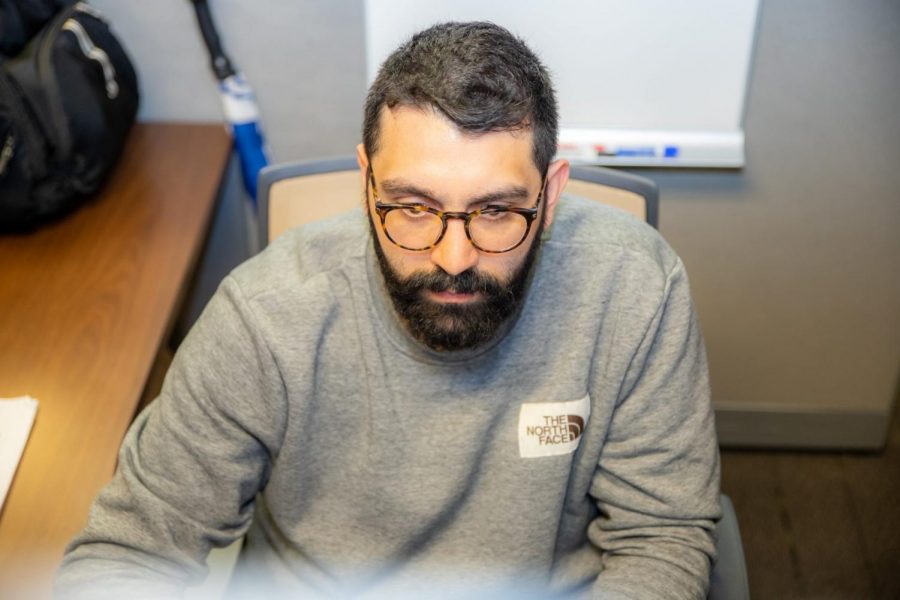
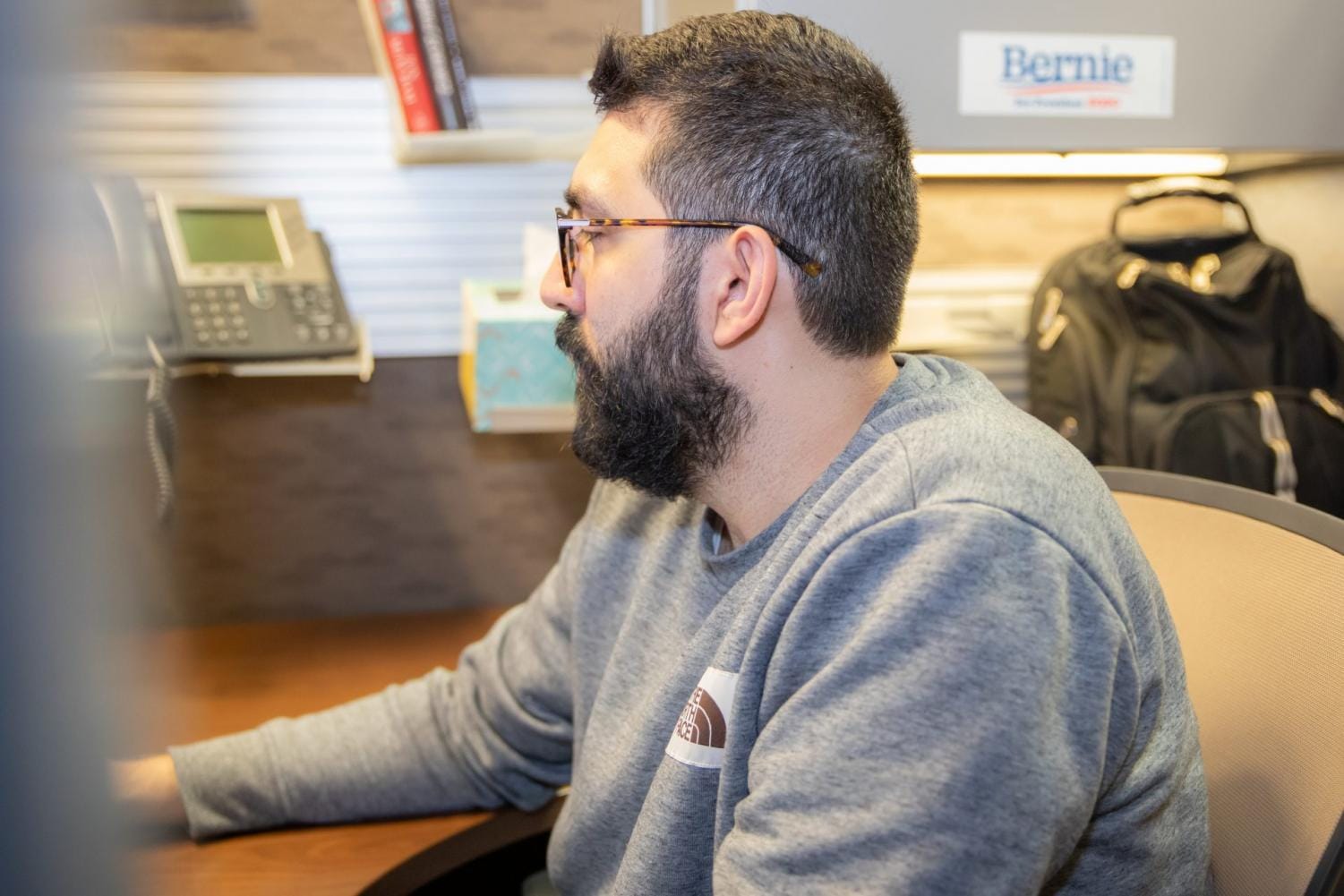
Emad+Mahou+at+his+office+at+DePaul+University.

 'Emad Mahou spends his days writing code and building tools for the university’s various digital interfaces as a software engineer at DePaul. But nine years ago this month, he was building something very different.

 In March 2011, Mahou was building a grassroots movement that helped incite the near-decade of civil war in his home country of Syria. Instead of navigating the halls of DePaul’s administrative offices, he was navigating the streets of Damascus while trying to dodge the wrath of President Bashar Al-Assad’s forces.

 “When I was 23, I was fighting in Syria for freedom. I was leading the revolution 2011, but today I have to do a login for a trustee,” he said.


 Mahou was born in Lebanon in 1989 to a Lebanese mother and Syrian father. His family immigrated to Syria when he was 6, settling down just outside of Syria’s capital, Damascus. Though he began studying architecture at the University of Damascus when he was 20, he never got to finish his degree. Civilian results — which would later be known as the Arab Spring — began three years later in Tunisia and Egypt, forcing the countries’ respective leaders to step down.

 As these unprecedented events unfolded, Mahou said he felt it was time to force a change in Syria.

 Hafez Al-Assad ruled Syria from 1970 until 2000 when he was succeeded by his son, Bashar. Hafez had ruled Syria oppressively, and there was hope the younger Al-Assad would be more humane. However, in the 11 years after his tenure began, Bashar cultivated a reputation as an autocrat just as, if not more, unsparing as his late father.

 He impeded any democratic processes that might result in his removal from office and reared brutality by preventing dissidents from leaving the country, torturing and murdering them.


 Dissatisfaction with the authoritarian leadership, mixed with economic tensions exacerbated by climate-induced displacement and lack of resources, bred fertile ground for Syrians to spark a revolution.

 Political dissent has always been one of Mahou’s guiding principles. He said his father originally left Syria for Lebanon after its regime targeted him for his opposition to it.

 Mahou began organizing by creating a Facebook page titled “The Syrian Revolution Against Assad.” He set up a meeting in February; no one showed up. Then another, with the same result. Finally, on March 15, 2011, about 25 men and women joined him at the Umayyad Mosque in Damascus. They chanted tunes of protest in the mosque, then trickled outside and marched down the Ottoman-era bazaar that served as a hub of commerce and socialization in the city.

 “Everybody was silent. You could only hear our voices. Everybody was scared to death,” Mahou said. “That’s the most amazing kind of fear that can be instilled, of just witnessing somebody doing something against the government.”

 Only minutes later, Al-Assad’s military stormed through the market and the protest disbanded, Mahou said. Two days later, he and his father joined a demonstration at the Interior Ministry.

 Mahou was horrified by the bloodbath he saw when, again, the police raided the protest and began beating the participants.


 As the protests spread across the country, Al-Assad began to escalate his counterattacks, which in turn drove the desire to oust him from power.

 “I lost fear when the revolution started. When they killed people, we weren’t scared; it was fuel. They made us more angry,” Mahou said.

 As the conflict grew from weeks into months and from hundreds of people to thousands, Mahou continued to organize. He said he was contacted by the United States government to help them understand and verify the situation and identify rebel groups that weren’t too radical to work on common efforts with.

 Cécil Shea, senior fellow on Global Security and Diplomacy at the Chicago Council on Global Affairs, said this was a frequent measure taken during that time.

 “One of the things the U.S. government was trying to do was bring some of the groups that were not so extreme, that the U.S. would have liked those to come to power, together to have meetings with the leaders and to have them coordinate,” Shea said.

 Mahou pledged to himself to always remain nonviolent.

 “We’re not killing Assad, we’re killing each other,” Mahou said, reflecting on his thoughts at the time. “If I met my maker I wanted to say I tried, I put all my might and power into this without causing more harm.”

 His conviction was compounded by personal loss. During one march, he was walking next to a friend when the man was shot by police.

 “He died in my arms,” Mahou said. “I’ve seen a life be taken away. I cannot put that pain on somebody else.”


 Three thousand miles away in England, foreign news correspondent James Longman’s life was about to be altered by the stirring strife in Syria. Longman has now traveled to countries around the world for his work with ABC and The BBC. But in 2011, he was just a student studying the Middle East.

 Longman went to Syria to do research for his thesis, but began freelancing for British press after realizing that as a student, his presence wouldn’t alert authorities like credentialed reporters would. He was connected with Emad through a Syrian academic living in London. He said the reason he’s a journalist today is because of the work he did in Syria — which he said was made possible by Mahou.

 “Without him, I wouldn’t have been able to do anything,” Longman said. “He was someone who I could trust because in that very hectic environment, you know, you never know who you’re with.”

 Mahou connected Longman with sources and got him from town to town, safehouse to safehouse — all the while making sure they weren’t being trailed by the government.


 As rebellion turned into full-out war, Mahou essentially became a spokesperson for the rebellion. Because he was fluent in English, active online and had information from the ground, he became a source for journalists overseas, giving accounts of the turmoil happening around him. In one such interview with SkyNews, the journalist ended the segment by thanking Mahou, attributing him with his first and last name.

 That mistake gave the regime a face and a name to attach to the movement.

 About a week later, he was apprehended by police. He said he was then imprisoned for over 100 days. He was tortured for many of them.

 “They zip tied me to a small bar and left me standing there for two days,” Mahou said, illustrating one of the more painful stretches of his imprisonment.

 He said he doesn’t know why he was released, but guessed that because he didn’t crack under torture, the police thought he’d provide them more information on the rebels if they let him go and surveilled him.

 Instead, he went into hiding, harbored for two months by a family to whom he said he owes his life. During that time, his father was arrested and four of his cousins were killed. He knew he couldn’t openly organize anymore without risking rearrest or endangering others. He had to leave Syria.


 With aid, he illegally crossed into Jordan, and reached the Zaatari Refugee Camp in Ar-Ramtha. After five days in the camp, he went to Amman, where he stayed for six months until obtaining status as a political asylee, making it possible for him to immigrate to the U.S.

 At the time, Mahou knew of three U.S. cities: New York, Los Angeles and Chicago. He deemed New York too big and Los Angeles too crowded, so he settled on Chicago. He ignored state department officials who warned him that Chicago might be too cold.

 While transitioning into his new life, Mahou was also assisting people in their transition from place to place. His first job was driving people between gates at the airport. In 2014, he went back to school, this time for computer science, knowing it was an education that could make him a living. He was hired at DePaul after graduating.

 “In 2012, I was pushing people from gate to gate in O’Hare Airport,” Mahou said. “Six months before that, I was leading a revolution in the heart of Damascus. Today, I am building sites for the DePaul trustees. In 10 years, I could be a DePaul trustee.

 “You’re the captain of your soul; you shape your future.” '