Saturday, 28 March 2015

Stop the ‘barrel bombs’ in Syria


Raed al-Saleh:

 'Last month alone — the same month Syrian dictator Bashar al-Assad told the BBC that his forces do not use barrel bombs — hundreds were dropped across the country.
The Security Council promised to act if its demands went unheeded — but it hasn’t. Its empty promise has only emboldened the regime.

 The suffering in Syria must end. We cannot go on forever listening for the sounds of survivors through the collapsed roofs of schools and clinics. We cannot go on carrying the bodies of children killed in a conflict they had no part in. Every bomb that drops deepens Syria’s cycle of violence and extremism.

 Only the international community can stop the bombs — with a no-fly zone, if necessary. We call on the United Nations and the world to remember its promise to the Syrian people. Please stop the bombs.'

Ed Miliband is peddling a lie about his volte-face on Syria


 ' “Let me tell you - right - let me tell you”, he explained in response to Paxman’s accusation he wouldn’t stand up to Vladimir Putin. “In the summer of 2013 this government proposed action in Syria. The bombing of Syria, right? I was called into a room by David Cameron and Nick Clegg, because President Obama had been on the phone - the leader of the free world, right? I listened to what they said, and over those days I made up my mind, and we said no, right? I think standing up to the leader of the free world shows a certain toughness I would say.”

 It was a lie. A total, and utter misrepresentation of what Ed Miliband did, and did not do, over the Syria vote. He knows it’s a lie, the shadow cabinet know it’s a lie, Labour MPs know it’s a lie.


 This is the truth about what Ed Miliband did over Syria. He did indeed walk into “a room” to meet David Cameron – it was the Prime Minister’s study in Downing Street. He told David Cameron that he would be prepared to support military action in Syria. He said that the Labour party would need some persuading over the issue, and because of that he would need to win some concessions that he could present to his MPs.

 Over the following days the nature of these concessions changed. First Miliband told Cameron he would need to publish legal advice showing military action was legitimate. Cameron agreed. Then Miliband told Cameron he would need to publish the intelligence showing the Assad regime had used chemical weapons. Cameron agreed. Then he said Cameron would need to demonstrate military action had UN approval. Again Cameron agreed, and confirmed he would be submitting a motion to the P5 to that effect. Then Ed Miliband said a vote would have to await the formal publication of the UN weapons inspectors reports into the attacks. Cameron agreed. Finally, Miliband said there would have to be not one but two Commons votes before action could be authorised. And again, the Prime Minister agreed.


 Maybe it doesn’t matter any more. The dead of Syria can’t be brought back. The opportunity to draw red lines against Assad’s use of chemical weapons has gone for good. And Ed Miliband has an election to win. Those depending on food banks, or worried about the NHS, or worried about the cost of living crisis won’t mind a bit of historical revisionism. Nor will Labour MP and activists buoyed by their leader’s combative performance.

 But the fact still remains. When asked to present his strongest case for being entrusted with the highest office in the land, Ed Miliband chose to build it upon a lie.'

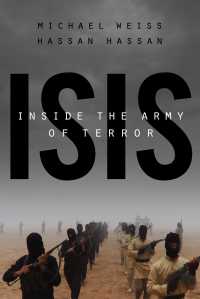
ISIS: Hassan/Weiss versus Cockburn

isis

 Robin Yassin-Kassab:

 'Cockburn vastly exaggerates Western support of the Syrian opposition, when the Americans’ main role was to prevent Arab states from sending the heavy weaponry Syrians so desperately needed to resist Assad’s blitzkrieg. One justification given by commentators for the failure to support the Free Army early on was that Islamists might benefit. Of course, the opposite happened – starved for funds, guns and ammunition, the moderate leadership was unable to win loyalty, or establish central control and discipline. Many of its fighters either despaired and left the country or gravitated towards the much better-funded Islamist brigades. Unhindered, Assad’s barrel bombs and scuds implemented a scorched earth strategy, traumatising Syrians and producing a vacuum in which jihadism flourished.

 “There is no alternative to first-hand reporting,” he nevertheless opines; and “journalists rarely fully admit to themselves … the degree to which they rely on secondary or self-interested sources”. Which brings us to the question of Cockburn’s reliability. In the book he states, in early 2014, “I witnessed [Nusra] forces storm a housing complex … where they proceeded to kill Alawites and Christians.” This alleged massacre was reported by Russian and Syrian state media (Russia is Assad’s imperial sponsor, providing his weapons and defending him at the Security Council); yet international organisations have no record of it. But Cockburn’s original report of the incident, in a January 28, 2014 column for The Independent, states that, rather than witnessing it, he was told the story by “a Syrian soldier, who gave his name as Abu Ali”.

 Because Cockburn’s a much-awarded, veteran correspondent, his opinions are echoed and magnified until they attain the status of fact, even amongst those who should know better. A group of Syrian leftist revolutionaries invited to meet Noam Chomsky in Beirut were astounded to hear the great man explain that their cause was doomed. Chomsky knew because his friend Patrick had told him, and “Patrick knows what’s happening in Syria better than anybody”.

 Increasingly a deluded ‘realism’ calls for cooperation with Assad against the greater jihadist enemy. It was precisely in order to provoke these calls that Assad did his utmost to create a jihadist threat, and why – until June 2014, when ISIS became a threat to his regime – he refrained from bombing the organisation. Even today, when the Free Army and ISIS fight, Assad bombs the Free Army. Former State Department official Fred Hof describes the unofficial ISIS-Assad collusion like this: “Their top tactical priority in Syria is identical: destroy the Syrian nationalist opposition.” '

Friday, 27 March 2015

Regime attack on mosque leaves 15 dead


 'Osama Abu Ibrahim, a field commander of Jeysh al-Fatah, told Anadolu Agency the group had occupied industrial and wheat silo areas near central Idlib following fierce clashes with regime forces.

 Opposition forces shelled regime check points around the city using locally made projectiles and took control of 15 regime security points, he said.

 Central Idlib is under siege by opposition forces which have cut off all supply roads and destroyed four tanks which were on their way to enforce the central area, Abu Ibrahim added.'

Breaking free in the great Syrian prison


 'When we are engulfed by monumental events, no matter how horrifying, sentiments of euphoria can accompany those of revulsion. One has a feeling of having lived an overpowering, grand experience, an exhilarating wave of hyperreality.

 This force, allowing psychological rebirth, will harden the spirits of Syrians against the depravities of Assad rule. It is why Assad’s enemies refuse to surrender, even as their conflict takes myriad turns into darkness. And it is why Iran will likely never triumph in Syria. In their search for emancipation, for a second childhood, Syrians will suffer, but they will also struggle against suffering.'

The Way Syrians Protect Themselves From Snipers


 'Some buses in Aleppo, Syria, have been reconverted to serve as protection from snipers loyal to the country’s embattled President Bashar Assad.'

The new grand alliance in the Middle East


 Nancy Lindisfarne and Jonathan Neale add nothing to our understanding of Syria. They make three references to the armed opposition to Assad, and they are all woefully wide of the mark.

 'Saudi Arabia, and various small gulf states, backed various right wing Sunni Islamist rebel groups against Assad’s Syrian government.'

 No, they have mostly backed the FSA, and all the groups they have supported have been defending Syrians against a murderous government; not the problem here. Complaining about the Islamist character, quite mistakenly in their formulation, could be seen as part of the anti-Muslim prejudice the authors claim to be opposing.


 'Assad’s Syrian government is fighting the Islamic State.'

 As little as they possibly can, as their strategy all along has been to fight jihadis as little as possible, in the hope that they will eclipse the secular opposition and Assad will appear the better option. So they have been engaging in a major offensive, mostly carried by their Iranian and Lebanese foreign fighters, against the moderate opposition in southern Syria, but the only advance in the north-east where ISIS has done a runner.


 'The revolt that began in 2011 united a broad range of Islamist and secular groups in resistance, and mixed local alliances. But by 2014 ISIS, a right wing Islamist group, was the largest army opposed to the governments of Syria and Iraq.

 This does not mean the secular left was unimportant. But it does mean that for a generation now Islamists have been the strongest force in mass movements against American power and against the dictatorships.'

 The broad range of Islamist and secular groups are still fighting Assad, and now have to deal with ISIS too. ISIS are not opposed to the government of Syria, but to the Sunni Muslim communities they are parasites upon. To say that there is now just a battle between the US and "dictatorships" and Islamists, in which the important reality is US bombing, ignores the struggle against Assad's genocide.

Wednesday, 25 March 2015

Aliah Ajamoughli: A proud Syrian


 “One of my family members stood out on a platform on a mosque, asking for people to donate blood, and was shot by a sniper,” Ajamoughli said. “The news segment was a YouTube video that they were showing. Early on in the revolution, when the protests were peaceful, the people captured the deaths of protesters and put it on YouTube. They thought by doing this they could show the world the terrible things of Assad, but they quickly found out the world didn’t care about Assad killing his people.”

Re-stabilizing Syria begins with the departure of Assad

 'The Assad regime now controls only 28 percent of Syrian territory, a military control that does not imply loyalty to it. This percentage continues to shrink daily - as in the governorates of Homs and Hama - the revolution’s most important strongholds. Neutral sources estimate that only 10% of the population remain in support of Assad. This limited control of territory, void of real governance or legitimacy, is maintained through the assistance of blood thirsty sectarian extremist militias, imported from Lebanon, Iraq and Afghanistan, and led by Iranian commanders who issue orders, and roam Syrian from Aleppo to Dara’a.

 The opposition forces have become increasingly aware of the need to put their differences aside in favor of unity and integration. There is also an increasing certitude of victory as the revolution has shown a tremendous ability to adapt to changing challenges and efficiently coordinate revolutionary, political and military efforts. We are ready and willing to engage in any political process that achieves freedom and dignity for our people. We continue to work to unite all components of our society under one national umbrella and to ensure that all Syrians play a role in the transitional period. The transitional process will preserve institutions - particularly the army and security apparatuses - initiate civil peace and transitional justice projects, and begin the reconstruction of Syria.'

Tuesday, 24 March 2015

Assad regime is evil, it must go


 Khalid Amayreh:

 'As to the rampancy of rape, mostly by Assad's soldiers and paramilitary thugs known as Shabbiha, a recent study reported "compelling findings" indicting the regime in this regard.

 The study was conducted by Women Under Siege, along with Columbia University epidemiologists, the Syrian-American Medical Society, and Syrian activists and journalists, who spent the past year documenting and mapping incidences of sexual violence in the war-ravaged country

 According to the study, Assad's forces have carried out 56 percent of all acts of rape. But, the study says, if you include pro-regime Shabbiha perpetrators, the number is closer to 80 percent.

 The study adds: "When it comes to men (who were the victims in 20 percent of the cases tracked by Women Under Siege), the figures are even more staggering. 90 percent of the reported sexualized violence against men was committed by government forces, possibly due to the fact that these tend to occur in detention facilities. Meanwhile, the Free Syrian Army has only carried out 1 percent of the documented sexual attacks."

 The Assad regime is a cancer upon the conscience of humanity. That is why it is an expression of criminal hypocrisy and evil moral duplicity to bomb IS in Syria and Iraq while keeping the Assad regime fully immersed in this orgy of evil.'

Syrian rebels announce offensive against city of Idlib

 'Armed opposition factions announced the campaign to capture the city of Idlib in a message posted online Tuesday. They tell residents the rebels "are at the walls of Idlib" and "have decided to liberate this good town." '

Forget Assad


 Bente Scheller:

 'Already now many Sunnis in the region perceive their lives as less important than the lives of members of minority groups in the eyes of the West. Most victims of regime brutality are Sunnis. The fact that they have received hardly any support against Assad, that the international community however now is even considering him a potential partner against ISIS, could amplify the perception of a Western-Shiite conspiracy against Sunnis. As uncertain as the gain through a co-operation with the regime in the battle against ISIS would be, as certain is that such a co-operation would trigger an influx of new fighters for ISIS – not for reasons of conviction, but simply because Sunnis could turn to no one else for protection against the regime.'

Sunday, 22 March 2015

'You rarely hear any laughter'


 'Asked if he would still protest if he had known how Moadamiyeh would suffer, Ahmed pauses before he answers.

 "I would still protest," he says. "If the siege and the bombs still happened, then so be it." '

Where the uprising began and still lives on


 'Assad has other plans. With an offensive in the South supported by Iran and Hezbollah, he is currently trying to weaken the national resistance and drive moderate rebels into the arms of al-Nusra and IS. Then he can declare his merciless war on Syria's civilian population to be a fight against terror in this region too.

 Instead of simply concentrating on IS in Syria, as it has been doing since the summer of 2014, the West should stop neglecting the origins of the radicalisation: Assad's brutal reign. This goes for the South in particular, where the MOC has long had contact with the counterparts it has been asking for and who are in a position to combat the jihadists.

 However, if they are to do this, they must do one thing above all else: they must lead the fight against Assad. Only as the spearhead of the resistance will the FSA pull the rug from under the radicals' feet. Only when they can do without military support from the al-Nusra Front will the latter lose its significance and attraction.'

Saturday, 21 March 2015

World yawns as Syria enters the dark ages


 'Last Sunday, Syria’s bloody civil war entered its fifth year. If we needed a reminder about that — and, let’s face it, we do — it came on Tuesday when the criminal regime of President Bashar Assad was accused of carrying out a chlorine gas attack against a rebel-held town in northwest Syria. The attack was said to have killed at least six people, including children who were gasping for breath. Amateur videos posted online, widely regarded as authentic, showed children stripped of their clothes lying on hospital beds as doctors tried to revive them.

Even if this attack by Assad’s forces is confirmed, precious little will come of it. Earlier this month, the UN Security Council approved a resolution that threatened military action if toxic chemicals such as chlorine are used in Syria. But Russia, as Assad’s leading ally, is certain to block any action.'

Kerry ‘deeply disturbed’ by Syria poison gas reports


 I hadn't got around to mentioning Assad's latest chemical attack.* John Kerry seems only disturbed that this might impede him stitching up a deal with the Iranians that leave them in control of Syria.
*[http://english.alarabiya.net/en/News/middle-east/2015/03/19/Kerry-says-deeply-disturbed-by-reports-Syria-used-chlorine-in-Sarmin-attack.html]

Report says nearly 650,000 besieged in Syria

Christians humanitarian aid

 'Nearly 650,000 Syrians are living in besieged communities in the country’s civil war, more than three times the UN estimate, according to a new report that gives a graphic account of hundreds of deaths in areas the world has struggled for years to reach.

 The report says Syria’s government is responsible for the siege tactics that have led to deaths by starvation, dehydration and the lack of medical care.'

 A couple of paragraphs later, the president of the Syrian American Medical Society describes his organisation as neutral, and that we're talking about families who have nothing to do with armed groups. Which is a problem generally with reporting on Syria. If you say the problem is Assad and he must go, then you are partisan and to be discounted, if you say there are problems on all sides, then obviously we should do nothing to help the rebels in case it makes things worse.

Four difficult and revolutionary years in Syria


 'The Syrian people are no longer fighting the regime, but fighting Iran's forces and allies who rely on Russian military and political support.

 Despite that all, and after hundreds of thousands of martyrs and prisoners and millions of refugees, and despite the continuous barbaric violence, the Syrian people are still fighting for victory in a world that wanted to see them massacred. It is an immense revolution that shall continue.'

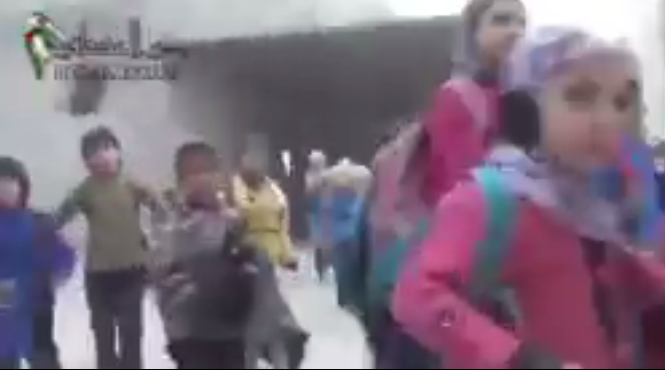
Assad shell drops next to school


 'A video by journalist Faisal Al-Qassem appears to show a Syrian school at the moments when a Syrian regime rocket lands next to it.

 In the video a teacher can be heard saying: "What is happening to us is history, history that is being written. History is documented on video. [In the past] they used to document history on paper, right? Let us document our history. In the future, if God lets us live, when you grow up, you will tell your grandsons: 'This happened to us and we were in school,' etc."

 While the teacher was talking a rocket can be heard falling nearby and the students quickly take to the ground. The plane dropped a shell that almost wiped out the school.'

Thursday, 19 March 2015

Counter-revolutionary forces have pushed revolutionary aims into near-oblivion


 Joseph and his comrades seem to be replicating the faults of the far left internationally in equating the Gulf States with Assad's supporters, while believing that building some independent political force can replace the military struggle against Assad. The return of refugees, the lifting of sieges, the end to bombing, none of these things will happen without his governance being threatened. The provision of weapons to the insurgents is not a reactionary act, it may mean that reactionaries have more influence before Assad is defeated but does not mean that they would control Syria thereafter, just as the provision of Russian arms to the Republic in the Spanish civil war was not the problem, though the Stalinist influence that came with it was an unavoidable problem. This is not a matter of supporting one counter-revolutionary faction or another, but cautiously welcoming all support for the fight against Assad.

 Joseph Daher:

 'The main problem in Syria, and elsewhere in the region, has been that some among the democratic and progressive oppositions have chosen to support one of these two counter revolutionary forces, presenting them as the choice of the ‘the lesser evil’. This actually represents the road to defeat and the maintenance of an unjust system in which the popular classes in the region live. The role of a popular and democratic opposition is not to choose between different factions of the counter-revolution that are supported by various international and sub-regional imperialist actors.

 The role should be to build an independent front from reactionary forces based on democratic, social, anti-imperialist principles and opposition to all forms of discrimination while working for a radical change of society in a dynamic from below in which the popular classes are the agents of change. In Syria this means to act on two levels. First, on a humanitarian level, it means to do whatever is possible to ease the suffering of the majority of the popular masses so that they are able to regain their capacity to organise and continue their struggle for liberation and emancipation. Foremost, this means the fast return of the refugees to their homes, the lifting of the starvation sieges on “liberated” regions, an end to the bombing and destruction of towns and cities and the liberation of tens of thousands of prisoners. Secondly, on a political level, it means to gather and assist politically and economically all the democratic and popular organisations that constitute the popular movement within and outside of Syria and that still try to maintain the initial objectives of the revolution.'

What Happened in Homs

 'The mantra so tirelessly repeated by our solemn leaders, “There is nothing we could have done,” is simply not true. Without our callous indifference, cowardice, and short-sightedness, things might have been different.

 The Syrian citizen-journalists, like those that helped, guided, and protected us during our stay, still believed that the constant flow of atrocity videos they risked their lives every day to film and upload on YouTube would change the course of things, would shock Western consciousnesses and precipitate strong action against the regime. The people still believed that song, dance, slogans, and prayer were stronger than fear and bullets. They were wrong, of course, and their illusions would soon drown in a river of blood.

 America, traumatized by two useless and disastrous wars to the point of forgetting its own founding myth—that of a people rising against tyranny with their hunting guns, helped only by indomitable spirit and idealism—stood back and watched, petrified. Europe, weakened by economic crisis and self-doubt, followed suit, while the regime’s friends, Russia and Iran, occupied every inch of the political space thus made available.'

Wednesday, 18 March 2015

'We had a house and lived with dignity'

Inside Syria: 'We had a house and lived with dignity'

 Hadi al-Abdallah:

 'All we demanded was our own rights, our basic human rights.

 This revolution was not a mistake. We were let down in many ways; The world did not take the right decisions to end these crimes.

 In the past four years we felt abandoned on all levels but this will not make us stop, retreat or get bored. We will continue working and protecting our revolution.

 We all expected the harsh reaction from Bashar al-Assad's regime, but we did not expect the world's reaction. We were let down by the media, we were let down by humanitarian organisations and we were let down militarily.'

Tuesday, 17 March 2015

Regime and ISIS Agree to Share Electricity


 'The rebel-held areas were excluded from the arrangement, as power stations in the liberated areas are not supplied.'

An anniversary of horrors in Syria


 'The Obama administration, which once proclaimed the prevention of genocide a national security priority, has not even pretended to have a strategy for Syria since the collapse of a peace conference in Geneva 13 months ago. Though it is recruiting and training a few thousand Syrians to fight the Islamic State, the administration refuses to commit itself even to defending them if they are attacked by the Assad regime — much less to helping them take the offensive against Damascus. Senior officials say the White House fears a hostile reaction from Iran, which has sent troops and militia forces to fight for the regime.Mr. Kerry’s statements reflected the administration’s real policy, which is to wash its hands of Syria while hoping it can separately strike a deal with Iran on its nuclear program and collaborate with it to defeat the Islamic State in Iraq. At best, Syria’s continued agony will be the price for progress elsewhere in the Middle East. More likely, the Assad regime’s unchecked slaughter will continue to destabilize the region.'

Monday, 16 March 2015

Living on the Edge


 'I have lived with my family in Idlib, which is under regime control, since March 2012. Although we’re against the regime, we have chosen to continue living here rather than seek asylum in a liberated area.

 I work as a teacher in a rebel-held area close to Idlib. Many of its residents have fled the brutal oppression of the regime. I persevere for the sake of the children of those who can see through me the city they long for and the past they have lost. For my part, I find in them a way to assuage my guilty conscience and connect with a revolution I still long for.'

Kerry defending Syrian ‘prison’: Jumblatt


 “I have never bet on the Americans to change the regime in Syria. On the contrary, I advised all those who bet on the [U.S.] to stop.”

'I had to do procedures I'd never seen'

A man stands next to a blood stain in Damascus

 I'd tend to take from this that despite all the reverses they have suffered, the Free Syrian Army and the Syrian people are one.

 'The last hospital I worked at was also destroyed by regime airstrikes. This is because the FSA depends heavily on civil services. The hospital is a main player in the presence of the FSA. If there is no hospital, the FSA doesn’t stay there because they cannot keep up their resistance activities. Any injured person will die. If there’s a hospital, they can be treated and go on with their lives.'

Sunday, 15 March 2015

At least 20 dead in Syrian air raids on Damascus suburb


 'President Bashar Assad's air force bombs Douma and other rebellious neighborhoods and towns around Damascus on a daily basis.'

We have to talk to Assad, admits Kerry

Syrian President Bashar al-Assad meets with US Secretary of State John Kerry in Damascus, Syria - 1 April 2010

 'The White House has previously insisted that Mr Assad stand down as part of a political settlement, but it is unclear from Mr Kerry's comments whether the US position has changed.'

 It's always been unclear whether American statements that Assad should go ever reflected any determination to make it so.

Authorization for the Use of Military Force Request


 'Secretary of State John Kerry, Defense Secretary Ashton Carter, and Joint Chiefs of Staff Chair General Martin Dempsey testified at a Senate Foreign Relations Committee hearing on President Obama’s request for authorization for use for military force (AUMF) against *ISIL.

 Bob Corker: Are we going to protect those we train to fight ISIS against Assad's barrel bomb attacks?

 Martin Dempsey: No.'

Saturday, 14 March 2015

The Syrian Regime Ramps Up Bombings On Civilians

destroyed aleppo

 “Every day, [Bashar al] Assad’s fighters drop barrel bombs,” 24-year-old Suliman Alhalaby, who lives in a rebel-controlled area of divided Aleppo, told The World Post over Skype. He says he’s lost 20 friends and relatives to the bombs -- cylinders filled with fuel, nails and shrapnel, and chucked out of helicopters. “It’s a horrible sound,” he explained. “Year after year, Assad is becoming more dangerous.”

 “All our people have [been] disappointed,” said Ahmad, a 27-year-old law student-turned-aid worker in Aleppo. “All the governments in the world don’t care about the suffering of my people.We know that ISIS was made by Assad to say to the international community: ‘I am fighting terrorists.’ ”

Free Free Syria

 The widow of Dr. Abbas Khan spoke at the end of the march for Syria in London today. Syrians must kill Assad before he kills all of them. Paul Conroy said that history will judge Assad and those who left Syria defenceless against him.

 There were about 400 people on the march, maybe a dozen from the far left.

Ghouta changes school hours to avoid regime bombings

Embedded image permalink

 'The state of emergency is not limited to schools. Health clinics in Douma have also limited their operating hours from 6am to 9am., Abu Adnan, the spokesman for Douma’s Unified Medical Office told Syria Direct on Wednesday.'

Friday, 13 March 2015

My home in Syria had everything


 This is how the conflict got militarised, it was fight back against Assad or die.

 'By the beginning of 2013, existence in his village in the southern Syrian governorate of Daraa had become impossible. In March the previous year, government soldiers looking for opposition spies found the sheltering villagers and began a random slaughter. “They went along us, saying ‘You’re going to heaven’ to one man, and ‘You’re going to hell’ to another one,” says Younis. “If they sent you to hell, you were either stabbed or shot. If they sent you to heaven, they let you live. I thought I was going to die, but the soldier said I was going to heaven.”

 Eight months later, he watched most of a family die as their car drove over one of the mines the soldiers had sown around the village.

 The device itself was a small one but the family, who were fleeing a neighbouring village, had a gas cylinder in the back of the car. Younis helped drag out and bury the bodies of the mother and her four children. The father, who was driving, was hit in the leg but survived to join the Free Syria Army (FSA).'

Don't bet against President Assad


 Robert Fisk's support for Assad becomes more irrational as time goes on. If the threat to bomb Assad was hollow, why should we believe "we hate Assad," or "we supported the opposition"? The original Syrian opponents of Assad are the same ones opposing him now, it is ISIS that is largely composed of non-Syrians (or indeed Assad's support from Lebanon and Iran). The secret mythical intermediary between Assad and ISIS has been exposed as one Mr. Haswani*.

 They have taken a few villages south of Qamisleh in the wake of the Kurdish YPG doing more damage to ISIS in the area and they have collapsed without a fight**. I can't find any trace of them fighting ISIS north-east of Latakia, but rather the Free Syrian ZArmy and Ahrar al-Sham***. Maybe he's talking about the August 2013 Latakia offensive**** in which ISIS played some small part. It's soldiers have been murdered en masse when their officers abandoned them, hardly the sign of an army on a mission to destroy ISIS. There a a couple more lies to mention, that the Free Syrian Army is nothing but "supposedly pro-Western" guerrillas, and that everyone's crimes in Syria are much the same because blood sticks to everyone's hands, though of course those of the Islamists are always worse. Fisk is completely detached from reality.

 'Their threat to bomb Assad out of Damascus was hollow – and Assad’s self-confidence blossomed. Those who hero-worshipped the original Syrian opponents of Assad (brave men indeed) are now creating a new and dark scenario for us, in which Assad has all along encouraged the Islamists – indeed allied himself to Isis – via a series of secret but mythical negotiators, and in which Assad’s army fights only its internal opponents and lets Nato bomb Isis to its heart’s content. But Assad’s army is fighting Isis – south of Qamishleh, for example, and north-east of Latakia – and its soldiers have been shot into mass graves by the black-hooded men of the “Islamic Caliphate”.

 So who will win? At first, we supported the opposition and hated Assad. But now that Isis is ruling much of Syria (though few of its cities) and killing Christians and Westerners, we hate Isis even more than we hate Assad. That’s why we bomb Isis but didn’t bomb Assad. And as long as both “sides” think they can still win, the war will go on for another year or two. Or three. Which means that Assad survives. But after perhaps 300,000 dead, would that be a victory?'


*[http://notris.blogspot.com/2015/03/oil-middleman-between-syria-and-isil-is.html]
**http://www.reddit.com/r/MapPorn/comments/2xmbrp/isis_collapse_in_syrias_qamishli_region_os_1280_x/]
***'The Islamist Ahrar al-Sham claimed rocket strikes on Slanfeh and Aramo, regime positions south of Dorin, while the FSA’s First Coastal Division said it had struck government posts in Dorin as well as Nabi Younes, the highest point in the region. A commander from the First Coastal Division—the largest FSA formation in Latakia Governorate—said in an interview that the regime had attacked the rebels’ mountain position to raise the morale of Assad supporters.'
[https://web.archive.org/web/20150509071732/http://syrianfreedomls.tumblr.com/post/113274798073/regime-in-new-latakia-campaign]
****[http://en.wikipedia.org/wiki/2013_Latakia_offensive]

‘Iranization’ of Syria


 'Although one might make the argument that Iran cannot be blamed for all these tragedies, Tehran’s support for Assad and his forces have directly impacted the militarized character, viciousness and direction of the civil war. Without the robust and unshakable support of Tehran, Assad’s fate would have resembled that of Mubarak and Ben Ali.

 As the international community, and particularly the United States, are silent and soft on Iran when it comes to its military, economic, and intelligence support of Assad, there is no pressure on the Islamic Republic to shift its support of Assad. Thus it follows that the Syrian civil war will continue, the death toll with increase, and there exists no end to the conflict anytime soon.'

Iran is part of the problem


 Sam Hamad:

 'Iran is neither a nuclear threat or the new Third Reich. But it is stoking sectarian war in Syria on behalf of the Assad regime and reinforcing sectarianism in Iraq. These have been the most immediate factors in the current chaos that has engulfed these two countries and which threatens to engulf the entire region. Netanyahu and the US hawks that hang on his every word may not provide any solutions, as they themselves are part of the problem, but the realpolitik that lies behind this new phase in the seemingly endless and wholly destructive “war on terror”, namely the current rapprochement of the US and Iran, is yet another major blow for all those forces within the region that support freedom and democracy.'

The lights have gone out over Syria, just like our humanity

Free Syrian Army fighters in Aleppo

 'Filiu believes the west has contributed to creating the monster it is fighting. Not in the way some proponents of anti-western conspiracy theories like to suggest (no, Isis is not a creature of the CIA), but by abandoning the Syrian revolutionaries and failing to provide them with the support that would have allowed them to change the balance of forces on the ground.

 Filiu identifies wasted opportunities, including President Obama’s August 2013 decision to give up on airstrikes against Assad’s military after its use of chemical weapons. In early 2014 there was another lost chance when Syrian rebels expelled Isis from Aleppo, but still didn’t receive the outside help they hoped for. Filiu is convinced that by creating a vacuum, the west let radical Islamic networks based in the Gulf states become enmeshed in the Syrian quagmire – thus helping spread the ideology Isis thrives on.

 While we bomb Isis, Assad spares it and prefers to barrel-bomb Syrian civilians in the pockets of territory still controlled by the rebels fighting his rule. Filiu says Isis is winning because, unlike the west, it has a strategy – and it has galvanised many young Sunnis. Isis is proactive, the west reactive. The actions of Isis draw us into kneejerk military operations with no political strategy whatsoever.Filiu identifies wasted opportunities, includingPresident Obama’s August 2013 decision to give up on airstrikes against Assad’s military after its use of chemical weapons. In early 2014 there was another lost chance when Syrian rebels expelled Isis from Aleppo, but still didn’t receive the outside help they hoped for. Filiu is convinced that by creating a vacuum, the west let radical Islamic networks based in the Gulf states become enmeshed in the Syrian quagmire – thus helping spread the ideology Isis thrives on.

 The west started a bombing campaign after its citizens were beheaded last year in Iraq – the images of these crimes were intolerable. Yet the west failed to do anything decisive after 200,000 people were killed in Syria. If you dwell on this fact for a minute, it is hardly surprising that many young Muslims – wherever they are – are likely to conclude that western policies are racist.'

Thursday, 12 March 2015

Millions Of Children Are Trapped By War In Syria

syria children

 'In the fourth year of the conflict, government forces carried out at least 1,450 indiscriminate attacks from the air, Human Rights Watch said last month.

 According to the New York-based group, these attacks often use barrel bombs, containers packed with explosives and projectiles that are dropped from helicopters.

 Life expectancy has plunged from 75.9 years in 2010 to an estimated 55.7 at the end of 2014, a U.N.-backed study has said.

 "Our organization should be running some of the largest medical programs in its 44-year history," Dr. Joanne Liu, MSF's international president, said in a statement on Wednesday. "But it's not. And the question is, why not?"

 The United Nations Security Council is "failing Syria" by not implementing its own resolutions, the NRC and 20 other aid groups, including Oxfam and Save the Children, said on Thursday.

 The unanimously passed resolutions, which authorize U.N. aid missions to enter the country without the Syrian government's consent, have been "ignored or undermined," the report said.

 "I haven't seen the Security Council so defunct since the build-up to the Iraq war in 2003," said Egeland. "I think they are not willing." '

Syria regime blamed for killing over 600 doctors


 'The Assad regime is responsible for 97 percent of medical personnel killings, it said.Attacks on medical staff and hospitals have devastated the medical infrastructure, said the report entitled "Doctors in the Crosshairs: Four years of Attacks on Health Care in Syria." '
[https://s3.amazonaws.com/PHR_Reports/doctors-in-the-crosshairs.pdf]


 'The consequences of the international community’s failure to protect Syrians from systematic and repeated violations of both human rights and humanitarian law have been devastating. Yet, one in particular stands out: the erosion of the long-established principle that neither militaries nor armed groups can target medical workers and the health care system for attacks.Since 2011, the Syrian government has systematically violated this principle and is using attacks on medical workers and facilities as a weapon of war. It began when the government interfered with and compromised health care services by arresting injured protesters in emergency rooms, but quickly escalated into bombing hospitals in opposition-held areas and detaining, torturing, and executing doctors who were adhering to medical ethics by treating the wounded regardless of their political beliefs. The doctors who have risked their lives to remain in Syria and treat the injured have been decimated by Bashar al-Assad’s forces, which consider it a crime punishable by death to provide medical treatment to “the other side.”

 As we approach the fifth year of the conflict, at least 610 medical personnel have been killed, and there have been 233 deliberate or indiscriminate attacks on 183 medical facilities. The Syrian government is responsible for 88 percent of the recorded hospital attacks and 97 percent of medical personnel killings, with 139 deaths directly attributed to torture or execution.'

Homs rebels relieved after exit but pledge return


 'He used to sell car parts and owned a cake factory, but the revolution turned him into a poet. He wrote the lyrics for several protest chants that became known in the Arab world.

 “But the regime didn’t understand the language of song and poetry, and with its violence, it pushed us into taking up arms.” Hajj Ayman'

 Some news outlets would rewrite this as ,"Western Proxies In Syria Are Used Car Dealers And Worse."

Wednesday, 11 March 2015

Syrian rebels free dozens from ISIS in Syria’s al-Bab


 'Abu Malek al-Babi, commander of Liwaa al-Tawheed of the FSA, said that FSA-linked “sleeper cells” have freed dozens of prisoners from IS detention centers in the city of al-Bab.'

Images of Syrian torture on display at UN

A warning at the exhibition of the ‘Caesar’ photographs at the UN headquarters in New York

 'The pictures show 27 men (some elderly), two children and one woman in various positions, almost all displaying signs of prolonged starvation. Some had their eyes gouged out, others had flayed or badly bleeding skin. One body was entirely charred. But all of the photographs had identifiers embedded within them and the numbers of regime facilities where the people had been killed.'

Rebels' march on Damascus becomes fight for survival


 “For us, the path to saving the revolution, saving the Free Syrian Army and the Syrian people is clear – it runs from Daraa to Damascus. If we can arrive at Damascus, the whole conflict would change. It is our last best hope.”

Wrestling With the U.S. to Expose Assad


 'Despite the Obama administration’s stated policy of opposing the Assad government, the U.S. hadn’t done much to force him out. In some instances—like the removal of chemical weapons—Washington and Damascus even worked together.

 At the time, the Obama administration was sensitive about critiques of its Syria policy. Shortly after the hearing, a bipartisan group of lawmakers met with President Obama at the White House. Responding to the suggestion that he should have armed the Syrian rebels earlier, the president said that criticism was “horseshit.”

 Some in Congress believed that this attitude spilled over to Foggy Bottom, and that it made the State Department less than eager to highlight Assad’s atrocities.'

Tuesday, 10 March 2015

The cultural outpouring fueled by Syrian war

Cartoon by Amjad Wardeh depicting Bashar al-Assad snorting dust as if it were cocaine

 'Most pundits claim that if there was a revolutionary moment it was brief and now it’s civil war. Artists and intellectuals beg to differ. With pens and brushes they have insisted on the importance of naming and representing the protests and demonstrations “revolution.” Charif Kiwan, one of the founders of the Abou Naddara documentary film production, said: “We don’t feel we are dealing with a war. We are dealing with a revolution. I don’t know what revolution is; I can’t explain what it is, but we have the feeling that we are in front of huge breakdowns, ruptures, something very violent and also very beautiful. So, we cannot qualify this. We accept the idea that it is a revolution.” '

Rebels unveil home-made Volcano cannon


 'Lacking the resources of Assad's government forces, rebels have had to improvise weapons. Mortar shells are turned on lathes in factories and fired using a variety of improvised launchers. Homemade grenades are launched from giant catapults or customised shotguns. In this gallery we look at some of the homemade munitions used by the Free Syrian Army.'

 It isn't the Saudis and the Americans fighting a proxy war, it's David v Goliath.

Monday, 9 March 2015

Syrians mark Women's Day in Idlib cellar


 'Ever since the revolution became armed, people started forgetting that women were at the forefront of protests, holding banners and screaming slogans before the men.We cannot marginalise these women and forget about them. This event was held to honour them.'

There will be a big revolution against IS


 'The increased pressure from the coalition and local Syrians has caused defections in IS’s ranks and led to numerous attempts to escape, says Abu Mujahed, a former FSA fighter and now citizen journalist in the IS-controlled city of al-Mayadin."Soon enough, in the upcoming months there will be a big revolution against IS. The revolution will happen for many reasons, including oppression against civilians, huge price increases, a lack of services and IS’s killing of young men in front of their families for no reason." '

Do we have to reconcile with Assad?


 'It is impossible for Saudi Arabia to reconcile with Assad, who has killed a quarter of a million people, in order to fight ISIS. How can we convince the 10 million displaced people - victims of Assad’s war machine - that we are giving up on them?

 When the time comes to discuss Assad’s fate, no one will care about the concept of vengeance. The focus today is on two parallel solutions: supporting the armed moderate opposition - the Free Syrian Army (FSA) - and supporting any peaceful solution based on the reconciliation of the entire Syrian people and on the maintenance of the regime without its senior leaders. A political solution cannot be fairly imposed without supporting the FSA.'

Sunday, 8 March 2015

Demonstration in Rif Damascus against Jabhat al Nusra

safe_image

 'A mass demonstration was organized on March 7 2015 in the town of Beit Sahem in Rif Damascus condemning through numerous slogans the various violent and repressive actions of Jabhat al Nusra in different towns (Yalda-Beit Sahem-Babbila), and called for Jabhat al Nusra members to leave these three towns, which are undergoing severe sieges imposed by Assad’s forces and militias.

 Jabhat al Nusra published a statement under the title “our headquarters and our Fronts are a red line” indicating that the demands of the protesters of the towns Babbila, Beit Sahem and Yalda can not be tolerated, and that any attack on its headquarters in the region will be answered. They finally warned that these events will drag the towns into what the Assad regime wants, brigades fightings themselves.'

Syrian regime 'behind 71 chemical weapons attacks'


 'The director of the Syrian Network for Human Rights, Fadel Abdul Ghani, told al-Araby al-Jadeed that the network had been given reliable reports of attacks in Rif Dimashq, Jubar Hama, Idlib, Daraa and Aleppo governorates since the agreement by Syria in 2013 to give up its chemical weapons under the terms of a UN resolution.Ghani called on the UN to "impose a ban on all sorts of weapons used by the Syrian government and prosecute the sides providing it with funds and weapons".'

Saturday, 7 March 2015

Middleman between Syria & Isil new target for sanctions


 'Syria's regime is not only buying oil from Isil, but helping to operate the terrorist movement's oil and gas facilities.'

 There are also reports coming out that Assad and ISIS have co-operated to cut off the water and electricity from rebel-held parts of Aleppo.

 'In public, the two belligerents claim to be sworn enemies. Isil has vowed to topple Mr Assad and transform Syria into an Islamic "Caliphate". But the rise of the jihadist movement has served Mr Assad's interests by allowing him to pose as an essential bulwark against Islamist terrorism.

 Isil fighters captured the oilfields of eastern Syria in 2013. Since then, the regime is believed to have funded the jihadists by purchasing oil from Isil. But those links are understood to extend further than was previously thought. Instead of merely being a customer for Isil's oil, the regime is understood to be running some oil and gas installations jointly with the terrorist movement.

 Mr Haswani's company, HESCO, operates a gas plant in Tabqa, a town in central Syria which was captured by Isil last August. Officials believe this installation is being run jointly by Isil and personnel from the regime. The gas facility continues to supply areas of Syria controlled by Mr Assad. Other oil and gas fields in Isil's hands are thought to be operated by personnel who remain on the payroll of the regime's oil ministry. The oil is then sold to Mr Assad, who distributes it in areas he controls at relatively low prices, helping him to win the loyalty of local people.

 Sometimes, the regime has paid for the oil by supplying Isil-held towns with electricity.'

A long trail of blood and tears


 Hisham Melhem:

 'By focusing only on degrading (ISIS) the U.S. will end up shoring up the two Shiite sectarian regimes in Baghdad and Damascus. As long as the U.S. and its western and regional allies are not pursuing a comprehensive transitional strategy in Syria leading to the removal of the Assad regime, the very magnet that attracted (ISIS) in the first place and unless they push their Iraqi allies to seriously rein in the Shiite militias and genuinely include the Sunnis in the political life of Iraq, America’s venture in the Levant and Iraq will end tragically.

 The Obama Administration’s almost obsession with reaching a nuclear deal with Iran, and its eagerness not to provoke Iranian retaliation against American personnel in Iraq, explain in part Washington’s refusal to remove Assad from power. Americans and the rest of the world were horrified when a Jordanian pilot was immolated by (ISIS) and young Egyptian Copts were beheaded in Libya; and yet the Assad regime is responsible for killing more innocent civilians than (ISIS) could ever do, given that Assad has the industrial capacity to conduct such horrors. His primitive but lethal barrel bombs that his air force rains daily on the civilians of Aleppo, have immolated more Syrians than (ISIS) would like to claim.'