Monday, 20 April 2015

The nail in the coffin for ‘local ceasefires’ in Syria

 'On Sunday, residents of Moadamiya, a town that lies just outside the Syrian capital, received a draconian ultimatum from Hassan Gandour, a former resident of Moadamiya and the regime's chief negotiator for the town.

 The ultimatum demands that Moadamiya be "evacuated of all inhabitants, including civilian residents." It warns that unless a farcical "ceasefire initiative" circulated by Gandour is enacted within fifteen days, "anyone within the town takes his life into his own hands." Finally, it levels a chilling threat at Syrian opposition members: "This war is not yet over. By God, I swear over the anguished cries of our women, children, and fellow residents that we will take revenge."

 Multiple foreign policy analysts have supported "local ceasefires" by claiming that they could reduce conflict, restore humanitarian aid, and promote broader reconciliation. Now we see the truth: Moadamiya's "local ceasefire" has culminated in a renewed siege and regime vows that the "war is not yet over." Only this time, residents are less able to defend themselves after ceding weapons in the previous ceasefire.


 The experience of Moadamiya shows a general pattern: Assad uses "local ceasefires" as diplomatic companions to his military sieges. He surrounds a town, starves its residents, then offers a "local ceasefire" in exchange for food. After residents surrender weapons or other strategic advantages, Assad resumes the siege and locals are less able to defend themselves. Unfortunately, De Mistura's initiative matches this pattern.

 On February 17, 2015, de Mistura announced that he had persuaded Assad to stop shelling Aleppo, while Assad-allied forces backed by Iran cut the last large Aleppo supply line. Assad was exploiting the U.N. ceasefires proposal to legitimate his "local ceasefires" strategy. His message to the rebels: accept my "local ceasefire," which is backed by the U.N. this time, or starve like your compatriots in Moadamiya. Rebels chose a third option. They launched a fierce counterattack, repulsed regime forces, and rejected the deal.

 On Tuesday, the Moadamiya local council called for U.N. monitors to enter the town and observe Assad's violations of the ceasefire. De Mistura should work to meet this demand, in Moadamiya and in all towns that have been starved into bogus "local ceasefires." While this is no substitute for Syria-wide democratic transition talks, it is an important step toward putting diplomatic pressure where it really belongs, on Bashar al-Assad.'

The wars that come back to haunt us


 'Tony Blair is still pilloried for the decisions he took over Iraq. David Cameron should not escape blame for his role in conflicts that are still raging.'

 It took me two looks at this to see that Patrick Cockburn not only wants to blame Cameron for things he hasn't done, but actually exonerate Tony Blair for taking us into the Iraq War.

 'Tony Blair is still pilloried for the decisions he took over going to war in Iraq in 2003. Focus on the decisions taken in the lead-up to the invasion has become a national obsession in which Blair is a scapegoat, as if most of the British establishment and popular opinion did not support him at the time.'

 I suppose this is due to Cockburn's adoption of Blair's belief in the War on Terror and love of dictators. His claim they we forget the destruction thereafter is further nonsense of the mistakes were made, but you have to accept that he acted in good faith even if the intelligence was wrong, defence that Blair himself deploys. It is also untrue, every opponent of the war I ever heard precisely pointed to the continuing violence as proof that Bush and Blair's war was not one of liberation.

 'A problem about this obsession with the events of 2002 and 2003 is that they have led to amnesia about what happened subsequently in Iraq and Afghanistan.'


 So to Libya.

 'Few recall that David Cameron led Britain into one war in Libya that overthrew Gaddafi, but was disastrous for most Libyans. Without this conflict, the drowned bodies of would-be emigrants to Europe would not be washing up in their hundreds on Libyan beaches.'

 The emigrants are coming from Syria and Eritrea, and points further south. If Gaddafi's police state were still in place, that would just have made their journey more perilous. And as Clay Claiborne has pointed out*, the NATO bombing only killed 75 civilians, so can barely be described as a war, let alone the cause of Libya's current ills. There is every reason to believe that the 'militias battling in streets and buildings shattered by shellfire,' are due to lack of support for Libya's new government, not the reverse.

 'Another scene worth revisiting via YouTube is the House of Commons on 29 August 2013, when Cameron lost the vote which would have opened the door to British military intervention in Syria. Ostensibly this was in response to the use of chemical weapons by the Syrian government in Damascus, but would have had an effect only if it had turned into a Libyan-type air campaign to overthrow President Bashar al-Assad. There is every reason to believe that al-Qaeda-type movements would have filled the vacuum and Syria would have descended even deeper into anarchy.'

 He lost the vote, so even before I point out that he made no attempt to win it, not putting on a three-line whip, it is only because Cockburn is struggling to build his case that something Cameron didn't do is supposed to matter so much. Ostensibly the world has promised to stop such crimes against humanity as the use of chemical weapons, but that's not a concern for Cockburn. We've already dealt with the Libyan-type air campaign, the greatest amount of bombing suggested was by John McCain who proposed the bombing of Assad's airfields, no more, which might have stopped the two years of barrel bombing, leaving Assad without a feasible strategy to hang on. There is reason to believe that al-Qaida would have filled the vacuum that Assad left, if you assume that Syrians naturally hate freedom and love extremism, and ignore the growth in support for extremism has gone along with Assad's destruction, as Cockburn's opponents have predicted, and it has been encouraged by Assad, as Cockburn has always denied.


 'True, British aircraft are carrying out strikes against Islamic State (Isis) in Iraq, but this is a largely symbolic involvement, as a glance at a list of airstrikes carried out by the RAF in March shows. The strikes are few in number and may involve eliminating a single bunker or vehicle.'

 This is a useful reminder than Britain is hardly involved in a war in the Middle East now, which Cockburn doesn't like.

 'The Conservative government escapes blame for recent debacles in the Middle East because few in Britain want greater military involvement. But we cannot ignore the region because, while we may not go to the Middle East, the Middle East and its crises will come to us.'

 So we need to befriend Assad and Iran, and crush any opposition which might involve Sunni Muslims. I hope it's inevitable that people see this is wrong.

*[http://claysbeach.blogspot.co.uk/2015/02/on-libya-hailed-as-model-journalist.html]

Regime heeds Grand Mufti’s call to ‘exterminate’ Aleppo


 Genocide is another name for it.

 'The attacks come in the wake of Grand Mufti Ahmad Hassoun’s demand for the “annihilation” of areas used to launch attacks on regime positions in Aleppo city last Friday via state television and a widely circulated audio clip.

 SNHR called the Mufti’s demands a “deliberate crime” and noted that following Hassoun’s fatwa would result in the deaths of millions of people. Nearly 90 percent of the people killed in this week’s attacks have been civilians.'

The defense of inaction in Syria


 ' “During every visit I was asked the same thing: Why has the world abandoned us? Why does nobody care?”

 The fashionable Washington answer to those questions today is that the world is doing nothing because nothing can be done. Muslims will kill Muslims, Sunni will hate Shia, and the civilized world must watch regretfully from the sidelines until the fever burns itself out.

 When Syrian dictator Bashar al-Assad began waging war against what started as a peaceful movement for democracy, Obama could have authorized training for a moderate, multi-sectarian resistance. When Assad began dropping shrapnel-filled barrel bombs on apartment buildings full of children — the signature weapon of his war, as machetes were to the Rwandan genocide — Obama could have destroyed Assad’s helicopters or given the resistance the weapons to do so. He could have, with allies, offered air cover for a safe zone in northern Syria where people at least could find some refuge from Assad’s attacks.

 At each turn, many people, including his own advisers, warned that a failure to act would allow extremists to extend their sway. Now the fulfillment of those warnings — the presence of extremists — provides one more pretext for inaction.

 What’s different about Obama is his assertive defense of inaction. Shortly after his reelection, in an interview with the New Republic, he asked, “And how do I weigh tens of thousands who’ve been killed in Syria versus the tens of thousands who are currently being killed in the Congo?” Later in 2013, speaking to the United Nations, he defended U.S. reticence in Syria by asserting that defense of democracy and human rights was not a “core interest” of the United States — unlike, for example, ensuring “the free flow of energy.” Some may welcome this dry-eyed realism; after all, what good did Clinton’s admission of fault do the Tutsis? Better that people know not to await a U.S. rescue that is never going to come.'

A Crime Against Humanity


 'Our work to find witnesses took us out into the desert. The refugees we found were on the run from the regime of Bashar al-Assad.

 Millions of Syrians have fled the country into desolate refugee camps like this one and over a period of weeks we have been able to find more survivors of the nerve gas attack. These people asked us to not show you their faces or tell you their names because they have family back in Syria and they are quite certain the dictatorship would hunt them down. Even at that, they told us some risks have to be taken to tell this story.

 This man told us, "Assad gassed people. He killed people. He's killing women.

 What he did could not be done by any other human being. He killed everything, even the trees." '

Saturday, 18 April 2015

Syrians urge ‘decisive storm’ against Assad


 'Syrian regime airstrikes pounded Aleppo and Idlib Friday as anti-regime protesters called for foreign military intervention in the country, while rebel groups said they had ended the presence ofISIS jihadis in eastern Damascus after a 24-hour campaign.

 One protester, in the town of Saqba outside Damascus, held a sign saying that the hoped-for intervention would rid Syria of “Iranian occupation.” '

 As did the one in the picture, so you might focus on their desire to stop foreign occupation of their country. And ISIS would never have got into the eastern suburbs of Damascus without, guess what, Assad letting them.

Government again accused of using chemical weapons


 Patrick Cockburn is still trying to spin things for Assad, but it is an uphill struggle.

 'The Syrian air force is notorious for responding to rebel attacks by indiscriminate bombing of any area it believes to be in rebel hands.'

 As if they don't know which areas are in rebel hands.

 'The use of poison gas may be a measure of Syrian desperation.'

 Syrian government desperation. As if his opponents were the foreigners, rather than the militias keeping him in place. It might be a typo, as there was another in the sentence.


 'Syrian helicopters are alleged to have dropped bombs on the city itself.'

 Given that there is an eyewitness, who else could have dropped it?

 'Jabhat al-Nusra and other opposition groups such as Ahrar al-Sham.'

 That he's having to mention other opposition groups rather than making out it is all about al-Qaida seems like a sign that he has seen how unconvincing he'd become.

 'With Jabhat al-Nusra making advances in the north and Islamic Fighters taking over most of Yarmouk Palestinian Camp, the government has suffered a series of reverses.'

 The reverse the government seems to have suffered is that ISIS were forced out of the camp without it having to be surrendered to Assad's forces.


 'Despite a shortage of recruits, it is, however, expected to launch a counter-offensive to recapture Idlib.'

 By who exactly?

 'As the fighting intensifies the government is likely to use any weapon it can get its hands on, including chemical weapons.'

 As it has all along, because it is an illegitimate government that has destroyed its social base and had to replace almost all consent with control, which can only destroy the country and torture and murder what is left. The Syrian people need the means to resist such destruction, not have their resistance pretended to be dragging the West into a war, nothing more than exiles in five-star Turkish hotels or nothing but Islamic extremism. That's how Syria got to be such a mess. And as Assad has trouble recruiting an army, he can be stopped if only his foreign intervention is stopped.

Inside the Homs Uprising by Jonathan Littell


 'On his return, Littell warned Alain Juppe, then French foreign minister, that “the regime was doing its utmost to provoke cycles of sectarian violence while the FSA was frantically trying to contain them; born out of despair the Islamist temptation was growing but had yet to gain any serious ground.” Tragically, Islamic State is one consequence of the West’s inaction.'

Why we’re failing to hold Bashar al-Assad to account


 'Assad is still gassing children to death. We’re still letting him get away with it. Those wondering why the West has so few friends among Syrian rebels might want to start there.'

Friday, 17 April 2015

Syria Conflict


 'A man mourns next to a body wrapped in shrouds following reported air strikes by government forces on a rebel held area in the northern Syrian city of Aleppo on April 17, 2015.'

Wednesday, 15 April 2015

Idlib’s Liberation Thoroughly Exposed Pro-Assad Media


 'The regime decided that if it was going to lose Idlib, then the prisoners in its dungeons weren’t going to taste freedom at all. If they couldn’t have Idlib, nobody could. 15 prisoners were summarily executed in the flight from the city. Thankfully the Free Men of the Levant (حركة أحرار الشام الإسلامية ‎ Ahrār ash-Shām) movement freed some 53 overjoyed prisoners from regime hellholes. The liberation was greeted with joy by the civilians of Idlib city, having lived under regime control for three years.Free Syrian Army men were slaughtered with car bombs, beheadings and torture, while Syrian army units sat nearby, completely untouched. While Assad’s army attacked them in Aleppo from one side, Da’esh terrorists assaulted them from the other side. Did Da’esh even deal any genuine blows to the regime? Study maps by Arabthomness from before and after they entered Syria, and come to your own conclusion.

 What should have been touted to the increasingly ignorant world as a major source of hope for the Syrian revolution, and a wake-up call to those claiming the Free Syrian Army somehow doesn’t exist any more (in that case, the author has many invisible friends) turned into a pathetic knee-jerk reaction; a repetitive, regurgitated cascade of rubbish which demonising Syrian fighters from all walks of life that united to free a city from the Assad regime (including Christians, Druze, and FSA groups) as “al-Qaeda”.'

Tuesday, 14 April 2015

FSA: Nusra ‘needs to act and split off from al-Qaida’


 "The harsh language in these announcements is not intended as a declaration of war. Rather, it is intended as a strong push for Nusra to determine its options and take steps [to benefit] the Syrian revolution, and break its ties with al-Qaida."

Sunday, 12 April 2015

In the Middle East, our enemy's enemy must be our friend


 Patrick Cockburn adopts the disastrous justification for the War on Terror wholesale. Never mind it is the dictators that give rise to the extremists, never mind that in Assad's case he has been supporting them directly. Never mind that the people of Idlib feel liberated by Jabhat al-Nusra in a way they do not with Assad or his friends in ISIS. The idea that we should be bombing Idlib to keep Assad in power is flat out crazy, but the logical conclusion of saying the problem is not Assad but American intervention is to whitewash Assad's crimes so you can pretend the alternatives are worse.

 'In Syria, similarly, “the enemy of our enemy” and the strongest military force is the Syrian army, though it shows signs of weakening after four years of war. But if we have decided that US air power is not to be used against Isis or Jabhat al-Nusra when they are fighting the Syrian army because we want to get rid of President Bashar al-Assad, then this is a decision that benefits Isis, Jabhat al-Nusra and extreme jihadis.'

Friday, 10 April 2015

The Starving of Yarmouk, Then the Capture


 Qusai Zakarya:

 'You cannot understand the Islamic State’s assault on the camp or what it means unless you also consider how Bashar al-Assad, as a gift to the Palestinian people, turned a thriving neighborhood of hundreds of thousands of people into a desperate population of 18,000 waiting to die. We cannot stop what happened in Yarmouk from repeating itself elsewhere unless we save the 600,000 besieged civilians whom Assad is starving to death.

 What happened in Yarmouk and al-Hajar al-Aswad can happen in other besieged areas in the capital. For Syrians under siege, surrendering to Assad or joining the Islamic State are two sides of the same coin: They are both the result of desperation from starvation. When you see Assad bragging in the media that some besieged Syrians have surrendered, you can bet there are others who just secretly joined the Islamic State. So long as Assad’s starvation sieges continue to weaken the Syrian people, the Islamic State will find an opening by persuasion or conquest.'

Wednesday, 8 April 2015

Imam assassinated on London street by Syrian hit squad

Outspoken: Abdul Hadi Arwani had taken part in a demonstration against President Assad three years ago

 'Fierce critic of Assad regime found slumped in car with chest wounds after daylight attack.'

 Assad brings his terrorism to London.

Tuesday, 7 April 2015

Rebels Fear Islamist Takeover, Civilians Fear Assad

A rebel fighter from the Ahrar al-Sham Islamist movement gestures while standing on a pick-up truck mounted with an antiaircraft weapon, as he looks at the sky with his fellow fighters outside Idlib.

 ' "Jund al-Aqsa and JAN previously had some differences in the liberated areas and attacked numerous factions, but we will think positively and pray that their behavior will be different in Idlib," Seejri said. "But if things remain the same -- with both JAN and Jund al-Aqsa remaining as we have known them -- then the situation would not bode well."

 "This media propaganda about this faction being moderate or of being extreme Islamists or aiming at creating an Islamic State is false. All of the factions, including JAN, Jund al-Aqsa, and all the others have a 10 percent element that can be described as extremist," Aroor said. All of the armed factions in Idlib would work together to "bring about the beginnings of a revolutionary region that will become a buffer zone and will represent the beginning of a new modern Syria."

 "The Raqqa environment that facilitated IS control was created by the withdrawal of the Syrian regime and its voluntary handover of the region to [the IS group]. I can confirm that Syrian regime warplanes were roaming the skies over Raqqa where IS banners and flags were flying all over the city for two years without firing a single shot. I don't believe that this will be repeated in Idlib because of its closeness to the coastal area, and this would constitute a threat to the regime."

 "The fear is that the regime will return at night to infiltrate the residential districts to seek revenge. We feared only the regime's forces in that they would use chemical weapons and chlorine against us. That is what drove us out." '

Why Yarmouk's takeover by ISIS is good news for Assad


 'The regime, following the loss of Idlib, is now concerned it could also lose the southern city of Daraa, where more moderate Free Syrian Army (FSA) rebels have been making significant gains. The regime has started to move its administrative bureaus out of the area as it did just before Idlib's fall.

 Yarmouk is only 100 kilometers away from Daraa. If ISIS, now in control of the camp, uses it as a base to attack the FSA in Daraa, it would save the Syrian regime from having to fight that battle itself.

 This tactic is not new. ISIS has been attempting to gain a foothold in FSA-controlled southern Syria for several months, relying on local recruitment of Syrians and Palestinians to have a presence in an area. Throughout this time, the Syrian regime has also been indirectly enabling ISIS access to the south because this serves the regime's aim of crushing the moderate opposition in the area.


 But the Yarmouk scenario is also about countering the gains of al-Nusra in Idlib. Unable to overwhelm al-Nusra militarily, the Syrian regime tried to indirectly use Yarmouk as a way to discredit al-Nusra through facilitating the access of ISIS to the camp.

 After ISIS was provoked by a Palestinian brigade in the Yarmouk camp, Aknaf Bayt al-Maqdis -- a group which had threated ISIS after accusing it of murdering one of its leaders -- the regime did not stand in the way of ISIS fighters who raided the camp. The regime had already besieged Yarmouk for several months and starved its residents, so it was no regime stronghold. Allowing ISIS to take over the camp was only a small sacrifice for Assad.
In return, the regime calculated that ISIS' takeover of the camp would achieve a much bigger gain: sparking a rift within al-Nusra.

 Although the group is officially an enemy of ISIS -- the latter has declared al-Nusra an apostate -- some al-Nusra brigades in southern Syria have personal connections with ISIS leaders.

 The ISIS advance in Yarmouk pushed the al-Nusra brigades that are sympathetic to ISIS to help it on the ground. The attack also forced the al-Nusra brigades opposed to ISIS to stay out of the battle so as not to spark a hot war between the two groups that would detract them from achieving their objectives (establishing a caliphate in the case of ISIS, and fighting the regime in the case of al-Nusra).


 The regime's calculation was that this contradiction between the actions of some al-Nusra brigades and the "neutrality" of others would embarrass the leaders of al-Nusra and hurt the group's credibility.

 Indeed, public criticisms of al-Nusra's apparent flip-flopping in Yarmouk have already begun to emerge -- and rival groups see in the Yarmouk scenario an opportunity to reassert themselves in the face of al-Nusra.

 Damaging Jabhat al-Nusra's credibility is crucial for Assad. Unlike ISIS, which has largely refrained from attacking the regime as it concentrates on building its state-within-a-state, al-Nusra in particular has always had fighting Assad its sole raison d'être.


 In Idlib, Jaysh al-Fateh -- which again, is partly comprised of al-Nusra -- is now working on creating a joint civilian-military administration similar to the model offered by the FSA in the south. This model is more acceptable to the local population than an Islamist mode of governance, and is a way for al-Nusra as well as the FSA to demonstrate that they can offer a better alternative to the regime. Any further growth of al-Nusra therefore means a growing concrete threat to the Syrian regime.

 The takeover of the Yarmouk camp has therefore been a wily and tactical maneuver by the Syrian regime. But its success remains to be seen. So far, al-Nusra has released a statement distancing itself from the events in Yarmouk, and has handed over control of the main crossing on the Syrian-Jordanian border near Daraa to the FSA. Whether this indicates that the Islamist Jaysh al-Fateh and the moderate FSA are exploring a pragmatic formula to increase their cooperation in the future is an open question.'

Monday, 6 April 2015

The Nusra Front’s Game-Changing Rise in Syria


 'Nusra’s pragmatism means that it wants to be represented at the table when a political deal on Syria is formulated, and that, coupled with Nusra’s popularity, is why it is a more significant threat to the regime than the Islamic State.

 Instead of putting Nusra and the Islamic State in the same basket, the West should look beyond the Nusra Front’s ideological affiliation and encourage its pragmatism as it seeks an end to the Syrian conflict.'

 I'm not sure everything in this article has the right emphasis, al-Nusra does seem more committed to the fight against Assad than against the FSA. Incidentally, all of the rebel factions in Aleppo apart from al-Nusra have united under the Free Syrian flag.*
*[https://www.zamanalwsl.net/news/59611.html]


Note 1/5/25, second link can't be retrieved.

Syria twist on Romeo and Juliet

 “We wanted, through this unique work, to draw attention to the areas under siege by the regime in Syria after the failure of humanitarian organisations to send food, water and medicine there,” said the play’s director, acclaimed Syrian actor Nawar Bulbul.

 “We also wanted to send a message to the world that the besieged people are not terrorists but children threatened by shelling, death and destruction.”

Syrian civil war continues to take toll on UCLA students


 'Naji said she thinks the strictness of the authoritarian government in Syria has engendered fear in some citizens that they are constantly being watched.

 When the Syrian government visited Naji’s grandmother and aunt in 2013, Naji said her aunt had to stuff her “Free Syria” flag in the drain of the kitchen sink to hide it from government home inspectors, who performed random searches to make sure civilians weren’t collaborating with rebel forces.

 Naji said she remembers how difficult it was early in the war to learn about the situation.
“Every time we would ask our family, ‘Is there something going on?’ they would have to say ‘no’ for their lives,” she said.


 Gelvin said he thinks the complexity of the war has caused many to predict a bleak future.
“It’s going to end up with both sides exhausted, but like prize fighters not able to deliver a final blow,” Gelvin said. “A permanent failed state is the prospect. (Syria has) disappeared from the face of the earth.”

 Despite this forecast, Basrawi said he believes the best solution to the war is to establish Syria as a heterogeneous nation full of a diverse range of people. He said he thinks the government should provide its citizens with many of the same freedoms democracies provide their citizens.'

Friday, 3 April 2015

“A Necessary, If Still Unpalatable, Potential Ally”


 'Remember these words the next time the New York Times runs a pious editorial decrying—with a spurious combination of selective facts and distorted law—some morally complicated aspect of U.S. counterterrorism policy.

 Remember them the next time the New York Times runs an editorial invoking the great moral authority of the paper of record on, well, just about anything.

 Remember them because the quotation, which appears in the last paragraph of today’s editorial, “The Crimes of Terrorists,” is—astonishingly, really—how the New York Times editorial page describes the genocidal Syrian dictator, Bashar Al-Assad.

 It doesn’t merely tacitly accept that our actions may bolster his position. It regard him as an ally—albeit an ally with some modifying adjectives like “unpalatable” and “potential” attached. In truth, however, the only adjective that really matters here is the first one: “necessary.” The others are just palliatives to make the editorial board feel better about its moral choice to align itself with a man responsible for an estimated 200,000 dead Syrians, the physical destruction of one of the world’s oldest civilizations, and the world’s largest refugee crisis.

 It’s a good thing the Times is keeping the faith about the dangers of NSA surveillance, the moral necessity of closing Guantanamo, the crucial importance of accountability in drone strikes, and the urgency of a laser-like focus on CIA interrogations that took place more than a decade ago.

 After all, some principles, even if not genocide, brook no compromise.'

Thursday, 2 April 2015

Assad on the back foot


 'It is unlikely that these victories for the rebels will spur America to increase its modest support for them, especially around Idleb, where Jabhat al-Nusra is the strongest force. The southern rebels have received more help, since they have fewer jihadists in their ranks and are less fragmented. But an American plan to train and equip 5,000 vetted men has still to get going. On March 27th Turkey said that the Americans had delayed their plans to start training there, for unspecified reasons.

 So Syria’s fate may depend ever more on how well Mr Assad’s regime hangs together—and on Iran. His army and paramilitary forces often clash. Hizbullah men talk of Syrian soldiers firing on them. Syrian soldiers, in turn, are annoyed by Iranian and Hizbullah checkpoints set up to ensure that they stay in line. Syrian soldiers have long found understandings with rebels; sometimes they agree not to fight, while the rebels sometimes buy ammunition from the soldiers. Overall, Mr Assad’s position is being hollowed out. “The regime is in charge of administrative matters,” says the same Damascus man. “But Iran is ever more in control militarily.”

 That could pave the way to negotiations, since it still seems unlikely that either side will win militarily. Iran’s rulers may be more pragmatic than Mr Assad, who wants to cling to power at any cost. There are signs that they see him as a burden; Hizbullah certainly does. If nuclear talks with Iran come good, some Syrians hope for a solution in their own country. “We’ll get rid of Mr Assad at some point,” says a Hizbullah commander. “I think Iran is just waiting until the right time.” '

What Happened in Homs


 'The people still believed that song, dance, slogans, and prayer were stronger than fear and bullets. They were wrong, of course, and their illusions would soon drown in a river of blood.

 America, traumatized by two useless and disastrous wars to the point of forgetting its own founding myth—that of a people rising against tyranny with their hunting guns, helped only by indomitable spirit and idealism—stood back and watched, petrified. Europe, weakened by economic crisis and self-doubt, followed suit, while the regime’s friends, Russia and Iran, occupied every inch of the political space thus made available. And geopolitics is always written with the blood of the people. The day after I left Homs, on February 3, a series of mortar shells targeted the neighborhood of al-Khalidiya, where I had spent so much time, killing over 140 civilians. As Talal Derki, the Syrian director and narrator of the magnificent documentary Return to Homs, comments at that point in his film, this mass murder was the turn of the revolution: “The dream of a revolution with songs and peaceful protests ended.”

 Mani and I were able to document what seems to have been the first deliberate sectarian massacre of the conflict, the murder with guns and knives of an entire Sunni family in the Nasihin neighborhood on the afternoon of January 26, 2012. Many more would follow, first of other families, then of entire Sunni communities in the village belt surrounding Homs to the West, in the foothills of the Jabal an-Nusayriyah, the so-called “Alawite mountain” from which the regime continues to draw its main support. Up to that point, as all our interlocutors kept repeating to us and as we witnessed in the demonstrations, the revolutionaries were doing everything in their power to prevent the descent into sectarian warfare; the FSA response to this massacre was not to slaughter an Alawite family, but to attack the army checkpoints from which the murderers had come.'

The regional quagmire traps Hezbollah


 'The fall of Idlib last week raised worrying questions for Hezbollah. The city was held principally by the Syrian army and pro-Assad militias, and their lamentable performance appeared to show that the military effectiveness of the Syrian regime is near its end. That means that the burden of fighting will continue to be shifted onto the shoulders of Iran and Hezbollah, as well as Shiite militias from Iraq and even Afghanistan.

 Now Hezbollah must consider what to do in Qalamoun, where it has been planning an attack for months. Everything suggests the party will go ahead with an operation, for several reasons: to reverse the sense of collapse prevailing in pro-Assad ranks; to show that the neutralization of the border region with Lebanon can succeed, even if this failed in the north and south; and to inflict a defeat on the Nusra Front, when the group’s central role in the takeover of Idlib has given it a great lift among Syrians opposed to the regime. Hezbollah does not want Nusra to gain strength at the expense of ISIS, whom many Syrians accuse of undermining their revolution.

 However, Hezbollah should be very careful. Qalamoun is a thankless place, and any military reversal there for the party, in light of those in recent weeks, would be devastating for Iran and the Assad regime. Hezbollah has to be sure that it can win in Qalamoun.

 The Syrian army and militias will be essential to this. Yet after their mediocre presentation in Idlib, Hezbollah must have doubts about them, particularly if corruption on the Syrian side is exploited by the rebels to allow reinforcements.'

Some thoughts on Syria


 Leila Al Shami:

 'There was nothing inevitable about what happened in Syria. The regime’s supporters from the beginning made clear their intentions, they scrawled them on walls across Syria: “Al-Assad or we burn the country”. As Russia and Iran gave unlimited economic and military support to the regime to crush the opposition, the democratic Free Syrian Army received little in the way of weapons or support. Islamists were released by Assad from prison in 2011 (they went on to head the main Islamist brigades) and were given support (financial and military), mainly by Gulf States.

 They came to dominate the military struggle. Sectarianism was carefully nurtured by the regime’s policies and political calculations- such as by sending Alawi death squads into Sunni civilian neighbourhoods. Syria’s political opposition elites in exile were hijacked by Gulf or Western influence, and anyway never had any real relevance on the ground. Worst of all, Syria’s civil revolutionaries were abandoned, including by much of the international left which slandered them as fools, barbarian jihadists or agents of the West.'

Wednesday, 1 April 2015

Civilians Pay For Freedom With Barrel Bombs


 'Since Sunday, JN fighters have kidnapped a priest and killed two Christians liquor vendor, according to the New York Times.

 But according to others, those incidents are isolated events and there has been no Sharia law imposed in Idlib. Women are dressing normally, Abu Yazidi said. “There’s been nothing like the rule that ISIS enforced.”

 Despite the rebel coalition’s promises of an inclusive government, residents are worried that hardliners might hijack their first chance at freedom after four years of civil war.

 “We will try to stop them,” Khder said. “We want a civil state and will not allow anyone to impose its laws on us.”

 Al-Homsi echoed that sentiment. “I am afraid for no one,” he said. “It’s the people’s revolution, we are one people. The Christians are our brothers.” '

ISIS is crumbling in Syria


 There is a report in the Lebanese Daily Star* that ISIS had seized parts of the Yarmouk refugee camp in Damascus. I've also seen a report that the rebels have beaten them back. The Daily Star says ISIS are opposed to Assad, but I don't believe his forces will have done anything to impede this attack on his real enemies.

 'Recent military gains made by the rebels with support from Jabhat al-Nusra are a fatal blow to both Bashar al-Assad and ISIS. The Islamic State has long accused the rebels and Jabhat al-Nusra of betraying Islam and claimed that they could never defeat Assad. However, the fact that Jabhat al-Nusra reached an understanding with Syrian rebel factions and their subsequent achievements in Idlib are a big loss for the Islamic State. “ISIS fears Nusra and the Salafist groups more than Assad and the international coalition—those groups have taken away its religious legitimacy,” says Sharia graduate Sheikh Qassem. “They have proved that there is another Islamist project that is not at odds with the goals of the Syrian revolution, or that it can achieve harmony with the revolution during the current period at least. In fact, they have proved that it is wrong to monopolize religion and use it for political reasons that have nothing whatsoever to do with religion itself.” '

*[https://web.archive.org/web/20150401153431/http://www.dailystar.com.lb/News/Middle-East/2015/Apr-01/292956-isis-seizes-most-of-yarmouk-refugee-camp-in-damascus-plo.ashx]

In the name of Palestine


 'Nasrallah completely ignored the Palestinian refugee camp in Syria—Yarmouk—which has been under siege by Assad’s forces since December 2012. The Palestinians trapped in Yarmouk have been without water, food or basic services for 300 days. According to the Action Group for the Palestinians in Syria, Assad has tortured 357 Palestinians to death, and at least 819 are reportedly detained. At least 2,679 Palestinian deaths in Syria have been documented.

 Yeah, all this in the name of Palestine.

 If Hezbollah dropped Palestine from its rhetoric, people might realize that what Nasrallah is really telling them is to drop their lives and families and join Iran’s army to kill Sunnis in the region. That wouldn’t work, would it?'

Tuesday, 31 March 2015

Regime pounds Idlib city after rebel takeover


 'One of the strikes destroyed the Syrian Red Crescent hospital, while airstrikes also targeted nearby villages in Idlib province.

 An anti-regime news outlet also posted video footage of Civil Defense personnel evacuating a woman wounded in one of the strikes, from Idlib’s small Christian community, wounded in one of the strikes.'

Monday, 30 March 2015

The special shoes

Huthaifah and revolutionary flag

 'By the spring of 2012 the optimism of the uprising was already disintegrating into the horror of civil war. Huthaifah saw protesters shot in the street by snipers. He saw bodies dumped outside a barracks by soldiers of the regime. "Every day walking on that street we saw a lot of people beside the garbage, dead. They killed them, and then they just threw them beside the garbage." '

 That's a funny definition of civil war.

Tortured in Syria — Rejected by Washington


 'Assad’s victims are being denied U.S. visas to come testify about their experiences—and one who did make it to D.C. for an award left in disgust at what she saw as U.S. indifference.

 “I want to talk to the average American and tell them about Syria and the revolution, and the great and high ideals which the Syrian people came out to demand. And how the Syrians were completely abandoned.” '

Al Qaeda and allies form coalition in Idlib

Screen Shot 2015-03-24 at 11.59.48 AM

 'This is not the first time Al Nusrah has advertised its use of American-made weapons. In December of last year, the group posted a video and pictures of its fighters using a TOW missile in Idlib. It is likely the weapons were captured from Western-backed groups, which have received some American-made arms.'

 So if weapons supplied to the FSA end up with Jabhat al-Nusra, there is a real danger that they will use them...to fight Assad.

Duplicity at the core of US policy on IS


 'The US does not consider the FSA an ally worthy of air or ground support, and at the same time, it cannot stop providing Kuds with supplies and reinforcements. This even though the FSA was the first to fight months-long successful battles against IS, which had targeted it for more than a year, killing thousands of its leaders, fighters and loyalists.

 IS has also fought off the FSA from most liberated areas in northern and central Syria, forcing it into an unequal war on two fronts: IS and the Syrian regime.

 In addition, IS adopted fighting methods that led to the infiltration of the FSA, targeting its fighters and seizing its weapons through intimidation, bribery, ideological corruption or beheadings.

 During this period, which lasted nearly a year and a half, the US did not notice the battle between the FSA and IS, and it did not want to support the moderates fighting this battle.

 Eventually, the White House argued it feared US weapons would fall in the hands of terrorists.

 Thus, the US used this excuse to stop supporting the "moderates" instead of increasing their support to enable them to continue their fight against terrorism as a common enemy.

 Chalk and cheese is the policy, with practices and outcomes that raise serious doubts and fears.'

'Army of Conquest' establishes operations base in Idlib


 ' “The Syrian provisional government will strive to make the free city of Idlib an example to the entire world about what Syrians want for the future of their country. It will begin sending its [government bodies] to work inside the city, along with the local council for the province of Idlib, to begin coordinating with its partners and with the [militias] and influential forces to make the city a headquarters for administering liberated regions of Syria.”

 The head of the powerful Ahrar al-Sham militia Sunday issued a statement denying that any “Islamic emirate” was in the works. The militias, according to Hashem al-Sheikh, “have not come to create for themselves a local power base or an emirate.”

 He urged residents of Idlib to take part in a “civilian administration” that would take over running local affairs in the vacuum created by the regime’s departure.'

The Syrian Revolution struggles on

 'Despite reports to the contrary, the Syrian revolution is not over. Its flame is kept alive by the Syrian diaspora, who from Brazil to Romania, Germany to Malaysia, Michigan to London, keep actively supporting the Syrian revolutionaries struggling for freedom in terrible conditions.

 The revolution stills burns brightly in those parts of Syria which have remained liberated from Assad and Da‘esh (ISIS). In Idlib, the only province largely liberated from Assad, demonstrations occurred in many towns and villages to mark the start of the revolution. In Free Aleppo, threatened by siege and surrounded on three sides by the regime and Da‘esh, rallies were held accompanied by the traditional dancing and singing which has been ahallmark of the revolution from the start.'

Sunday, 29 March 2015

Syria is blocking aid to thousands of its civilians


 'Lady Amos said, "The authority of this Council is being undermined. People trapped in besieged locations are becoming more and more desperate." '

 That's the key to all this. Lady Amos' urgency isn't because of the depth of the suffering, it's that the international community risks losing control. The liberation of Idlib by a force spanning al-Nusra and the FSA, but mainly led by the more Islamist forces, leaves the UN needing to be seen to make an effort to stop Assad's multiple crimes against humanity. Hopefully the improvement in the situation will make al-Nusra grow up a bit, you can't go around kidnapping and killing other revolutionaries, and associating with al-Qaida, and then expect anyone to care if Assad and the US combine to bomb you to shit. And now the Syrian people now have a window where there is the option for better, at least until the UN tries to force a shoddy deal on them that leaves Assad in place, trying to persuade people to their sort of Islamism might be a better strategy than looking like the barbarians of ISIS.

 There is a false equivalence in the claim that a UN Security Council resolution passed last year demanding humanitarian aid access to civilians caught in the war has been "flagrantly ignored by all fighting parties". The figure of 'as many as 185,500 people are trapped by the government', may be a severe underestimate*. And we'll wait and see if there's any action over yet another use of chemical weapons, "The attack on Sarmin came 10 days after the United Nations Security Council condemned the use of chlorine as a weapon in Syria and threatened to take action if such arms are used again in the conflict."
*[
https://www.theguardian.com/world/2015/mar/20/report-says-nearly-650000-besieged-in-syria]

Iran losing in Yemen will give us advantage over Assad

Iran losing in Yemen will give us advantage over Assad

 'The fight in Idlib against the regime began as Ahrar Ash-Sham, al-Nusra and the FSA joined their forces. This is a serious strategic gain because this will break the siege in Aleppo as well. This will result in the total control of the north of the country. The region will be cleansed of Iranian paramilitary and al-Assad forces. Of course, we will have to face ISIS; however, for the time being, al-Assad forces will be losing ground. We have seen that ISIS comes into the play when al-Assad forces are retreating.

 Since Kobane, ISIS has suffered a psychological collapse. They started to move their emplacements from Aleppo to ar-Raqqah. ISIS is still there, but with low morale. There were conflicts in ar-Raqqah and Deir ez-Zor. Due to the collapsed morale, they are not able to wage war. This is an advantage for us in the manner of controlling the region and fighting against regime forces.'

The Need to End Impunity and Move to Accountability


 'There is no doubt that the Syrian Military, Security and Intelligence Forces under the command of Bashar al-Assad have and continue to commit to act with absolute impunity. Their conduct over the course of the last four years that include arbitrary arrest, detention, torture, mass starvation, extra-judicial killings, use of prohibited weapons and means of warfare constitute the gravest forms of international crimes on a scale not seen since the Holocaust. It has deliberately and indiscriminately bombed civilian areas and used indiscriminate methods and means of war – such as cluster bombs, barrel bombs and chemical weapons– that has massacred civilian populations with the sole intent of destroying any opposition to its dictatorial rule.'

Saturday, 28 March 2015

Stop the ‘barrel bombs’ in Syria


Raed al-Saleh:

 'Last month alone — the same month Syrian dictator Bashar al-Assad told the BBC that his forces do not use barrel bombs — hundreds were dropped across the country.
The Security Council promised to act if its demands went unheeded — but it hasn’t. Its empty promise has only emboldened the regime.

 The suffering in Syria must end. We cannot go on forever listening for the sounds of survivors through the collapsed roofs of schools and clinics. We cannot go on carrying the bodies of children killed in a conflict they had no part in. Every bomb that drops deepens Syria’s cycle of violence and extremism.

 Only the international community can stop the bombs — with a no-fly zone, if necessary. We call on the United Nations and the world to remember its promise to the Syrian people. Please stop the bombs.'

Ed Miliband is peddling a lie about his volte-face on Syria


 ' “Let me tell you - right - let me tell you”, he explained in response to Paxman’s accusation he wouldn’t stand up to Vladimir Putin. “In the summer of 2013 this government proposed action in Syria. The bombing of Syria, right? I was called into a room by David Cameron and Nick Clegg, because President Obama had been on the phone - the leader of the free world, right? I listened to what they said, and over those days I made up my mind, and we said no, right? I think standing up to the leader of the free world shows a certain toughness I would say.”

 It was a lie. A total, and utter misrepresentation of what Ed Miliband did, and did not do, over the Syria vote. He knows it’s a lie, the shadow cabinet know it’s a lie, Labour MPs know it’s a lie.


 This is the truth about what Ed Miliband did over Syria. He did indeed walk into “a room” to meet David Cameron – it was the Prime Minister’s study in Downing Street. He told David Cameron that he would be prepared to support military action in Syria. He said that the Labour party would need some persuading over the issue, and because of that he would need to win some concessions that he could present to his MPs.

 Over the following days the nature of these concessions changed. First Miliband told Cameron he would need to publish legal advice showing military action was legitimate. Cameron agreed. Then Miliband told Cameron he would need to publish the intelligence showing the Assad regime had used chemical weapons. Cameron agreed. Then he said Cameron would need to demonstrate military action had UN approval. Again Cameron agreed, and confirmed he would be submitting a motion to the P5 to that effect. Then Ed Miliband said a vote would have to await the formal publication of the UN weapons inspectors reports into the attacks. Cameron agreed. Finally, Miliband said there would have to be not one but two Commons votes before action could be authorised. And again, the Prime Minister agreed.


 Maybe it doesn’t matter any more. The dead of Syria can’t be brought back. The opportunity to draw red lines against Assad’s use of chemical weapons has gone for good. And Ed Miliband has an election to win. Those depending on food banks, or worried about the NHS, or worried about the cost of living crisis won’t mind a bit of historical revisionism. Nor will Labour MP and activists buoyed by their leader’s combative performance.

 But the fact still remains. When asked to present his strongest case for being entrusted with the highest office in the land, Ed Miliband chose to build it upon a lie.'

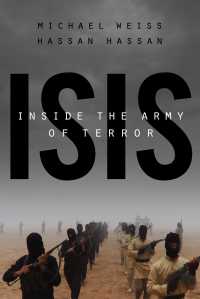
ISIS: Hassan/Weiss versus Cockburn

isis

 Robin Yassin-Kassab:

 'Cockburn vastly exaggerates Western support of the Syrian opposition, when the Americans’ main role was to prevent Arab states from sending the heavy weaponry Syrians so desperately needed to resist Assad’s blitzkrieg. One justification given by commentators for the failure to support the Free Army early on was that Islamists might benefit. Of course, the opposite happened – starved for funds, guns and ammunition, the moderate leadership was unable to win loyalty, or establish central control and discipline. Many of its fighters either despaired and left the country or gravitated towards the much better-funded Islamist brigades. Unhindered, Assad’s barrel bombs and scuds implemented a scorched earth strategy, traumatising Syrians and producing a vacuum in which jihadism flourished.

 “There is no alternative to first-hand reporting,” he nevertheless opines; and “journalists rarely fully admit to themselves … the degree to which they rely on secondary or self-interested sources”. Which brings us to the question of Cockburn’s reliability. In the book he states, in early 2014, “I witnessed [Nusra] forces storm a housing complex … where they proceeded to kill Alawites and Christians.” This alleged massacre was reported by Russian and Syrian state media (Russia is Assad’s imperial sponsor, providing his weapons and defending him at the Security Council); yet international organisations have no record of it. But Cockburn’s original report of the incident, in a January 28, 2014 column for The Independent, states that, rather than witnessing it, he was told the story by “a Syrian soldier, who gave his name as Abu Ali”.

 Because Cockburn’s a much-awarded, veteran correspondent, his opinions are echoed and magnified until they attain the status of fact, even amongst those who should know better. A group of Syrian leftist revolutionaries invited to meet Noam Chomsky in Beirut were astounded to hear the great man explain that their cause was doomed. Chomsky knew because his friend Patrick had told him, and “Patrick knows what’s happening in Syria better than anybody”.

 Increasingly a deluded ‘realism’ calls for cooperation with Assad against the greater jihadist enemy. It was precisely in order to provoke these calls that Assad did his utmost to create a jihadist threat, and why – until June 2014, when ISIS became a threat to his regime – he refrained from bombing the organisation. Even today, when the Free Army and ISIS fight, Assad bombs the Free Army. Former State Department official Fred Hof describes the unofficial ISIS-Assad collusion like this: “Their top tactical priority in Syria is identical: destroy the Syrian nationalist opposition.” '

Friday, 27 March 2015

Regime attack on mosque leaves 15 dead


 'Osama Abu Ibrahim, a field commander of Jeysh al-Fatah, told Anadolu Agency the group had occupied industrial and wheat silo areas near central Idlib following fierce clashes with regime forces.

 Opposition forces shelled regime check points around the city using locally made projectiles and took control of 15 regime security points, he said.

 Central Idlib is under siege by opposition forces which have cut off all supply roads and destroyed four tanks which were on their way to enforce the central area, Abu Ibrahim added.'

Breaking free in the great Syrian prison


 'When we are engulfed by monumental events, no matter how horrifying, sentiments of euphoria can accompany those of revulsion. One has a feeling of having lived an overpowering, grand experience, an exhilarating wave of hyperreality.

 This force, allowing psychological rebirth, will harden the spirits of Syrians against the depravities of Assad rule. It is why Assad’s enemies refuse to surrender, even as their conflict takes myriad turns into darkness. And it is why Iran will likely never triumph in Syria. In their search for emancipation, for a second childhood, Syrians will suffer, but they will also struggle against suffering.'

The Way Syrians Protect Themselves From Snipers


 'Some buses in Aleppo, Syria, have been reconverted to serve as protection from snipers loyal to the country’s embattled President Bashar Assad.'

The new grand alliance in the Middle East


 Nancy Lindisfarne and Jonathan Neale add nothing to our understanding of Syria. They make three references to the armed opposition to Assad, and they are all woefully wide of the mark.

 'Saudi Arabia, and various small gulf states, backed various right wing Sunni Islamist rebel groups against Assad’s Syrian government.'

 No, they have mostly backed the FSA, and all the groups they have supported have been defending Syrians against a murderous government; not the problem here. Complaining about the Islamist character, quite mistakenly in their formulation, could be seen as part of the anti-Muslim prejudice the authors claim to be opposing.


 'Assad’s Syrian government is fighting the Islamic State.'

 As little as they possibly can, as their strategy all along has been to fight jihadis as little as possible, in the hope that they will eclipse the secular opposition and Assad will appear the better option. So they have been engaging in a major offensive, mostly carried by their Iranian and Lebanese foreign fighters, against the moderate opposition in southern Syria, but the only advance in the north-east where ISIS has done a runner.


 'The revolt that began in 2011 united a broad range of Islamist and secular groups in resistance, and mixed local alliances. But by 2014 ISIS, a right wing Islamist group, was the largest army opposed to the governments of Syria and Iraq.

 This does not mean the secular left was unimportant. But it does mean that for a generation now Islamists have been the strongest force in mass movements against American power and against the dictatorships.'

 The broad range of Islamist and secular groups are still fighting Assad, and now have to deal with ISIS too. ISIS are not opposed to the government of Syria, but to the Sunni Muslim communities they are parasites upon. To say that there is now just a battle between the US and "dictatorships" and Islamists, in which the important reality is US bombing, ignores the struggle against Assad's genocide.

Wednesday, 25 March 2015

Aliah Ajamoughli: A proud Syrian


 “One of my family members stood out on a platform on a mosque, asking for people to donate blood, and was shot by a sniper,” Ajamoughli said. “The news segment was a YouTube video that they were showing. Early on in the revolution, when the protests were peaceful, the people captured the deaths of protesters and put it on YouTube. They thought by doing this they could show the world the terrible things of Assad, but they quickly found out the world didn’t care about Assad killing his people.”

Re-stabilizing Syria begins with the departure of Assad

 'The Assad regime now controls only 28 percent of Syrian territory, a military control that does not imply loyalty to it. This percentage continues to shrink daily - as in the governorates of Homs and Hama - the revolution’s most important strongholds. Neutral sources estimate that only 10% of the population remain in support of Assad. This limited control of territory, void of real governance or legitimacy, is maintained through the assistance of blood thirsty sectarian extremist militias, imported from Lebanon, Iraq and Afghanistan, and led by Iranian commanders who issue orders, and roam Syrian from Aleppo to Dara’a.

 The opposition forces have become increasingly aware of the need to put their differences aside in favor of unity and integration. There is also an increasing certitude of victory as the revolution has shown a tremendous ability to adapt to changing challenges and efficiently coordinate revolutionary, political and military efforts. We are ready and willing to engage in any political process that achieves freedom and dignity for our people. We continue to work to unite all components of our society under one national umbrella and to ensure that all Syrians play a role in the transitional period. The transitional process will preserve institutions - particularly the army and security apparatuses - initiate civil peace and transitional justice projects, and begin the reconstruction of Syria.'

Tuesday, 24 March 2015

Assad regime is evil, it must go


 Khalid Amayreh:

 'As to the rampancy of rape, mostly by Assad's soldiers and paramilitary thugs known as Shabbiha, a recent study reported "compelling findings" indicting the regime in this regard.

 The study was conducted by Women Under Siege, along with Columbia University epidemiologists, the Syrian-American Medical Society, and Syrian activists and journalists, who spent the past year documenting and mapping incidences of sexual violence in the war-ravaged country

 According to the study, Assad's forces have carried out 56 percent of all acts of rape. But, the study says, if you include pro-regime Shabbiha perpetrators, the number is closer to 80 percent.

 The study adds: "When it comes to men (who were the victims in 20 percent of the cases tracked by Women Under Siege), the figures are even more staggering. 90 percent of the reported sexualized violence against men was committed by government forces, possibly due to the fact that these tend to occur in detention facilities. Meanwhile, the Free Syrian Army has only carried out 1 percent of the documented sexual attacks."

 The Assad regime is a cancer upon the conscience of humanity. That is why it is an expression of criminal hypocrisy and evil moral duplicity to bomb IS in Syria and Iraq while keeping the Assad regime fully immersed in this orgy of evil.'

Syrian rebels announce offensive against city of Idlib

 'Armed opposition factions announced the campaign to capture the city of Idlib in a message posted online Tuesday. They tell residents the rebels "are at the walls of Idlib" and "have decided to liberate this good town." '

Forget Assad


 Bente Scheller:

 'Already now many Sunnis in the region perceive their lives as less important than the lives of members of minority groups in the eyes of the West. Most victims of regime brutality are Sunnis. The fact that they have received hardly any support against Assad, that the international community however now is even considering him a potential partner against ISIS, could amplify the perception of a Western-Shiite conspiracy against Sunnis. As uncertain as the gain through a co-operation with the regime in the battle against ISIS would be, as certain is that such a co-operation would trigger an influx of new fighters for ISIS – not for reasons of conviction, but simply because Sunnis could turn to no one else for protection against the regime.'

Sunday, 22 March 2015

'You rarely hear any laughter'


 'Asked if he would still protest if he had known how Moadamiyeh would suffer, Ahmed pauses before he answers.

 "I would still protest," he says. "If the siege and the bombs still happened, then so be it." '

Where the uprising began and still lives on


 'Assad has other plans. With an offensive in the South supported by Iran and Hezbollah, he is currently trying to weaken the national resistance and drive moderate rebels into the arms of al-Nusra and IS. Then he can declare his merciless war on Syria's civilian population to be a fight against terror in this region too.

 Instead of simply concentrating on IS in Syria, as it has been doing since the summer of 2014, the West should stop neglecting the origins of the radicalisation: Assad's brutal reign. This goes for the South in particular, where the MOC has long had contact with the counterparts it has been asking for and who are in a position to combat the jihadists.

 However, if they are to do this, they must do one thing above all else: they must lead the fight against Assad. Only as the spearhead of the resistance will the FSA pull the rug from under the radicals' feet. Only when they can do without military support from the al-Nusra Front will the latter lose its significance and attraction.'