Saturday, 12 August 2017

We Crossed a Bridge and It Trembled review

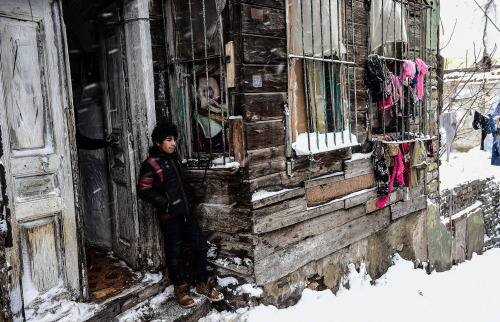
A Syrian refugee in Lebanon.

 Robin Yassin-Kassab:

 
'Everyone talks about Syrians, but very few actually talk to them. Perhaps that’s why Syria’s revolution and war have been so badly misunderstood in the west – variously as a US-led regime-change plot, an ancient Sunni-Shia conflict or a struggle between secularism and jihadism.

 We Crossed a Bridge and It Trembled bucks the trend. Here the story is told entirely through the mouths of Wendy Pearlman’s Syrian interviewees, hundreds of them, from all social backgrounds, Christians and Muslims, Ismailis and Druze, rural and urban, middle class and poor. These best of all possible informants – the people who made the events, and who suffer the consequences – provide not only gripping eyewitness accounts but erudite analysis and sober reflection.

 The introduction, alongside a concise overview of developments from 1970 to the present, describes Pearlman’s method. She interviewed refugees (who are therefore overwhelmingly anti-regime) in locations ranging from Jordan to Germany. And she interviewed them in Arabic, enabling “a connection that would have been impossible had I relied on an interpreter”. The result is testament both to Syrian expressive powers and the translation’s high literary standard.

 These heart-stopping tales of torment and triumph are perfectly enchained, chronologically and thematically, to reflect the course of the crisis. They begin with life under Bashar al-Assad’s regime, “not a government but a mafia”, when children were trained to lie for their family’s security. “It was a state of terror,” says Ilyas, a dentist. “Every citizen was terrified. The regime was also terrified.”

 Assad inherited power from his father in 2000. His crony-capitalist “reforms” meant “the poor got poorer and people got angrier, day after day”. Interviewees recount the 2004 Kurdish uprising and smaller, isolated acts of resistance.


 In 2011, against the background of the Arab spring, decades of frustration exploded. According to Cherin, a mother from Aleppo who speaks like a grassroots poet: “You have an inheritance, and after 30 years you slam it on the ground and shatter it.” State repression only intensified the fury. “The government sent dead to every village,” says Abu Thair, an engineer from Daraa. “The funerals began. And imagine, each funeral becomes a demonstration.”

T he early revolution was marked by cross-sect cooperation, a new sympathy for distant regions and a reinvigorated sense of nationality. “You are my people,” enthuses Waddah from Latakia. “You are extraordinary.” Revolutionaries set up coordination committees to organise and record protests, to try to provide security, then to build makeshift field hospitals (the injured arriving at state hospitals were often murdered). Later, people elected local councils to administer liberated areas – the first experience of democracy in more than 40 years, remarkably under-reported, and an evidential rebuke to those who believe Arabs are culturally unsuited to ruling themselves.

 In response, the regime practised rape and torture. It delivered tens of thousands of peaceful activists into prisons that serve as extermination camps, and simultaneously released jihadists. Ayham, a web developer, complains: “The regime puts all the movement leaders in prison, and then says the movement has no leaders.”

 Curfews were followed by sieges, gunfire and warplanes. The revolution’s militarisation was inevitable, even necessary, but it inevitably brought down a host of curses, from banditry to warlordism. “We need somebody to do the wrong thing in order for future generations to have a life that is morally stable and functioning,” Adam, a media organiser, says, before admitting: “We opened Pandora’s box.”


 Pearlman hears rebel fighters talking of their motivations (houses burnt, relatives abducted) and civilians recounting experiences of bombing, massacres and chemical attacks. Assad deliberately provoked sectarian breakdown; foreign interventions fanned the flames. Global jihadist groups arrived as parasites on the chaos, and some Syrians joined them, because, in one informant’s words: “You are in dire need for a narrative that can justify this futility.” A fighter explains the generalised rage thus: “No country in the world is paying attention to me. Not a single one is doing anything to protect any fraction of the rights I should have as a human on this earth.”

 Now revolutionaries resist the new authoritarians alongside the old. Khalil, a defected army officer, articulates a common sentiment: “We won’t accept another dictator to take [Assad’s] place.”

 High ideals coexist with grim reality. More than half the population have been driven from their homes, and families have splintered. Pearlman hears of the poverty, disease and humiliation of exile. She talks to a woman who kissed the walls of her neighbourhood before she fled, and a mother who made terrible journeys through Europe, ending with her determined journey to Berlin.

 There is certainly hope. Throughout this book, Syrian irrepressibility and resilience are set against the logic of self-immolation and nihilism of “Assad or we burn the country”. It is a book that sheds necessary light and confounds misapprehensions, not least in that it reveals the roles of revolutionary women, usually invisible to the outside.

 A reader wishing for a fuller political and cultural background will consult other works too, but this one contains all the human context necessary, and in the people’s own voices. Syrians, Pearlman writes, are too often cast as “victims to be pitied, bodies to be sheltered, radicals to be denounced or threats to be feared ... it can be difficult to find chances to listen to actual Syrians as human beings”. But she has listened.'
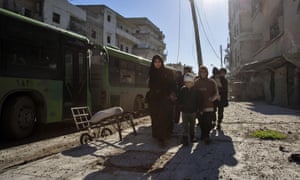
Syrians evacuate Aleppo in December 2016.

Friday, 11 August 2017

Why Trump shouldn't pull the plug on Syrian rebels

Image result for Why Trump shouldn't pull the plug on Syrian rebels

Mohammed Alaa Ghanem:

 'President Trump is making a dangerous mistake if he is ending a CIA program to arm moderate Syrian rebels, as was asserted by the Washington Post last month. His decision will mostly serve to empower Al Qaeda and Iran. The president should reconsider.

 I have tracked the program since its inception in 2013 while serving as Government Relations Director of the Syrian American Council, a nonprofit that advocates for a democratic and pluralistic Syria. I believe that the President’s decision could not have come at a worse time.

 Battles that will determine the strength of Al Qaeda and Iran in Syria for years to come are raging right now. The president’s decision undercuts the good guys.


 The CIA program was never meant to defeat Assad. Known as “Timber Sycamore,” it proposed working with only a few dozen moderate rebels per month (there were around 100,000 rebels overall at the time) and providing them only with basic training and light arms.

 I still remember the day the program was introduced because I received an inside report on the Obama administration’s meeting with senators to introduce it. Most senators were, to put it mildly, skeptical.

 House and Senate Intelligence Committee members rightly asked how such a meager program could succeed. Some wondered if the program was meant only to be a cosmetic substitute for more robust action.

 Obama Administration officials responded that the U.S. needed “skin in the game” to keep regional opposition backers in line and check extremism in the rebel camp. This was a key argument that got the program approved. And this, ultimately, was the program’s main purpose.


 Even by these very limited standards, the program was set up to fail. In early 2014, a highly disciplined coalition of CIA-vetted rebels called the “Hazzm Movement” formed in northern Syria. The group was strongly committed to fighting extremism; they eventually entered into a 3-front war with ISIS, Al Qaeda, and Assad forces.

 I knew the leadership of this group and even arranged meetings for them with the administration to help them gain increased support.

 But the support was not forthcoming. When Hazzm fighters captured enemy tanks, the CIA would not give them the money needed to operate them, so the weapons sat idle. The CIA at one point shipped 36 rifles to a commander who had requested 1,000. When the Hazzm Movement was overrun by Al-Qaeda in early 2015, its commanders reported receiving just 16 bullets per fighter per month.

 A leader of the group later described depending on America for support as “a losing bet.”


 Trump has cited the CIA program’s cost inefficiencies and indirect benefits to Al Qaeda as reasons for ending it. Neither argument is valid in southern Syria, where the CIA and regional partners adapted to failures in the north by devising a new, more egalitarian system of weapons provision that helped moderates to unify.

 A coalition of Free Syrian Army rebels rose to prominence in early 2015 and has dominated southern Syria until today. This coalition has kept Al Qaeda weak in southern Syria; contained suspected ISIS affiliates at the Israeli border; and kept Iran and Hezbollah away from Jordan and Israel through blistering military defeats.

 Further east, affiliates of the coalition have allied with a Pentagon-trained group to expel ISIS from the outskirts of the Syrian capital.

 Even in northern Syria, it is wrong to call the CIA program a flop. Former CIA-vetted rebels remain heavily involved in anti-Qaeda efforts in northern Idlib province, where Al Qaeda hopes to establish an emirate. Groups such as the Free Idlib Army and Levant Front have kept pockets of democracy alive.

 Local rebels waged a major battle against Al Qaeda last month, and former CIA partners north of Idlib are now the best hope to destroy Al Qaeda at its main base in that province.


 That the CIA program achieved successes even though Obama set it up to fail is a testament to the potential of the collaboration. Trump now needs to decide whether he will bring this potential to fruition, or complete Obama’s failures.

 Under Obama, Iran became much stronger in Syria, because Obama’s Syria policy was largely premised on appeasing Iran to secure a nuclear deal. As a result, the CIA program in northern Syria failed to hold Al Qaeda at bay; but Trump’s cancellation of the program might be the finishing blow for moderate forces that will give Al Qaeda its cherished emirate.

 It could also give Iran its ultimate goal: a direct ground corridor to Lebanon, allowing it to supercharge Hezbollah and threaten U.S. allies in the region like never before.

 The CIA-backed “Lions of the East” resistance group is the main obstacle to such a historic Iranian victory at this time. The Lions came under fierce attack from Iranian proxies after contesting Iran’s route to Lebanon through eastern Syria.

 The Pentagon carried out multiple airstrikes against those proxies before backing off; the Lions persevered and last week launched a furious new offensive. With proper support, these forces could cause major damage to Iranian interests in Syria. Without aid it is only a matter of time before they are defeated.


 The idea of Trump’s decision to end support sends a chill up the spine of anti-Assad democrats across Syria. Thousands of Syrians will take it as a signal that America no longer wishes to support their struggle for freedom – be it against Assad, Iran, or Al Qaeda.

 Thousands of fighters who received salaries from the program will no longer have a livelihood, forcing them to join better-funded extremists or leave the field altogether for Al Qaeda and Iran to flourish. The situation will get worse, not better.

 The CIA program was far too limited and was in dire need of reform. But if Trump thinks that he struck a blow against the extremists by pulling the plug on CIA partners in Syria, then he should know that he is only extending Obama’s failed policies.

 A more robust program that gives vetted rebels freedom to target ISIS, Al Qaeda, and Iran alike would better serve U.S. national interests.'


Thursday, 10 August 2017

Yassin al-Haj Saleh's 'The Impossible Revolution'


 Muhammad Idrees Ahmad:

 'Since the beginning of the Syrian revolution over six years ago, there has been a determined effort to smother it both literally and figuratively.

 There is the ceaseless attrition of bullets, bombs, torture, starvation and poison gas; there is the relentless subversion of truth through erasure, distortion, slant and fabrication.

 But in defiance of the terror, through myriad betrayals, regardless of the slander, and in the face of global indifference, the revolution survives. Every time the violence ebbs, the revolutionary flag returns to the street borne by crowds chanting the same slogans that reverberated through earlier, more hopeful days.

 Even in the absence of peace, besieged neighbourhoods have elected local councils, provided social services, educated children, treated the wounded and fed the needy. Under impossible circumstances, the people who stood up against one of history's most murderous regimes persist.


 You would know none of this if your only window into the Syrian conflict is the western media or, worse, its Kremlin counterpart. Syria, for all one can tell from their coverage, is about Islamic State atrocities, Al Qaeda gains, coalition bombings, regime advances, Russian resurgence and CIA manoeuvres.

It is a geopolitical chessboard in which Syrians are mere pawns, denied agency, except in violence; denied humanity, except in victimhood.

 When earlier this week the UN war crimes prosecutor Carla del Ponte resigned over the Security Council's inaction, she saw fit to add: "everyone in Syria is bad now". She said this as the news of the execution of media activist Bassel Khartabil was becoming public, Idlib University was holding free elections, Saraqib and Eastern Ghouta were electing local councils and volunteers from the Syrian Civil Defence were risking lives to rescue victims of the regime's relentless bombings. For del Ponte and her ilk, these people might as well not exist.

 Such is the moral haze in which the debate on Syria has unfolded. And it is this fog that Yassin al-Haj Saleh has chosen to dispel in the ten essays that make up The Impossible Revolution: Making Sense of the Syrian Tragedy.

 In its lucidity, erudition, range and percipience, the book is worthy of a Gramsci. In its method, rigour and predictions, it is an intellectual achievement of extraordinary significance. The book honours the revolution by describing with precision its causes and aspirations and recording with complexity its challenges and achievements. It is the living chronicle of a revolution, a sustained diagnosis, a prophecy and a 'J'accuse'.


 Yassin al-Haj Saleh, one of Syria's most celebrated intellectuals, wrote these essays over a period of five years, from underground in Damascus, Douma and Raqqa, and from exile in Istanbul. Saleh's compelling biography and his colossal sacrifices lend his writings unusual moral authority.

 While still in college, Saleh was arrested by the regime and spent 16 years in its notorious prisons; and, since the start of the revolution, his wife and brother have both been disappeared by jihadis (the latter by IS). Yet, in spite of the personal tragedy, Saleh writes with remarkable dispassion and objectivity.

 The essays in this book tackle questions that most confound audiences in the West.


 The discussions range from the causes of the revolution, the regime's violent repression, the revolution's turn to arms, the rise of the Islamists, the threat of militant nihilism to the question of sectarianism. They are rooted in history but they aren't the usual apologetic narratives of colonial depredation and native passivity. Saleh's interest is in postcolonial Syria, in its initial promise, halting progress, and eventual betrayal under Baathist rule.

 The Baath Party however was merely a cover for what Saleh calls Hafez al-Assad's "neo-sultanic" rule under which the social functions of the state declined, the population became dependent on a new elite through networks of patronage from below, while the security state maintained order through surveillance and terror from above.

 The regime used the logic of sectarianism to keep the population split vertically, so that people at the bottom could only access state resources and services through intermediaries from their own sect. Sectarianism in the regime's hands became a political means of control. It had nothing to do with doctrinal differences; its guiding principle was power.

 In this system kinship become a key principle, money guaranteed access, and together they created the supreme value: power. People at the top of the pyramid were free to expropriate state resources and a legal system was instituted to protect the gains.

 The state functioned on two levels: a "non-sectarian yet powerless visible state" and an invisible "private and sectarian" one. It is the latter that enjoyed "sovereignty over people's fates, internal domestic affairs, public resources, and regional international relations".


 Under Bashar al-Assad the state also replaced its "obsolete, inhumane political apparatus with a glamorous material façade". A regressive and exploitative system was given cover by a purely culturalist notion of modernity with the left-behind blamed for their own immiseration because of their attachment to "tradition".

 Tellingly, when revolution came, virtually all the defections happened in the visible state while the invisible, sectarian state remained cohesive and resilient. Beyond resilience, however, the privatised state also tried to neutralise the revolution's political advantage by forcing upon it a military contest for which it was decidedly unprepared.

 As early as June 2011, Saleh warned against the dangers of this "state of nature": Violence could replace the revolution's positive aspirations with the logic of necessity and desperation. Saleh charges the regime as the primary instigator of violence. But while wary of military confrontations, Saleh does not blame the armed uprising for undermining the revolution.

 Abandoned by the world and faced with the regime's lethal provocations, revolutionary conscience could only hold out so long. Saleh recognises the necessity of armed resistance when the alternative is total annihilation. He also notes that contrary to pacifist dogma, "those who took up arms did not replace the peaceful revolution but rather contributed to its expansion and resilience".

 By July 2011, three months into the uprising, Human Rights Watch had recorded 887 unarmed protesters killed by regime snipers. The Free Syria Army was formed shortly after that. It was partly through the protection of rebel arms that street protests continued to grow (reaching their peak during the summer of 2012). Citizen journalists provided additional protection by filming violations and beaming them out to the world.


 But if Saleh recognises the legitimacy of armed resistance, he is withering in his condemnation of what he calls "militant nihilism" (a term he prefers to "terrorism" which has been diluted of meaning through misuse by repressive states).

 It is neither morally defensible nor practically justifiable because it "necessarily hurts the innocent, owing to its arbitrariness". Even when motivated by real injustice "the 'goal' of terrorism collapses into the very act of rebellion against this condition and into the elimination of enemies without ever achieving anything greater, such as… national independence, or ending poverty, or even punishing criminals among the rulers and their collaborators".

 Saleh was predicting the rise of such nihilism already in May 2012. Without support for the revolutionary forces, he warned, the nihilists will strengthen. "Were a nihilist organisation to somehow come to power", Saleh writes in a prophetic passage, "the result could only be brutal despotism. Not only are nihilist organisations accustomed to indiscriminate violence: their radical withdrawal from the world encourages the cultural and psychological conditions necessary for prohibiting dissent and uprooting any alternative."

 In a section on media activists, Saleh describes them as creating an "objective memory of the uprising". In these ten essays, he has achieved something similar.

 For all its resilience, the revolution in Syria appears headed toward a grim denouement. But in the face of cynical efforts by counter-revolutionary ideologues to rewrite history, Saleh's work will stand as an imperishable reminder of the circumstances through which this impossible revolution endured.'

Wednesday, 9 August 2017

Assad and ISIS are playing one game


 Karam Abo Aljoud:

 'The regime advanced recently in the areas I highlighted with blue, in very quick time with no resistance from ISIS. all those areas were controlled by ISIS. The question is, why the regime keep only a narrow corridor for himself in Hama (next to the arrow)? why the regime is not fighting against ISIS there.

 The answer is that, the regime wants to make it possible for ISIS to go to Idleb, so the regime can claim that ISIS is in Idleb.

 Assad and ISIS are playing one game.'

Exiles despair for city of ghosts

An elderly Syrian sits outside a newly reopened shop selling tablecloths amid the destruction of Aleppo’s old city. Picture: AFP

 'When he speaks of his house in Aleppo, Abu Fares al-Halabi remembers it as it was ­before he fled into exile: the honey-coloured stone arches sweeping over the lower rooms, the breezes coming through the wood lattice windows, and the scent of jasmine in the courtyard.

 Relatives and former neighbours have described the reality now. An outer wall has been ­destroyed by a barrel bomb, opening the way for looters. Much of the neighbourhood is destroyed. “My father wants to rebuild it, other relatives say forget it,” said Mr Halabi, 31, of the house where he grew up in Aleppo’s old city.

 “We sent a carpenter to repair the door, but as he was doing it a local official came past and told him not to bother, as it will only be broken into again by the looters. Then the official helped himself to one of our antique hookah pipes.”


 Aleppo’s ancient heart is home to a huge souk, an imposing citadel, a famous mosque, and a warren of alleyways full of houses and businesses.

 Before the war it was home to an estimated 120,000 people, many of whom fled as the area ­became the epicentre of battles between rebel forces and the Syrian regime. After three and a half years of conflict, the city was ­recaptured by President Bashar al-Assad’s forces and allies in ­December, but much of the area that was once controlled by the rebels remains in ruins.

 Mazen Samman, UNESCO’s program co-ordinator in Aleppo, said last week that detailed plans exist for its full restoration. “Our vision is to rebuild the old city ­exactly as it was before the war, with the same stones where we can,” he said. Former residents say they are dubious of such claims.


 “What’s UNESCO’s plan, to build for me and not consult me?” said Mr Halabi, whose family is in exile in Europe and the US. “There are the monuments, but most of the old city is people’s homes. We are part of the heritage. What is their plan for us?” The mistrust partly stems from the fact that UNESCO can work in Syria only with the blessing of Assad, whose forces are responsible for most of the destruction.

 Many abandoned homes have been requisitioned by supporters of the regime, or squatted by families who lost their homes in the fighting. A second property owned by Mr Halabi’s family has been taken over by a family known for their connections to Assad; despite appeals to the authorities, the family has been told they cannot be evicted. Even those who stayed often lost the title deeds to their properties and cannot return to begin rebuilding.

 “So many gangs and shabiha (pro-government paramilitaries) are in charge. We still cannot visit freely,” Ahmed, 56, a textiles merchant who used to supply manufacturers all over Syria from his shop next to the 12th-century Umayyad Mosque, said. He fled in 2012, and returned to find his shop destroyed. “Aleppo is not the same without its old city and businesses. I hope that we will be able to rebuild it without anyone’s help,” he said.


 Of those who fled abroad, some choose to stay in exile, fearing retribution from the regime. The threat of conscription into the army means that there is a dearth of young men in Aleppo — the people who would do the bulk of the reconstruction work.

 For those who do want to return, the cost of the paperwork at a Syrian consulate has rocketed to $US400 per person. Some observers fear the void could be filled by new residents and investors who care little for the old character of the city. “There are plans available of the footprint of the old city, and there have been architectural surveys,” said Michael Danti, a professor of archeology who worked in Syria for two decades before the war.

 “However, to say those plans can be used to rebuild historic neighbourhoods where there is only rubble and desolation is like saying you could rebuild clear-cut sections of the Amazon using blueprints. One of my biggest fears is that the post-conflict redevelopment will attempt to sweep away all memory of the hundreds of thousands who perished and the millions who fled and might never return. If so, Aleppo will ­become a city of ghosts.” '


 Note 11/7/25, link broken.

Syrian Names Immortalized in Tomato Sauce and Blood


 'Under the clinical white lights of a Maryland conservation center on Tuesday, Mansour Omari carefully laid out five scraps of worn material that have traveled within the collar of his shirt — past Syrian government forces and across oceans — covered in blood and rust, and in the fading names of the disappeared.

 A human-rights activist, fighting for freedom of speech and chronicling the missing, Mr. Omari was arrested in February 2012 in his Damascus office and went on to spend about a year in a series of prisons, including nine months in a brutal facility under the supervision of Maher al-Assad, the brother of President Bashar al-Assad of Syria.

 It was in that fetid underground jail that Mr. Omari and four of his fellow inmates set out to record the names of all 82 prisoners there, in the hope of informing their families and documenting the atrocities.

 “When I was inside, I saw myself, what I was documenting,” he said. “I saw it firsthand. I felt it was my duty, actually.”

 The resulting lists, which included the prisoners’ contact details, were sewn into the collar and cuffs of a shirt and smuggled out by Mr. Omari, who was the first among the group to be released.

 The scraps of material are now being lent to the United States Holocaust Memorial Museum for an exhibition in Washington.


 Back in that Syrian prison, with ruthless government guards watching over them, Mr. Omari and his friends had set about quietly improvising writing materials: Small panels of fabric were cut carefully from the backs of their shirts. Broken chicken bones were used as pens. And when the tomato sauce from their rations proved too thin for makeshift ink, the friends used blood from their ailing gums mixed with flakes of rust from the prison’s iron bars.

 “We did it almost secretly. We didn’t want other people to know because there is a danger that some of them would tell the general,” Mr. Omari, 37, said, explaining how groups of cellmates form close friendships in the confined quarters.

 “We were going to some groups, sitting with them, asking for their names,” he added.

 Conservationists at the museum are preparing to study the fabric and are researching how best to preserve it. The chief conservator, Jane E. Klinger, said her team was looking to construct containers to hold the documents — perhaps from plexiglass fitted with ultraviolet lights — which have so far been buried within a notebook Mr. Omari bought at the civilian prison to which he was moved in late 2012.

 “That’s a very good solution for a lay person because they’re protected, flat, there’s an amount of cushioning,” she said, using white gloves and small metal tools to look through Mr. Omari’s notebook.


 On Tuesday at the museum’s David and Fela Shapell Family Collections, Conservation and Research Center, about an hour’s drive from Washington, Mr. Omari unveiled the names of the prisoners to a small group of conservationists.

 Flipping through the notebook’s worn pages, he revealed memories, all dated carefully on the top of every page.

 Scribbled neatly on the book’s tattered front are the words “la dolce vita,” or “the good life.”

 “I don’t take it out so much,” he said in slow, hushed English. “It’s so emotional for me when I see it.”

 “I was writing it for myself, trying to see that life is beautiful even after all that happened,” he added.

 Some pages are filled with Arabic, lessons in journalism and poetry that Mr. Omari taught an illiterate prisoner. There are also lines of basic English — “She knows her nose is big” — as part of the language instruction he provided for others.

 “You are in a place that you have all the time. You have nothing. You are doing nothing. You have nothing to do. So we had a lot of activities,” he said, explaining how inmates created “televisions” by holding up a sheet and taking turns to perform before it.

 “I convinced people. We are detained. We don’t know how long we will be there,” he added. “But when you are released, if you have a language, that will help you.”


 Mr. Omari, who now lives in Sweden, estimates about 100,000 people have been held by government forces in Syria, where half the population is thought to have been displaced since the war began more than six years ago.

 Scraps of documentation are slowly emerging, including letters from inmates and more names of missing people, as well as photographs smuggled out of the country by a Syrian police photographer that show widespread torture.

 Mr. Omari was arrested for his contact with foreign entities, among other things. And though the reasons for his release remain unclear, he says pressure from overseas is likely to have contributed to it.

 This week, the family of Bassel Khartabil, another well-known activist, shared news that he was executed in 2015 shortly after being imprisoned.

 Along with trying to share stories of the atrocities that are occurring in the Syrian war, Mr. Omari is calling on foreign powers to intervene in the conflict. He says that much of the public shares his view.

 “They hate so much Obama because he drew a red line, and he didn’t interfere,” he said of former President Barack Obama. “They hate Obama so much, really.”

 While President Trump’s decision to launch a missile strike in Syria in response to a chemical weapon attack in April was met with some criticism overseas, Mr. Omari said that among the Syrian public, “almost everybody was happy.” '


Monday, 7 August 2017

Syrians in Istanbul worry about being caught in the middle

Image result for Syrian refugees look out from an evacuated house the Kucukpazar district of Istanbul, Turkey. (Gurcan Ozturk / AFP/Getty Images)

 'The night of last year’s attempted coup in Turkey, Alaa Khaldi considered packing his bags.

 The 31-year-old Syrian refugee from Damascus, who fled to Turkey in 2015, was worried that Turkish President Recep Tayyip Erdogan would fall. Erdogan’s Islamist government has opened Turkey’s doors to more than 3 million Syrians fleeing the civil war in their country, and Khaldi thought a new government might roll up the welcome mat.

 “The main party is with us,” Khaldi said, referring to Erdogan’s Justice and Development Party, or AKP. “What happens after them, we don’t know.”


 Erdogan survived the attempted coup July 15, 2016, and has amassed more power, imposing a seemingly indefinite state of emergency and deeply polarizing Turkish society. But Syrians living in Istanbul worry that the widening political divisions will put them at risk, particularly as their numbers continue to grow while Europe blocks refugees from entering through Turkey.

 “If the regime changes, we would definitely be at risk,” said Khaldi, who works at a software company in central Istanbul’s Fatih district, a densely populated neighborhood with a large Syrian population.

 Erdogan has cast Turkey’s acceptance of the refugees as a benevolent project toward fellow Muslims — and particularly Syria, which shares a history with Turkey as both were under the rule of the Ottoman Empire until 1922.

 While Europe has tried to stop the flow of refugees and some European countries have been openly hostile to arrivals, Turkey has absorbed the influx with relatively little unrest. The vast majority of Syrians who work do so under the table, but Erdogan has offered a limited number of work permits that could raise Syrians’ wages and even floated the idea last year of offering Syrians the chance to apply for Turkish citizenship.

 That triggered a backlash among many Turks, even Erdogan’s supporters. His announcement came amid a smattering of news reports alleging the involvement of Syrians in various crimes, and soon the hashtag, “I don’t want Syrians in my country,” was trending on Turkish social media.


 Erdogan’s political opponents — who castigate him as an increasingly authoritarian figure who has imprisoned tens of thousands since the failed coup — have also voiced concern about the large Syrian presence.

 Kemal Kilicdaroglu, who has emerged as perhaps the most influential opposition figure after leading a massive anti-government demonstration in July, has called for a national referendum on the Syrian citizenship question and said that a growing Syrian population would make it difficult to identify suspected militants among them.

 Erdogan has not changed his policy, saying in a speech in late July that anyone who brought up stories of Syrians causing unrest in Turkey was effectively a terrorist.


 About 300,000 Syrian refugees live in 26 camps run by the Turkish government, with the vast majority of the overall population clustering in cities like Istanbul, Ankara, Izmir and Gaziantep, near the Syrian border.

 Syrians account for 3.6% of Turkey’s population, and their presence is obvious in areas like Fatih, where Syrian sweet shops and fast-food joints line the sidewalks and signs on storefronts are printed in Arabic script.

 Such neighborhoods are undeniably signs of Istanbul’s cosmopolitanism, but experts also say there are underlying tensions and misunderstandings, particularly because most Syrians don’t speak Turkish.

 “In the beginning, the idea of a common civilization really smoothed things over, but in the long run we’re seeing these Syrian ghettos develop, especially in major cities,” said Selim Koru, an analyst at the Economic Policy Research Foundation of Turkey.

 “People in Syrian ghettos are going to be resistant to learning Turkish, adjusting to Turkish culture and traditions. So in the medium to long run, that could present some problems,” Koru said.


 At a small grocery store in Fatih, a 37-year-old shopkeeper from Damascus, who gave his name only as Kinan, said recently that nearly all his customers were Syrian. Turks probably wouldn’t patronize his store if they knew he was Syrian, he said.

 “They accept us, but they don’t really like us,” he said.

 A medical engineer who fled Damascus in early 2016, Kinan lives in an apartment in Fatih with five other Syrian refugees. Since clashes broke out in May between Turks and South Asian migrants in another part of the city, Kinan said he is careful when he rides public transit not to speak Arabic.

 “Day after day it will become worse for us, this is my fear,” said Kinan, who works to send money to his wife and son in Damascus. “On social media, you see stories of Syrians being attacked, even killed in Turkey. They feel we are taking their jobs. They will become less accepting of us.”


 At a Syrian chicken restaurant along Fatih’s main drag, 15-year-old Hassan Sakka from the Syrian city of Aleppo showed a scar on his ear from a fight he’d had that week with a Turkish neighbor who he said had tried to shake him down for money. The neighbor’s reasoning, Hassan said, was that he didn’t have a job while Hassan and his cousin did.

 “The relationship between Syrians and Turkish people is just about work. There is no friendly relationship,” said Hassan’s cousin, Haytham Mahmoud.

 The 26-year-old works in a factory assembling boxes for about $350 a month alongside a dozen other men, all Syrians, to send money to his parents and two sisters in Aleppo.

 “There is no friendly relationship,” Mahmoud said. “Here we just eat, sleep and work. Any of us would love to go back to Syria.”

Image result for Syrian refugees look out from an evacuated house the Kucukpazar district of Istanbul, Turkey. (Gurcan Ozturk / AFP/Getty Images)

‘This is the chance the war gave us – to empower women’


 'In the early, heady days of the Syrian revolution, opponents of Bashar al-Assad’s regime and advocates for human rights saw an opportunity. “Women were extremely active and present,” says writer and journalist Samar Yazbek. But as the war escalated, some of this hope was lost. “The war became extremely violent and women’s rights became a secondary issue. But despite the horrifying intensity of the war, there are still women activists working to create life and maintain a civil society, both within the heart of war and as refugees.”

 These activists are fighting to ensure that women have a place not just at the negotiating table, but in post-war Syria. As the chaos of war causes major social upheaval, these women are pushing for girls and women to be empowered, and to have equal access to education and representation – in keeping with the UN’s sustainable development goal 5, which points out that such changes benefit humanity at large.

 In 2012, Yazbek won the Penn Pinter prize, a prestigious literary award. She used the money to start Women Now for Development, one of a number of organisations trying to challenge traditional patriarchal norms. Initially, the work revolved around helping women to support themselves financially. As violence intensified and the revolution became militarised, it adapted to protect women’s status and to support them through displacement. “I wanted to help build a democratic society,” says Yazbek. “It seems very far away now, but the ambition is to create pockets of civil society that can link up together to rebuild Syria after the war.”

 Even in the relative normality of life before the war, it was clear that women were suffering from discrimination. In November 2011 a UNFPA report (pdf) found that one in three women in Syria experienced domestic violence. Several Syrian laws clearly disadvantage women; the penalty for “honour” killing is softer than for other murders, and there is no legislation that specifically prohibits gender discrimination. The Syrian family code limits a woman’s financial rights within marriage if she works outside the home without her husband’s consent. The Syrian regime has at times been cynical about its engagement with women’s rights, presenting itself as a safe option compared to the rank misogyny of extremist groups. This has often been hollow, for instance, using women as spokespeople while keeping them out of roles of real influence, and failing to take any action on discriminatory laws. And Yazbek points out that in areas of Syria held by Isis and other religious factions, the situation for women has drastically worsened. “We were already fighting against patriarchy and dictatorship before the war. Now we have to fight not only that, but also religious extremism.”


 Women Now runs seven centres – two in Lebanon and five within Syria. Starting as a small support group for a few families in rebel-held territory in Syria, it has expanded to become a major women’s network. In addition to providing psychosocial support, skills training (in English and IT among others), and economic empowerment, it has a clear political goal: getting women’s voices heard – from the family setting to international peace talks. “We try to educate women about their rights, and spread awareness,” says Ola El-Jindi, a programme manager at the NGO. “This is the chance the war gave us – to empower women. If we didn’t use it well, it would be another disaster of war. We must use this opportunity to do better things.”

 At the Women Now centre in Chtoura, a town in Lebanon’s Bekaa Valley, women and their children pass in and out all day; the centre acts as a safe space for women to express their ideas, engage with politics, and fight the loneliness that can be a central part of the refugee experience. In a room adjacent to the main office, two Syrian women, Noor and Hala, told me about their dreams. “I’d like to set up a business,” says Hala, who wears a full niqab. “My ideal would be designing evening gowns.”

 “I want to get a job to send my kids to a good school,” says Noor, who is learning English at the centre. “Now I feel I have a purpose, I am not only serving my family and my kids, but also doing something for myself.”

 There is clearly a large gulf between women living as refugees, in challenging economic situations, and the more privileged women already engaged in Syrian politics. “We aim to empower women in their daily lives and make them capable of representing themselves,” says El-Jindi. “It is hard to get women’s voices heard – there is a big gap between the women in Geneva and the women here at this centre. But our first goal is not only participating in international peace talks. It is to make women empowered enough to participate in general.”


 In many places around the world – including Britain after World War Two – war can be a turning point for female empowerment. As men are absent, fighting or killed, women move out of their traditional roles. This is true inside Syria, where women are keeping society going in the midst of war – working as doctors, teachers, nurses and advocates. In places like Lebanon – where many refugees don’t have the legal right to stay – men are more likely to be stopped at checkpoints than women, meaning their movement is restricted.

 “In Arab culture, the man is often the breadwinner, has the decision-making power in the family, and spends more time outside,” says Chiara Butti, Lebanon country director for the peace-building charity International Alert. “When they have to leave their country they become very frustrated sitting in the camp. For women, it’s often easier to move around. So they can work in the community, meet other women. After a few years, they are identified as influential people in the community – they’re able to bring people together and represent their community.”

 Of course, refugee women face a whole host of gender-specific challenges – not least heightened risk sexual assault or exploitation, and caring responsibilities for their children. Engaging in international peace talks can seem a whole world away; some face resistance from male members of their families when they start to participate in politics.

 But recent history shows that women’s presence at international talks is vital. In 2014, when Syrian women were still excluded from the process, the Women’s International League for Peace and Freedom (WILPF) held a conference in Sarajevo bringing together Syrian and Bosnian women. The Bosnian party shared their experiences of being left out from the 1995 Dayton peace negotiations, where no women were present at all. According to WILPF, the exclusion of women from Bosnia’s peace process “has had concrete consequences both for the society as a whole and also for women … and their ability to be recognised as agents of change in later processes.” This is not unique to Bosnia; in 2012, UN Women published a review (pdf) of 31 peace processes, showing that only 4% of peace agreements had women as signatories.

 The top negotiating teams for both Syrian opposition and regime are entirely male – but in March 2016, a Syrian women’s advisory board attended Geneva talks for the first time. “All of us are women who regularly face a room full of men attempting to resolve a conflict fought mostly by men,” Marah Bukai, one of the committee members, wrote recently. “In our own ways, we persist in taking on a political role that many people in our society do not accept.”

 Women Now wants to ensure that grassroots concerns are reflected too, and runs consulting sessions with women, supporting them to write recommendations and demands, which they then feedback to the opposition commission and the team of Staffan de Mistura, the UN envoy to Syria.

 “There is nothing good about the war,” says El-Jindi. “Women are forced to relocate, and work as well as looking after their families. We have been forced to change. We didn’t choose it. But now, we are not going to go back to our previous position.” '

Friday, 4 August 2017

Hezbollah: Then & Now


 'As the chaotic events continue to unfold throughout Syria, one militia in particular has been placed into the spot light; Hezbollah. The Shiite Islamic guerrilla movement, founded in 1985, has gained much popularity and support since then. With Lebanon’s diverse population a good one third of the nation constitutes an overwhelming Sunni Muslim demographic along with one third Christian, particularly Maronite Catholic, and one third Shiite Muslim as well. Due to much of the violence and political turmoil Lebanon has faced over time, Hezbollah sees itself as an emerging movement standing up for the oppressed and calling for national unity under the pretext of rejecting Israel’s occupation of both Palestine and Lebanon’s southern territories. Has this really been the case, however? Or has Hezbollah simply carried out Iran’s broader agenda in order to establish creeping Shiite hegemony throughout the region? Is Hezbollah’s rhetoric of so-called “unity” truly sincere? Or is it a misleading call to submerge others into their propaganda?


 In recent years the deployment of Hezbollah militants to Syria from Lebanon has only ignited sectarian tension since the beginning of the Syrian revolution which began in 2011. According to Hezbollah, it had initially presented itself inside Syria in order to protect revered Shiite shrines, or so they say. However, Hezbollah has begun to fan the flames of war thus accelerating and resurfacing the on-going political, and even Sunni-Shiite theological tension, within the region. Prior to the establishment of ISIS, Bashar Al Assad’s national Syrian Arab Army had massacred over 200,000 innocent civilians, with the assistance of Hezbollah and the Iranian Revolutionary Guard Corps under the pretext of fighting terrorism; a regime that was established by French imperialists and legitimized by Iranian Shiite clerics upon an overwhelmingly Sunni majority population. Although it may seem as if the militia’s alliance to Assad would strike national and regional unity, Hezbollah’s political and militant support for the regime has only brought about discord, a bloody massacre and deteriorating support from Sunni Muslims and Arab Christians alike.


 A significant characteristic of Hezbollah that should be highlighted is its complex history. Despite Hezbollah’s and Iran’s current anti-Israeli rhetoric, the Shiites of Lebanon were quite comfortable with Israel’s establishment throughout the 1982 Israeli invasion of Southern Lebanon. The initial invasion of Lebanon was to root out the PLO (Palestinian Liberation Organization) which was present in Lebanon at the time. When Israel decided to extend their presence in the Southern Lebanese territory, Khomeini’s establishment of Hezbollah in Lebanon turned into what is now known as the “Islamic resistance of Lebanon” against the Israeli occupation. Interestingly enough, Iran was a close ally of Israel prior to the 1979 Iranian revolution. So what changed? Shiite Islamists overtook what was meant to be a secular economic reformation in Iran leading to much enmity towards Israel drawing upon the sentiments of Shiite cleric Navab Safavi in 1954 towards the Palestinian cause. This seems to be quite hypocritical when taking the events of the Iran Contra into consideration. How can one oppose the United States and Israel chanting the “death to America, death to Israel” slogans in the streets of Tehran all when purchasing weapons from them? The events of the 2006 summer war between Hezbollah and Israel also indicate the hypocrisy of Hezbollah. Every so often, Hassan Nasrallah, secretary general of Hezbollah, will conduct speeches that seem uplifting and motivating in an attempt to mobilize and boost the morale of his supporters. After Israel declared a cease-fire that summer, Hezbollah proudly championed itself to the rest of the Arab world as heroes and liberators. Hezbollah also promised to retaliate against Israel with 30,000 rockets had it continued to attack Southern Lebanese territory or Palestinian territory. In late 2008 and early 2009, Israel carried out a series of aggressive attacks known as Operation Cast Lead on Gaza yet Hezbollah was nowhere to be found.


 So why are Hezbollah and Iran so adamant about their resistance against Israel? Frankly, it is simply a distraction from Hezbollah’s militant presence in Syria. Hezbollah desperately uses Israel as a distraction while in all actuality it cannot afford to fight a war on two fronts; one against Israel and one in Syria. The fact of the matter is, there is no purpose in Hezbollah reiterating it’s anti-Israel rhetoric to the rest of the Arab world considering the fact that the Sunni-Shiite tension has been ongoing for centuries whereas the Arab-Israeli conflict has only recently emerged within the last century. Shiite Hezbollah, as well as Iran, have only recently submerged themselves in the conflict within the past 38 years. Furthermore, the Arab-Israeli issue has been particularly a Sunni Arab-Israeli issue. So why get involved? To establish and legitimize Shiite regional hegemony, of course. Saudi Arabia, a major Sunni regional actor, is seen by many Arabs in the region as a disappointment due to the lack of aiding the Palestinian cause and its alliance to the United States. For both, Iran and Hezbollah, this is seen as the perfect opportunity to act as the upholders of the Palestinian cause and declare themselves as the heroes and liberators of Muslims, Sunnis and Shiites alike. Overtime, however, their true colors have emerged with their support for the tyrannical Syrian regime, their loyalty to Iran, and their militant activities within Syria. Furthermore, if the Assad regime falls to Sunni rebels, essentially this would mean the end of Hezbollah’s source of aid clearly displaying its dependency upon the Syrian regime. Hezbollah is now faced with difficult and complex circumstances that can no longer allow for it to defend a Sunni Palestine all while trying to maintain its support for Shiite Iran and Bashar Al Assad. Eventually, Hezbollah will have to sever ties with one or the other.'

Thursday, 3 August 2017

Free and just Syria for all Syrians


 'Mr. Staffan de Mistura
United Nations Special Envoy for Syria
CC:
UN Secretary General
Members of the UN Security Council
Envoys of the International Syria Support Group
EU Ambassadors to the Political and Security Committee

 2 August 2017

 Your Excellency,

 Following the seventh round of peace negotiations, we write to you on behalf of the undersigned Syrian civil society organisations who work every day under unbearable circumstances to improve the living conditions of millions of Syrians. We represent the voices from the ground and our work across the country in the fields of medical and humanitarian assistance, education, freedom of expression, youth and women empowerment, and accountability and justice proves again the fundamental role Syrian civil society plays as a champion for a democratic and inclusive Syria.

 As a vital resource for the Syrian population trapped between a tyrannical regime and the brutality of extremism, Syrian civil society organisations strongly support any efforts to bring an end to the Syria conflict. This is why many of our representatives have participated in the intra-Syrian peace talks within the framework of the Civil Society Support Room and have been active in supporting the Geneva peace talks between the Syrian opposition and the Syrian regime.

 Sadly, the Geneva process has delivered neither peace nor protection to the Syrian people who are increasingly disillusioned with a process that continues to fail them. We are keen to reverse this trend as without the support of Syrian civil society no political deal will be either sustainable or legitimate, and right now the current process is losing our support. Syrian civil society’s priority is to achieve an inclusive transition to a free and democratic Syria. We are all united around this outcome which defines the basis of the Geneva peace process as set out by UN Security Council Resolution 2254 and as reiterated in your mandate as UN Special Envoy for Syria.

 We expect all parties in Geneva—including you—to work for this purpose and engage in serious negotiations. The time consumed on discussions around process and representation, at the expense of a credible and realistic political deal for transition towards democracy, is not only wasting precious time but it is also undermining the international community’s efforts to fight terrorism in Syria. Syrian civil society activities are essential in the fight against extremism. Moderate voices—as we represent—have the power to push back against the extremist forces and fill the vacuum on the ground. But to be able to do so, we need the international community to protect our ability to assist and serve our people. This is why we need the Geneva process to prioritise the protection of civilians and deliver meaningful negotiations that lead to peace for Syria.

 From the onset of the Geneva talks we have pressed for an active role in shaping the process given our links to the ground. As a result we continue to welcome efforts by the Syrian opposition to broaden its membership as long as it shares our purpose of achieving a political transition that is in compliance with international humanitarian law. But many members of civil society are troubled by some international actors’ attempts to dictate who sits around the negotiation table. For the Geneva process to be truly inclusive and Syrian-led it must serve the Syrian people’s aspirations first and foremost for a transition towards a democratic and free Syria. Allowing the priorities and direction of the process to be shaped by international actors has only weakened the process and diverted it from its central function.


 As Syrian civil society representatives, we therefore call on you to:

 1. Ensure that the Geneva process serves the interests of Syrians, first and foremost, and is not driven entirely by international actors. This requires a re-focus of the Geneva talks onto transition, as per UNSCR 2254. The international community, including the Permanent Five members of the Security Council, have confirmed the principal aim of the Geneva process is transition. To achieve this aim we call on you to use your authority to effectively hold to account any party at the negotiations that continues to stall and undermine the Geneva process.

 2. Draw from the legitimacy and unique contribution of Syrian civil society to ensure a sustainable political agreement for Syria. This includes using civil society’s expertise on the four baskets to unlock progress in the talks and move to concrete discussions towards transition. Only Syrian civil society can create the broad buy-in from the ground for any political agreement.

 3. Demand the enforcement of UNSCRs that call for the protection of civilians to make the Geneva process viable. To do so, we urge you to press the parties to the conflict and especially the backers of the Syrian regime to enforce a sustainable nationwide ceasefire with a UN-led monitoring mechanism and credible enforcement. This is clearly illustrated by the regime’s and Russia’s ongoing violations of previous commitments, including from Astana, as well as by the unlawful killing of civilians due to counter-terrorism operations of the anti-ISIS coalition. Civil society organisations active on the ground are ready to cooperate with a credible and impartial monitoring system but we need you, the UN, to assert your role and ensure the impartiality of the ceasefire monitoring.

 4. Ensure that concrete progress on humanitarian access, the detainee file and forced displacement is at the heart of the Geneva negotiations. In particular, we call on you to fulfil your mandate and ensure progress on the detainee file including by securing (i) a comprehensive plan for the release of detainees beyond small-scale prisoner exchanges; (ii) information about the fates of all Syrians forcibly disappeared; (iii) access by international monitors to all detention facilities; and (iv) a halt to execution orders, particularly in regime security and military facilities, as well as in those run by armed groups.


 As UN Special Envoy for Syria you can rescue the current failing Geneva process and compel serious negotiations that serve the needs and demands of the Syrian people. The undersigned Syrian civil society organisations stand ready to assist you in this effort, but we need you and the international community to implement a credible process that will enable us to build a democratic, free and just Syria for all Syrians.


 Signed,

1. Syrian American Medical Society
2. Syrian Center for Media and Freedom of Expression
3. Shaml CSOs Coalition
4. Kesh Malek Organisation
5. Women Now for Development
6. The Syrian Network for Human Rights
7. Violations Documentation Center
8. Baytna Syria
9. The Day After
10. Union of Medical Care and Relief Organisations
11. Syrian Legal Development Programme
12. Syrian Nonviolence Movement
13. Watanili
14. Jasmine Dream
15. Start Point
16. Sawa Foundation
17. Sawa for Development and Aid
18. Basamat for Development
19. The Working Group for Syria
20. The Working Group for Syrian Detainees
21. Rethink Rebuild Society
22. Albab Coordination
23. Local Development & Small Project Support
24. Foundation of Syrian Civil Society Organisations
25. Syrian American Council
26. Zaytoon
27. Zaad
28. Mohamed Khalili
29. Free Syrian Lawyers Association
30. Badael Foundation
31. Sonbola Group for Education and Development
32. Najda Now International
33. Noha Alkamcha
34. Alaa Basatneh
35. Sana Mustafa
36. Peace and Justice for Syria
37. Syrian Association of Yorkshire
38. Syria Solidarity UK
39. Scotland4Syria
40. Doctors Under Fire
41. Guernica 37 International Justice Chambers
42. Ministry of Local Administration
43. Council of Free Quneitra District
44. Council of Free Daraa District
45. Union of Free Economists in Daraa
46. Directorate General of Civil Status in Daraa and Quneitra
47. The Free Directorate of Real Estate in Daraa
48. The Free Directorate of Transportation in Daraa
49. Directorate of Family Affairs in the Southern Province
50. The Free Directorate General of Irrigation in Daraa and Quneitra
51. Union of Free Engineers in Quneitra
52. The Free Lawyers Union in Daraa
53. Syrian Women Association for Development in Quneitra
54. Office of Documentation and Civil Status in Bosra
55. Union of Agricultural Engineers in Quneitra
56. The Free Lawyers Union in Quneitra
57. Office of Documentation and Civil Status in Swisah
58. Office of Documentation and Civil Status in Hieran
59. Directorate of Enkhel
60. The Revolutionary Council in Enkhel
61. The Enkhel Judiciary
62. Office of Documentation and Civil Status in Nawa
63. Office of Documentation and Civil Status in Tafas
64. Association of Enkhel Ajyal Schools
65. Office of Documentation and Civil Status in Hirak
66. Office of Documentation and Civil Status in Al-Jiza
67. Local Council of Enkhel City
68. The Public Institute for Grains – Free Daraa Branch
69. Syrian Women Dawn Association – Hawa’
70. Voice of Women Association
71. Syrian Women Peace Association
72. Office of Documentation and Reparations (Destroyed Houses)
73. Free Doctors Union in Daraa
74. Ghadir Al-Bustan Council
75. Al-Rafid Council
76. Al- Bouweidah Council
77. Nab’ Al-Sakhr Council
78. Al-Qasibah Council
79. Swisah Council
80. Kudnah Council
81. Beer Ajam Council
82. Jabbatha Al-Khashab Council
83. Council of Displaced Persons of Quneitra from Damascus
84. West Daraa Council
85. Al-Kahtanya Council
86. Um Batneh Council
87. Masehara Council
88. Juba Council
89. Al-Coum Council
90. Khan Arnabeh Council
91. Haoud Al-Yarmouk Council
92. Moukhayam Daraa Council
93. Kanaker Council
94. Council of Sa’sa’ in Damascus Countryside
95. Al-Mal Council
96. Deir El-Adas Local Council
97. Kafr Shams Local Council
98. Local Council of the Occupied City of Sheikh Maskin
99. Local Council of the Displaced from Haoud Al-Yarmouk
100. Saida Local Council
101. Deir Maker Council
102. Dourin Council
103. Ghassem Local Council
104. Msikah Local Council
105. Mahja Local Council
106. Da’el Local Council
107. Nassib Local Council
108. Akraba Local Council
109. Karak Al-Sharqi Local Council
110. Al-Boeer Local Council
111. Nimer Local Council
112. Ayb Local Council
113. Council of the Lajah and Houran tribes
114. Tafas Local Council
115. Al Faqi’ Local Council
116. Nawa Local Council
117. Local Council of Sharae’ Village
118. Jabal El-Arab Tribal Council
119. City of Azra’ Local Council
120. Town of Heit Local Council
121. Elemtaih Village Local Council
122. Al-Sahwah Local Council
123. Al-Na'imah Local Council
124. Deir Al-Bakht Local Council
125. Almah Town Local Council
126. Al-Jiza Local Council
127. Umm Al-Ausaj Village Local Council
128. Jebab Local Council
129. Al Sheikh Saad Local Council
130. Ibte' Local Council
131. Kfar Nasig Village Local Council
132. Al-Ghariyya Al-Sharqiya Local Council
133. Zamrain Village Local Council
134. Melihah Al-Atash Village Local Council
135. Enkhel Local Council
136. ‘Odwan Local Council
137. Al-Bakar Local Council
138. Syria Relief Network
139. Civil Defense in Nawa City
140. Security Office in Nawa
141. Kahil Local Council
142. Local Council of the Northern Lajah Sector
143. Jassem Local Council
144. Namer Local Council
145. Al-Malyha Al-Gharbiah Local Council
146. Al-Aalya Local Council
147. Al-Taybah Local Council
148. Naheta Local Council
149. Busra Al-Harir Local Council
150. Revolution Command Council in Enkhel City
151. The Free Directorate of Religious Affairs in Daraa
152. Directorate of Family Affairs in Daraa
153. Union of Veterinarians
154. Syrian Center For Arbitration & Conflict Resolution in Nawa City
155. Al-Omariah Commission for Transitional Justice
156. El-Shaheed Khalaf El Kharsan Hospital
157. The Free Syrian Teachers Union
158. The Syrian Commission for Media
159. Al-Jebayya Center for Studies in Nawa
160. Agricultural Engineers Union in Daraa
161. The Free Engineers Union in Daraa
162. The Free Directorate of Health in Daraa
163. The Free Directorate of Education In Daraa
164. The Free Directorate of Statistics in Daraa
165. Nawa Media Institute
166. Bidhrat Nama’ Institute
167. Center for Legal Consultation in Daraa
168. Revolution Command Council in Daraa
169. Abna’ Al-Shuhadaa School in Nawa'

We have the right to be free

Oum on the right at a rally in East Aleppo

 'Late last year, the BBC's Mike Thomson received a desperate call from a bomb shelter in the Syrian city of Aleppo. It came from head teacher and mother of three Oum Mudar, who pleaded for help getting her terrified family out of the rebel-held part of the city. When Thomson was unable to make contact again, he feared the worst.

 "The worse thing is the night, it's so long," Oum tells me, speaking after an especially heavy air attack last October.

 "All the time there are rockets, helicopters, bombs. I'm so afraid for my children. I can't sleep until 5am. Before then, I just pray."

 The oldest of her three children, 12-year-old Wissam, then reveals his own technique for getting through the night.

 "I sometimes manage to sleep when there is bombing at night by putting my fingers in my ears. When that doesn't work I place a pillow over my head," he tells me.


 But soon, as pro-government forces close in and the bombing raids get heavier, neither pillows over heads nor fingers in ears are a passport to sleep any more. What remains of rebel-held territory in East Aleppo is being pounded with unparalleled ferocity.

 Just before 8pm on Tuesday 18 December, my mobile phone pings. It is a voicemail message from Oum.

 "Please, please help us get out of Aleppo by safe corridor," she pleads.

 "Me and my family and my neighbour… we are terrified… please help us."

 Oum is a dedicated supporter of the anti-Assad revolution who has sworn to never leave Aleppo, so I know things must now be really bad.


 Finally, I get through. A distressing cacophony of crying children and babies comes on the line. Then I hear Oum's clearly petrified voice. She is speaking from an overcrowded basement bomb shelter, packed with distraught people, many of them children. We manage to have the following very brief and harrowing conversation.

 "More than 100 people, more than 50 of them children… orphans… orphans. Their parents were killed by bombing while they were out buying food and they are all alone here."

 I remember conversations in which Oum made clear that she did not expect her family to get out of East Aleppo alive. Take this chilling text message she sent me last November after a night of heavy bombing:

 "We do not want anything just let us die silently .. the last breath taken out now.. we are dying..my last message."


 Oum and her family are now living in Gaziantep, in the south of the country, close to the border with Syria. There, in a quiet suburb of a city that is now home to more than 300,000 Syrian refugees, I am greeted by Oum's husband, Salim, an artist. He guides me through a large ornate metal door to a bright, modern-looking ground-floor apartment.

 The lack of obvious decorations or pictures on the walls suggests that either the family have not lived here long or are not planning on staying.

 Oum, wearing a blue denim jacket and traditional black headscarf, greets me warmly and soon begins to talk about conditions in the basement where the family was holed up the last time she spoke to me from Aleppo.

 There were more than 100 people without food or water, she says, young and old, babies crying, bombs crashing to earth nearby. There was the fear of arrest once government troops arrived, and for women the fear of rape.


 Zane tells me that the room next door was on fire and buildings outside were collapsing. It was terrifying, he says.

 Zane's older brother, Wissam, had his own coping mechanism.

 "I just closed my ears to everything and did lots of drawing," he says. "When I am drawing I forget everything around me. So I forgot the bombs, I forgot the shelling, I focused only on my drawing."

 Oum remembers, around this time, seeing other families running towards government-controlled West Aleppo to escape the bombing, and trying to warn them that they might be arrested or killed.

 "I shouted, 'Why do you go to death?' They said to me, 'Here is also death.' So, we have no choice."


 In the end, on 22 December, she and her family left too. They were among the last 200 people to be evacuated from East Aleppo, under a deal agreed between the rebels and the Syrian government.

 Before they left, Salim remembers, they burned all of their possessions they couldn't take.

 "These were our memories and we didn't want the Syrian regime to take them or abuse them," he says. "All we had left was the clothes we were wearing."

 The evacuation bus took them all to Idlib. From there the family made their own way north towards Turkey, where Oum's mother had already fled. But they had to spend five days on the border, in the cold and rain, waiting for a chance to cross.

 "We tried three times and each time we were caught by police," she says. "Finally we made it over the border and after three hours' walking we got to my mother's home."

 Om tells me how all of them were covered in mud from head to toe and were put straight into a hot shower by her mother. A few days later, clean and refreshed, they travelled on to Gaziantep. Here, thanks to her teaching experience, Oum got a job researching children's programmes for a local television channel.


 So things worked out so much better for Oum than I had feared. The family is safe, well-fed and well-clothed - which makes me unprepared for her next statement.

 "This is not my country. I can't live here, I can't," she says.

 "So we decide, my husband, even my kids. We hold a meeting and make a decision to go back to Syria. There are so many kids that need me there. I still am strong. Here I'm weak. If I come back to Syria I will be more strong."

 "I am not happy here because all of my memories are in Aleppo," says Wissam. "So I'll be happy to go back because at least I will be in my country."

 He then adds: "To die in my own country is better than living outside of it."

 Oum tells me how she has brought soil with her from the graveyard in East Aleppo where some of her relatives were buried. She plans to use it to plant "Aleppo trees" when they get to their new home from home in Idlib.

 "We don't want anything impossible, just our freedom, social justice and liberty. We have the right to be free." '
Salim Mudar painting in East Aleppo flanked by son and friend

Two US presidents have undermined Syria's revolution

Ghouta 3 year anniversary - Anadolu

 'America's allies in Syria cannot count on their friends. That's the message sent by the White House.

 It emerged last week that the United States will shutter a CIA programme to equip vetted rebel groups. These groups were America's allies and assets on the ground in Syria.

 Some rebel groups, after extensive vetting, have been given a small number of American weapons. They have been given American small arms, as well as TOW missile systems, with which they have ceremonially destroyed some enemy vehicles.

 But this flow of arms, never strong, is to be shut off, meaning that all support, stated or tacit, from the United States cannot be counted on. This rift is serious and it looks to be final.


 Donald Trump's Syria policy remains deeply confused, and this latest development can only exacerbate this confusion, which breeds dysfunction, and threatens to render ridiculous America's entire Syria policy. This is a failure of action but also of messaging.

 One message is imparted with real force. America abandons its allies. It ditches its friends. It sells those who are no longer immediately valuable down the river.

 In a way, this is of a piece with previous US policy in Syria. This move was always coming. And yet it is still a shocking betrayal, a fact which cannot and must not be overlooked.

 Syria's rebels - and the broader opposition to Assad - share stated American goals. They are fighting for their freedom and for the future of their country. This ought to be something with which the United States, at the helm of the free world, can make common cause.

 But this argument seems not to have been received. Or if it was, it can only have been rejected out of hand, disregarded deliberately by successive administrations.


 Trump's break with Syria's rebels is not all that new, despite his claims to political novelty.

 After all, starving rebels of resources is a continuation of President Obama's policy of half-supporting the Syrian opposition, a policy which never genuinely approached regime change and which essentially confirmed the Assad regime in power.

 Far from supporting democrats in the Middle East and elsewhere, the Obama administration was obsessed, eerily echoing Trumpian rhetoric, with deals.

 Obama himself joked about wanting "a few smart autocrats" to run the region. And in Iran's theocracy, he must have thought he'd found a solution of sorts.

 Iran gave succour and support to the criminal regime of Bashar al-Assad. It backed up the latter's slaughter of civilians and crushing of protesting crowds. Iranian officers and officials organised the regime's lines of defence and supply, creating and animating sectarian militias which now make up the bulk of the pro-Assad coalition.

 Obama, nominally opposed to Assad and apparently horrified by his crimes, knew this all along. And yet, in pursuit of a deal with the Iranian state over nuclear weapons, the Americans did not act to present a serious challenge to Assad, Iran's client in Damascus.


 Assad was allowed to get away with massacres and war crimes and mass executions. He was allowed to turn state prisons into death camps complete with crematoria for disposing the bodies of those executed en masse.

 Compared to this, perhaps, Trump's policy contains less moral hypocrisy, but it is still incoherent and chaotic in the extreme.

 Trump claims to care about Iranian influence in Syria; and he has shown that he is prepared to act to prevent Iranian-supported militias from attacking a base manned by American special forces and Syrian rebels in al-Tanf. Trump's April strike of the al-Shayrat airbase punished regime war crimes and possibly deterred more uses of sarin gas.

 But Trump, at heart an inconsistent man, is incapable of following the logic of an isolated good deed such as this. He is governed by his unstable temperament and worried by changeable, mob-like public sentiment at home.

 He conjures great avatars for him to fight. IS, though it is now on the back foot in Syria and Iraq, serves this purpose. Accordingly, Trump says he wants to defeat IS quickly and comprehensively.

 This objective, and arresting Iranian influence are both incompatible with withdrawing support for Syria's rebels. They are fighting the regime, which is increasingly becoming an Iranian-controlled operation, incapable of recapturing the rest of the country.

 To weaken this bulwark against an Iranian client state would give a shot in the arm to Qassem Soleimani and the Iranian Revolutionary Guards Corps – Quds Force, which conducts external operations for the Iranian state.

 Soleimani and the IRGC–QF have played a key role in running things in Syria for years. They will be empowered and strengthened by any collapse in support for Syria's rebels.

 At the same time, the remnants of the Assad regime will be emboldened by this move. And every time Assad feels emboldened, he launches attacks on rebel areas and commits more war crimes, often using chemical means.


 Trump publicly deplored the murder of "beautiful babies" by sarin gas. This policy, however it is phrased, can only assist their murderer.

 Finally, the rebels Trump wishes to weaken have fought and will continue to fight IS. They have done so with some success. Without them, IS will take longer to defeat, and may be replaced by a successor organisation which will feed on the sense of betrayal felt by Syria's Sunnis.

 That sense of betrayal will not be entirely illegitimate.

 Two American presidents have undermined Syria's revolution. The first by starving it of resources and secretly dealing with a state essential to the survival of the Assad regime; the second by rendering such cloak and dagger stuff public for the first time and using it as a basis for official policy.

 If Trump has any sense, he will rethink this move before it has disastrous consequences. But sadly, this seems one Obama-era policy he is more than happy to follow unthinkingly, even into the moral abyss.'


Tuesday, 1 August 2017

US military threatened to bomb our headquarters

US military threatened to bomb our headquarters but why?, an Official of Shohadaa al-Qraiteen Brigade says

 'The US troops in the Syrian desert region warned the Free Syrian Army that it would bomb its positions and military headquarters.

 According to Abu Omar al-Homsi, head of the media office of Shohadaa al-Qraiteen Brigade, the US-led coalition threatened to bomb their positions in the Syrian desert if they refused to hand over heavy weapons taken from the coalition earlier.

 The threats came as a result of the battle launched by the brigade on July 17 against the Hezbollah militia and the Syrian regime forces, which managed to control the mountains of "al-Ghorab and al-Halba". This angered the coalition, which refuses to open any battles against the Syrian regime in the region, al-Homsi added.

 Al-Homsi confirmed that the brigade's leadership will not return arms back, consisting of "Toyota cars, medium weapons, light weapons and a number of lorry vehicles to the international coalition, and will continue to use them against the Syrian regime."

 Shohadaa al-Qraiteen Brigade announced a few days ago it had stopped receiving support from the international coalition because of the latter's refusal to provide ammunition and weapons in the battles against the Syrian regime, and only to provide it in battles against ISIS.'

Bassel Khartabil is dead

No photo description available.

 Rami Jarrah:

 
'Sad to say it comes as no shock that the Syrian regime have put Bassel to death in an underground execution process that was hidden from the public in Syria.

 Those closest to Bassel have received confirmation through sources, that what was once something they suspected and feared was in fact true and that he is no longer with us today.

 On the 15th of March 2012 he was detained by the Syrian regime and spent the next three and a half years in Assad's prisons. In October 2015 news arose of his disappearance after a final phone call he was allowed to make to his wife. It was in fact this moment that he had been sentenced to execution and that outrageous sentence was soon carried out.

 For almost two years since then his family and loved ones have broken all barriers in order to get any information on Bassel's whereabouts only to come to what has now been presented as confirmation that Bassel is in fact dead.

 Bassel was a dedicated Palestinian-Syrian activist who lead most of his older years as a software developer, he was widely recognised for his role in helping open up the internet in Syria and contributed to many crucial online information platforms. Bassel was a peaceful activist who worked hard on ensuring internet freedoms for simply believing in every humans universal right of access to the free flow of information, these are the reasons that he has been relieved of his right to live, not terrorism, not violence but because of peaceful resistance against tyranny.

 So to his murderers a message: You have killed no ordinary man, watch now as the world rumbles for Bassel, for the man who brought the truth to his people justice will surely be gained one day, and on that day Bassel's name and his message will ripple above your graves.

 We will never accept you sick people in power.'