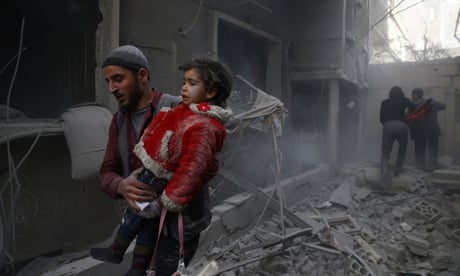
Tuesday, 13 February 2018

Eliot Higgins: What is the truth about the chemical attacks


 'Since the earliest reports of chemical weapon use in the Syrian conflict, a growing community of denialists has emerged, comprising online commentators, bloggers, pro-Assad activists, and fringe websites.

 This in itself is not usual. From 9/11 to the Las Vegas mass-shooting, online communities have coalesced around opinions and theories about what “really happened.”

 What is unusual about this community is how their views are beginning to creep into mainstream discourse about the use of chemical weapons in Syria, and how that is being used to undermine investigations that attempt to establish the facts surrounding these crimes.


 The Russian government has played a key role in amplifying these theories to undermine genuine investigative work. Their reaction to the August 21 2013 Sarin attacks that killed hundreds was to embrace various (often contradictory) conspiracy theories from fringe figures absolving the Syrian regime of responsibility.

 On August 23 2013, Russian Foreign Ministry spokesman Aleksandr Lukashevich stated that “on the Internet, in particular, reports are circulating that news of the incident carrying accusations against government troops was published several hours before the so-called attack. So, this was a pre-planned action.”

 This assertion was based on the claim from various pro-government sites that the YouTube videos of the attack had time stamps from August 20 2013. This was, in fact, a result of the display date being based on the local server time from the US west coast, which meant that a video uploaded in the early morning in Syria would carry a timestamp that was 9 hours ahead of California.

 Despite this simple explanation, the allegation persisted. It was even repeated by Russia’s Foreign Ministry Sergei Lavrov a few days later.


 As this conspiracy theory became untenable, the Russian government turned to another, courtesy of the Syria based Mother Superior Agnes Mariam de la Croix. She claimed that the attacks had been staged, and that the victims were in fact kidnapped Alawites from pro-government areas, killed as part of the deception.

 This claim quickly collapsed as it failed to substantiate its claim. Meanwhile an investigation by Peter Bouckaert, emergencies director of Human Rights Watch, found that among other problems with her claims, the claim was dismissed even by families of abducted Alawites. All the same: Lavrov promoted this claim too.


 It is not enough to present alternative theories . One of the key weapons in the chemical weapon denialist arsenal is discrediting and demonising individuals and organisations who witness and document events on the ground, including chemical weapon attacks. Whatever their disposition, they end up being branded as belonging to or being in cahoots with Al Qaeda or ISIS.

 With access to opposition held areas severely restricted, these groups and individuals are usually the only source of information in the aftermath of chemical attacks. Labelling them terrorists is a convenient way for the chemical truthers to dismiss their testimony.

 Chief among these targets are the Syrian Civil Defence, also known as the White Helmets, and their key supporter, Mayday Rescue. As the only organised rescue service in many opposition held areas, information collected by the White Helmets, often with body cameras worn by rescuers, has become an important source of information about the situation on the ground in Syria. In recent years they have played a key role in documenting chemical attacks and passing information onto the OPCW and other investigators.

 At the centre of the effort to discredit the White Helmets is Vanessa Beeley, a person plucked from obscurity by Russian state media. She has emerged as a vocal and persistent critic of the White Helmets and their supporters and she is featured heavily on international Russian state funded news such as Russian Today and Sputnik. Beeley, who has described the White Helmets as “ legitimate targets ”, recently elaborated her views:

 "The White Helmets franchise is a terrifying extension of soft power infiltration deep inside target nations, exploiting trust, vulnerability and poverty with the “First Responder” construct that “everyone trusts” as James Le Mesurier [Mayday Rescue’s Founder] so clearly stated in a recent interview in Brazil.

 This pseudo Humanitarian, NATO state-sanctioned fist will be used to crush many more nations in the future if it is not stopped in Syria. Just as Syria has contained the terrorist fire within its borders, so has it exposed the White Helmets as the terrorist alter ego, but for how long will both be contained?

 Terrorism is fanning out into Europe via the EU funded Turkish exit routes, the White Helmets are also establishing themselves further afield, in Venezuela, Malaysia, the Philippines to name a few. Terrorism and the White Helmets march in lock-step and can only be stopped by confronting the cancerous cultures in which they are cultivated — US Necolonialism, British Imperialism, EU Globalism, Gulf State Extremism & Israeli Parasitism."


 Russia promotes Beeley’s views (and those like hers) on Russian state funded media. But, more consequently, it also uses her views in more august fora.

 After the April 4 2017 Sarin attack in Khan Sheikhoun, Russian Deputy Ambassador to the UN, Peter Illichev, submitted a presentation by Beeley, The White Helmets - Fact or Fiction, to the United Nations General Assembly.

 In the debate that followed the publication of the OPCW-UN Joint Investigative Mechanism (JIM) report which blamed the Syrian government for the Khan Sheikhoun attack, the Russia’s deputy representative to the UN Vladimir Safronov, told the security council:

 "All conclusions of their work were based on indirect testimonies, most of which was provided by the opposition and by NGOs that have no credibility, such as the White Helmets which are closely associated with Jabhat al-Nusra terrorists."

 Thus demonising those organisations who are best placed to gather information on chemical attacks and other war crimes has become a key strategy of chemical weapon truthers and denialists in their attempts to undermine the work of investigative bodies, from NGOs to OPCW-UN JIM.

 While chemical attack denialism has often been relegated to fringe and Russian state media, there have been occasions where more mainstream voices and media organisations have promoted claims about chemical attacks that are riddled with inaccuracies.


 Veteran journalist Seymour Hersh has become particularly notorious for his work on chemical attacks in Syria, first on the August 21st 2013 Sarin attacks in Damascus, then the Sarin attack in Khan Sheikhoun on April 4th 2017.

 In articles for the London Review of Books, Hersh laid out a narrative where the August 21st 2013 Sarin attacks in Damascus were a carefully orchestrated false flag attack by rebels using Turkish help.

 The problem was, Hersh’s story was full of holes, inaccuracies, and fanciful claims with no evidence to support them. Hersh only spoke about “homemade” rockets, when some of the rockets used were Soviet era M14 140mm artillery rockets.

 He had no explanation for the massive volume of Sarin used requiring an expensive and complex chemical process and supply chain. Nor could he explain the presence of rockets known to be unique to Syrian government forces used in the attack.

 After the April 4 2017 Khan Sheikhoun Sarin attack Hersh returned with his latest chemical weapon investigation, this time published in Germany’s Die Welt . In the article ( Trump‘s Red Line ), Hersh claimed that Russia had provided the regime with a precision bomb to target a terrorist meeting, but the bomb also incinerated a room full of cleaning supplies, which created a toxic cloud resulting in the massive number of casualties.

 The problem was, as the OPCW-UN JIM report into the attack showed, this was a complete fantasy, that not even the Syrians and Russians supported. Even though the body set up to investigate chemical attack in Syria showed Hersh’s scenario was complete fiction, Welt has never issued a correction, and Hersh’s response to the criticism was that he had “learned just to write what I know, and move on”.


 The problem with these stories in respectable publications is the majority of readers are understandably not up to date on the minutiae of the conflict, which means these stories make a great deal of impact, even though they are demonstrably wrong.

 Through respectable publications, conspiracy theories acquire broader legitimacy corroding the factual basis of public discourse. When facts and opinions are put on equal footing, it destroys the very basis of informed judgment. It also suggests that people on the ground are lying, the evidence cited by the OPCW-UN JIM is fake, and that Western governments are actively participating in a conspiracy against Bashar al Assad, with all the people opposing him as their accomplices.

 Newsweek itself has recently published an opinion piece that is symptomatic of this trend. In Now Mattis admits there was no evidence Assad used poison gas on his people, Ian Wilkie, claims that Secretary of Defense James Mattis stated there was “no evidence” the Syrian government used Sarin, stating that “ Mattis offered no temporal qualifications, which means that both the 2017 event in Khan Sheikhoun and the 2013 tragedy in Ghouta are unsolved cases in the eyes of the Defense Department and Defense Intelligence Agency.”

 Seemingly a damning statement, but one taken out of context, with Mattis’ full remarks referring to the 2013 and 2017 attacks:

 Q: "Just make sure I heard you correctly, you’re saying you think it’s likely they have used it and you’re looking for the evidence? Is that what you said?"

 SEC. MATTIS: "That’s — we think that they did not carry out what they said they would do back when — in the previous administration, when they were caught using it. Obviously they didn’t, cause they used it again during our administration.

 And that gives us a lot of reason to suspect them. And now we have other reports from the battlefield from people who claim it’s been used.

 We do not have evidence of it. But we’re not refuting them; we’re looking for evidence of it. Since clearly we are using — we are dealing with the Assad regime that has used denial and deceit to hide their outlaw actions, okay?"

 Wilkie takes this misrepresentation of Mattis’s statement as confirmation that the theories surrounding 2013 and 2017 attacks claiming the Syrian government wasn’t responsible were correct all along, and in turn, the community of chemical weapon denialists and truthers has spread the Newsweek piece, citing it as proof that they were right all along.


 Presenting these views in mainstream publications, be they the London Review of Books, Welt, or Newsweek, is not presenting another perspective, or encouraging debate; it’s promoting the idea that facts are no longer sacred; truth is a matter of opinion; official bodies set up to investigate these incidents are compromised; victims are performers; and rescuers are belligerents.

 This is dangerous, Orwellian inversion of reality. This is not the debate on Iraq’s WMD, this is the debate on whether or not Sandy Hook victims were really crisis actors, or if Israelis were told not to go to work at the World Trade Center on 9/11.

 This is what Russia wants, and this is what Assad wants, as it lets the perpetrators escape justice, and leaves the victims to rot.'

Oscar-nominated Syrian film screened in rebel-held Idlib

No caption

 'An Oscar-nominated Syrian documentary following rescuers under regime bombardment in Aleppo was screened Monday before dozens of spectators in the rebel-held city of Idlib.

 "Last Men in Aleppo" by Syrian Feras Fayyad and the rebels' Aleppo Media Centre shows the work of the feted White Helmet volunteer rescuers during the brutal government seige.

 Government forces are now conducting a Russian-backed offensive to regain territory in Idlib province, the last one that had remained fully outside the regime's control.

 Spectators on the campus of Idlib University laughed, cried and sat in stunned silence as they watched scenes of carnage and loss in the documentary.

 "It stirred memories of the last difficult days in Aleppo and the many people who died before our eyes," said Mohamad al-Shaghel, who fled the city.


 The December 2016 defeat of the rebels in Aleppo after a ferocious onslaught proved a major turning point in the war as leader Bashar al-Assad and his Russian backers seized the upper hand.

 "What the heroes of this film lived through is what all Syrians have lived through," said Alaa al-Abdallah, the director of the university's media institute.

 The film which already won a grand jury prize at the Sundance Film Festival is nominated for best documentary at this years Oscars.

 Last year another film about the White Helmet civilian rescuers won an Oscar for best short documentary.'


Monday, 12 February 2018

This man stayed in Aleppo to make a film as bombs fell


 'I didn’t make Last Men in Aleppo to ask people to do something. I made this film to express my personal feeling. I grew up in Aleppo. I know every street, every smell, every wall, the colour of every building. When I put this story in front of an audience, and they get the same feeling about Aleppo as I do, as I’ve had since my childhood, that’s not just a success for the film - that’s a success for us as Syrians. What I wanted most is to show the Syrian war as a personal story.

 Syria doesn’t only need peace, Syria needs justice. There have been millions of people killed, families and children. And there have been people involved in these crimes.

 Talking about justice means addressing war crimes. A huge number of people have been killed or thrown in prison because of their political opinion or their background. These are crimes that should be addressed as war crimes. War criminals should be recognised and taken to court. This must be part of any peace process.

 How can you ask people to come back to their country if they know that the people who were involved in killing their children and families, and who might threaten them in the future, are still there?


 I was in jail for eight months. I had heard stories about Syrian prisons and what happens inside them since my childhood, from family, friends, whispers. Growing up, it was our biggest fear, worse than losing your mother. Every year I got older, the fear would grow twice as strong.

 From your childhood, you hear people say that once you’re inside, you will wish to die. And that’s what happened. I wanted to be killed, because I couldn’t handle more torture, psychological or physical.

 They took my food away, they put electricity on my body, they beat me. They try to make you lose your dignity. But I realised however scared I was of them, they were ten times more scared of me. As a filmmaker, they see you as a leader and as someone whom other people follow, whose opinion others listen to. After I realised that, I started to release myself from my fear.

 It was one of my worst experiences. But it was important, because I saw with my own eyes how people are killed and tortured. I heard the voices and the sounds. This government is torturing its own people for their opinions, their expressions, their freedom of speech, their activities and their films.


 For years and years these people have wanted to build a wall around Syria, to stop the international community and politicians from seeing what is going on. They don’t want to open anyone’s eyes to it.

 There’s a moment in the film when the characters are sitting on a roof, looking at all the destruction. It’s then that beauty starts to be created, through their friendship, their care for each other. These are human values. All our history we have fought for them. All the time we have been threatened by a regime or a system which tries to break down these kinds of relations and make us lose trust.

 I want to show that human relationships have been the only way to survive, and to survive for years, under Assad, father and son. Our friends and our families is how we make our lives continue.

 I search for hope and the best of humanity, because I have seen the ugly side. I’m motivated to use what I can do as an artist, to understand human values through these characters volunteering as White Helmets. I wanted to understand what makes them stay. The meaning of displacement through history is important to me. What makes some people leave and some people stay?

 The guilty survivor is a part of it. You feel you survived and you have to do something for others.


 I am working on a film about a group of female doctors in Syria who established an underground hospital to save lives.

 Cinema is always representing women as a beautiful bodies, or as queens, or as victims. This film is about these women being no different from men in that position. Whether man or woman or transgender - that’s just our sexual or gender identity. That’s nothing to do with what we can do or make in this life.

 I am thinking about Lady Macbeth a lot, about the conflict between her independence and her being controlled, by society or by a male character. This project is also about seeing #Metoo in a different way. It’s not just a social media movement. It’s about practical, real change, in unique circumstances. I hope these women’s position as doctors in a war like the Syrian war starts a discussion.'

Top Iranian general prevented Assad from leaving power


 'In a report published by the Iranian Mehr agency, Ali Agha Mohammadi, an official in the Diagnostic Regime Service in Iran, the country's highest ruling advisory body, revealed that al-Assad was about to leave power entirely and leave the palace, but Iran dissuaded him from this decision and pushed him to hold on to his position.

 Mohammadi reported that the Major General Hossein Hamedani, who was killed in Syria in 2015, had returned from Damascus to Iran at one point to inform the leadership that al-Assad was determined to leave power and leave the palace where he was trapped.

 Mohammadi said, “the martyr Hamadani told Bashar al-Assad that he should not worry, and that he should allow the distribution of arms to 10,000 civilians as they will keep the threat at bay after they are organized.”

 Hamedani was the most senior Iranian military officer to be killed in foregin mission in 36 years since the 1979 Islamic revolution. He was killed by rebels in Aleppo in 2015.

 Mohammadi said, “Commander Hamedani recruited 80,000 Syrian militants, and the intervention of Hezbollah also, which made the [Syrian] army stronger, and today we see that the Syrian army was able to shoot down a Zionist aircraft.”

 Iranian officials have been repeating statements that attribute al-Assad's steadfastness and survival to them alone, without caring to mention the hundreds of thousands of pro-regime supporters who have been killed or wounded to keep al-Assad in power. Regime supporters see Tehran's words as scorning them and the sacrifices they have made, and highlighting the debt they own Iran in a provocative manner.'

Sunday, 11 February 2018

Revolutionary women: Makers of the new media in Syria


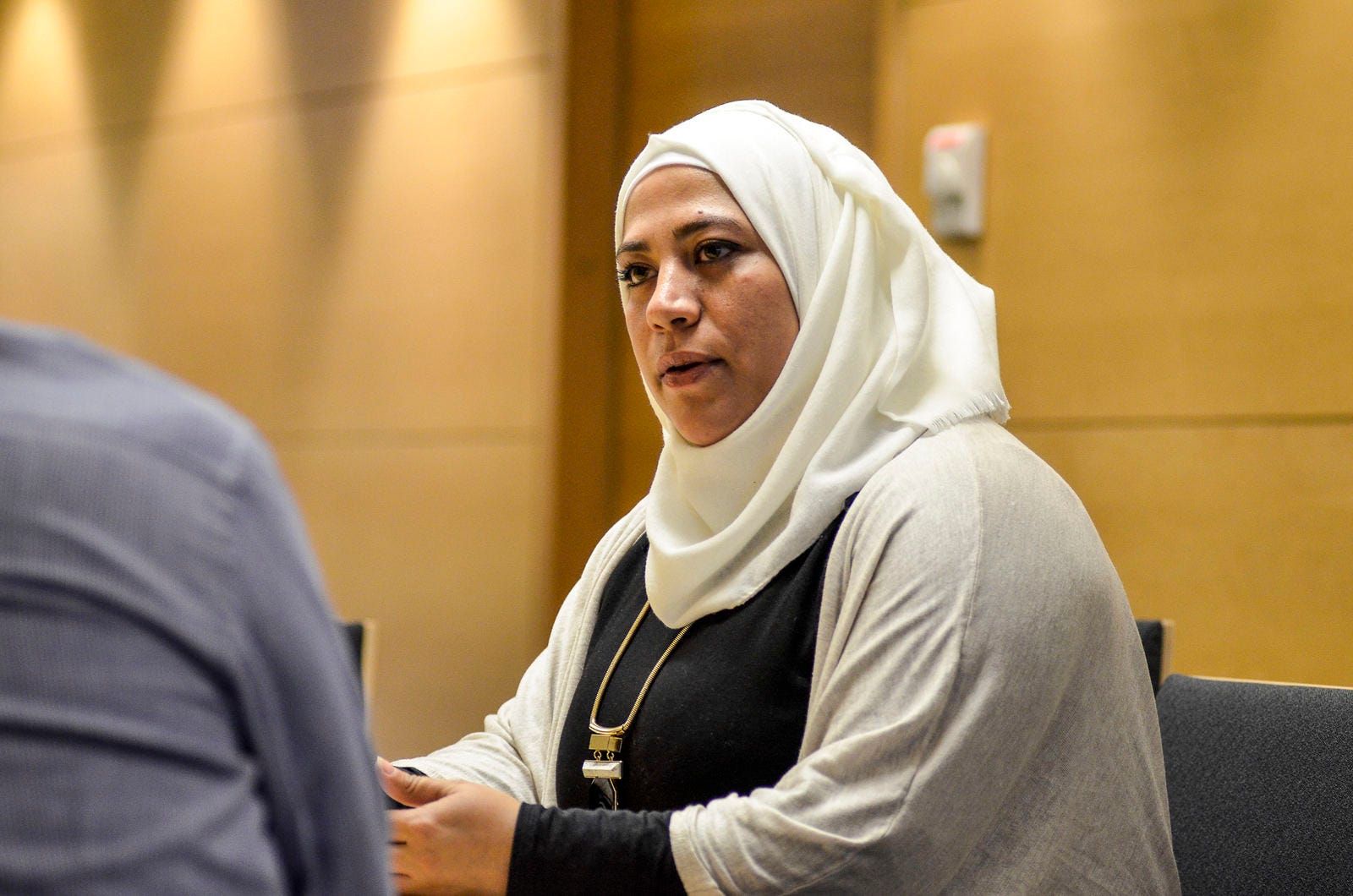
 'My name is Kholoud Helmi. I am an activist and a journalist. I began my activism at the very beginning of the Syrian Revolution in 2011. At the end of that same year a group of friends and I realised that there was no media coverage of the situation on the ground in Syria. I come from Darayya, a city about 20 minutes’ drive south west of Damascus by car. We were part of the revolution very early on, going out onto the streets and marching in the earliest wide scale demonstration on the 15th March 2011. Shortly afterwards, in April 2011 government checkpoints started appearing and the regime began besieging my city. There were barriers regulating our entry and exit.

 Likewise, there were no international media organisations in Syria to report on what was happening, [as they were] prevented by the regime, and the state-owned media only reported the regime’s point of view, so we took the decision to start our own platform in order to provide an opposing perspective. We were eyewitnesses to what was happening, both eyewitnesses and actors on the ground. Thinking back to the end of 2011 when we made that decision, it was the craziest decision we could have ever made, but certainly the right one.

 At that time, the danger we were in — being surrounded by the regime and government security forces — meant that my family couldn’t know that I was working as a journalist. Only very few people knew and as we couldn’t meet in person due to restrictions on our movements and the danger we were putting ourselves in by meeting, we had to use Skype. We used it to plan our actions, organize the layout of the newspaper and discuss what news to cover.

 It was crucial for me to focus on being an active woman in the revolution. Of the 25 co-founders of the newspaper, around 75% were women. It was our choice to be part of the newspaper as we had been present for every single moment since the revolution’s beginning. We were taking to the streets and organising demonstrations. We were not just witnessing but participating in everything that was happening.

Women specifically were very important to the resistance movement because until 2012 we were able to pass unrestricted through checkpoints, the regime agents would not search women. Our male colleagues were not able to cross through checkpoints at all, so most of them had to walk for three hours to get from where they lived to Damascus, walking through rural areas to avoid the checkpoints so as not to be scrutinized and arrested by default.

 Thus, as women we had greater freedom of movement than our male colleagues and so were better able to take up the mission to go to other towns and cities in order to document the massacres, brutal repression of the demonstrations and other events of the revolution.


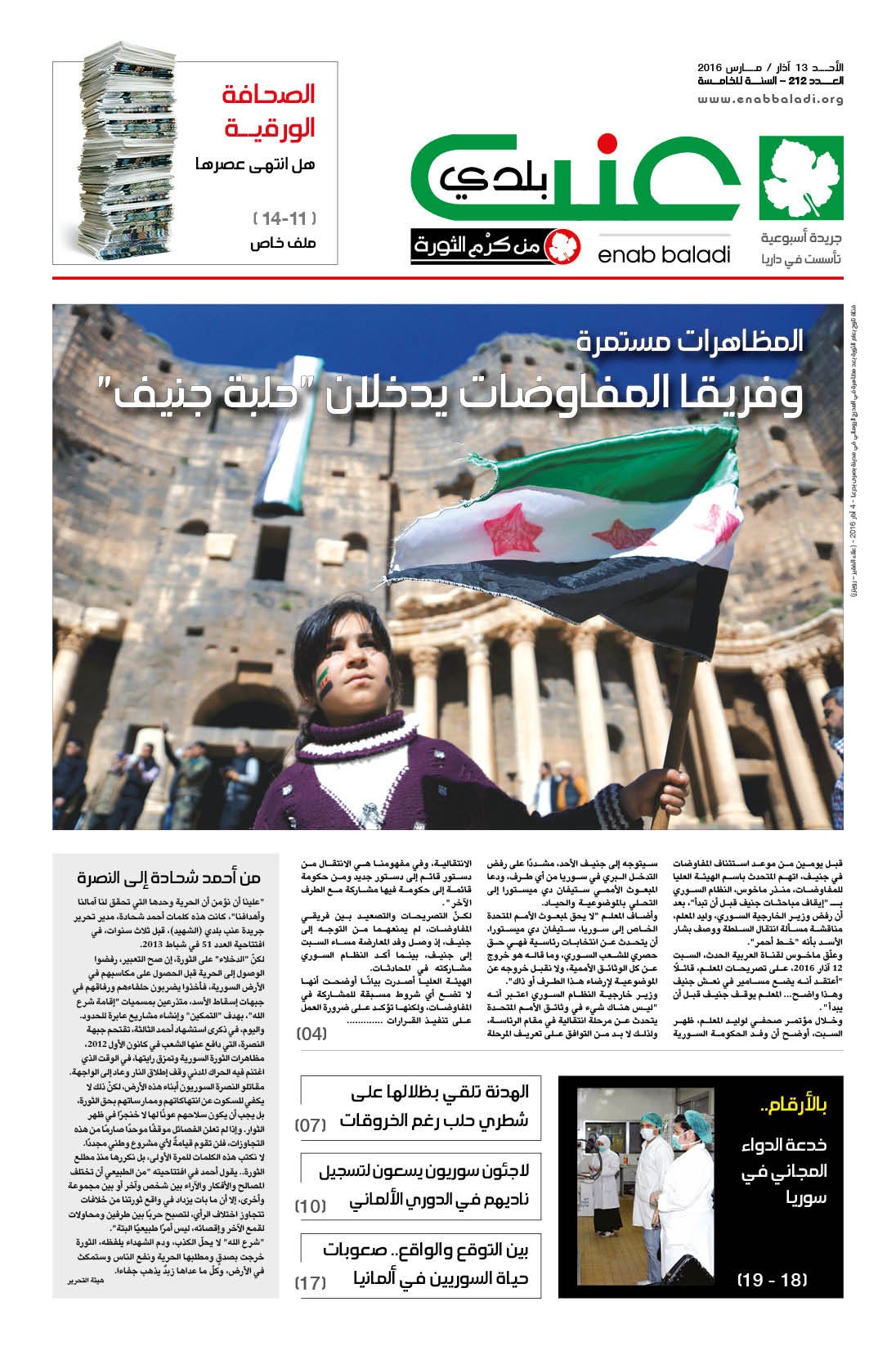
 We physically printed all our material from the very first edition and began distributing copies in the streets, not just to our friends and acquaintances but to the wider Syrian people. I used to cross checkpoints carrying around one hundred copies in my bag. I knew full well that I could have ended up disappeared, in prison or dead had they even opened my bag. I was stopped by the security forces several times and I knew I was standing between life and death. We had to be so brave, pretending we were doing nothing unusual, that we were just ordinary people going about our daily lives just trying to cross the street. When I think of those moments even now my heart beats faster. I still remember pretending that I was only carrying ‘feminine items’ so they wouldn’t search me.

 I was also stopped at mobile checkpoints — checks that would randomly happen out of the blue with no warning and no way to plan for them. They once searched my handbag but stopped just short of looking inside the plastic bag I was carrying with 15 copies of our paper. I had to risk my life many times to circulate our magazine, Enab Baladi.

 In January 2013 my hometown fell to the regime. Until this point it had been constantly besieged, with my friends and family having been forced out of homes the previous November. Despite that, my friends and I kept going to back to Darayya taking the rural routes.

 In the second week of January as we were leaving the town, one of my friends was captured by the regime. She was married with three children. A week later, the regime arrested her mother, forcing her to entrap us. She called us, her daughter’s friends, saying that she wanted to see us and of course we rushed to her — she had lost her daughter and we wanted to comfort her. The first two women to arrive at her house were immediately arrested by the regime. Luckily a third friend of mine called them to asked where they were and heard them say the phrase we had agreed on should we ever find ourselves in danger: Akhlas, khalast, I’m over, things are over, I’m done. We knew then that the threat to our lives was too great and we had to leave.


 One week later we were smuggled to Beirut where we started our new life as part of the Syrian diaspora. First to Lebanon — Beirut, then Egypt and finally Turkey. I ended up in Turkey where the team of Enab Baladi were reunited. We started operating again from Turkey and continue to do so to this day.

 We still cover news from all over Syria and have reporters working all over the country. We used to have reporters even in regime-held areas — most of them are women. We even had a reporter in an ISIS occupied area. Our reporter in Damascus quit some time ago because she was feeling the pressure of operating from there and couldn’t take the risk anymore. She felt like she was constantly under scrutiny and being controlled by the regime. We lost a lot of friends on this journey.

 One of the co-founders and the first to structure the newspaper took the decision to stay in Darayya after it was besieged by the regime. He was the first one to die, we lost him at the end of 2012. A few months later, we lost the managing editor, he was hit by a missile. Later we lost a third friend, our reporter in Darayya who was also hit by a missile. Four of our guys were then arrested by the regime. We heard three months ago that Nadi, one of the four, was killed under torture in a regime detention centre. My brother and one of the co-founders of the newspaper were taken from their homes in May 2012. There was only one week, during August 2012, that Enab Baladi was not published, when the first massacre committed by the Assad regime in Darayya took place.

 Regime forces raided my hometown, slaughtering over a thousand people in three days. Some of our team stayed in Darayya at the time but I had left the town for three days. When I returned it was unrecognisable, horrible. That week we couldn’t report anything. I still remember crying. I had been writing the news of other massacres committed elsewhere but when it happened in my hometown I felt too weak to write about it.


 The next week we made the decision to continue. We had to continue spreading the message that a change must come, everybody has to know what is happening in Syria. After seven years we continue to publish Enab Baladi. We have kept the same structure, we have an editor-in-chief, a managing editor, a full team operating. At first our office was very small but we have now moved into larger premises.

 Our team has grown in number and now we have reporters based in many cities. We also have reporters from other countries writing about Syrian refugees and are lucky enough to be considered one of the most prominent Syrian platforms. More than six years ago a group of women decided to join the forces of the revolution. We took the streets and had to struggle to be respected but in the end we proved ourselves and here we are now, as founders of something that had never existed before.'

Friday, 9 February 2018

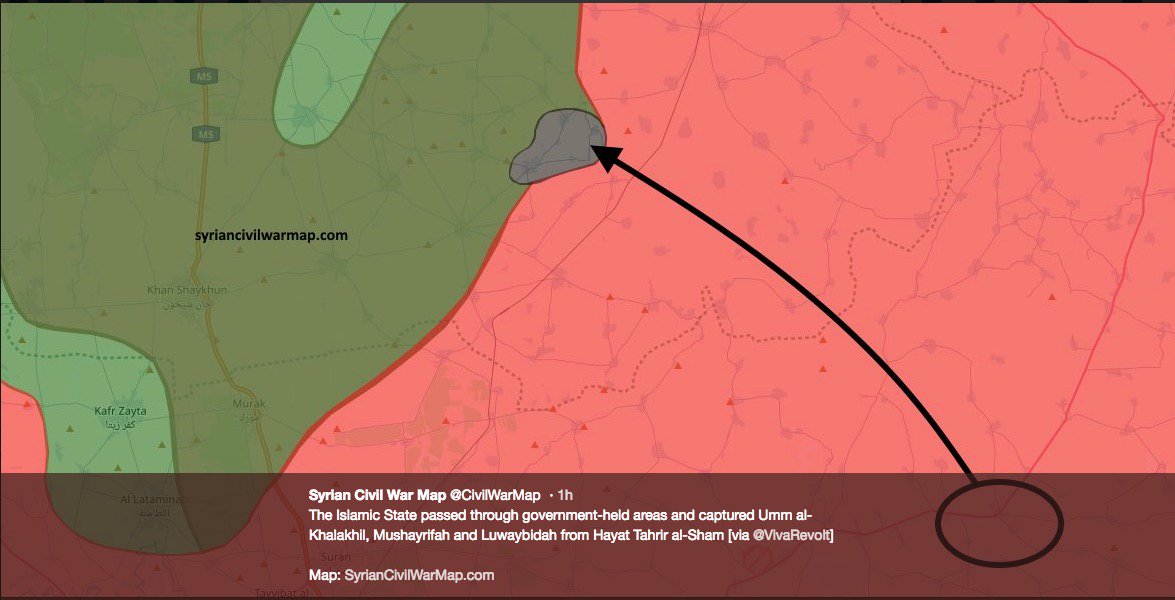
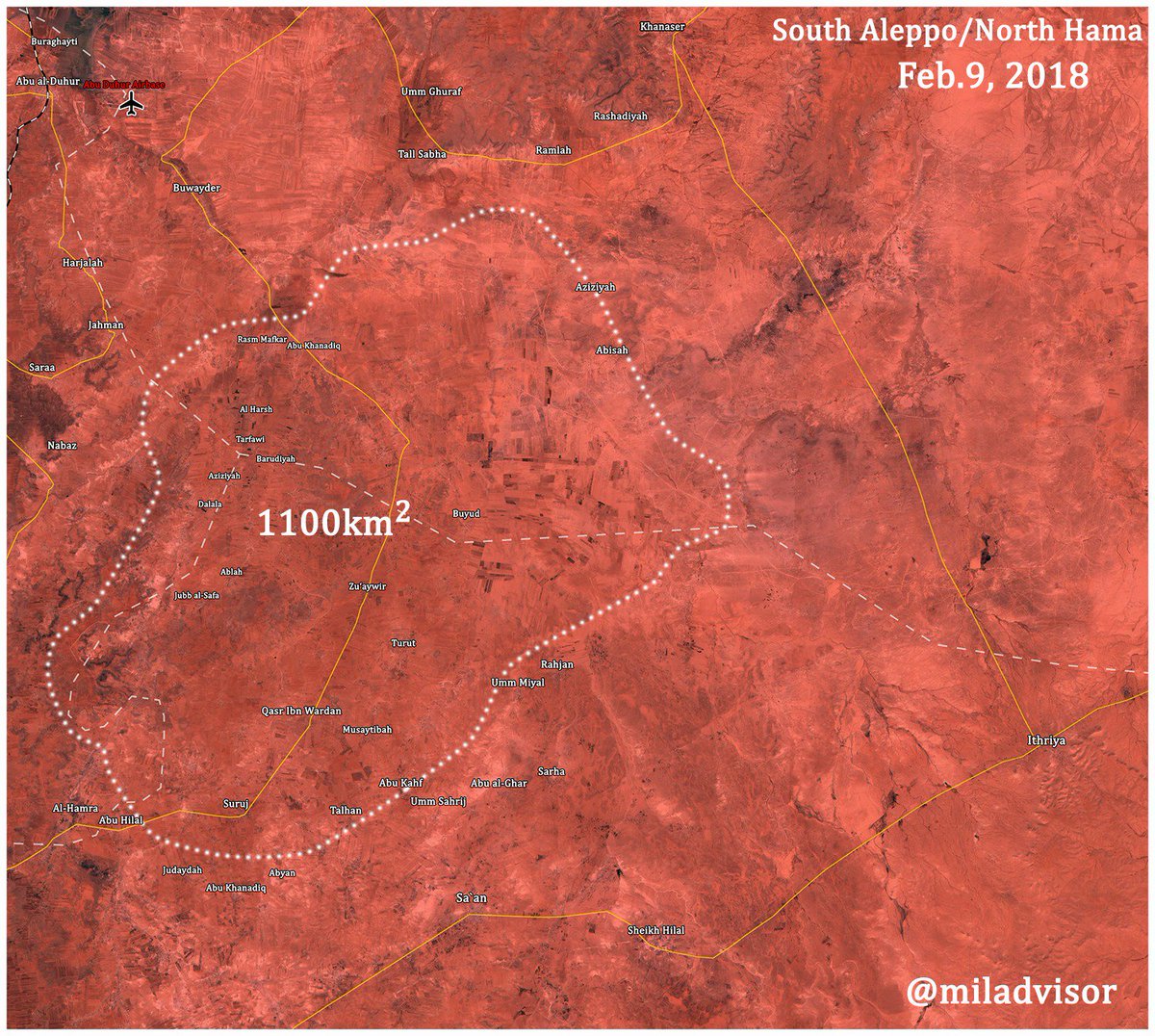
The new ISIS pocket in Idlib


 'Say good bye to the old ISIS pocket in Hama and say hello to the new ISIS pocket in Idlib.(20 km to the west) With friendly support of Assad, Putin & Iran.

 Pro-regime media claims instead, they did all they could to stop the "thirty kilometers of government territory" journey of some 500 ISIS militants. Pictures show several destroyed technicals and up to 10 terrorist fatalities. Still, rather doubtful they really tried to.'


"How many appeals do we still have to make?"

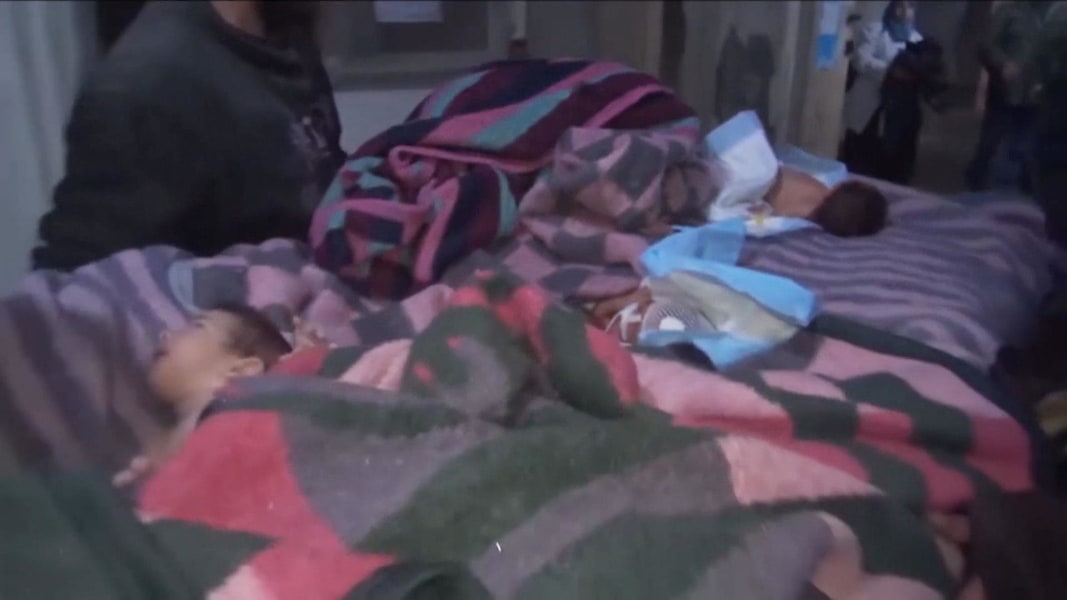
Image result for Babies rescued from Syrian hospital after Russian airstrike 1:10 Video nbc

 'After surviving seven years of war, Aya Qrai was offered a unique chance at joy: her first child, a son.

 "Abdulrazaq let me live in my own world and I forgot the war — I saw the beauty of life through him," said Qrai, 19, speaking from a rebel enclave in northwestern Syria. "With all the war and all the sadness, I was full of happiness."

 Abdulrazaq was born two months premature and went into intensive care at a hospital in the city of Maarat al-Numan in northwestern Syria. He died 16 days later, after airstrikes badly damaged the facility in Idlib Province on Sunday and forced the evacuation of at least 10 newborns.

 Abdulrazaq died from lack of oxygen before he reached another hospital, according to his family.

 Video shot on Sunday in the aftermath of an attack that rebels and observers say was carried out by a Russian warplane shows newborns being rushed from the damaged building.
Tearful and exhausted, Aya Qrai says she wants to die.

 “We Syrians are not allowed to smile and to live a normal life,” she said, sitting close to her husband, Hamoud. “When I decided to live and to challenge the war [by having a baby], the airstrike took my baby away from me.”

 A hospital in nearby Kafr Nabl was also bombed Sunday, forcing the evacuation of patients.
The shelling of the hospitals and other areas where civilians are trapped comes amid intensifying attacks on rebel-held areas near the city of Aleppo and the capital, Damascus.


 The Qrai family’s grief is just one piece in a mosaic of tragedy created by Syria’s civil war, which started as pro-democracy street protests against the rule of President Bashar al-Assad in 2011. The conflict quickly spiraled into a full-fledged conflict that has killed hundreds of thousands of people and forced millions from their homes.

 The Qrais are among some two million people now living in Idlib — where fighting is forcing civilians to move constantly to escape fighting, according to the United Nations. Two pro-government villages in Idlib were also being besieged by rebels, the U.N. announced on Tuesday.

 When asked if the couple had a message for the world, Hamoud Qrai angrily interjects: “Sir, how many messages do we have to send? How many appeals do we still have to make to stop the killing? We are being killed by a dictator who wants to rule us by force.”
“Who on earth would target a hospital?” he said.

 This week, the U.N. called for an immediate humanitarian cease-fire in Syria of at least a month after heavy airstrikes claimed scores of lives.

 Aid workers, meanwhile, warn that rebel areas are not receiving desperately needed deliveries.

 "For the last two months we have not had a single convoy,” said Panos Moumtzis, assistant U.N. secretary general and regional humanitarian coordinator for the Syria crisis. “This is really outrageous." '

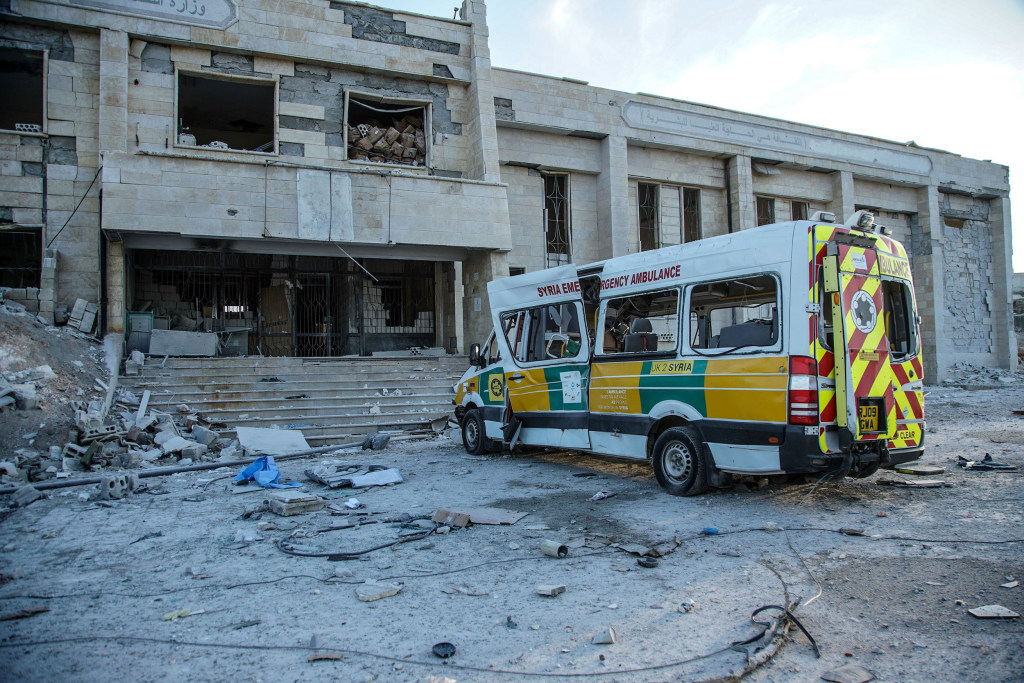
Image: A destroyed hospital in Kafr Nabl

Talal Derki's new film following a Nusra Front soldier


 'My life before these bad times was different. I was living in Damascus. I studied cinema in Greece. Most of the people I knew in Damascus as a filmmaker were artists, you know, we never were in touch with the religious people, and by saying religious I am talking jihadis, salafists, those were very rare in Syria. After the revolution started, I filmed my documentary "Return to Homs" in Syria, with people who were into democracy and freedom. During the time of the shooting people started to talk about a "caliphate." It was the month when ISIS declared itself, in Spring 2013. I witnessed how many people loved them, so much brainwashing! That was for me the biggest shock.

 During the last block of shooting for the film in 2013, I met for the first time a jihadi from IS in the desert north of Homs. I was there waiting, and the only people with internet access were IS. So I met some people and later I thought, you know, I have the possibility to do it, I have access. I believe it's difficult for someone else to do this. So it has really been a big journey since we started in 2014.

 The Islamists didn't have much knowledge about my background. I had hidden all information, had avoided all photos of me drinking alcohol and being with girls. And before I didn't write any article against the jihad. So there was no clash. I also gave some interviews on opposition Arabic radio and TV that supported them, and they were happy thinking this is a guy supporting us. And I told them I was motivated by their movement, I wanted to learn from them.

 I wanted to go psychologically inside the society of the jihadis. I wanted to understand how it happened, how they become what they are. Who are these people? How do they look from the inside? What are their codes? How do they brainwash people? To understand how they convince people through the story of the new generation. And the film is also about a father's legacy of violence. There's a lot of violence, so what happens to the kids? In a way, I believe that every father can watch this film and find himself or his father somewhere inside it. I tried to capture moments that are eternal moments.

 It's a matter of day by day. You have to forget who you are. You have to be a new person to make such a film. There was no other option. I had to do this. Firstly for my safety. Secondly to observe, to go to their point of view. To understand what their life looks like. You need to let them trust you. I also tried mostly to reduce the places where you shoot, and I filmed a lot inside the house.


 When I went with the father outside, he always met with other jihadis from other Arab countries and from Europe, and these are dangerous people because they don't easily trust you filming them, whatever your background. And they have experience researching online. When they investigated me, I had to tell I am a war photographer. And also from the outside I had to be exactly like them. So I was praying with them, listening to them, shaking my head like them.

 I learned from my father that to tame your nightmares, you need to capture them first. It's about getting them out from the subconscious to the conscious. Write it down. Write it with a camera and then leave it there. That's what I did.

 One of the boys featured closely in the film is Osama, who is very sensitive and rebellious. Osama is the one who lied to his father that he prayed, but he did not pray. And I know him. If he grew up in a different family, he would be an artist. I am sure.

 If the society was strong in that region, if there wouldn't be violence against kids and women, if women were equal there, if there was a clear law about what children learn, the jihadis would not be able to find a place, nobody would welcome them. Look at countries like Iraq, Afghanistan, Syria, Libya — violence will bring more violence, will bring more radical people. And this will go on.'

Sundance Film Festival 2018 - Film Of Fathers and Sons (Courtesy of Sundance Institute/K. Hasson/T. Derki)

Thursday, 8 February 2018

East Ghouta ‘drowning in blood’ after third day of bombing

Smoke after an airstrike

 'Residents of the besieged Syrian enclave of eastern Ghouta have endured a fourth day of relentless bombardment by the government of Bashar al-Assad, a campaign that has so far killed more than 200 people and left a ceasefire deal that lasted months in tatters.

 The bombardment continued despite international pleas for a countrywide ceasefire to alleviate “extreme” suffering in Syria, where the violence has been renewed after failed peace talks earlier this month.

 “Ghouta is drowning in blood,” said a doctor in Arbeen, one of the towns in the region in which 100 people were wounded and at least 14 killed, including a rescue worker and several children.

 “There is no safe place in Ghouta,” said Raed Srewel, a journalist based in Douma, another town in the area. “You can describe it with this saying we have: “On top of death, the graves are too small.”


 59 civilians, including 15 children, have been killed on Thursday alone in eastern Ghouta, an enclave that has been under siege for years, endured a devastating sarin gas attack in 2013 and was once the bread basket of the nearby capital, Damascus.

 The killings capped three days of shelling and bombardment after a national dialogue conference brokered by Russia failed to produce a breakthrough in peace talks. The violence, which continued in other parts of Syria as well, marked the effective end of a de-escalation agreement brokered by Moscow, Ankara and Tehran to reduce violence around the country and pave the way for peace talks.

 That deal has unravelled with a broad government offensive in Idlib province in Syria’s north-west and eastern Ghouta, two of the last major strongholds of the opposition fighting Assad.

 The offensive in Idlib has already displaced more than 300,000 people by UN estimates, numbers that have risen in the last few days. Many have sought refuge near the Turkish border, threatening a new influx of refugees.


 In eastern Ghouta, rescue workers spent much of the day searching through the rubble of buildings that had collapsed under the airstrikes. They said they had tracked at least 76 airstrikes on Tuesday and Wednesday alone in the region.

 “It has become a city of ghosts, and if you walk in it, it is filled with the smell of death and blood,” Srewel said, describing his hometown of Douma. “The planes are always in the skies of Ghouta, the markets and homes are being bombed, there are martyrs and wounded, and God is our only solace.”

 Earlier this week the UN commission of inquiry, tasked with investigating war crimes and crimes against humanity in Syria, condemned the upsurge of violence in Idlib and Ghouta, saying they “make a mockery” of the de-escalation agreement.

 “What is happening in eastern Ghouta is not simply a humanitarian crisis because aid is denied. These sieges involve the international crimes of indiscriminate bombardment and deliberate starvation of the civilian population,” said Paulo Pinheiro, the chair of the commission.


 Russia dismissed calls for a month-long humanitarian ceasefire as the UN Security Council met to discuss the worsening humanitarian crisis. “That is not realistic,” said Russia’s UN envoy, Vassily Nebenzia. “We would like to see a ceasefire, the end of the war, but the terrorists, I am not sure, are in agreement.”

 France’s ambassador to the UN, François Delattre, called for unhindered access for aid agencies. “Eastern Ghouta is experiencing a Middle Ages-style siege. That is totally unacceptable,” he said.

 Syrian government forces also clashed with US forces in the eastern province of Deir ez-Zor, the first time such a large-scale confrontation has occurred on Syrian land.

 An official with the US-led coalition against Islamic State told Reuters it had repelled a coordinated assault by pro-regime militias on a base in the region, a battle that Syrian state media appeared to confirm with a news bulletin that accused the coalition of killing dozens of militia fighters.

 The official said no US troops had been killed or wounded in the attack, which was carried out by about 500 fighters, but one Syrian fighter allied with the coalition was wounded. More than a hundred pro-regime fighters were killed.'

The Russians strike the symbols of the Syrian revolution


 'Residents in parts of Syria have been experiencing some of the most terrifying days of their seven-year-long war.

 This week, the Syrian government and its Russian ally pummeled towns and villages in the opposition-held northern Syrian province of Idlib with air attacks. A relentless series of payloads were dropped in the space of just a few hours in the darkness of Sunday night.

 The dead are still being counted. Residents say dozens of people are missing under the rubble of collapsed buildings.

 Airstrikes on Eastern Ghouta, the besieged rebel-held suburbs outside Damascus, are ongoing. More than 100 people have been killed in the past 48 hours alone, according to residents.


 "It's clear these attacks are part of a systematic strategy in order to basically punish civilians," said Haid Haid, an analyst with the British think tank Chatham House.

 Hassan Hassan, a Syria analyst and author, agreed that civilians are the focus of these attacks. "Most of the airstrikes have not hit front lines," he said.

 Instead, the air campaign appears focused on residential buildings and hospitals.


 On Monday, Raed Fares, an activist in Kafranbel, an opposition-held town about 8 miles from the nearest front line in Idlib province, said he woke up to bombing raids on the local hospital.

 "In the early morning, they attacked the hospital here four times. It's very close to my house, and it was so horrible to wake up to this sound," he says. "Everything was shaking."

 Fares shared photographs on his Facebook page of the hospital building, with its roof caved in, and of an ambulance destroyed by shrapnel.

 This was the second hospital reported to have been hit in 48 hours. Residents of Maaret al-Numan, another town in Idlib province, shared videos of premature babies struggling for breath after they had to be ripped out of incubators to be rescued from a hospital damaged by a plane's payload.


 There have also been reports of chlorine gas attacks. Doctors in the town of Saraqeb, in Idlib, reported treating 11 patients who suffered from the suffocating symptoms of the chemical weapon.

 These attacks have been interpreted partly as a response to the rebel downing of a Russian Su-25 plane Saturday near Saraqeb. The Russian pilot ejected from the plane and was shot dead by militants, according to Russia's Defense Ministry.

 Kremlin spokesman Dmitry Peskov called the attacks "precision strikes," according to Russia's TASS news agency, and said they were "provoked by the tragic event when terrorists shot down our plane."

 But analysts also see these attacks as an attempt to punish opponents of Syrian President Bashar Assad by targeting towns and villages in Syria that are sympathetic to the opposition.


 Last month, the Syrian opposition decided to boycott peace talks hosted by Russia in the Black Sea city of Sochi.

 Hassan, the Syrian analyst, said the boycott was a major blow for the Russians.

 "Sochi was envisioned by Russia to be a milestone, at least as a public relations stunt, to say, 'Not only did we defeat ISIS,' as [Russian President Vladimir] Putin announced inside Syria at the Hmeimim air base, but also, 'we have managed to steer the politics in Syria as well,' " he said.

 With these air attacks, Hassan said, Russia may be "trying to show [the opposition] that 'this is the result of not bowing to our demands.' "


 The Syrian regime and its Russian ally have repeatedly said they are targeting Islamist extremists and al-Qaida. But, Hassan said, this spate of bombardments has focused on towns in Idlib where residents have rejected the more-militant groups and have shown allegiance to the moderate anti-government opposition.

 Take Kafranbel, the hometown of the activist Fares. It has repeatedly rejected al-Qaida's rule.

 "Kafranbel is the civil face of the revolution, and it's democratic," Fares said. "Russia and the Syrian regime want to paint all of Idlib as being the black of extremists," he added, referring to the black flags used by groups like Islamic State. "But Kafranbel is green and civil," he said, referring to a color on the Syrian opposition flag.

 Hassan emphasized the potential for symbolism in recent airstrikes: "If Russia wants to strike against the Syrian opposition and show them the costs of not playing along," he said, "it makes sense because in striking these areas, they strike the symbols of the Syrian revolution." '

Wednesday, 7 February 2018

Living Under Assad’s Siege


Yassin al-Haj Saleh:

 'On Tuesday, 78 people were killed in the Syrian rebel enclave of Eastern Ghouta after heavy aerial bombardment by Syrian and Russian forces. The United Nations has called for a cease-fire for a month across Syria to be able to deliver humanitarian aid and evacuate the critically ill and wounded.

 The siege of Eastern Ghouta has turned into one of the longest and most destructive sieges in recent wars — about a year longer than the nearly four-year siege of Sarajevo. Ghouta is an area of small towns and fertile countryside east of Damascus.

 The regime of Bashar al-Assad has barred the residents from leaving and outsiders from visiting their relatives in the besieged area, according to Osama Nassar, an activist and journalist who has been living in the Douma district of the area since 2013.

 The people of Eastern Ghouta joined the protests against the Assad regime in March 2011, in the very early days of the Syrian uprising, and government forces killed many young men there. I was there a few weeks after those protests and attended the funeral of eight people killed by the regime.

 The killings militarized the uprising by the fall of 2011. By July 2012, the regime began attacking population centers with barrel bombs. Peaceful protests came to an end.

 In October and November 2012, the rebels drove out regime forces from Eastern Ghouta. In the beginning of 2013, the regime, supported by Iran and Hezbollah, regained the military initiative and imposed the siege.


 I arrived in the Douma district in April 2013 and lived with a civil defense unit that came to be known as the White Helmets. Regime planes bombed the region daily. I saw the bodies of the dead being brought to the civil defense unit every day for registration. One day there were nine bodies. Another day, 26.

 Yet people were still hopeful despite everyday life’s becoming increasingly difficult. On Aug. 21, 2013, the Assad regime attacked Eastern Ghouta with sarin gas and killed more than 1,400 civilians, including 426 children.

 A deal between the United States and Russia forced the Assad regime to agree to surrendering its chemical weapons to United Nations investigators, but President Barack Obama decided not to enforce a no-fly zone over Syria. Mr. Assad concluded that he could use all other weapons, including barrel bombs and starvation, to crush the uprising.

 A month after the chemical weapons deal, in October 2013, Mr. Assad’s forces intensified the siege of Eastern Ghouta. Even people who needed medical care were prevented from leaving or getting help from outside. Arbitrary daily bombings turned life precarious; people struggled even to retrieve corpses from the rubble of their houses.


 Around that time, Jaish al-Islam, a Salafi militant group, came to dominate Douma and established a despotic system, arresting, kidnapping and assassinating people who did not comply with its dictates. Other rebel groups in the besieged areas include Faylaq al-Rahman, an affiliate of the Free Syrian Army, and Hayyat Tahrir al-Sham, which largely draws its membership from a Syrian al-Qaeda affiliate. And there are numerous smaller groups and brigades, which control and fight in smaller areas.

 The civilians share an ambivalent relationship with the rebel groups. They offer them support for fighting against the Assad regime but criticize them for failing to overcome their factionalism and uniting against the regime. The civilians also protest and chafe at the rebels intervening in their daily life whether it is dealing harshly with them or arresting someone.

 When I left Eastern Ghouta for Raqqa in the summer of 2013, the cost of everyday amenities had already increased significantly because of the war. Our only electric supply was a generator for four hours a day.

 Samira al-Khalil, my wife, had joined me a few months earlier. We didn’t have enough to eat and began losing weight. We laughed that our friend Razan Zeitouna, a lawyer and writer documenting the atrocities, couldn’t lose weight because she was reed thin. The regime’s slogan was “Aljoo’ or Arrukoo’” (Starve or Surrender).

 During the siege, Samira, who had been imprisoned for four years under the Hafez al-Assad regime for her activism, wrote in her diary, “Prison was just a joke when compared to siege, for all the people suffer from the latter: the children, the elderly.” She added: “ Under the siege there is nothing! No medicines, no bread, no water, no electricity, nothing. No! I forgot something important: death. It is available everywhere, in every family.”


 By the fall of 2013, along with Eastern Ghouta, the rebel enclaves of Daraya, Moadamiya, Madaya and Zabadani, which are close to Damascus, were also under siege, being bombed and starved.

 Eastern Ghouta showed great resilience and embraced innovative ways to survive. People continued growing food on their farms, and that partly helped keep hunger at bay. They found a way to breach the siege by digging a network of underground tunnels, some of which led to neighborhoods in Damascus and were used to smuggle in necessary commodities.

 Numerous conversations with friends and acquaintainces still living there give me a fuller sense of how they survived. People recycled plastic garbage and extracted fuel from it. They used this fuel for the generators that had been smuggled in through the tunnels. The electricity this generated became essential to connect with satellite internet and the outside world. They ground fodder and used it as flour to bake bread; they toasted oats and used it to make a beverage to replace coffee. They embraced wild herbs, which were untouched in peace, as a staple vegetable. They turned the basements of hospitals and schools into storage facilities in the face of the barrel bombs.


 In a cruel twist, the regime sought to extract profit by doing some business with the besieged populace. Muhyi Eddin Manfoush, a businessman connected to the Syrian Republican Guard headed by Mr. Assad’s brother, Maher al-Assad, was allowed by the regime to sell flour, packaged food, butter, oil, tea and sugar, among other things, in the besieged area, according to several merchants in Eastern Ghouta.

 The deal was that Mr. Manfoush would charge the besieged and impoverished buyers a tax beyond the usual price. For a kilogram of flour, sugar and rice he charged an extra 2,000 Syrian pounds, or about $4; for clothes, shoes and cleaning material he charged an extra 3,000 Syrian pounds, or about $6, according to multiple residents. But medicines, medical equipment, electronics and building equipment were strictly prohibited from entering the besieged area.

 The people of Eastern Ghouta were left with few resources and a terribly depleted capacity to buy anything. The few sources of support were financial aid from a group of NGOs and some religious networks. By 2017, the fourth year of the siege, Mr. Assad’s forces had taken control of many neighborhoods from the rebels. In March, the regime took Barzeh and Qaboun, two neighborhoods in Damascus that were crucial for the survival of the besieged areas. The tunnels that the opposition had dug to bring in supplies led from Eastern Ghouta to Barzeh and Qaboun. Mr. Assad’s forces destroyed the tunnel network and blocked the supplies.

 Within days of the fall of Barzeh and Qaboun, the price of diesel jumped to about $10 per liter from about 63 cents per liter. The season for harvesting crops and planting vegetables was days away. The farmers couldn’t afford the fuel for their agricultural tools — generators, water pumps, tractors. They simply couldn’t water their lands or even harvest the crops.

 The failure to cultivate and harvest the local produce, the destruction of the tunnel system and the relentless siege pushed the cost of living punitively higher. In October, according to various residents and activists in Eastern Ghouta, a kilogram of sugar cost 2,400 Syrian pounds, or about $5; a kilo of rice was 2,900 Syrian pounds, or about $5; a kilo of lentils was 2,000 Syrian , or about $5; a liter of frying oil was 3,000 Syrian pounds, or about $6.

 The besieged couldn’t afford it. Children were the first to starve and die. And that is when the images of the emaciated, undernourished children began coming out of Eastern Ghouta.


 In late November, the businessmen connected to the regime brought in a new contingent of supplies at their usual extortionate rates. Few could afford it, and it barely lasted two weeks, according to Aous al-Mubarak, a dentist living there. Around 400 children suffered from extreme malnourishment, he said. The numbers have only risen.

 Eastern Ghouta has been turned into a concentration camp by the Assad regime. Mr. Assad has perfected a system of political nihilism, which wipes out people who oppose it and enslaves those who acquiesce and submit. Even after five years of siege and bombardment, the residents are holding on to human dignity, mourning each death, not turning callous in the face of its familiarity.

 Bara’a, a 15-year-old girl who was a friend of Mr. Nassar’s daughter, was killed in January after the regime planes bombed Douma. Mr. Nassar had thought five years of living under siege was familiarizing him with death. “I shudder every time I think of her mother,” he said.'


Saturday, 3 February 2018

US says Syria may be developing new chemical weapons

Opposition forces receive medical treatment after the Assad regime allegedly carried out a chemical gas attack in the de-conflict zone in Damascus, Syria on 20 July 2017 [Alaa Muhammed/Anadolu Agency)

 'The Syrian government may be developing new types of chemical weapons, and U.S. President Donald Trump is prepared to consider further military action if necessary to deter chemical attacks, senior U.S. officials said on Thursday.

 President Bashar al-Assad is believed to have secretly kept part of Syria’s chemical weapons stockpile despite a U.S.-Russian deal under which Damascus was supposed to have handed over all such weapons for destruction in 2014, the officials said.

 Assad’s forces have instead “evolved” their chemical weapons and made continued occasional use of them in smaller amounts since a deadly attack last April that drew a U.S. missile strike on a Syrian air base, the officials told reporters in a briefing.

 Characteristics of some of those recent attacks suggest that Syria may be developing new weapons and methods for delivering poison chemicals, possibly to make it harder to trace their origin, the officials said, speaking on condition of anonymity, but they declined to provide specifics.


 A deadly sarin attack on a rebel-held area in April prompted Trump to order a missile strike last year on the Shayrat air base, from which the Syrian operation is said to have been launched.

 “We reserve the right to use military force to prevent or deter the use of chemical weapons,” one official said, while declining to specify how serious a chemical attack would have to be to draw a fresh U.S. military response.

 A second official said, however, that the Trump administration hopes that stepped-up international sanctions and diplomatic pressure will help rein in Assad’s chemical weapons program.

 If the international community does not act quickly to tighten the screws on Assad, Syria’s chemical weapons could spread beyond its borders and possibly even “to U.S. shores,” the second official said.

 “It will spread if we don’t do something,” the official warned.


 The officials echoed U.S. Secretary of State Rex Tillerson’s recent accusation that Russia, Assad’s ally in Syria’s multi-sided civil war, bears some responsibility for failing to enforce the chemical weapons ban.

 Russia has denied any complicity, and the Syrian government has said it has not carried out any of the attacks.

 The U.S. officials suggested that if left unchecked there would be more smaller chemical attacks as an “instrument of terror” to compensate for Assad’s lack of adequate manpower to retake some opposition-held areas.

 “They think they can get away with it if they keep it under a certain level,” an official said.

 Western officials have cast suspicion on the Syrian government for a chlorine gas attack on a rebel-held enclave east of Damascus last week that sickened at least 13 people.

 State Department spokeswoman Heather Nauert said on Thursday the United States was “extremely concerned” about reports that Syrian forces had carried out another chlorine gas attack this week in the eastern Ghouta area.'

'We need to rebuild the families'


 'He'd told her the screaming and the torture goes on all night. Their tiny cell, strategically placed next to the torture chamber so they can hear what’s going on inside, is crammed with 150 naked people. In the morning -- after breakfast of a small piece of bread and five olives -- the detainees’ first job is to remove the bodies of those killed during the night. There are usually about 35 victims. Sometimes there are as many as 50. They put the bodies into sacks and load them onto trucks. Then they wash the torture chamber’s floor of the victims’ blood. This is the morning ritual at the military intelligence detention centre, branch 227, in the Syrian capital of Damascus.

 As she describes the detention centre where she believes her husband, Nasser, a civil activist, is being held, Farizah Jahjah, 50, takes a huge breath and her eyes fill with tears. She's been perfectly composed until now. Neatly dressed in a black knee-length dress and red scarf with glasses perched on her dark hair, she talks passionately yet calmly about the issue of detainees in Syria.

 It’s been nearly four years since she’s had news from her husband. She has no idea if he’s dead or alive. She’s heard rumours but nothing concrete, nothing from an official source. She’s only heard an account of his time in prison from a man who was with him when he was first detained and subsequently released.

 Farizah’s husband is one of thousands of Syrians being held in secret detention centres and prisons throughout the country. A year ago, she and four other Syrian women founded Families for Freedom, an NGO that aims to give a voice to the families of detainees and highlight their plight.

 Ultimately, they’re asking for the immediate release of all those unlawfully detained. But in the meantime, they’re urging the Syrian government to release a list of names of all those in custody -- along with their location and status -- and allow international aid groups access to detention facilities.


 It’s impossible to give a precise figure of the number of detainees in Syria because no international observers have been given access to detention centres. Estimates of those behind bars vary wildly -- from 200,000 to as many as 300,000. As of January 2018, the Syrian Network for Human Rights says at least 215,000 people are believed to be in the custody of authorities, including women and children.

 Some have been detained for peaceful opposition, simply being in the wrong place at the wrong time or for the “crime” of delivering milk.

 Hala al Ghawi, 39, a doctor and another of the group’s founders, says that every family in her neighbourhood is missing someone. Farizah rattles off lists of friends who are missing family members -- cousins, grandparents, siblings and children. Sometimes, whole families have been disappeared or detained.

 Forced disappearance and arbitrary detention have long been a weapon of Syrian President Bashar al-Assad’s government but there has been a sharp escalation since the beginning of the civil war in 2011. Although detention and torture are practised by all sides in the conflict, Assad’s government is believed to be behind the vast majority of arrests.

 Some of the detainees are civil activists, like Farizah’s husband; others are doctors, like Hala’s husband, who was arrested in 2011.

“He wasn’t involved in any political activity,” she says. “He is a doctor. He made it his duty to help people.”

 Dr. al Ghawi was arrested after a man rang his clinic to make an appointment for his wife, saying she was suffering from stomach problems. When the man arrived and found Dr. al Ghawi in his practice, he said he’d return with his wife – but instead, security forces swooped in and took the doctor away. He was lucky enough to be released after 70 days.

 He was freed, Hala believes, so that he would warn people outside of the horrible conditions inside prison. Seven years later, he suffers from depression, PTSD and still has flashbacks from his time inside. “He dreams that they are coming to capture him,” she says.

 Then in 2013 her father-in-law, 70, was arrested at the market when he was buying vegetables. And 20 days later they took her brother, now 33, from his metal workshop in the west-central city of Hama.

 Despite begging for information and going to every prison she could, she has no news of either of them.


 “It’s chaos in some places,” said Mohammed Ghannam, 38, who spent 14 months in prison in Homs and now lives in Paris. “There are people who are thrown in prison and they completely forget about them. There are no papers for their arrest.”

 The prisons are overflowing and some people are being held in underground shopping malls that have been turned into secret detention centres. Ghannam was briefly detained and interrogated in a cultural centre in the northwestern city of Idlib.

 Assad has refused to bow to demands for international observers to visit the prisons. On the rare occasion that he does, as he did in Homs in 2011, the Assad regime manages to find a way to hoodwink the international community.

 “They always find a way to trick the system”, said Ghannam. “I was there. They moved us from the [detention] centre. Those observers saw an empty bombed out building.”


 Before the 2011 popular uprising, many Syrians were too afraid to speak out for fear of retribution. “My parents told me the walls have ears,” said Hala, who grew up in the city of Hama, scene of the 1982 massacre, where an estimated 20,000 people were killed on the orders of Hafez al-Assad -- the current president’s father.

 But the revolution -- and the disappearance of their loved ones -- gave them courage. Although both Hala and Farizah now live outside of Syria, they still have family at home. Hala, who lives in Turkey, says she is very careful and cautious about what she says. She wants to stress that Families for Freedom is asking for the release of detainees as a humanitarian gesture. They don’t want Assad to use the detainees as a negotiating tool.

 Before her husband’s arrest in 2014, Farizah herself had been threatened with detention. She fled Syria with their two children, eventually making a new home in France. But her husband had refused to leave on the principle “that if all of us are seeking freedom and a better future -- some of us have to stay”. Farizah was initially too afraid to speak out about her husband’s arrest. After years of silence she felt it was her only option. She won’t even talk about her family in Syria for fear of reprisals against them.

 Hala shrugs when she explains why her parents refuse to leave the country. They’re waiting for her brother, she says, “that maybe one day he will knock the door and come”.

 Part of the success of Families for Freedom, they say, lies not just in the comfort that it’s brought to detainees’ families -- who now share photos of their relatives and talk more openly about the issue -- but that it’s also helped raised awareness of the horrific conditions in Syria's prisons and detention centres.


 “You beg them to kill you after they hang you for hours,” says Ghannam who was imprisoned on terrorism charges after delivering food and medical supplies to the besieged city of Homs in 2011.

 After a three-month interrogation where he was raped with a plastic stick, doused in diesel and threatened with a lighter, left in a room with four dead bodies for three days and three nights and slung upside down like a dead cat, he “sang like a canary”.

 “They broke me,” he said, after a brutal night of interrogation in the notorious “heaven room” of the Palestine branch of Damascus’s detention centre.

 “I really felt I wanted to work with the government, that I was completely wrong, and that the revolution was a conspiracy.”

 Ghannam was transferred to Homs central prison and was lucky enough to be released on parole after his friends “hired at least eight lawyers and paid a lot of money”. He fled to Lebanon three days later and was sentenced to eight years in absentia.

 “I’m not scared from bombing like I’m scared to be detained,” says Hala. “It’s very horrible.”


 Negotiations to release the detainees have so far failed. Their plight has been repeatedly sidelined at UN talks in Geneva, Sochi and Astana.

 Part of the problem lies in the Assad government’s “reluctance” to address the problem, said Sara Kayyali, Syria researcher at Human Rights Watch.

 The release of detainees is “crucial for any forward-looking solution” to the Syrian conflict, Kayyali added, “especially as talks of the conflict winding down and people returning are advanced”.

 Hala believes in the West’s power to pressure Assad if there is the political will to do so.

 Both women are disappointed by French President Emmanuel Macron’s position on Assad. Macron’s predecessor, François Hollande, had called for Assad’s exit, describing him as a “butcher” of his own people and insisting that “he cannot be part of the solution”.

 But Macron says Assad’s departure is no longer a prerequisite, adding that Paris’s priority is fighting terrorism and ensuring Syria does not become a failed state. He has also questioned the Syrian opposition’s credibility.

 "If the Assad regime were gone, ISIS would go,” says Hala. “They depend on each other to survive,” referring to Assad’s 2011 release of militant Islamists from Saydnaya prison, some of whom went on to play leading roles within the Islamic State group, Al Nusra Front and other extremist groups.

 Ghannam is not optimistic about the detainees’ fate. “There’s no oil behind them, there is no f***** piece of land. What benefits can France get? Maybe reconstruction deals?”

 “They’re talking about rebuilding the country -- the buildings -- but they need to rebuild the families,” says Hala. “If I know that a person is related to the regime and he tortured my brother til death I cannot forgive him.”


Some Syrians Are Going Back to War Alongside Turkey


 'Turkey is relying on a newly reconfigured, 20,000-member force with three army corps as it tries to carve out a buffer zone within Syria. The force has already taken 16 casualties in two weeks of fighting on the front lines.

 But the soldiers are not Turks. Rather they are the mostly Arab fighters of the Free Syrian Army.

 The Free Syrian Army, out of favor with the United States and badly depleted after seven years of fighting on multiple fronts, has long had common cause with Turkey, whose incursion has angered the Americans.

 On the other side are Kurdish groups, under the umbrella of the Syrian Democratic Forces, who are the United States’ favored fighting tool on the ground but who are disliked by local Syrians for driving them from their homes and seen by Turkey as a security threat.


 Last week, in a cafe in Kilis, a small Turkish city a few miles from the Syrian border, Lt. Col. Mohammed Hammadin was back for a few hours after leading an assault against Kurdish positions on a mountain south of the border. He is a former Syrian Army officer and a commander of the Levant Front, the largest faction of the Free Syrian Army.

 Colonel Hammadin, 40, watched as a Free Syrian Army journalist shared video footage showing the colonel, still panting from his exertions, his hand on the shoulder of a captured Kurdish fighter.

 He explained that his Syrian force shared aims with Turkey, first in wanting to see Mr. Assad go, but also in its dislike for the Kurdistan Workers’ Party, or P.K.K., which has waged a separatist insurgency for three decades against Turkey.

 Like most members of the Syrian opposition in Turkey, the colonel described all the various Kurdish militant groups, no matter which side of the border they were on, as part of the same P.K.K. organization.

 “Turkey has a right to attack the P.K.K. for its own national security,” he said. “It has the right to clear the area because the P.K.K. can attack its cities from the border.”


 While he and his forces want Mr. Assad gone, they also want a united Syria. The Kurds, whose population straddles Turkey, Syria and Iraq, have long wanted to carve out their own nation.

 “The most important reason to fight them is that they are separatists,” he said. “They want their own cantons on the northern border.”

 The Kurdish militias had frequently sided with the Syrian government against the Free Syrian Army in the war, he said, helping enforce the siege of Aleppo, displacing Arab communities from their villages, and oppressing their own Kurdish people.

 “They committed many violations,” he said. “They were very pragmatic to gain their own ends — an independent state.”

 Syrians forced to flee to Turkey are bitter at the Kurdish militants. As such, the Free Syrian Army has embraced the Turkish fight against the Kurdish militants with gusto.

 Free Syrian Army soldiers posted video on social media showing themselves heading to the border to join the Turkish operation. Syrian volunteers have flocked to a recruitment center in the town of Urfa to sign up.

 “People are volunteering,” Colonel Hammadin said. “It’s good they want to apply, but our numbers are enough.”


 Hunched over a coffee table in another part of Kilis, two Syrian brothers, Murshid and Bashar Sheikh Naif, explained why their family supported Turkey’s latest operation.

 They had joined the uprising against the Assad government from the start in 2011. Murshid, 32, a former policeman, was imprisoned by the government for 18 months. He was released when the Free Syrian Army exchanged captured government soldiers for him.

 Of eight brothers in the Naif family, five have joined the Free Syrian Army over the years. They have fought multiple enemies — first Syrian government troops, then Russian and Iranian forces, then extremists of the Islamic State, and now American-backed Kurdish militias, whom they blame for forcing them from their home.

 Two brothers were killed, one fighting against the government and one against the Islamic State. Bashar, 22, was wounded fighting the Islamic State in an earlier operation alongside the Turkish Army. Two more brothers have joined the latest operation against the Kurdish militias in the enclave of Afrin, they said.

 “We were neighbors,” the elder Mr. Naif said of the Kurdish fighters. “There were no problems until the S.D.F. became an enemy and pushed us out of our villages.”

 The family fled to Turkey as the Kurdish militia seized their hometown, Tal Rifaat, and surrounding villages in 2016, he said.

 He played a video on his cellphone showing the exodus of refugees — some 200,000 Arabs were displaced from a string of 15 villages and towns north of Aleppo — and their shelters in mud-soaked camps.

 Their father died soon after, distraught at the loss of their home, Mr. Naif said. Their mother was dying of cancer, his younger brother added.

 “So we have a common cause,” Mr. Naif said. “There is a common interest in fighting against the P.K.K. with Turkey. Turkey is our personal ally and they helped the people a lot.”


 President Recep Tayyip Erdogan of Turkey gave the Free Syrian Army a strong endorsement in a speech on Tuesday, comparing them to Turkey’s National Forces, which fought for independence in the early 20th century.

 “The Free Syrian Army is a civil formation, organized by people who gathered to protect their own country,” he said, addressing legislators from his Justice and Development Party. “We are happy to be side by side with our Syrian brothers in their freedom struggle.”

 Nationalist support for the military campaign is running high in Turkey and dissent largely stifled. About 300 people, including members of the Turkish Medical Association, have been detained for expressing criticism of the operation on social media.


 Some Syrian refugees in Turkey are confused as to what to think about Ankara’s decision to send tanks and planes into Syria.

 Political and humanitarian activists voice fears that the operation will cause Syrians yet more civilian suffering, or stir strife between Kurdish and Arab communities in Syria.

 Some warn that Syrian fighters are being used by foreign powers.

 “Afrin is not our battle,” said an opposition activist, Yusuf Mousa. “As Syrians, we respect that Turkey is an ally of the Syrian revolution, but they are trying to make actions for their benefit.”

 Yet while Turkey’s operation in Afrin has been cast as a narrow fight against Kurdish separatists, seizing the territory would boost the standing of the Free Syrian Army.

 The group has steadily lost ground as an opposition force as the Syrian Democratic Forces, which the United States regards as its most effective partner in the fight against the Islamic State, have gained prominence.

 With Turkey’s help, the Free Syrian Army wants to seize the northern countryside around Tal Rifaat and open a corridor to the northwestern province of Idlib, to rescue more than a million trapped civilians and fighters.

 Mr. Erdogan has vowed to take control of a 20-mile zone along the length of Turkey’s border with Syria, and has called on United States forces to pull back from the Syrian town of Manbij.

 Colonel Hammadin did not say how far his soldiers would go, but he ruled out any confrontation with American troops. He said he hoped for the United States’ support against Mr. Assad.

 “America has the ability to do anything,” he said. “We look forward to them making the Assad regime leave.” '


Tuesday, 30 January 2018

Tests link Syrian stockpile to largest sarin attack


 'The Syrian government’s chemical weapons stockpile has been linked for the first time by laboratory tests to the largest sarin nerve agent attack of the civil war, supporting claims that government forces under President Bashar al-Assad were behind the atrocity.

 Laboratories working for the Organisation for the Prohibition of Chemical Weapons compared samples taken by a U.N. mission in the Damascus suburb of Ghouta after the Aug. 21, 2013 attack, when hundreds of civilians died of sarin gas poisoning, to chemicals handed over by Damascus for destruction in 2014.

 The tests found “markers” in samples taken at Ghouta and at the sites of two other nerve agent attacks, in the towns of Khan Sheikhoun in Idlib governorate on April 4, 2017 and Khan al-Assal, Aleppo, in March 2013, two people involved in the process said.

 “We compared Khan Sheikhoun, Khan al-Assal, Ghouta,” said one source who asked not to be named because of the sensitivity of the findings. “There were signatures in all three of them that matched.”

 The same test results were the basis for a report by the OPCW-United Nations Joint Investigative Mechanism in October which said the Syrian government was responsible for the Khan Sheikhoun attack, which killed dozens.


 The findings on Ghouta, whose details were confirmed by two separate diplomatic sources, were not released in the October report to the U.N. Security Council because they were not part of the team’s mandate.

 They will nonetheless bolster claims that Assad’s government still possesses and uses banned munitions in violation of several Security Council resolutions and the Chemical Weapons Convention.

 The OPCW declined to comment. Syria has repeatedly denied using chemical weapons in the conflict now in its seventh year and has blamed the chemical attacks in the rebel-held territory of Ghouta on the insurgents themselves.

 Russia has also denied that Syrian government forces have carried out chemical attacks and has questioned the reliability of the OCPW inquiries. Officials in Moscow have said the rebels staged the attacks to discredit the Assad government and whip up international condemnation.

 Under a U.S.-Russian deal after the Ghouta attack in 2013, Damascus joined the OPCW and agreed to permanently eliminate its chemical weapons program, including destroying a 1,300-tonne stockpile of industrial precursors that has now been linked to the Ghouta attack.


 But inspectors have found proof of an ongoing chemical weapons program in Syria, including the systematic use of chlorine barrel bombs and sarin, which they say was ordered at the highest levels of government.

 The sarin attack on Khan Sheikhoun in April last year prompted U.S. President Donald Trump to order a missile strike against the Shayrat air base, from which the Syrian operation is said to have been launched.

 Diplomatic and scientific sources said efforts by Syria and Russia to discredit the U.N.-OPCW tests establishing a connection to Ghouta have so far come up with nothing.

 Russia’s blocking of resolutions at the Security Council seeking accountability for war crimes in Syria gained new relevance when Russia stationed its aircraft at Shayrat in 2015.

 Washington fired missiles at Shayrat in April 2017, saying the Syrian air force used it to stage the Khan Sheikhoun sarin attack on April 4 a few days earlier, killing more than 80 people.

 No Russian military assets are believed to have been hit, but Moscow warned at the time it could have serious consequences.

 In June, the Pentagon said it had seen what appeared to be preparations for another chemical attack at the same airfield, prompting Russia to say it would respond proportionately if Washington took pre-emptive measures against Syrian forces there.


 The chemical tests were carried out at the request of the U.N.-OPCW inquiry, which was searching for potential links between the stockpile and samples from Khan Sheikhoun. The analysis results raised the possibility that they would provide a link to other sarin attacks, the source said.

 Two compounds in the Ghouta sample matched those also found in Khan Sheikhoun, one formed from sarin and the stabilizer hexamine and another specific fluorophosphate that appears during sarin production, the tests showed.

 “Like in all science, it should be repeated a couple of times, but it was serious matching and serious laboratory work,” the source said.

 Independent experts, however, said the findings are the strongest scientific evidence to date that the Syrian government was behind Ghouta, the deadliest chemical weapons attack since the Halabja massacres of 1988 during the Iran-Iraq war.

 “A match of samples from the 2013 Ghouta attacks to tests of chemicals in the Syrian stockpile is the equivalent of DNA evidence: definitive proof,” said Amy Smithson, a U.S. nonproliferation expert.

 The hexamine finding “is a particularly significant match,” Smithson said, because it is a chemical identified as a unique hallmark of the Syrian military’s process to make sarin.

 “This match adds to the mountain of physical evidence that points conclusively, without a shadow of doubt, to the Syrian government,” she said.


 Smithson and other sources familiar with the matter said it would have been virtually impossible for the rebels to carry out a coordinated, large-scale strike with poisonous munitions, even if they had been able to steal the chemicals from the government’s stockpile.

 “I don’t think there is a cat in hell’s chance that rebels or Islamic State were responsible for the Aug. 21 Ghouta attack,” said Hamish de Bretton-Gordon, an independent specialist in biological and chemical weapons.

 The U.N.-OPCW inquiry, which was disbanded in November after being blocked by Syria’s ally Russia at the U.N. Security Council, also found that Islamic State had used the less toxic blistering agent sulfur mustard gas on a small scale in Syria.

 The Ghouta attack, by comparison, was textbook chemical warfare, Smithson and de Bretton-Gordon said, perfectly executed by forces trained to handle sarin, a toxin which is more difficult to use because it must be mixed just before delivery.

 Surface-to-surface rockets delivered hundreds of litres of sarin in perfect weather conditions that made them as lethal as possible: low temperatures and wind in the early hours of the morning, when the gas would remain concentrated and kill sleeping victims, many of them children.

 Pre-attack air raids with conventional bombs shattered windows and doors and drove people into shelters where the heavy poison seeped down into underground hiding places. Aerial bombing afterwards sought to destroy the evidence.

 The large quantity of chemicals used, along with radar images of rocket traces showing they originated from Syrian Brigade positions, are further proof that the rebels could not have carried out the Ghouta attack, the experts said.'

Image result for Tests link Syrian government stockpile to largest sarin attack - sources