Wednesday, 20 September 2017

Report From Dera’a, Cradle of the Syrian Revolution

FSA Dera’a

 Khaled al Zubi:

 'In July, in one of President Trump’s first foreign-policy advances, the United States, Russia, and Jordan brokered a cease-fire between Syrian regime and opposition forces in the country’s southern provinces along the Jordanian border. The deal raised many people’s hopes that a new era had begun, one that would rein in Bashar al-Assad’s military operations against his own people. That’s not the way it worked out.

 Several weeks ago, I awoke late at night to the whizzing sound of regime aircraft circling the skies above my village, Muleiha Sharqiyya, and my 1-month-old son, crying. It was his first experience with warplanes in his short life, and no doubt scary. I rolled over and quickly scanned my phone; friends on WhatsApp were saying that several hundred Syrian and Russian forces were gathering outside Sama Hneidat, just east of Muleiha Sharqiyya, in apparent preparation for an assault. Not more than 15 minutes later, FSA rebel convoys carrying reinforcements could be heard passing down the main road heading east, toward the regime buildup.

 Muleiha Sharqiyya is part of a string of towns in Syria’s southernmost Dera’a province that collectively form a sort of border between regime- and opposition-held territory. Our hamlet of 6,000 faces several regime-held towns located just under two miles east, well within range of small artillery. A few miles south looms the sprawling Tha’la military air base, where Assad’s forces regularly assemble before launching assaults on cities and towns in east Dera’a.

 I got up and texted Yasser, a colleague who worked the nearest checkpoint through which the convoy was undoubtedly passing. “It’s nothing, inshallah,” he wrote, “but some of the guys think they [the regime] might wanna take the reservoir before the winter.” This was a reference to the water reservoir in a nearby village, which serves both regime and opposition farms.

 “There’s foreigners with them,” Yasser added, which usually meant Iranians, Afghans, or even Russians.

 By the end of the night, the FSA mustered a big-enough show of force to deter the pro-regime forces without firing a shot. It’s a testimony to the organization and readiness of opposition forces here and the popular support they enjoy.


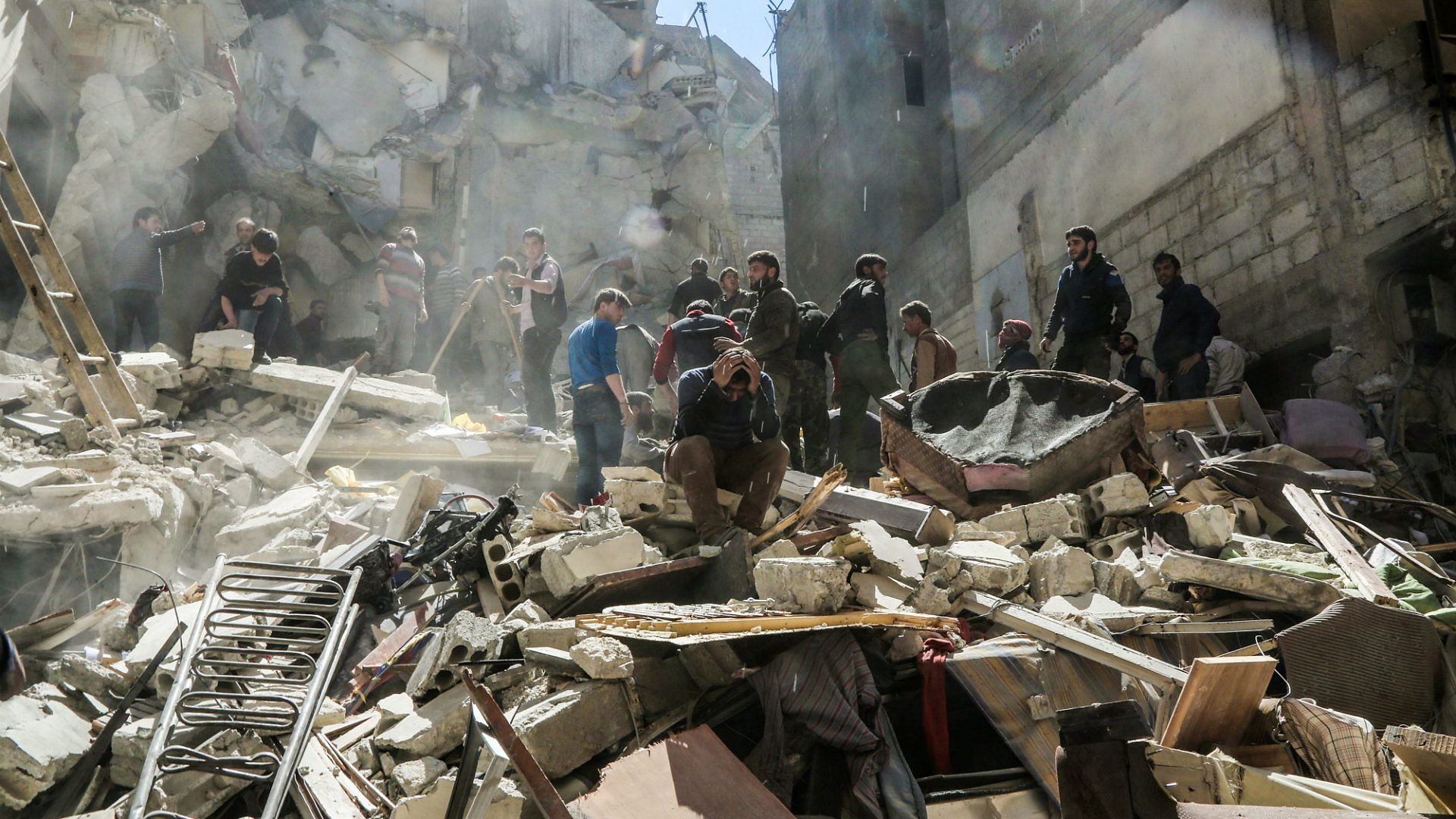
 The Syrian revolution began in Dera’a in 2011, and what transpires here is crucial to the viability of a political solution to the Syrian conflict. It was in Dera’a city that Syrian youth sprayed “The people want the fall of the regime” on walls and were arrested on March 6 of that year. The first mass protest against the regime—the so-called “Day of Rage”—occurred on March 15. On March 24, Dera’a saw the first massacre of the revolution, when security forces killed more than 200 civilians just outside the Omari mosque in Dera’a’s Old City. [The Nation could not independently verify this figure and therefore does not endorse its authenticity. International reporting at the time of the event placed the number killed there, on that day and in the days afterward, at anywhere from 5 to 150.]

 Perhaps because the revolution began here, its spirit has been preserved in its purest form in the south. Unlike other liberated areas—such as Idlib in the north and East Ghouta in the Damascus suburbs, which are dominated by Islamist military factions—FSA factions here, collectively known as the Southern Front, have successfully prevented the spread of such groups. Both a free press and civil society thrive here, along with independent civil courts that resolve disputes between individuals. If the Assad regime can’t preserve a fragile peace with the Southern Front, it’s unlikely to do so elsewhere.

 The fact that the Southern Front factions are committed to the principles of democracy has a downside. This region has historically enjoyed more support from the United States, Britain, and other sectors of the international community than other FSA factions and has been spared the grinding poverty in besieged parts of Syria where Islamists or other radical forces have sway. On the other hand, much of what goes on in our province goes unreported, both internationally and in the regional press. When violations occur, they often go unnoticed.

 That is not to say that locals are uninformed. The near-clash in my area took place in late July, just over two months after the fourth round of talks in Astana, Kazakhstan, in May, where Russia, Iran, and Turkey came up with the idea of implementing “de-escalation zones” across Syria. But neither those talks nor the US-brokered cease-fire has stopped regime aircraft from regularly bombing Dera’a city, the large provincial capital. Nonetheless, on this particular night, in Sama Hneidat, regime forces may have figured that it wasn’t worth violating the cease-fire over a battle they were likely to lose.

 “Putin’s playing with Papa Trump,” a neighbor, Abu Faysal, told me the next morning, over coffee. “Everyone thinks Trump is crazy and that Putin—guided by logic—is pulling the strings,” he added. “What they don’t realize is that Syria makes everybody crazy.” Abu Faysal was convinced that the regime buildup was a Russian attempt to intimidate both the FSA and the United States to gain leverage for the next round of talks, whenever they would be. “Trump tried to show Russia he was the worst by bombing Assad,” a reference to the April 6 US airstrikes on Syria’s Shayrat air base after Assad used chemical weapons in Khan Sheikhoun. “Now Putin’s saying, ‘I can be crazy too, but a different kind of crazy.’”


 When the “Day of Rage” protests began, I was an economics major at Tishreen University in the northwest province of Latakia. Dominated by the Assad family’s minority Alawite sect, Latakia has always been loyal to the regime, and Tishreen University was no different. When I and other students organized a march in solidarity with Dera’a, most of the student body watched from the sidelines as we entered the main quad, to be detained by school security.

 By April 2011, many of the Tishreen students were labeling the protesters in Dera’a as radical Sunni jihadists. The regime had already adopted the slogan “us or the terrorists.” The university paper published articles claiming that intelligence had been intercepted demonstrating that “calls for help” had been made to international jihadists like Al Qaeda.

 It was shocking to hear what was being said about my distant home province. The mood on campus was becoming so different from what I was hearing back home that I decided to leave university, return home, and join the protesters, or at least comfort my family. In the end I did both, as I learned soon after that one of my cousins, Ahmed, had been shot and wounded by security forces during a demonstration.


 Shortly after my return home, six friends and I, armed with just two AK-47s and several hunting rifles, set up our town’s first neighborhood watch along the road leading south toward the Tha’la air base, which we would man at night. It was a modest effort, but our ranks would slowly grow, and to our surprise, we got support from sympathetic army officers, many of whom would later defect and join the opposition.

 One such person was Zakaria, a sergeant from the northeastern town of Qamishli who was stationed at the 52nd Brigade base located just west of Muleiha Sharqiyya. Zakaria often frequented the mobile-phone shop my family owned, initially to buy credit for his phone. As time went on, Zakaria became more and more friendly with me and our staff, and ultimately began to speak about his desire to defect, saying that he feared what would happen to his family if he were killed.

 One day Zakaria gave me his phone number and told me to call if I needed anything. I wasn’t sure if he was aware of my nighttime activity manning an armed checkpoint to deter his security forces. However, several weeks later, it was Zakaria who reached out to me, and it was clear from our conversation that he was privy to what I was up to.

 “Security forces are going to launch night raids tonight looking for Khaled, Fadi, and Maher,” he said, referring to another volunteer named Khaled. “They’re going to charge them with engaging in terrorist activity.” I forwarded the message, advising all three to leave town. I also advised the other guys manning the checkpoint to stay home. Sure enough, the raids were launched, but the security forces came up empty-handed.

 “Whoever saves one life—it is as if he had saved all of mankind,” I told Zakaria the next day, citing a well-known passage from the Quran and Talmud during a phone call thanking him for his help. He later defected from the army while on leave in Damascus. Before doing so he introduced us to other sympathetic army officers who would continue to help us stay several steps ahead of the regime. The last I heard, Zakaria was dead, killed while fighting the regime alongside an FSA faction in the eastern Damascus suburb of Qabun.


 As the months went on, I switched from carrying a rifle to a camera. As the armed insurgency phase of the revolution intensified, more and more Syrian army officers defected to the opposition who were far more qualified than I to provide security for our town. Furthermore, working at my family’s mobile-phone shop afforded me more experience than most people in my area working with computers, cameras, and other forms of technology.

 My experience with Zakaria and other army officers who would later defect also meant I was uniquely placed to coordinate with the armed factions and track developments through the course of the revolution. I dived headfirst into journalism and activism and haven’t looked back. My work has taken me to frontlines all over the south, where I’ve been able to witness FSA losses and gains and had the privilege of developing ties with other like-minded activists. Our job is to use our cameras to document regime war crimes and tell individual stories of triumph, failure, and perseverance that collectively make up the ethos of resistance in the south.

 My work allows me to see first-hand the solidarity among the southern factions that characterize our region. Unlike in other parts of the country, where individual groups lay claim to specific towns, regions, or swaths of land, in many parts of the south armed brigades and factions share territory and come and go between different front lines, as the situation requires. This freedom of movement extends to myself and others, and is a testament to our region’s success: Though I pledge allegiance to no faction, my work on behalf of the Syrian revolution ingratiates me with the Southern Front factions, whom I call my brothers.


 Ever since the fourth round of Astana talks in early May, when de-escalation zones were first broached, Syrian regime forces have adopted a series of new tactics in the Dera’a countryside that appear to be aimed at provoking a violent response from FSA opposition forces, while allowing the regime to maintain plausible deniability.

 The first incident occurred between May 28 and 30, when, similar to what happened in Sama Hneidat, hundreds of pro-Assad Iranian, Afghan, and Lebanese Hezbollah fighters mobilized with dozens of tanks and heavy artillery over a period of three days outside the town of Khirbat Ghazala, six miles northeast of Dera’a city. The show of force was interpreted by FSA artillery units stationed in the area as a direct provocation.

 Muhammad Badr al-Izra’i, an FSA commander stationed with a local artillery brigade, told me regime columns were approaching from two different directions, one from Damascus and the second from the frontlines in Dera’a city.

 Al-Izra’i was convinced the regime would claim it was implementing the terms of the Astana talks by de-escalating the fight in Dera’a and then, after the fact, send in the second column the next day and commit a massacre in Dera’a city. “They wanted to hide this fact from the international community, so they withdrew some forces first, in order to provide cover,” he said.

 To preempt an ambush of FSA forces in Dera’a city, al-Izra’i’s unit leader decided to fire on the regime forces approaching from Dera’a. Regime ranks took heavy losses, scattered, and withdrew in different directions. “Our actions that day are what showed the regime we’re not willing to stand for such trickery,” he said. The FSA stand at Khirbat Ghazala may explain why pro-regime forces stood down later in Sama Hneidat after the FSA mobilized its own reinforcements.


 Since then, regime forces have avoided clashing directly in the open with FSA factions in the Dera’a countryside, choosing instead to launch air strikes or quick hit and-run artillery attacks. The regime, it seems, is changing its tactics. Throughout June and July, regime forces have used airstrikes or hit-and-run artillery against the towns of Sayda, al-Na’ima, al-Laja, and the al-Nasib border crossing with Jordan. As it launches airstrikes, the regime claims it does so in response to the movement of terrorist groups, knowing that moderate FSA forces dominate opposition areas.

 One of those killed in a June 22 air strike in al-Na’ima was a close friend, Mustafa Abd al-Nur, a civilian who happened to be in the wrong place at the wrong time when Syrian regime jets dropped their bombs. Regime violations of the agreed-upon de-escalation zone aren’t as bad here as they are in other areas—in particular East Ghouta—but innocent people are still being killed due to the regime’s failure to live up to its promises.

 Most southerners are skeptical of Russian and regime intentions in the de-escalation zones. No one believes that Assad or his allies seriously intend to let the Syrian opposition maintain control of any part of the country in the mid- to long term. The Southern Front in turn has not abandoned its aim to defeat Assad militarily or force his government to dissolve.

 However, many here support de-escalation zones—but on the condition that Jordan and Russia, not Iran, serve as guarantors. That will allow the Southern Front time to redress problems within the region that have undermined the progress of our revolution for several years—in particular, rooting out what little remains of ISIS, HTS, and other extremist factions. I expect the regime would also like to take advantage of the calm to carry out a bit of spring-cleaning on its side as well.


 For now, the Assad regime is likely to try to sabotage and weaken the FSA in the south. Late at night on June 28, my own home was shot up by unknown assailants as I was sleeping next to my wife, just five days before the birth of our son. Luckily, no one was hurt, and we left to stay with family members in the town of Sayda, a safer spot deeper in opposition-held territory. My son, exposed to the sound of gunshots before his own birth and the sound of warplanes within his first month, will undoubtedly grow up fast, and will likely become desensitized to the sounds of war before he’s able to walk.

 As of now we don’t know who is responsible for the shooting. It could be elements of the Assad regime infiltrating behind enemy lines in order to kill those of us who are most active in the media. Or it could be the HTS/Al Qaeda affiliate Jabhat Fateh al-Sham (formerly Jabhat al-Nusra), whom I’ve been outspoken against since their arrival in the region back in 2013.

 Luckily, the south hasn’t fallen under the sway of radical jihadists as in other parts of the country, such as Idlib, East Ghouta, and Qalamoun. This stems partially from the social dynamics of the south and partially from luck. When the revolution began, many radical groups focused their efforts around Syria’s urban enclaves, such as Damascus, Hama, and Aleppo, ignoring the south. By the time Jabhat al-Nusra, ISIS, and others sought to penetrate the region, the social, democratic, and military infrastructure in place was strong enough to resist their spread.

 This infrastructure was undergirded by resilient communal ties that have evolved and intertwined since the earliest days of the revolution, when individuals such as myself and others took the initial risks that were needed to inspire others and instill in them a sense of purpose. The south’s status as the birthplace of the revolution means we have had more time to evolve and strengthen these ties, building trust between individuals, communities, and towns that have in turn provided fertile ground for the development of grassroots, democratic reform.

 Many have died defending the south, and I expect many more will. However, military power alone hasn’t got us where we are.

 Activists and journalists such as myself aren’t doing it for salary or some messianic ideology full of empty promises. We fight for our families, our homes, and the dignity of our towns. The civil, social, and political infrastructure is the bedrock that holds our foundation in place, even if soldiers die in the fighting. We think our model is an example, and we trust that our allies abroad won’t abandon us. I believe the south will prevail.'

Tuesday, 19 September 2017

Regime Forces Lose Strategic Areas In Northern Hama

 'At the beginning of today, the Syrian regime and its militias lost several military positions following a military operation launched by several military factions in the northern Hama countryside.

According to media sources affiliated with the Syrian regime, its troops retreated from al-Qahera, Al-Shaatha, Al-Talisiyah and Al-Suda hill near the town of Ma'an in the northern countryside of Hama, military factions have not released information yet.

The Russia warplanes launched several air raids on the villages and towns of the northern Hama countryside, as well as rendering two Hospitals in both Kernabal and Khan Sheikhun out of service as a result of the raids.

The northern Hama countryside has been relatively calm in the military operations since entering the de-escalation agreement on the 4th of May, but the regime forces attacked the opposition factions in violation of the agreement in both the Janaba and al-Zalkeyat and seized them north of Hama.'


 Note 14/7/25, link broken.

Three hospitals in an hour


 'Three hospitals in an hour were destroyed by Assad regime and Russian warplanes in the countryside of Idlib. The Obstetrics hospital of "Tah" was one of them. This is in addition to two schools.

 Rahma hospital in Khan Sheikhoun in the countryside of Idlib has been targeted by Assad planes.

 They always start killing life and hope.'

Monday, 18 September 2017

In Syria, the World’s Democracies Failed Us


 Fadi Azzam:

 
'Umar ibn al-Khattab, a chief adviser and successor to the Prophet Muhammad, was the last truly just ruler in the Arab world, and he died 1,400 years ago. Khattab was called “al-Farooq” — the one who distinguishes between right and wrong.

 He also uttered one of the most beautiful phrases in Arab history: “How can you turn people into slaves when their mothers gave birth to them as free human beings?”

 Khattab extended the Islamic empire as far as Persia and was renowned for establishing evenhanded governance throughout the conquered lands, including in what is now Syria.

 Damascus is a pivot point for understanding history and its movements. Conquered countless times, the city has always managed to remain steadfastly itself when its occupiers change.

 During the last century, Damascus established many of the essentials of democracy: elections, a parliament, political parties, anti-government protests, freedom of the press.

 Then came the Baath Party coup in 1963. Hafez al-Assad snatched freedom and instituted a paranoid regime. In 2000 his son Bashar succeeded him, and promised — at first — to redeem Syria. But the reform movement stalled.


 In March 2011, in the midst of the Arab Spring, protesters took to the streets of Damascus, demanding democratic reforms and the release of political prisoners. Security forces opened fire — and a revolution began, gradually convulsing all of Syria.

 In a video from that time, President Bashar al-Assad’s soldiers trampled a group of young protesters shackled in chains on the ground: You want freedom, you animals? Tell me: What is freedom? That was the question. And the Assad regime responded decisively.

 Meanwhile, in an area of Syria seized by Al Qaeda, a video camera documented how foreign fighters from Chechnya, France, Saudi Arabia and Tunisia were terrorizing the young people of the Syrian revolution, tearing down their flag. Then Al Qaeda posted signs on the roads under its control: “Democracy Is Blasphemy.”

 The Syrian tragedy came to dominate screens worldwide. And the question for Arab nations was clear: Do you understand the fate of those who demand freedom and democracy? This question, which was answered with Syrian blood, confirmed that this dreadful Arab Spring must end in Damascus.


 America and the West confined their intervention mainly to words, as if statements alone would counter the Assad regime’s brutality and the hatefulness of the imported terrorists. In our time, terrorism has emerged as an effective prescription for treating all diseases — a postmodern sorcery that has opened Syria’s doors to thousands of jihadis from around the world.

 Once in Syria, these bearded men drove tanks and fired machine guns, applying what they had learned from playing video games. Fantasy blended with fact so that the two were hard to separate.

 As terrorists streamed in and Syria erupted, the free world kept a safe distance. In 2014, President Barack Obama, defending the West’s lack of significant military intervention, questioned whether the “moderate opposition” in Syria — which included “farmers or dentists or maybe some radio reporters” — could ever prevail against “a battle-hardened regime, with support from external actors who have a lot at stake.”

 But if a Syrian dentist says to the world, in effect, “You have bad breath,” what’s wrong with that?


 We know how the United States has helped sustain brutal regimes in the Middle East and around the world, how it has overthrown democratically elected governments in Latin America and elsewhere. We know that Syria’s oil reserves don’t compare with Iraq’s and that we’re not vital enough to American interests for the United States to intervene on our behalf.

 We know what happened in Abu Ghraib prison. And we know what happens to people who find themselves at the wrong place when a drone strike hits. This is the power that America and the West can wield. But such power is immoral if it doesn’t assert the values of freedom and democracy for the world’s poor and dispossessed.

 We Syrians asked for help to end the massacres, to provide safe havens for civilians and to prosecute war criminals. Those pleas were futile. Syrian deaths became a moral scandal for the entire world.

 The nation’s most courageous men and women were killed while they danced and sang for freedom, dignity and democracy. There is no nobler death than this. Take a moment to view the faces of those who died in the streets and inside detention camps. You can find online the thousands of photos of the dead in government custody leaked by the Syrian defector code-named Caesar.


 The democratic world failed Syria. I don’t mean the West’s politicians, foreign ministers and generals. I mean its cultural elites, civil societies and human rights organizations. Those are the people who failed us.

 For us in the Middle East, democracy has brought misery — at relatively little cost to the West, which always protects its own interests first. Policy is tailored to business concerns. The focus of Western decision-makers today is “jobs, jobs, jobs …”

 The Sept. 11 attacks shattered a barrier. The West immediately took revenge on the poor of Afghanistan, and applied democracy there like a handkerchief on a hemorrhage.

 The supposed existence of weapons of mass destruction provided a pretext for Iraq’s annihilation, which allowed Iran to vandalize an enormous Arab nation. A democracy was created in Baghdad’s Green Zone, an area of just a few kilometers.

 Mr. Assad ridiculed Mr. Obama’s porous red lines. The former president claims that he owes a patch of his gray hair to the debates about what the United States should do in Syria. He won the Nobel Peace Prize — which he can’t talk about without being haunted by a photo of a child asphyxiated by sarin gas in Syria.


 Can democracy be achieved through the use of military force? The answer is yes. If the West had intervened in support of the Syrian revolution, democracy would have had a chance. Instead, the Syrian people have been left with democracy’s slogans and lies — and more destruction and extremism.

 The world’s free men and women have been tied up and forced to the ground by the leaders of the new era: Donald Trump, Vladimir Putin, Recep Tayyip Erdogan, Ayatollah Ali Khamenei, Benjamin Netanyahu and Mr. Assad himself. Each of them applauding while he tramples our backs and yells: You want freedom, you animals? Tell me: What is freedom?'


Fadi Azzam

This is only a battle in a longer struggle for justice

Image result for yassin al-haj saleh bbc interview newshour

 Yassin al-Haj Saleh:

 'The challenge that Syrians faced was to essentially change the political environment in the country, and this challenge has not been achieved. So everything will be worse in the country, Bashar is staying, and it is an occupied country; occupied by at least the Russians and the Iranians.

 What remains of the state is the killing machine. There are no services or services are in a pretty bad shape, schooling, almost everything; but the security tools, and the killing machine, is almost safe.

 The Salafi-jihadist source of strength is not only arms. They capitalise on destruction, on hopelessness. So maybe they'll be defeated, militarily speaking, but the ground will still be fertile for we can't say now what extremist groups. Everything that caused the dynamics of radicalisation, militarisation, Islamisation and sectarianisation are still there.

 The emancipatory movement is weakened. We are the ones, hundreds, thousands of us were killed under torture. Many disappeared and we don't know about them: my wife is one of them, my brother is one of them. Tens of thousands of people are displaced outside Syria in the neighbouring countries and in Europe, but there is a silver lining to this cloud, the creativity of these people on the artistic/cultural level. Maybe we are not powerful or influential, but I think we are trying to produce meanings for this horrible suffering of our country. Syria now is a global symbol in my opinion, and it is not the end of the struggle. Actually, I think this is only a battle in a longer struggle for justice, for equality, for freedom; and I hope that the democratic movement will have important work in this long struggle.

 Prison gave me a different maturity, I hope. Now I am more ready to fight for life, and also it was an inoculation against despair. I hope it changed me positively to be a more human agent and struggle for justice.'

Friday, 15 September 2017

My Syrian hometown fought the Islamic State and won


 Haid Haid:

 'And once we finally expelled IS, we started a reconciliation process to integrate local fighters back into our community. Three years later, Atarib is still in our control. Here's how we did it.

 I still remember my first visit to my hometown, Atarib, after the Islamic State (IS) group first showed up there. It was late 2013 when entering Syria through the Turkish border was still easy and the main danger you had to worry about were regime air strikes.

 In the main market, you could hear all sorts of foreign languages which was shocking because we were accustomed to hearing Arabic and not much else. A family of Asian-looking fighters who spoke neither Arabic, nor English had taken over my high school.

 “Daesh [the Arabic acronym for IS] was established literally over a night in Atarib,” said Ahmed, a local activist.

 “It was shocking to see that a group who did not exist the night before now has a military base, soldiers and logos all over the city. In other words, it was a jihadi coup.”

 Walking around town, now plastered in the IS logo and its signature black flag, it was impossible not to see a masked man in black or a fighter’s wife, casually walking around with a Kalashnikov.

 My city seemed to be in a permanent state of mourning.


 How IS ended up in Atarib in 2013 is a similar story to how the group ended up in pockets across the rest of Syria as it tried to establish territorial control in preparation for its proclaimed caliphate.

 In late 2011 as the civil war in Syria slowly evolved from peaceful uprisings into an armed conflict, al-Nusra was established in Syria with the support of the al-Qaeda-affiliated Islamic State in Iraq (ISI), which was at that time exploring opportunities to expand into Syria.

 But things deteriorated between these allies when al-Nusra refused to merge with ISI. Nusra, led by Abu Mohammed al-Golani, wanted to continue to follow al-Qaeda chief Ayman al-Zawahiri. Both ISI and Nusra shared the same vision of establishing a caliphate, but disagreed on how to achieve that goal. Nusra wanted to pursue a long term strategy, winning over locals in the process. Led by Abu Bakr al-Baghdadi, ISI’s strategy was to use whatever means necessary to take territory with little concern for hearts and minds.

 Eventually, these differences came to a head and, in April 2013, ISI and al-Nusra split when IS was officially created in Syria.

 As elsewhere in Syria, this division caused the majority of al-Nusra’s foreign fighters in Atarib – who were more focused on pursuing a caliphate than winning over locals - to defect and set up a branch of IS in the city. The newly-branded IS members took over al-Nusra’s centre in Atarib including its weapons and other belongings.

 Despite clear ideological and strategic differences with IS, the Free Syrian Army groups in Atarib (and elsewhere), made up mostly of locals, didn’t have enough capacity or international support to challenge the group. Knowing full well that IS’s goal was to take control of the city, the FSA reluctantly found common cause with IS in fighting the Syrian regime.


 Initially, IS seemed to accept that it would coexist with others in town. But soon enough, the group started to encourage members from others to defect to its ranks by offering public services that were otherwise hard to come by and not offered by other groups.

 “When cooking gas was not available in Atarib, Daesh started providing it at cheaper rates to people who registered at its centre,” said Waleed, a local activist.

 “When drinking water was not available, Daesh used a water tanker truck to provide people with water. It distributed water for free to its members, and at a low rate to those who registered their names at its centre. As a result, people started joining Daesh,” he said.

 IS reportedly attempted to take over Atarib’s main bakery to provide bread at lower prices and also offered to supply thousands of free litres of diesel to the city’s revolutionary council on condition that the latter allowed IS to run it.

 Likewise, IS also made efforts to embed itself in the community through provision of dawa and also through awards ceremonies.

 “They used to ask people easy questions so whoever participated would win. They knew that people were poor, and that by paying sizeable amounts for silly questions – usually 5,000 SYP [then around $20] for a regular prize, with the big prize going up to 25,000 SYP [around $100] – the number of people attending these events would double every time,” said local activist Waleed.

 Members of the group also tried to highlight the inefficiency of the existing local government and paint IS as the best crisis manager and city administrator.

 “During Daesh’s public events, the host speakers used to publicly criticise the police, the checkpoints and even the local court, and talk about its corruption, incompetence, not following sharia,” Mahmoud, an activist in Atarib, said. “They were trying to turn locals against those in charge.”

 According to Mosab, a local activist, IS’s court – operating in parallel to the local court supported by the local council and the FSA group - was willing to do whatever it took to solve its cases, including coercing people to confess and comply, to maintain an appearance of efficiency.

 “One day my friend had a car accident in the city and his gun was stolen from his car in the ensuing confusion. He filed a complaint with the local court, but nothing happened due to lack of evidence,” Mosab told me.

 “He later lodged a complaint with Daesh’s court. A few days later, Daesh found a suspect, charged him and gave a gun back to my friend, but it was not the same gun he lost,” he said.

 Around four months after Baghdadi launched IS from his underground base in Iraq in April 2013, IS had secured its presence in Atarib and moved to compete more directly with the other rebel groups, seemingly willing to do anything it took to gain control.


 To me, there was never anything that special about Atarib before the peaceful demonstrations of 2011 began. About 25km west of the city of Aleppo with around 30,000 mostly Sunni Arabs, our city wasn’t the site of anything historic or the hometown of anyone particularly famous. The truth is that from the moment I could leave Atarib to start university, I did.

 Atarib means soil. I have no idea why it was called this, but the name says a bit about the purpose it has serves: it is a large agricultural and trading centre serving as a strategic transport hub between the city of Aleppo, the northern countryside of neighbouring Idlib governorate, and the Bab al-Hawa border crossing on the Syrian–Turkish border.

 Anti-regime demonstrations took place in Atarib as early as April 2011, and the city swiftly became an important protest centre for both the district of Aleppo and for the city itself.

 One reason for Atarib’s rise as a pocket of peaceful protest were the large numbers of young, university-educated people living in the city. But also important was a strong network for extended families living in the city who provided safe harbour and supported their protesting relatives even if they themselves weren’t in the streets.

 But it wasn’t a free for all. Pro-regime locals and shabiha in the area harassed protesters and their families, leading to the emergence of a group of locals who protected the demonstrators. As military officers defected from the regime, Atarib – with its revolutionary reputation – was one of the first urban centres to host them. On 12 February 2012, one of the defected officers established the first FSA faction in the city.

 The regime forces immediately reacted and stormed the city two days later. After brief armed resistance, local dissidents fled the city to avoid persecution. The local FSA group in Atarib district, which was made up of locals from the city itself and from the wider district, continued to recruit people until it was able to push the pro-regime forces out of the city in July 2012 and out of most of northern Syria.

 Several months later, IS turned up.


 As the fight against the regime continued, Atarib, located on a crucial rebel supply line running between Turkey and Idlib and a revolutionary powerhouse that had helped secure rural Aleppo against the regime, became vitally important – and a key target for IS as the group attempted to capture the area.

 “Controlling Atarib would have allowed Daesh to dominate the whole area,” said local activist Mustafa.

 By late 2013, IS’s increased influence in Atarib had encouraged the group to do whatever it took to compete with locals for control of the city.

 Arrests, abductions and assassinations by the group of anyone who opposed, questioned or was perceived to question IS activities became rampant. Using money and other leverage, the group swiftly established a wide network of informants to better understand local dynamics, recruit supporters and eliminate potential threats.

 The network, said Abdullah, another local activist, “created mistrust between people as they did not know who could be spying on them. As a result, many people joined IS in order to protect themselves”.

 IS’s chief targets included independent activists, citizen journalists, influential figures and FSA members and commanders. Among the most prominent victims was my cousin Samar Saleh who was kidnapped off the street with her journalist friend, Mohammad Al-Omar, in Atarib in August 2013. An eyewitness saw a member of IS when Samar and Mohammad were pulled off the street, but otherwise, we have no information about what has happened to them since.

 “It drove people crazy, the spike in the number of people who were forcibly disappeared,” said Mosab.

 All of the evidence indicated that IS was the group behind the majority of them, he said. But the group “was always denying the whereabouts of those people. In many instances, Daesh denied arresting people, yet a few days later the same people were presented and sentenced in front of the group’s court.”

 By now, fear of IS was widespread, and yet the true extent of the group’s power in the city – and the number of groups that had sworn secret allegiance to it – was a mystery. Unable to know who was aligned with whom, many locals and local groups who would have fought IS were hesitant to act.

 IS’s next move, however, proved to be a turning point.


 In the first days of 2014, IS’s skirmishes with local groups turned into a full-scale confrontation as the group attempted to seize the city for good.

 The change happened quickly: IS established a series of checkpoints to isolate Atarib and prevent opposition reinforcements from reaching it, and also mobilised its forces from areas of Aleppo and Idlib in preparation for storming the city.

 On 2 January 2014, IS fighters attempted to arrest my other cousin, Mahmoud Haid, on charges of corruption and affiliation with the Syrian regime. His arrest was part of a wider campaign against corrupt individuals. Local residents intervened to prevent his arrest, and demanded that IS follow the correct procedure in lodging a complaint against him before the local court. The city’s police and local court similarly took action to prevent his detention as IS’s arrest squad withdrew angrily.

 IS members later returned with a warrant demanding that the head of the local court come to the IS-controlled police station in al-Dana, a nearby town under IS authority. Atarib’s own authorities refused to hand anyone over, insisting that locals should be questioned or prosecuted within the city itself.

 IS’s local commander then went to the police station in Atarib and threatened to storm the city if the group’s demands were not met. At about the same time, the body of a local FSA fighter, Ali Obeid – a known opponent of IS who had last been seen heading towards one of the group’s checkpoints outside the city – was discovered in a town close by, apparently showing signs of torture; IS was assumed to be the main suspect.

 This chain of events provoked demonstrations against IS on the streets of Atarib, and the city’s notables and local armed groups held an emergency meeting and, after months of an uneasy toleration of the group, the city decided to fight.

 An FSA commander who was present at the meeting said it was an easy choice.

 “People were demonstrating against Daesh in the streets. Daesh also threatened to storm the city and persecute us. Therefore, everyone agreed that fighting was our only choice,” he said.

 Preparations for the armed resistance were to be led by the local rebel groups, and among the various roles assigned at the meeting, two local military leaders were unanimously appointed to the roles of principal commander and military commander.

 A broader meeting among members of the public followed, which was broadcast widely over walkie- talkies and from the city’s mosques. Members of local armed groups and civilians were urged to participate in the defence of Atarib in whatever way they could.

 Based on instructions from the newly designated military commander, civilians set up makeshift checkpoints at all the main entry points to the city, while some local armed groups and business leaders began distributing weapons.

 “The sense of solidarity among civilians was unbelievable. It reminded me of the early days of the peaceful demonstrations against Assad, everyone was working together,” said Mosa’b.

 “Some people started cooking and looking after those who were at the checkpoints. Others were taking turns at the checkpoints or were patrolling throughout the city. Some donated money, ammunition, arms. Even restaurants were serving food for free.”


 On 2 January, within hours of the various meetings around town, the fight against IS was underway. As the group began shelling Atarib from a nearby town, resistance members immediately returned fire, and soon the IS fighters still inside the city were surrounded.

 For hours, the IS fighters and local leaders talked in an effort to negotiate their surrender, but it eventually became clear that the fighters were trying to delay efforts in the hope that reinforcements would arrive to rescue them. The next day, IS forces attempted to storm the city again, but were quickly repelled by locals.

 That same afternoon, the military commander briefed residents about the fight against IS at a further meeting convened in the city’s largest mosque during Friday prayers. He appealed to the members of the local community to forget about any differences they may have had over their positions since the war had started and work together to defend the city.

 Later the same day, led by the military commander, armed civilians joined local armed groups and stormed IS’s headquarters in the city, capturing the remaining IS members – mostly foreign nationals – who had opted to fight rather than surrender. In the weeks that followed, the speed of IS’s defeat in Atarib encouraged other groups to join the fight and expel the group from their areas in Aleppo and Idlib.


 The fight against IS was swift. But what is particularly notable about Atarib’s resistance to IS is that the fight was followed almost immediately by a locally run reconciliation process that helped IS fighters who had been pressured to join the group or even those who were now disillusioned to reintegrate with the community.

 Local leaders in Atarib including elders, doctors and scholars told IS supporters – some of whom were their own family members - that if they chose not to fight for the group, they would be safe, and many of the fighters choose to put down their arms for this reason.

 “We decided to give people a way out in case they wanted one. We all make mistakes, and people should always have a second chance,” said Omar, a local who fought against IS.

 “Moreover, killing locals, even if they are members of IS, would badly impact the relationship between the residents of the city. Luckily, almost all of the locals decided not to fight, which weakened Daesh and preserved the unity of our community.”

 Of course, there were some in Atarib who didn’t want to forgive the IS fighters, but by and large, as influential leaders in the city voiced their support for reconciliation, most people fell in line.

 The process had flaws. It was hard to make sure that former members didn’t rejoin IS somewhere else later or switch allegiance to the ideologically similar al-Nusra as that group moved in to take control of former IS strategic positions and weaponry.

 But three years on, the city of Atarib remains under local control, supported by strong civil society and rebel groups in opposition to the Assad regime. This strength has contributed to the city’s ability to protect itself in the face of the recent significant expansion of al-Nusra’s influence following the group’s merger with other rebel groups in the Hayat Tahrir al-Sham (HTS) or Levant Liberation Committee alliance.


 Both before and after the merger, al-Nusra launched a large number of offensives to capture key strategic areas and resources, but Atarib has evaded HTS control.

 The city’s residents believe that their ability to work together, bolstered by the continued strong presence of rebel groups in the city, as well as Atarib’s record of resistance to al-Nusra’s previous attempt to take control of the city in early 2015, are chief factors that continue to hold al-Nusra at bay.

 In the context of the wider conflict against IS in Syria, the US-led anti-IS campaign has largely succeeded in conquering the group militarily, but it hasn’t tackled how to sustain these achievements. A sole focus on defeating IS militarily, without a broader strategy to address the conditions that first allowed IS to flourish, will likely further enable al-Nusra, which has been exploiting the power vacuum in areas where IS has collapsed.

 A strategy to defeat IS – and other ideologically similar extremist groups – can only be successful if it is undertaken comprehensively and in cooperation with local communities to identify and address the deep-rooted political, economic, social and cultural problems that have allowed such groups to rise and flourish.

 Strong local communities that are able to create their own alternatives and solutions like Atarib will have the incentive to fight for them, especially when they trust that what comes next will not be worse.

 If the US-led coalition wants to defeat IS without it re-emerging, it’s military strategy should be coupled with locally sensitive reconciliation processes to address the issue of reintegrating IS members fully within a local community. Many lessons learned from the Atarib experience could be applied in this context.'

Thursday, 14 September 2017

The Importance of Justice: Syria’s Disappeared


 Bente Scheller:

 
'I was first confronted with the fate of political prisoners in Syria 15 years ago. To this day, I am grateful for the conversations with lawyers such as Anwar al-Bounni, who is in attendance today, and Razan Zeitouneh, who was abducted in 2013.

 One day Razan Zeitouneh took me along to meet Fares Mourad who had, after 20 years imprisonment, finally been released. First sentenced to death, his sentence was later reduced to seven years imprisonment, and yet he was detained for another 13 years. Prisoners in Syria were never granted claimable rights.

 Fares was sitting across from me. Even though he could no longer raise his head and was only able to look at me with great strain, he smiled. “What irony that the first foreigner I meet happens to be German,” he said and pointed to his overstretched neck: “We call the torture technique with which this was done to me the ‘German chair’.”


 Excruciating detention conditions and torture always were defining features of the Syrian state under Assad rule. That did not first begin with the onset of the Syrian revolution.

 Thousands were killed in the Hama massacre in 1982, while thousands more disappeared in prisons. To date, no trace of them has been found.

 The neighbouring country, Lebanon, saw the Syrian army in their capacity as occupying power deport political prisoners to Syria and to this day 30,000 of those disappeared are not accounted for.

 It is not without reason that the Syrian figure of speech for disappearing without a trace goes, “where not even the blue fly will find you”. The bluebottle fly is the very first fly to lay its maggots on a corpse.


 Disappearance is only possible in a state that covertly kills and does away with the evidence. And yet, in Syria, the point is not just to eradicate lives. To the state, it is at least just as important to express contempt and to humiliate the relatives who are reduced to petitioners.

 For those who wish to gain an understanding of how prisoners were tortured already in the 1980s in Palmyra’s notorious jail, I recommend the recently released film Tadmor by Monika Borgmann and Lokman Slim. In it, former prisoners reconstruct the hell they lived through and play out a typical day in the prison.

 With the violent suppression of the Syrian revolution in 2011, the extent of arrests, disappearances and torture assumed an entirely new dimension.


 Back when the revolution started gaining momentum, activists were in good spirits and confident that they would succeed in bringing an end to the system. Many who had been detained short-term were determined to continue with their efforts:

 “They arrest us, and then we are released, and we continue” – that is how many of our partners described it during the first years.

 It was clear to them that they would face detention. And yet they expected there to be boundaries which the regime would not infringe upon at a large scale. They were convinced that they would get away with their lives.

 This certainty soon dwindled once it became clear that many would indeed not survive. When the cases in which prisoners of all ages survived imprisonment only by some weeks, at times only a few days, began to amass and it could no longer be ignored that death by torture had become method, the mood hardened. That also promoted the arming of the uprising.


 The photographs taken on behalf of the regime by the Syrian military member code-named “Caesar” – images of prisoners tortured to death in the regime’s detention centres and prisons – depict at least 6,700 victims of the gruelling state leadership.

 Investigator Stephen Rapp describes it as “killing at an industrial level”, and he furthermore postulates that already the available documents on these crimes are the most extensive set of records “since Nuremberg”.

 The “Out of Sight, Out of Mind: Deaths in Detention in the Syrian Arab Republic” report released by the UN Commission of Inquiry in 2015, or the reports published by Human Rights Watch or Amnesty International on detention conditions and the systematic execution of thousands in the Sednaya Prison, have put beyond doubt that the killing of those arbitrarily arrested has become method.

 Despite the circumstance that this ineffable horror has been precisely documented, there has been no noteworthy political outcry.

 Whether the grounds of the Sednaya Prison actually contain a crematorium – as suspected by the State Department – is yet to be determined.

 However, the fact that tens of thousands of people have been disappeared and no news as to their whereabouts has been received for years suggests that a majority of them are no longer alive.


 Why is there no push for international access to this prison? How is it possible that especially among the ranks of German politicians so many of the bloodcurdling crimes committed by the Syrian regime and its main backers, Russia and Iran, are passed over or even played down?

 Ethnic cleansing is well underway in Syria – pursued in great part not, as oftentimes presumed, by ISIS or Daesh, but rather by the regime. The infamous “green buses” are used to deport thousands against their will, and ghost towns are created, all on the basis of religious affiliation.

 The Caesar photographs and the film on the disappeared were shown in Washington’s Holocaust Memorial Museum.

 In Germany, however, most politicians conduct themselves guardedly. Most notably in the run-up to the parliamentary elections.

 UN Emergency Relief Coordinator Stephen O’Brien speaks of the greatest humanitarian crisis of the century in relation to Syria.

 Insofar, states and international organisations pose the question of how one can help, how especially the people in Syria can be helped.


 The majority of UN humanitarian aid distribution is not aligned with neediness and the relevant criteria – independence, impartiality and neutrality – but aid is instead distributed plain and simply via Damascus in an area controlled by the regime. In light of what is known of the detention conditions in Syria, the question arises, in my view, to what extent humanitarian aid is used not to alleviate suffering, but to contribute to the horror. Medical facilities in regime-controlled areas are an integral part of the torture apparatus. Louisa Loveluck and Zakaria Zakaria wrote in the Washington in April: “Medicine has been used as a weapon of war since the earliest days of the uprising, when pro-government doctors performed amputations on protesters for minor injuries.”

 Survivor Mohsen al-Masri explains, “Prisoners learned to stay silent when guards asked who needed to go to the hospital. It didn’t matter what they did to us; we had to pretend we were fine. People rarely came back from those trips.”[2]

 In a state which uses doctors and hospitals as part of its brutal obliteration of the opposition, the assessment of what one delivers to this system becomes a political and a moral issue.

 The UN Special Envoy for Syria, Staffan de Mistura, has broached the matter of releasing political prisoners in advance of each round of Geneva peace talks. The release of political prisoners would be a confidence-building measure and would signal that the regime takes an interest in a negotiated settlement.

 The fact that the Assad regime, after all these years, is unwilling to make such a gesture speaks volumes for the prospects of the talks. For the time being, they seem merely like a means to let time pass.

 Time in which the regime continues to wage its relentless war against insurgents, whom it bluntly subsumes under the category of “terrorists”. Time during which the international community gives the impression of being active without however being capable of producing any tangible progress, particularly in relation to the improvement of the living conditions of civilians in Syria. Every day more people are arrested, and every day more people die in captivity.


 The regime’s continuation of large-scale arrests and disappearances on the one hand is due to the circumstance that political prisoners are used as leverage to pressurize relatives. At times the objective is to coerce another member of the detainee’s family to turn themselves in. Oftentimes the motives are of a material nature. The families of political prisoners are forced to hand over money, even just to obtain information on the whereabouts of the person concerned. Ever-present corruption in Syria renders imprisonment an individual source of income for civil servants at every level. Since 2011, this has downright blossomed into a grim branch of the war economy, a self-sufficient system. Many of those who have become indebted or who have sold their possessions in an attempt to scrape together money for the more and more exorbitant demands of the security forces have later come to realise that their relatives were already deceased at the time of payment.

 On the other hand, the reason for which arrests and abuse resulting in death are pursued is that the regime needs not fear any consequences. The meticulous documentation by Caesar and others, but also the fact that henchmen of the regime still continue to publish videos online of them torturing detainees bears witness to that.

 Legal reviews such as the one initiated by Anwar al-Bounni and Mazen Darwish, in cooperation with the European Center for Constitutional and Human Rights, are therefore of grave importance. A clear message must be sent to the effect that despite the present state of connivance due to political unwillingness, the crimes committed will not remain unpunished in the long term.

 If we switch from the international to the local perspective to examine in detail the so-called “local ceasefires”, it becomes apparent that here also the issue of prisoners assumes great importance.


 Close to one million Syrian men and women live under siege according to the estimate released by Siege Watch – almost all of them are being besieged by the regime. By starving the population and withholding medical care, the regime and its allies attempt to forcefully elicit surrenders. In the last months alone, numerous locations in the environs of Damascus have been depopulated in the full sense of the word. “Current population: zero. No longer monitored,” Siege Watch states on its interactive map.

 In the course of negotiations of the conditions for the surrender of a locality, the opposition’s demand for the release of prisoners proves to be an especially tenuous issue.

 That is typically the point at which the negotiations are abandoned and the issue fails to find its place in the final settlement – and even if it does, based on the experiences to date, the regime only rarely complies with its commitments. This raises the question: Why?

 Only because the regime, even at a small scale, is not prepared to commit to confidence-building measures? Or because it aims to prevent witness statements? Or because the individuals in question have perhaps already lost their lives and their corpses have long been buried in mass graves?

 That takes us back to the question of why not more is done at an international level to grind to a halt the mass killings in Syria.

 Syrian activists are left to battle a set of problems at international level. Democratic forces in Syria are continually worn down by all of the armed parties who have no interest in freedom or rule of law – ISIS and other Islamic extremists, the authoritarian tendencies also present amongst Kurdish groups, and the regime. Abroad they are often told that there are “no good guys” left in Syria – ignorance as justification for inaction.


 Time and time again, those driven by nostalgia reminisce about an illusory stability, security and peaceful togetherness in Syria prior to 2011. While this may have been the impression a traveler and outside observer could have obtained, it fails to do justice to the real-life experiences of many Syrian citizens.

 In the face of the openly and wilfully flaunted reign of terror by the so-called “Islamic State”, the leap to designate Assad the “lesser evil” is quickly made in an international context, regardless of the well-documented fact that his regime is responsible for the majority of human rights offences and war crimes.

 The Assad regime is culpable for more than 90% of deaths in Syria. Amongst those tortured to death, according to the Syrian Network for Human Rights, the figure rises to 99%. And yet, the myth that this regime is worth preserving cannot be eradicated.

 Whoever describes the regime as a “lesser evil” in the same breath tends to make reference to the minorities living in Syria and suggests Assad is their guardian. That is equally only tenable when one turns a blind eye to what is actually taking place. Neither are those rising up against Assad exclusively members of the Sunni majority, nor does the affiliation with a minority entail automatic protection. Some of the attendees today can give their own painful accounts of that.

 Those representing the “Assad is the guardian of minorities” dictum lose sight entirely of the fact that the protection of minorities is a question of guaranteed rights. Whoever, for better or for worse, tethers the matter of minority rights to a person – especially a person who tramples all over human rights – denies minorities their rights and renders their fate a question of mercy.

 Just like all others, members of minority groups in Syria also cannot count on legal rights and legislation. They have been taken hostage by the regime and have thereby become pawns; the decision of whether to grant them protection or not has been a bargaining chip at Assad’s disposal throughout the entire conflict.


 Just as important as it is to demand guarantees for the rights of minorities from opposition forces, it is necessary to speak about rights for members of a majority and, when they are being killed and prosecuted, it is crucial not to remain idle. The desire for simple explanations should not entice anyone to indulge in the regime’s rhetoric of “us” and “them” or to contemplate the conflict exclusively through a denominational prism.

 Like in every other conflict, the majority of people in Syria is made up by unarmed civilians whose rights and lives we carry the responsibility to support, notwithstanding their denomination.

 All parties who commit crimes in the course of this conflict need to be held accountable. Suffering cannot be measured in numbers. And yet, failing to act for the reason of supposed balance when evaluating the difference in the extent of crimes committed by each party in the conflict falls short.

 While the Assad regime is responsible for an overwhelming proportion of deaths and violence in Syria, it remains unfazed and continues to lay claim to international legitimacy. This legitimacy however does not find representation in form of a seat in the UN, but rather through actions. Legitimate rule brings with it not only rights, but also duties.

 Assad has claimed the right to destroy the Syrian population whilst he should actually commit himself to its protection.

 Syria has been part of the international Convention against Torture since 2004.

 Syria is, as documented by a UN resolution from 2015, the only state that is part of the Chemical Weapons Convention in which chemical weapons continue to be deployed. By the very regime which joined the convention.

 The achievements made in the realm of international law during the past decades, in the areas of unconventional weapons and the responsibility to protect, are being systematically dismantled in Syria. That constitutes an encouraging signal to dictators worldwide – devastating for civilians and problematic for the vision for a world which aims to abandon the rule of the most powerful.

 The reticence in Germany, the silence of other countries when faced with the overwhelming body of evidence leaves survivors aghast.


 Garance Le Caisne, in her book “Operation Caesar”, quotes one of those who assisted Caesar in smuggling photographs abroad, Sami:

 "The war has already been ongoing for four years. And yet diplomats speak of reconciliation and transitions. Does that mean the intelligence officials will retain their positions? After all that has happened? And Caesar and I will continue to be pursued by the regime?"

 The release of prisoners is the main concern of various Syrian activists, amongst others, the “families of the disappeared” and the ”Save the Rest” campaign. In reference to the typical procedure whereby most prisoners are first taken to the mostly underground detention centres of the Syrian intelligence services, “Save the Rest” reminds us: “Not everyone underground is dead, there are thousands of lives waiting to be saved.”

 To all intents and purposes, international efforts should be aligned in order to put an end to the murders in Syria. However, as long as there are no genuine efforts discernible, it is essential to offer activists and civilians at least some form of outlook. For this reason, the legal review of unjust ongoings is crucial.

 I extend my deep gratitude and great respect to those who with their reports and witness statements disclose the happenings in Syria and to those who have seized the courage to take legal action. Courage not only because they speak of the unspeakable, but also because it carries danger for themselves and their relatives. The long arm of the Syrian regime reaches farther than just the states bordering Syria in which the witnesses of inconvenient proceedings against the regime frequently fall victim to attacks and arrests.

 Likewise in Germany, we can find examples of how perpetrators sent by the Syrian regime have intimidated regime opponents, at times not shying away from physical violence.

 It therefore becomes all the more important – now and in future – to enable survivors of tyrannical regimes to seek justice.'

Image result for bente scheller

Wednesday, 13 September 2017

The world is wrong to let mass-murderer Assad remain


 James Snell:

 'With the defeat of the Islamic State group imminent, the future of Syria is beginning to take shape - and many nations have sought to promote their preferred visions for the country through covert or explicit intervention.

 One might expect their objectives to be largely conflicting, but for the three most consequential external players - Iran, Russia and the United States - some unity is starting to solidify as they eye some preferred outcomes.

 Iran has spent the duration of the Syrian war propping up the regimeof Bashar al-Assad. This has included providing material aid and logistical support to Damascus, transporting Shia foreign fighters into Syria, and marshalling regime-allied militias. Iranian troops have been covertly fighting on Assad's side for many years.

 Russia's pro-Assad intervention has, since September 2015, involved a massive use of airpower, and changed the course of the war. Its results are clear to see: the war crimes, the mass civilian casualties, the bombing of Aleppo into submission, the clear targeting of opposition forces in preference to hitting IS - these were, in embryonic form, part of the operation from the beginning.


 The American part in all this is less clear cut. US policymakers have been saying for years that Assad should - in fact must - step aside. His crimes against the Syrian people are too great, and too visible, for those who are willing to see, to allow for the adoption of any other posture.

 But this stated position has, from the beginning, been a half-truth. The United States never committed to a policy of regime change in Syria. It vetted rebel groups and began ferrying arms to aid them, but never enthusiastically. Some of these programmes were declared early on to be failures and wound up.

 America's president in 2013, Barack Obama, did not seem to be pursuing regime change.

 When the dictator, who Obama said must go, used gas to murder civilians in East Ghouta - and in doing so, stepped over an American "red line" - there was no response.

 If the gassing of children in front of the world does not force the world's leading nation to take action, one can only conclude that no action was ever intended.


 Now, with a new president in office, and even after another chemical attack which shocked the world, the result of six years of policy is clear for all to see: the US is happy for Assad to remain in power and will even turn much of Syria over to the regime. This is a mistake. It's a terrible, world-historic mistake.

 Officialdom has a certain view of things. It peers at foreign revolutions with scepticism tinged with horror. And in many Western countries, officials have for years been pushing the line that Syria's revolution is a spent force. Some were saying so from the very beginning, in 2011.

 This inflexible view has prompted governments such as the UK to withdraw support from rebel forces. It has contributed to the failure of numerous American initiatives to arm Syria's revolutionaries. This has begun a self-fulfilling prophecy, with rebel groups, starved of support for years, failing to meet arbitrary standards for success.


 The net beneficiary of such deliberate neglect is Assad, whose forces have received sustained backing from two dedicated allies. Alone, the Iranian support to the regime has been immense. Adding Russia into the equation unbalances everything further. Syria's rebels have had sporadic foreign support, but they have never been able to count on it.

 In the wake of the international anti-IS campaign, the concerns of the people of Syria, tired of an otiose and corrupt tyranny, were pushed into the background.

 This campaign against IS has become the only show in town. Western governments care exclusively about IS' swift defeat, and seem to care little about who gains from collapse of "the Caliphate".


 The Assad regime has benefited from the pressure applied by dozens of nations to the shrinking Islamic State group. It has reaped the rewards territorially and can now claim - with little real evidence - that it is fighting terror. The regime's push into Deir az-Zour would be unthinkable without massive external action against IS; it simply lacks the manpower to execute anything of that scale on its own.

 At the same time, much of Syria is being given over to the Syrian Democratic Forces, a tightly controlled subsidiary of the Kurdish People's Protection Units (YPG), whose origins remain unclear and whose objectives are often, despite repeated promises, not those of the occupants of the land being fought over.

 The wholehearted American and coalition support of the SDF is about little more than beating IS fast, and damn the consequences. But it is also, notably, about abdicating responsibility in every possible way.

 The SDF will likely hand over much of the territory it captures to the regime, and the Americans seem perfectly at peace with this.


 Hence the increasing international tolerance of Assad's survival. Many nations, such as France, still maintain that Assad must go and a transition take place. But this is fictive.

 There was no serious attempt on the part of the international coalition to get to Deir az-Zour before Assad, despite the fact that the regime cannot be counted upon permanently to take the territory from IS, nor to do so without huge numbers of civilian casualties.

 Assad's regime is being allowed to survive and even to benefit from the collapse of the Islamic State group. But the regime remains on life-support.

 Its survival, aided by Russia and Iran, is not sustainable, nor in the best interests of Syrians.

 For the United States and others to allow the regime to survive is beyond neglect or even cold indifference. This unhappy conclusion, a callous international consensus, represents a profound rejection of the Syrian people, and, in the American case, a deliberate step back from the duties commanded as the price for leading the world.'

How facts no longer matter in the Syrian conflict


 Lina Khatib:

 'There seems to be a growing sense of nonchalance regarding the Syrian conflict within the policy community both internationally and regionally, even when facts emerge that categorically prove that serious transgressions are taking place. Two recent events point to this trajectory, which is playing right into the hands of the Bashar al-Assad regime and its allies.

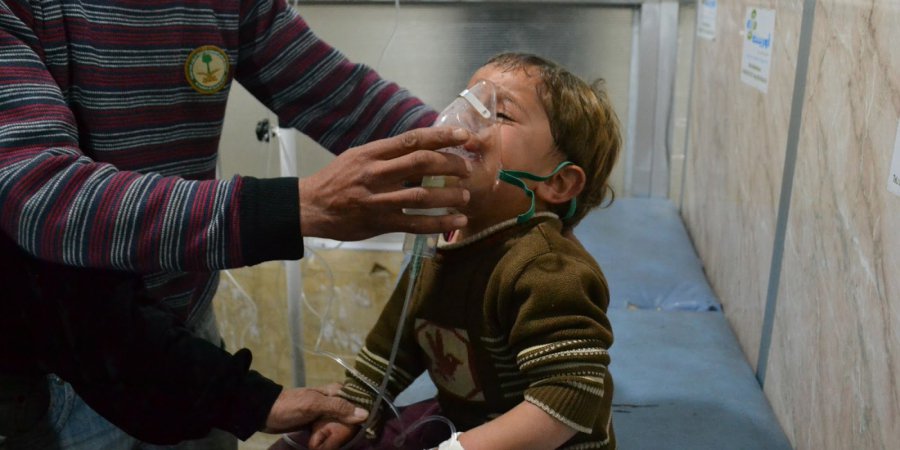
 The United Nations’ Independent Commission of Inquiry on Syria confirmed this week that the Syrian regime used sarin gas in its attack on Khan Sheikhoun that took place in April this year, among 20 incidents in which the regime used chemical weapons during the Syrian conflict so far.

 The UN’s report on chemical weapons use comes a few years after the UN brokered a deal with Russia and the Syrian regime to dispose of chemical weapons in Syria. That deal, in 2013, was used at the time as a reason by the US administration to justify not acting on former President Barack Obama’s “red line” regarding the use of chemical weapons in Syria.

 The UN was quick to hail the chemical weapons deal as a success, but ensuing evidence on the ground in Syria showed again and again that the regime was still using these illegal weapons in its attacks on its opponents, including attacks on civilians.
However, there were never any serious repercussions as a result of this evidence coming out, with many countries remaining silent about it under the pretext that it was difficult to verify information emerging from Syria. Russia and its allies attempted to reverse the narrative by saying that it was opposition groups and not the Syrian regime that had used chemical weapons in Syria.


 The independent investigators working under the UN umbrella to research and verify transgressions by all sides in the Syrian conflict continued to pursue their mission regardless. But over the years, it started to become apparent that their carefully put together reports were not being met with change in policy in the international community.

 It also became farcical that one arm of the UN would say one thing (that the regime no longer possessed chemical weapons, as the Joint Mission of Organization for the Prohibition of Chemical Weapons and the United Nations announced in June 2014), while another showed the complete opposite.

 And yet, no one in the international community commented on this contradiction. Frustrated at the apparent futility of the Commission of Inquiry’s mission, one of its key members, Carla del Ponte, decided to resign a few weeks ago.

 The recent issuing of the Inquiry’s report on the use of chemical weapons was met with a short-lived media frenzy that was revived a few days later when Israel bombed what it said was a chemical weapon facility inside Syria. But, like other such moments that previously took place throughout the trajectory of the Syrian conflict, this one was also short lived.

 This sense of desensitisation to contradictions also applies to the case of the Lebanese soldiers whose bodies have finally been retrieved from the Islamic State (IS) group after the terrorist organisation kidnapped them in 2014.


 At that time, the fate of the soldiers was unknown. Their families protested in downtown Beirut calling on the Lebanese government to step up its efforts to release them. For several months, it was assumed that the soldiers were still alive. Hezbollah utilised their case to show why its own forces were needed to protect Lebanon from IS.

 In the years afterwards, Hezbollah increased the scope of its intervention in Syria. It became almost taboo to question this role. This trajectory saw its peak this summer, as Hezbollah declared “victory” against IS following battles between the two sides that took place along the Lebanese-Syrian border. Finding out the fate of the kidnapped soldiers was one of the reasons that Hezbollah gave to justify its actions and present its “victory” in nationalist terms, instead of as a self-serving ploy.

 When a deal was eventually brokered between Hezbollah and IS in the aftermath of the summer battles, it became obvious that Hezbollah had managed to steer the chain of events to its advantage. It was found out that not only Hezbollah, but also the Lebanese authorities, had known since 2015 that the soldiers had been killed by IS. The Lebanese authorities did not dare expose this fact for fear of domestic repercussions, while Hezbollah took advantage of the “mystery” surrounding the soldiers to build up momentum for its military actions in Syria and eventual “victory”.

 And yet, when the reality of the soldiers’ saga came out, there was no public outcry against Hezbollah or the Lebanese authorities regarding how they handled this situation. Lebanon instead held a national day of mourning for the soldiers, putting patriotism at the forefront in a way that made any questioning of the events surrounding the death of the soldiers akin to treason.


 Hezbollah also used the deal brokered with IS in order to show that it had the moral high ground, transporting IS operatives and their families, who were being evacuated from the Lebanese border into Syria, in air-conditioned buses.

 But the group did not comment on the blatant misleading of the families of the Lebanese soldiers who had for years been mobilising to find out the fate of their children, when that fate had been known throughout, but was undisclosed in order to serve different political agendas.

 Looking at both those cases, it has become clear that “facts” in the context of the Syrian conflict are beginning to lose their value. Governments around the world have become adept at being selective in what they acknowledge in this conflict, and what they ignore.

 Meanwhile, the biggest winners from this policy of selectivity are the Assad regime and its allies, who cannot be blamed for being convinced that they are able to get away with anything, because even the emergence of hard evidence is no longer a driver behind accountability.'

FSA relocating to outside Syria's liberated areas


 'Free Syrian Army (FSA) factions in areas liberated during Operation Euphrates Shield in the Aleppo countryside are making significant efforts to eliminate their military checkpoints and armed presence in the small cities and towns under their control. Since early August, they have been moving their posts to outskirts, to operational military barracks and others under construction, believing that it will contribute to instilling stability and promoting prosperity in these areas. The factions expect cities and towns to be free of their armed presence in early 2018.

 Civilians in the liberated areas have welcomed the decision. The FSA took the step of withdrawing from populated areas mainly because residents were angered by militia checkpoints and the troubling actions by some faction members, such as arbitrary shootings of civilians. Fed up, locals had begun asking them to leave.

 Turkey had launched Euphrates Shield on Aug. 24 of last year, joined by allied FSA militias, to battle the Islamic State (IS) and Syrian Kurdish forces in northern Syria. After the campaign ended on March 29, most FSA factions settled in repopulated areas liberated from IS, including Akhtarin, al-Bab, Bizaah, Ghandoura, Jarablus and Qabaseen. Clashes would occasionally break out between the FSA groups, terrifying civilians and creating chaos. Such sporadic fighting has become less frequent as FSA militants have left populated areas.

 Abdullah Halawa, military leader of the FSA-affiliated Hamza Division in al-Bab, said, “The Hamza Division has decided to evacuate all its military posts in al-Bab and nearby towns to ensure the safety of civilians, end its military presence in the city and avoid clashes between civilians and armed men that normally lead to terrorizing innocent people. The decision took effect in early August.”

 Halawa said that the Hamza Division had finished building three military barracks in liberated areas, near the town of Tel Ahmar, on the outskirts of al-Bab and near the border with Turkey and close to the town of Hawar Kilis. The barracks provide the services one would expect from any such military facility.

 Halawa added, “These three military barracks that Hamza Division established in the past three months can accommodate half of [our] militants, who total 2,300. We want to build more military barracks outside inhabited towns and cities in the Euphrates Shield areas for the rest. The new facilities will be ready in early 2018.”


 The Hamza Division is not alone among FSA factions redeploying from residential areas and closing military posts. The Mu’tasim Brigade, the Sultan Murad Division, the Levant Front and the Islamic Ahrar al-Sham have also done so.

 Col. Ahmad Osman, leader of al-Sultan Murad Division, said that the FSA factions want to accomplish several goals in relocating to barracks. In addition to being able to monitor fighters to curb violations, they also want to form a national army based on traditional military structures in terms of discipline and adherence to rules and law and avoiding interference in civilian, public life.

 Al-Monitor visited a barracks of the Mu’tasim Brigade, slightly more than 3 miles east of Marea. The barracks, spread over 37 acres, provides the usual facilities — a mess hall, bunks, latrines, shooting range, training spaces, and ammunition and weapons warehouses. A fortified headquarters building for brigade leaders stands at the center of the compound.

 Mohammad al-Haj, a fighter with the Mu’tasim Brigade, moved from the brigade's headquarters in Marea to the new barracks outside the city a month ago, after it was completed in early August. “When we moved to the new barracks, everything changed,” Haj said. “There is a daily program for training and sports activities, set hours for sleeping, eating and bathing. We cannot leave the site unless we get written permission from the officer in charge. We need some time to adapt to living here far from civilians.”

 Youssef Mamdouh, leader of the Mu’tasim Brigade, said, “A new barracks is underway. Work on it began in early September. It is 3 kilometers [1.9 miles] from Marea, and we expect it to be completed by the end of 2017. These two barracks can contain all the militants of the brigade, who exceed 2,000. The brigade can then redeploy from its positions within Marea.”

 The FSA factions have been holding regular discussions among themselves since the beginning of this month on how to make their project successful. This has been done in cooperation with the Syrian Islamic Council, the Istanbul-based religious authority of the FSA, which supports the move, and the so-called Syrian Interim Government, which has called for the creation of a national army that includes all the FSA factions (with the exception of the extremist Hayat Tahrir al-Sham) under its umbrella.'

There is no future in Syria

Syrians walk among damaged buildings on a street filled with debris at the mountain resort town of Zabadani in the Damascus countryside, Syria, May 18.

 'Twenty-four-year-old Ahmet, who lives near the Syrian border in the Reyhanlı district of Turkey's southern city of Hatay, tells the story of one of his close friends, Abdullah. Ahmet says that when Abdullah and he were students in Damascus, Syrian intelligence took Abdullah away in a raid on a mosque when the first mass protests kicked off. That day, intelligence officers gathered people, who were present in the mosque courtyard, by mercilessly bludgeoning their faces.

 The only thing wrong that Abdullah did that day was being in the wrong place at the wrong time. His family and friends did not hear from him or receive any news about his situation for more than two weeks. Seventeen days after this unfortunate incident, an appalling phone call came from Abdullah, saying, "I'm completely naked; I'm coming by taxi; can you get me some money to pay for the fare and to buy me some clothes?"

 When Abdullah finally arrived at the door of the house where he and Ahmet were staying, his desperate appearance, his dramatic weight loss, broken arms and swollen eyes, showed that he was subject to unspeakable torture.

 Abdullah later told Ahmed that he was held in a 10 square-meter cell with some 26 others. When I first heard this story, I couldn't believe it. I had to ask Ahmet "How this could be possible?" A total of 17 days, full of torture, in a very small cell where 27 people had to literally sit on top each other… It is really hard to imagine.

 Almost one year later, Abdullah was arrested once again and his mother immediately started going from door to door to find her son. Finally, a regime correspondent told her, "I'll bring you your son but you have to pay me $50,000 first."

 The family sold their entire savings and gave the money. When Abdullah's mother excitedly arrived at the prison to see her son, the guards threatened her and told her, "You can only see him, you can't talk to him. If you say even a word, we'll kill him."

 In her meeting with Abdullah, the only thing they shared was tears. As it seems, Abdullah was threatened just like his mother. That meeting was the last time they saw each other.


 Another sad story is that of a 24-year-old Syrian girl, Ümmü Ala, who lives with her two children in Reyhanlı. Her husband and father were killed by Bashar Assad regime officers. Four years earlier, her nine-year-old brother was shot by a regime sniper while playing on the streets in Syria's Homs.

 In 2012, Ala was arrested by the regime and was imprisoned for three and a half months because her older brother joined the Free Syrian Army (FSA).

 "How come?" I asked her. "Did they arrest you just to take revenge from your brother? Didn't you join the protests?" She responded, "Yes… It was for revenge. I used to work as a cleaner in Homs. I didn't go out to join the protests even for just a day."

 I was curious about her story and started asking her questions to learn about the kind of a place that she was held in and what she experienced there. She told me that she was held in a room with 45 or 50 women. Showing me her teeth, she said that they were all broken when they struck her with metal sticks.

 Turkey's Humanitarian Relief Foundation (IHH) fixed her teeth, and she is very thankful to them. "They were torturing us. My turn was generally on Fridays," Ala said. Showing her toes, Ala said all her toenails were hammered one by one; she was beaten over and over. She said that she was raped and added that all the women were treated the same way she was, and some of them even died due to the torture or the contaminated water that they gave them to drink.

 Ãœmmü Ala's elder brother managed to get her out of the prison by giving a $1,300 bribe to one of the guards. The infamous regime is also known for being bribed. If you're a lucky person to meet with a regime member, it is often a chance to save your family or friends from prison by giving him a bribe of anywhere between a thousand to millions of dollars. What an inhumane situation…

 Until fleeing to Turkey to save her life, Ümmü Ala was in Homs, one of the Syrian cities where heavy occupation was taking place. I asked her, "How were your days in Homs?" and she replied that one day her brother shot a cat and a dog, brought them to their home and skinned them and they ate them. She added that they ate wood chips, leaves, grass and so on for a long time. It was exceedingly sad for me, when I heard Ala's story.


 I know that talking about Syria or Syrians is not the popular thing to do anymore. Further, if you talk "too much" about Syria in the media, you can easily hurt your reputation. After all that has happened, it is unacceptable to see that there are still some people saying that, "We must compromise with Assad." Here are Assad's wrongdoings to humans – a tyranny that leftists, far-rights and "anti-Daesh" groups currently see as "an indispensable partner to provide peace in Syria."

 So far, hundreds of thousands of photos proving the Assad regime's civilian torture in prisons have been released; yet unfortunately it's not enough to draw the attention of the international public conscience. I know that neither Abdullah nor Ümmü Ala's stories are likely to draw much attention. However, if there are still some people among us seeking the truth, they, without hesitation, must talk about those stories to comprehend what's really going on in Syria. If we think those tragedies are just part of the war in Syria, it is not true, instead, we mustn't fail to notice the reasons behind this war.

 Ala is now living in a so called house with a rent of TL 400. She pays the rent with the help of the IHH. When asked how she earns a living, she answered that she sometimes cleans the houses of some wealthy Syrian families. But most of the time she said, she was in need and even a penny would help.

 If you want to understand the tragedy of Syrians, just think of the millions of Abdullahs and Alas out there. Today, Syrians are either forced to live far away from their homes, with nothing, or to return back to their homeland where their names are blacklisted by the Assad regime and face its revenge scenarios.

 It is for sure that today the people, who are redrawing Syria's maps, are ignoring the sufferings of Syrians, but history has recorded their deeds and future generations will not forgive the Assad regime or those who sit back and just watch the tragedies unfold. And we'll also continue remembering and reminding people not to forget about the sorrows our Syrian brothers and sisters face every day.'

Friday, 8 September 2017

Like demanding Hitler be awarded the Nobel Peace Prize


 'Civilians of Killi, rural Idlib, protest, demanding overthrow of criminal regime & condemning De Mistura’s statements.'

Syrian opposition leader says U.N. mediation has failed


 'A prominent Syrian opposition leader said on Thursday U.N. mediation to end the country’s six-year conflict has failed and the revolution would continue.

 Riyad Hijab, chairman of the Saudi-backed High Negotiations Committee (HNC), rejected comments by U.N. special envoy Staffan de Mistura that President Bashar al-Assad’s opponents must accept they have not won the war.

 “De Mistura’s statements reflect the defeat of U.N. mediation,” Hijab wrote on Twitter. “The Syrian revolution continues,” he said. De Mistura had repeatedly made “un-studied” remarks on the conflict, he said.

 Hijab, a former Syrian prime minister under Assad, called for a new a U.N. “approach on the Syrian issue”, without elaborating.


 Assad has won a series of military victories but rebel groups still hold large parts of the northwest of the country and substantial enclaves in the southwest, in Homs province and near Damascus.

 De Mistura said on Wednesday the opposition must be “unified and realistic” in accepting it had not won the war. He did not say Assad was victorious.

 “Victory can only be if there is a sustainable political long-term solution,” de Mistura said, suggesting the conflict was almost over because many countries were involved principally to defeat Islamic State and a national ceasefire should follow.


 The remarks come ahead of a round of Syria talks between Damascus allies Russia and Iran and opposition backer Turkey in Astana next week.

 Several rounds of negotiations in Astana and a separate U.N.-sponsored track in Geneva between the government and the HNC have produced no visible progress on ending the war that broke out after a popular uprising in 2011.

 Russia and Iran have stood by Assad. Some Western countries have softened their initial stance that he should leave power immediately, saying he could be part of a transitional period.'

Tuesday, 5 September 2017

Refugees dread a forced return to Syria


 The guns haven't fallen silent, and Assad isn't exactly victorious, but otherwise correct.


 'The verdict is out. Syrian President Bashar Al Assad has won the military war and consolidated control over the country’s opposition movement — thanks largely in part to Syria’s powerful allies, Russia and Iran.

 While the respite in heavy and brutal warfare against the Syrian civilian population is a welcoming development for a population that has been subject to what the United Nations terms “probable war crimes” the story does not end here.

 Syria’s neighbouring countries, which have borne the brunt of responsibility in sheltering Syria’s downtrodden refugee population, may be eagerly hoping that the victory effectively ends the Syria crisis, and refugees, which have drained precious resources from host countries, can now go back.


 However, the crisis is far from over and the atrocities still lie in store for those Syrians who return home.

 Already, rumours have spread that a change in the United Nations definition of civilians entitled to international protection may prompt host countries to forcibly return refugees. When text messages spread throughout Jordan’s Zaatari refugee camp about such forced returns last week, one aid worker in Jordan described the camp’s mood as “bordering on hysteria”.

 Already hundreds of refugees have been sent back to Syria in small batches via Jordan’s Nasib border crossing, according to groups monitoring the situation. Some have been deported for security reasons, but the speed of the returns has made it difficult for observers on the ground to track and assess the claims and cases.


 In Lebanon, the question of when and how Syrians should return to their country has become a highly charged one in Lebanon, a tiny country that is hosting more than one million refugees while its own population is about four million. Increasingly, political leaders — including Lebanese President Michel Aoun — have made calls for the refugees to return home, whether willingly or not.

 But many refugees, despite the miserable conditions in the country, simply refuse to go back. As one refugee community leader in Lebanon’s Arsal village put it. “Even if there are pressures for us to leave, staying is our best bet. It’s not possible to send people to their death,” he told the Los Angeles Times. Al Assad has proved to be among the world’s most brutal of dictators, gassing, starving and indiscriminately bombing his own citizens.

 But as the guns fall silent a far more sinister fate awaits those who dare to return to Syria.

 Tens of thousands of Syrians have disappeared in the country’s prisons. (Families rarely receive any information about their conditions or even if they are alive at all). Surely, the many who had revolted against their dictator and sided with the opposition forces will not be forgotten by Al Assad’s top-notch mukhabarat (intelligence team), which has perfected over close to 50 years of the Al Assad regime (father and son combined) the art of intimidation and suppression of free speech.

 One Syrian who spoke to the Washington Post said that upon returning to Syria in 2014, from Lebanon, where he fled to (he needed to secure paperwork), he was arrested on the spot and tortured for more than a year in one of the regime’s most notorious detention centres. The regime has proven that it does not discriminate in its abuse — sparing neither women nor children. A recent report released last week by the Syrian Network for Human Rights said that 90 per cent of the forced disappearances in the country were perpetuated by Al Assad’s regime, including 4,219 women and 1,116 children.


 Any plan to return refugees should be carefully coordinated with international agencies, which would need the backing and political will of the global community and full-proof mechanisms in place to ensure their safety.

 But any refugee, would surely be sceptical that any international organisation could protect them-given the global community’s complete failure to protect civilians throughout the course of the six-year war. That being said, host countries have a moral responsibility not to send these vulnerable refugees back to a ravaged state where a victorious and emboldened Al Assad patiently awaits them to unleash fresh torture.

 The host countries should not have to bear the brunt of hosting these people alone and the powerful and wealthy nations of the world should step up to the plate and do their bit as well.

 While the global failure to protect civilians cannot be erased, a new opportunity is presenting itself now, to do the right thing.'