Saturday, 6 September 2014
Deadly barrel bombs 'hit taxi stand' in Syria's Aleppo
'At least 12 civilians, including a child, were killed in a Syrian air strike on a taxi stand in Aleppo. At the scene, bloodied bodies were removed and rescue workers scrambled to treat the injured.'
The Funeral That Brought Syria's Revolutionaries to a Church with Red Roses
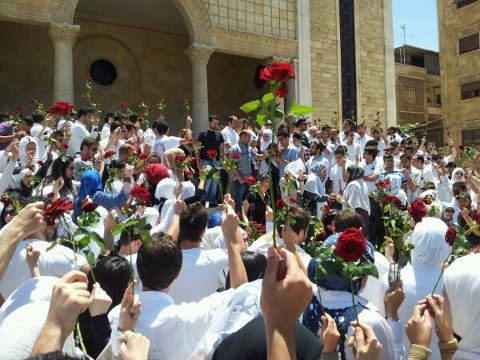
'If the regime has stolen what’s left of my family, the revolution gave me a family that is capable of unconditional love. Anyone can talk about sectarian cheers, and make claims about the nature of the Syrian conflict, but, deep inside, I trust that this revolution pulled us all out of the thousands of shells we used to hide in. This grief has united us and reformed us in its essence.
Great is the debt I owe them, deep is my gratitude for their compassion, and dear to me is every tear they shed with me, and long—so long—is the road we still need to cross together, with whomever is left.'
Friday, 5 September 2014
America doesn't need Assad's help to strike Isil

'Syria's pilots do go into action quite frequently. Day after day, they bomb their own people in defenceless towns and villages. The lesson is obvious: this is an air force which specialises in killing helpless civilians on the ground. The one and only task of which Assad's airmen are capable is murdering the very people they are supposed to defend.'
The Case For an IS 'No Drive Zone' in Syria

American Thinker appear to be anti-Clinton obsessives, but this beats the Let's Not Fight WW3 on behalf of al-Qaida and the CIA line that passes for analysis on parts of the left hands down. I'm not sure 'superiorly' is a proper word.
'Specifically, in addition to a beefing up provisions of sophisticated weaponry to the rebel opposition, the U.S. can rim rebel-IS fronts with ‘No-Drive zones’ that, enforced by UAVs and/or fix-winged attack aircraft, could: a) revitalize a frayed rebel-opposition that is beleaguered and outgunned by enemies on multiple fronts; b) compel IS to turn its barrels on the Assad regime, thereby detracting resources from their campaigns against the rebels and allowing the forgoing the breathing room to organize into more cohesive and capable fighting entity.
Incidentally, it is precisely in strategically vital Aleppo province that Syria’s revolution -- whipsawed and struggling to stay afloat against encroachments by superiorly armed enemies (i.e. the Syrian Arab Army [SAA] and IS) on multiple fronts -- is on the brink of collapse.
For some, such an outcome is ideal. With the rebels out of the picture, choosing sides becomes ostensibly easier; and external support for Assad’s ‘war on terror’-- if only tacit or ‘under-the-table’-- more forthcoming.
Unfortunately, political science says that a regime victory has dangerous implications. “Violent insurgencies”, writes MIT’s Roger Peterson, “often involve death, destruction, and desecration -- all of which can create powerful emotions” that are unlikely to disappear under any postwar Assad regime; especially not one that is likely to act as authoritarian, if not more so, than ever.
Incidentally, it is precisely in strategically vital Aleppo province that Syria’s revolution -- whipsawed and struggling to stay afloat against encroachments by superiorly armed enemies (i.e. the Syrian Arab Army [SAA] and IS) on multiple fronts -- is on the brink of collapse.
For some, such an outcome is ideal. With the rebels out of the picture, choosing sides becomes ostensibly easier; and external support for Assad’s ‘war on terror’-- if only tacit or ‘under-the-table’-- more forthcoming.
Unfortunately, political science says that a regime victory has dangerous implications. “Violent insurgencies”, writes MIT’s Roger Peterson, “often involve death, destruction, and desecration -- all of which can create powerful emotions” that are unlikely to disappear under any postwar Assad regime; especially not one that is likely to act as authoritarian, if not more so, than ever.
Some have retorted that it’s too late; that the opposition is way too fragmented and abounds with Islamic extremists for any Western-aided rebel victory to bear fruit. But, in what Wendy Pearlman describes as a “cruel irony”, it is Western inaction that “is a cause contributing to fragmentation in Syrian rebels’ ranks as much as it has been a reaction to that fragmentation.”
How rebels are expected to cohere while being subjected to incessant carpet-bombing and assaults from two superiorly equipped foes has never been properly articulated. And considering that the average duration of civil wars since 1945 is about 10 years -- Syria’s is going on 3.5 -- neither has the argument that it’s ‘too late’ to act.
Working to rehabilitate and empower the non-global-jihadist rebel camp (the IF included) is the only way forward. The delivery of advanced weaponry/supplies is a necessary step towards this end, but it must be coupled with a strategy that magnifies its effects.'
How rebels are expected to cohere while being subjected to incessant carpet-bombing and assaults from two superiorly equipped foes has never been properly articulated. And considering that the average duration of civil wars since 1945 is about 10 years -- Syria’s is going on 3.5 -- neither has the argument that it’s ‘too late’ to act.
Working to rehabilitate and empower the non-global-jihadist rebel camp (the IF included) is the only way forward. The delivery of advanced weaponry/supplies is a necessary step towards this end, but it must be coupled with a strategy that magnifies its effects.'
Golan residents worried by Syrian terror threat
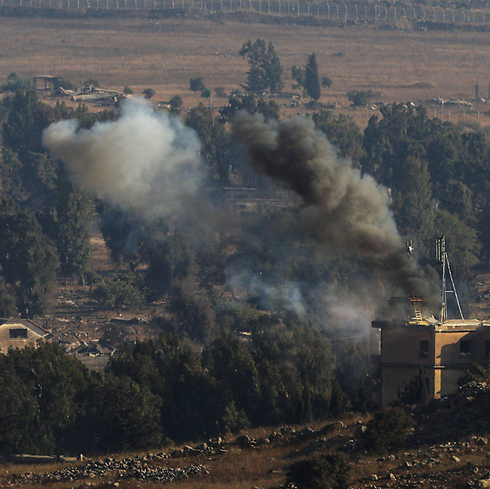
'The Syrian government is "not our cup of tea," said Gabi Kuniel, an Israeli who tends vineyards recently damaged by mortar shells when the violence spilled over to the Israeli-held side of the strategic Golan Heights.
But "we prefer that the Syrian army controls this region and not a group of radical al-Qaeda Muslim people." '
Why Did the Syrian Opposition Falter?

'Would arming the FSA more adequately have allowed it to defeat the Assad regime, or prevented the emergence of the Islamic State? The evidence shows that, in the struggle between state and society in Syria, the FSA did not falter because it consists of [militarily untrained] “farmers and dentists,” as US President Obama famously argued. It faltered because US assistance to it was, at best, reluctant. By contrast, Russia, Iran, and Hizbullah provided the militarily superior Assad regime all the help it needed to survive, and then some.
Had Washington equipped the FSA with the necessary military hardware, like anti-aircraft guns and anti-tank missiles, and had US airpower backed the FSA as it currently is the Kurdish “Peshmerga” in northern Iraq, the Assad regime would have collapsed long ago.'
Thursday, 4 September 2014
Syria Muslim Brotherhood Former Leader Bayanouni: Islamic State Major Threat to Syrian Revolution

'The international community's callous, even conniving stance led to the number of martyrs, missing persons, detainees and injured exceeding one million people, with the forced displacement of more than half of the entire Syrian people from their homes, towns and villages. It also led to the emergence of extremist groups, a strange and alien phenomenon in Syria, which is well-known for its tolerance and peaceful coexistence among all factions and segments of the society.
In spite of all this, the Syrian people are determined to pursue their revolution until they achieve their goals: freedom, dignity ousting the criminal regime, establishing a democratic pluralistic system of governance where all citizens determine their own future and participate in the rebuilding of their homeland.
The revolutionary battalions are not interested in foreign support attached to special agendas that, mostly, do not want the Syrian revolution to win. As a result, the last few months have seen remarkable progress for the revolutionaries on most fronts, although some of these are preoccupied with confrontations with the so-called Islamic State (IS), which has – for a number of reasons – become a major threat to the revolution.'
U.S. has no Syrian plan

'Tuesday, the target was Jobar, in the Damascus suburbs, and Wednesday it was apparently a school bus in Deir al-Zor. And every day it is Aleppo, which is being pounded by barrel bombs, and other sites across the country, struck with a ferocity seemingly reserved for civilians and moderate rebels – for when the regime occasionally decides to strike ISIS, it does so rather mutely.
Thankfully, it appears the U.S. and its partners have realized that even though they share a common enemy in ISIS, the Syrian regime cannot be trusted. But unfortunately it does not appear that they have any clear strategy to combat the threat posed by ISIS in Syria, and this is despite us knowing exactly where certain ISIS units are at any given time, as they constantly publicize their territorial gains. They are not an invisible enemy.'
'Difficult to find relationship between Qatar and IS'

'Does Qatar have any type of leverage with the 'Islamic State'? And if so, how does that tie in with rumors that Qatar is providing financial support for IS?
The IS jihadists contacted Qatar to pay a ransom for James Foley. The amount was huge and Qatar said no - and Washington also said no. Qatar has good relations with Jabhat al-Nusra [an al-Qaeda affiliate in Syria - ed.] and they are the enemy of the 'Islamic State' fighters. Qatar has had a good relationship with them since the beginning of the revolution in Syria. We have no evidence of IS funding.'
Wednesday, 3 September 2014
13 civilians killed in bus attack in eastern Syria

'A Syrian government airstrike hit a bus carrying civilians in eastern Syria on Wednesday, killing at least 13 people, most of them children, opposition activists said.'
The Unbearable Emptiness of a New York Times Op-Ed

A series of commonly perpetuated untruths, here purveyed by Peter Beinart.
'John McCain and Lindsey Graham want Obama to confront ISIS now. They don't specify how.'
They do, just not in the paradigm Peter Beinart wants to impose on the conflict.
'It starts with a lie: that Obama said “we don’t have a strategy yet” to deal with ISIS. In fact, Obama was speaking solely about ISIS in Syria.'
And without a strategy to deal with them in Syria, there is no strategy.
'Last year, when George Washington University’s Marc Lynch surveyed scholars of civil wars, he found that “most contributors are … deeply pessimistic about the prospect for ending Syria’s civil war any time soon” because “Syria has among the worst possible configurations [of any civil war]: a highly fragmented opposition, many potential spoilers, and foreign actors intervening enough to keep the conflict raging but not enough to decisively end the war.” McCain and Graham don’t explain how to overcome all this.'
Marc Lynch tells us, "The literature tells us", rather than analysis of what's going on in Syria. It isn't a serious counterblast to the reality that the FSA has been victorious against ISIS wherever it has received support.
'Any serious proposal for expanding American military involvement in Iraq into Syria must do one of two things. 1) Explain, in some detail, how bombing ISIS will strengthen the moderate Syrian opposition rather than other Sunni jihadist groups (for instance, al-Nusra, al-Qaeda’s affiliate) and/or Bashar al-Assad. Or 2) explain why it’s worth bombing ISIS even if we strengthen other Sunni jihadist groups and/or Bashar al-Assad.'
So setting to one side that arming the FSA properly would strengthen it in relation to all other groups, which would render the concern in 1) irrelevant. Beinart doesn't specify how bombing ISIS would strengthen their trading partner Assad, or suddenly convince the millions who have fled his rule in the last three years that he is a viable option.
'They cite Jimmy Carter’s decision to abandon détente with the Soviet Union after Moscow invaded Afghanistan, Bill Clinton’s decision to intervene in the Balkans, and George W. Bush’s decision to implement the “surge” in Iraq. What do these cases have in common? They’re the best examples McCain and Graham could find of when a president chose military escalation and it worked (sort of).'
I'd pick other examples which wouldn't appeal to the senators, such as the support the Soviet Union gave to liberation movements in Latin America in the sixties and seventies. Which highlights the problem that things could have been kept simple if the FSA had been allowed to overthrow Assad when there was no ISIS, and until they are, the inability of a genocidal government and a murderous caliphate to offer any future for Syria will continue to spiral the level of atrocities. Now it's more complicated. They had no interests to protect in Syria, whatever those who see geopolitical intrigue behind every revolution might say. Now the conflict has moved to Iraq where the do have influence, the chances that their fundamental interests in exploiting foreigners as much as possible will poison any intervention are that much greater.
Scott Lemieux* suggests that "the John McCain and Lindsey Graham Award For Outstanding Achievement in the Field of Wankery Goes To…John McCain and Lindsey Graham" for this, I wouldn't.
*[http://www.lawyersgunsmoneyblog.com/…/john-mccain-lindsey-g…]
They do, just not in the paradigm Peter Beinart wants to impose on the conflict.
'It starts with a lie: that Obama said “we don’t have a strategy yet” to deal with ISIS. In fact, Obama was speaking solely about ISIS in Syria.'
And without a strategy to deal with them in Syria, there is no strategy.
'Last year, when George Washington University’s Marc Lynch surveyed scholars of civil wars, he found that “most contributors are … deeply pessimistic about the prospect for ending Syria’s civil war any time soon” because “Syria has among the worst possible configurations [of any civil war]: a highly fragmented opposition, many potential spoilers, and foreign actors intervening enough to keep the conflict raging but not enough to decisively end the war.” McCain and Graham don’t explain how to overcome all this.'
Marc Lynch tells us, "The literature tells us", rather than analysis of what's going on in Syria. It isn't a serious counterblast to the reality that the FSA has been victorious against ISIS wherever it has received support.
'Any serious proposal for expanding American military involvement in Iraq into Syria must do one of two things. 1) Explain, in some detail, how bombing ISIS will strengthen the moderate Syrian opposition rather than other Sunni jihadist groups (for instance, al-Nusra, al-Qaeda’s affiliate) and/or Bashar al-Assad. Or 2) explain why it’s worth bombing ISIS even if we strengthen other Sunni jihadist groups and/or Bashar al-Assad.'
So setting to one side that arming the FSA properly would strengthen it in relation to all other groups, which would render the concern in 1) irrelevant. Beinart doesn't specify how bombing ISIS would strengthen their trading partner Assad, or suddenly convince the millions who have fled his rule in the last three years that he is a viable option.
'They cite Jimmy Carter’s decision to abandon détente with the Soviet Union after Moscow invaded Afghanistan, Bill Clinton’s decision to intervene in the Balkans, and George W. Bush’s decision to implement the “surge” in Iraq. What do these cases have in common? They’re the best examples McCain and Graham could find of when a president chose military escalation and it worked (sort of).'
I'd pick other examples which wouldn't appeal to the senators, such as the support the Soviet Union gave to liberation movements in Latin America in the sixties and seventies. Which highlights the problem that things could have been kept simple if the FSA had been allowed to overthrow Assad when there was no ISIS, and until they are, the inability of a genocidal government and a murderous caliphate to offer any future for Syria will continue to spiral the level of atrocities. Now it's more complicated. They had no interests to protect in Syria, whatever those who see geopolitical intrigue behind every revolution might say. Now the conflict has moved to Iraq where the do have influence, the chances that their fundamental interests in exploiting foreigners as much as possible will poison any intervention are that much greater.
Scott Lemieux* suggests that "the John McCain and Lindsey Graham Award For Outstanding Achievement in the Field of Wankery Goes To…John McCain and Lindsey Graham" for this, I wouldn't.
*[http://www.lawyersgunsmoneyblog.com/…/john-mccain-lindsey-g…]
ISIS executed Syrian Muslim journalist Bassam Raies

Razan Saffour:
"2 weeks ago ISIS executed Syrian Muslim journalist Bassam Raies. The world didn't give a damn."
The Guy Behind FSA Kittens Has Little Hope for Syria

'I saw the cutest of cats as something that was directly challenging the narrative and showing that the Free Syrian army were human beings, they had the overwhelming support of civilians around them and were kind to animals. In contrast, Assad’s soldiers have machine-gunned livestock and donkeys and, in one case, swung a cat around on a chain. The regime actively tortures and kills opposition activists and shows the same cruelty towards animals.
The Assad regime defector "Caesar" recently gave his report to Congress detailing, with 55,000 photographs, the industrial-scale torture and execution of opposition activists. It was little more than a footnote on CNN. Syria is old news, despite the fact that it’s ongoing. The coverage amounts to, “Well, there’s not a lot we can do and we’re not really sure who the good guys are.” People forget that the Syrian revolution is about pursuing freedom and that it started in a non-violent way.
Whereas Assad forces have butchered and tortured both humans and animals alike, IS highlights their kindness to animals while simultaneously publicizing their extreme brutality to people they deem enemies or heretical. The actions of Assad forces can be explained by cruelty towards life in general. The paradoxical actions of IS can only be explained by religious extremism.'
Syrian Army continues to pound Jobar with parachute bombs

Assad's forces are attacking civilians with parachute bombs in Jobar, one of the suburbs of Damascus he hit with chemical weapons last year.
Tuesday, 2 September 2014
Meet the ISIS 'truthers'

I'd go a bit further.
'Cockburn says that by fighting ISIS in Iraq and supporting its objectives in Syria (toppling President Bashar al-Assad), the U.S. "has created a situation in which ISIS can survive and may well flourish." But Cockburn also accuses the U.S. of arming ISIS — not just because U.S. weapons and vehicles given to Iraq's army fell into ISIS's hands, but because it armed other militias in Syria, some of which were known to be allied with jihadists.
Cockburn also says the U.S. enabled the rise of al Qaeda, ISIS, and other Islamist groups because it didn't take on allies Saudi Arabia and Pakistan, "the two countries that fostered jihadism as a creed and a movement."
Still, while the facts may be correct, the chain of causation in this theory seems a little weak.'
Sunday, 31 August 2014
Why I Decided War Reporting Was No Longer Worth the Risk

Now, of course, the same people who form opinions without bothering to find anything out about Syria, would take from this that there is no 'moderate' resistance in Syria any more.
' “I’m a journalist covering Syria.”
Without hesitation, she bore in: “So, is your reporting truthful?” She inserted the question the way someone might confront a WWE wrestler about whether what happens in the ring is real. We all know it’s made up. Just admit it.
She continued to press, telling me she was certain the media wasn’t giving her the whole story. She wanted to know why. She knew that President Bashar al-Assad was bad, but who exactly were the people in the opposition? (This was the December 2012, when moderates still held sway in the Syrian resistance.)
I met Jim Foley once or twice working in the Middle East, but knew him mostly by his reputation: A friendly, laidback guy who could make people laugh even in the most dire situations. Now that he’s gone, I wish I could believe that such an extraordinary person died striving to inform an American public yearning to know the truth. It’s harder to accept what really happened, which is that he died while people eagerly formed opinions on his profession and the topics he covered without bothering to read the stories he put in front of them.'
I met Jim Foley once or twice working in the Middle East, but knew him mostly by his reputation: A friendly, laidback guy who could make people laugh even in the most dire situations. Now that he’s gone, I wish I could believe that such an extraordinary person died striving to inform an American public yearning to know the truth. It’s harder to accept what really happened, which is that he died while people eagerly formed opinions on his profession and the topics he covered without bothering to read the stories he put in front of them.'
Syria's Silent War Crime: Systematic Mass Rape

'Evidence is piling up that the Damascus regime has used rape - of daughters in front of fathers, wives in front of husbands - as a targeted weapon.
“Compared to this, Abu Ghraib must have been paradise,” she says with a faint smile, alluding to the American prison in Iraq. “I’ve been through everything! I’ve been battered, flogged with steel cables, had cigarette butts in the neck, razor blades all over my body, electricity in my vagina. I’ve been raped while blindfolded every day by several men who stank of alcohol and obeyed their superior’s orders, who was always there. They shouted: “You wanted freedom? Well here it is!” Many of the women, she explains, in addition to their pain, thought their families might kill them if they found out what had happened to them. Her determination to enroll in the Free Syrian Army became only stronger. When she was released, she became one of the rare women to lead a battalion, at the head of 20 men, before being seriously injured and evacuated by her fellow rebels.
As early as spring 2011, he says, campaigns of rape by militias were organized inside homes, while families were still there. Daughters were raped in front of their fathers, wives in front of their husbands. Men became crazy with anger and yelled that they would defend themselves and avenge their honor. “I used to think we had to do everything we could to avoid getting into a militarized phase, and that arming the revolution would multiply the number of dead by 100,” Ghalioun said. “But the use of rape decided otherwise. And I think Assad wanted it this way. Once the revolutionaries were armed, he could easily justify the massacres of those he already called ‘terrorists’.”
Yes, she does have stories to tell, says Sema Nassar. Specific cases, with dates. Dozens of them. Like this young girl from Hama, currently a refugee in the United States, who was at home with her three brothers when soldiers burst in and told the three men to rape their sister. The first refused; they decapitated him. The second refused; he suffered the same fate. The third accepted; they killed him on the girl, whom they then raped.
Or, there is the story that another Syrian woman has recounted, of being brought to a house in the suburbs of Homs in the summer of 2012, along with around 20 other women. They were tortured and gang raped in front of a camera. The videotape was then sent to her uncle, a prominent sheik, television preacher and member of the opposition.
“This practice is very frequent during raids on villages and systematic in secret service detention centers,” the head of the Syrian League for Human Rights Abdel Karim Rihaoui told . Currently living in Cairo, he estimates that over 50,000 women have been raped in Bashar al-Assad’s prisons since the beginning of the revolution.'
Or, there is the story that another Syrian woman has recounted, of being brought to a house in the suburbs of Homs in the summer of 2012, along with around 20 other women. They were tortured and gang raped in front of a camera. The videotape was then sent to her uncle, a prominent sheik, television preacher and member of the opposition.
“This practice is very frequent during raids on villages and systematic in secret service detention centers,” the head of the Syrian League for Human Rights Abdel Karim Rihaoui told . Currently living in Cairo, he estimates that over 50,000 women have been raped in Bashar al-Assad’s prisons since the beginning of the revolution.'
Saturday, 30 August 2014
A Weary Rebel Retreats to Fight Another Day

'At dawn on Aug. 21, 2013, the chemical attack struck Moadhamiyeh. Struggling to breathe, Mr. Eid staggered outside, saw a young boy foaming at the mouth, and then passed out. A friend found Mr. Eid among dead bodies; after a shot of atropine, he awoke to an earthshaking bombardment.
Washing his face as he prepared to rush to the front line, he glimpsed his reflection. He saw eyes filled with an unfamiliar rage, he recalled, “like when Bruce Banner looks in the mirror and sees the Hulk.”
By the time he reached Beirut, though, rage had transmuted into disillusion. He swiftly set about breaking his promise to the Fourth Division, telling journalists that the government’s truces were far from peace-building compromises, that starving towns had no choice but compliance. But he also recounted the opposition’s mistakes: betting on decisive military help from the West that never came, and underestimating Mr. Assad’s appetite for violence, and the number and tenacity of his supporters.
Now, in the cafe, he called on fellow activists to be pragmatic, conserve lives, and root out sectarianism and extremism, or risk “destroying what’s left” and “creating another dictatorship.” '
'Syria Speaks'

The London Review of Books, which published Seymour Hersh's genocide denial over Assad's chemical attacks when reputable news outlets wouldn't touch it, have now reviewed a pro-Syrian revolution collection. It demeans and derides their aspirations. This is denying their voices even as as they are hollowly lauded.
Ursula Lindsey:
'Most of the more than fifty contributors are outside Syria now; their hope and defiance seem out of date. Yet the book is a valuable reminder that the early protests against Assad were both peaceful and democratic. It also sheds light on the way the protesters’ aspirations were ground into irrelevance.'
Ursula Lindsey:
'Most of the more than fifty contributors are outside Syria now; their hope and defiance seem out of date. Yet the book is a valuable reminder that the early protests against Assad were both peaceful and democratic. It also sheds light on the way the protesters’ aspirations were ground into irrelevance.'
Friday, 29 August 2014
Beginner’s Guide to the Islamic State, the Insurgency, and the Assad Regime

Scott Lucas:
'More people are being introduced to the Syrian conflict by the advances of the Islamic State. Here’s a 7-minute introduction to the jihadists and their relationships with the insurgency and with the Assad regime.
1. The Islamic State is not part of the Syrian insurgency.
2. So who are the insurgency?
3. Where is the Assad regime positioned between the Islamic State and the insurgency?
4. “We have a 3-way fight.”
5. “If you are going to deal with the Syrian crisis, you are going to have to deal with both the Assad regime and the Islamic State.” '
Thursday, 28 August 2014
Obama's new war in Iraq
The first line quoted is an insult the the Free Syrian Army. Cockburn is now promoting an alliance with Assad, and abandoning the real fight with the promise that the masses will rise again isn't much help to Syrians. There are other things wrong both in the sections quoted and in the rest of the article.
'Obama has secured $500 million in funding for what the U.S. calls the moderate opposition to the regime. Assad has responded that any such surveillance and bombing would be looked upon as a declaration of war--in the hopes of pressuring Obama into an alliance against ISIS.
As Independent journalist Patrick Cockburn reports:
"The U.S. has already covertly assisted the Assad government by passing on intelligence about the exact location of jihadi leaders through the BND, the German intelligence service...This may explain why Syrian aircraft and artillery have been able to on occasion been able to target accurately rebel commanders and headquarters."
By opposing intervention, we can provide space for the genuine forces for liberation that we saw emerge in the Arab Spring to regroup and build so they can provide an alternative to sectarian religious forces. Undoubtedly, the masses will rise again, because the counter-revolution offers nothing to their demands for democracy, equality and liberation.'
Give us guns, not airstrikes, to finish off Islamic State

'Last week I was on the front line in northern Aleppo, where fighters of the Free Syrian Army (FSA) are holding back the forces of Islamic State (formerly Isis). These battles have cost the lives of many brave soldiers but it would be foolish to think that the fight can be conducted from the air, as some in the United States believe.'
New U.S. help arrives for Syrian rebels

“If we have support, there are lots of revolutionaries that would come back.”
Military Implications of the Syrian Regime's Defeat in Raqqa

'The most effective way to stop ISIS and then roll it back would be a combined effort involving well-armed and supported Syrian rebel forces and U.S./allied airpower, all working under a coherent long-term strategy and conducting coordinated operations to defeat the group's forces and free areas under its control. Failing that, more limited measures -- such as arming the rebels and using airpower to reduce ISIS forces and capabilities -- would be useful in preventing more dramatic gains in Syria and perhaps rolling back the group's recent progress in northern Aleppo.'
A rift with Assad's allies? Think again

'The fact is that all three parties need each other too much to risk disagreement over Hamas. Assad owes his very survival to the direct intervention of Hezbollah and Iran. The latter two, increasingly unpopular throughout the region for propping him up, will not want to risk losing one of the only Middle Eastern allies they have left. The strategic choices they have made makes Assad a more important ally to them than Hamas could be.
As such, talk of a rift seems based more on wild optimism than rational analysis. If the killing of more than 170,000 Syrians has done nothing to dent their alliance, the killing of more than 1,000 Palestinians will not either.'
I saw that someone in the UK who styles themselves an anti-fascist activist had posted a statement very similar to that attributed to Hassan Nasrallah here, "for all differences and sensitivities on other issues to be put to one side", and wondered if there was a direct connection.
Note 2/4/25, I think that "anti-fascist activist" was Kevin Ovenden, an Oxford graduate who was working for George Galloway at the time.
Heavy Use of Banned Cluster Bombs Reported in Syria

'Although the report did not specify whether government forces or insurgents were using them, munitions experts have said that only the Syrian military has the technical capability.'
There's another New York Times report about human rights abuses, with a précis* on the Middle East news page saying each faction is doing it. No, it's the Assad régime and ISIS that systematically carry out crimes against humanity, not the actual rebels, and all the reporting that just tells us how confusing Syria is doesn't help.
“It’s a sign of lawlessness, the use of such arms, and that’s why it’s not surprising the worst place is Syria, because it’s the most lawless conflict on our watch,” he said. “It is a conflict where there are no principles left, no norms left.”
The Syrian people who suffer these crimes still have principles and norms.
* 'A United Nations panel reported that brutality in the civil war had increased, as each faction resorted more to massacring and torturing civilians.'
[http://www.nytimes.com/…/wo…/middleeast/syria-conflict.html…]
Ordinary Syrians Loathe IS
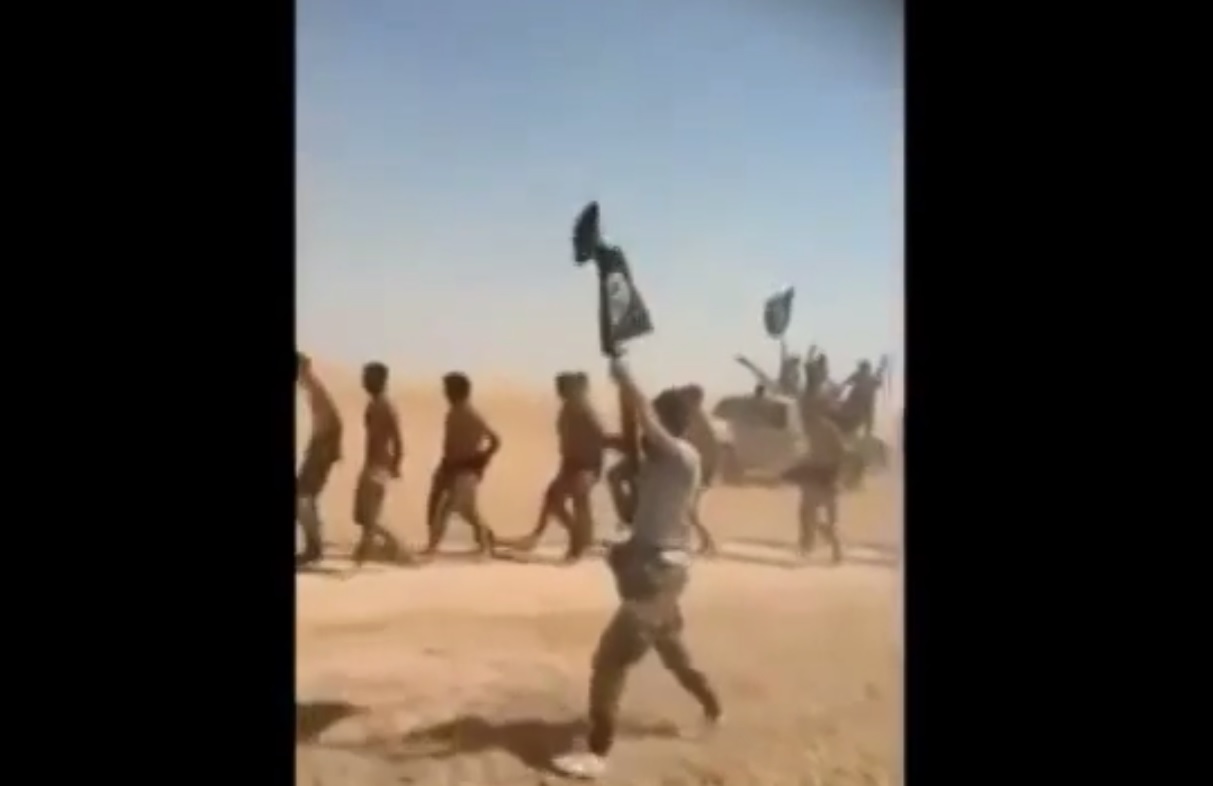
'When Raqqa was liberated by the Free Syrian Army, we experienced three months of genuine freedom. But after the entry of the militants, things became awful; IS assumed the role previously performed by the regime, but this time in the name of religion, or what they see as religion. Isis swiftly began to arrest the majority of those who participated in the revolution, either members of the FSA or ordinary civilians, as well as members of the media.
I recently spoke to a 26-year-old living in Raqqa, Hazam Hassan, who told me that IS and
Assad are two sides of the same terrorist coin, and there is no difference between what they do.'
Syrian rebels announce seizure of Golan Heights border crossing

'The FSA said its forces weren't looking to push Assad's troops from all of Quneitra, where one border post remains under government control. It also said opposition forces posed no threat to Israel.
"Our aim isn't Israel right now, and we in the FSA haven't targeted Israeli lands," said spokesman Kenan Mohammed, adding that the rebels' focus is on Assad and the extremist Islamic State [IS] group. "The matter of Israel - it's not for now." '
Everywhere I'd seen this reported up to now followed the Syrian Observatory for Human Rights in saying it was Jabhat al-Nusra and other rebel groups that had seized the crossing. Or just Jabhat al-Nusra. Thus we see the Cockburn line that there are no moderate rebels fulfilled by writing them out of the story. And in the first line quoted, I think that should actually be that the FSA are looking to push Assad's troops from all of Quneitra. As in Salameh Kaileh's account, "the Assad regime has reached an unprecedented degree of weakness and disintegration."
The Syrian Revolution: A Marxist account
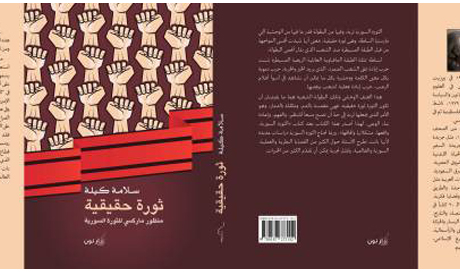
Salameh Kaileh:
"Moreover, the bloody violence which was unleashed by the Assad regime led to the transformation of demonstrators into armed strugglers. Of course, the Assad regime benefitted immensely from this to assert that the demonstrators were fundamentalist terrorists."
Only if they are allowed to present this perspective unchallenged, which has been the case with much of the media and especially of much of the Left. I think that the Gulf involvement has made it harder to convince Alawites and Christians that Assad isn't protecting them, but I see that as more of a symptom of the underlying problem that is Assad's rule than at the core of the problem. There are much worse analyses purporting to be Marxist, and this may contain a lot of insight.
Tuesday, 26 August 2014
“Painting on death” in war-torn Syria

"Most of the shells and missiles that I use are from the government’s air raids and heavy guns. I also use defective pieces from the ammunition factories that belong to the Free Syrian Army (the rebels). I wanted to show that, in my city and in Syria in general, there are artists as well as warriors. Each fights in his own way against the regime."
‘Assad Policies Aided Rise of Islamic State Militant Group’

It should be noted that the FSA took back three villages from ISIS near Aleppo last night. People defending a revolution in their homeland can do amazing things sometimes.
'In short, through its allergy to trying to support a force in Syria opposed to both the Islamic State and the regime, the Obama administration managed to settle on the one policy that both the terror group and Assad can agree on — namely, leaving the field to them.'
Huddersfield University student Sleman Shwaish talks about escaping from Syria
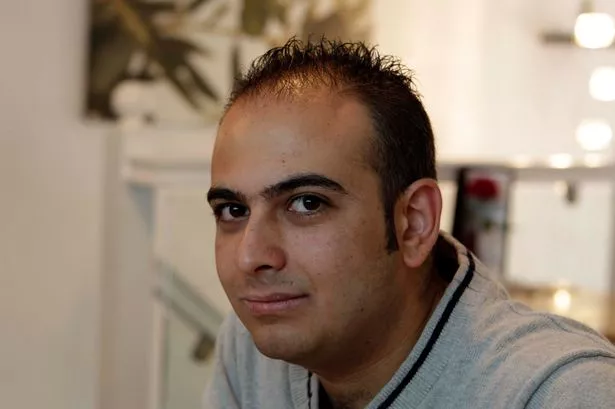
“I don’t like to involve myself in politics because of my experiences in Syria but I’m so concerned about what’s going on there and in Iraq, especially now that ISIS are moving close to my home city of Qamishli and the Assad regime has still not been overthrown.”
Monday, 25 August 2014
Obama Is Just 'Tickling' ISIS, Syrian Rebels Say

'Early this year, when ISIS first threatened to take over northern Aleppo, the international powers through the coordination center in Turkey sent small arms and ammunition to the FSA, which pushed back ISIS. The FSA even liberated an ISIS prison inside the children’s hospital and freed 30 civilians, including two Syrian journalists.
But when the FSA then took the fight to other parts of Syria, including near Raqqa, where ISIS has its stronghold, the flow of military aid to the moderate rebels just stopped. This time around, small arms won’t be enough: ISIS now has heavy weapons and heavy armor. To be sure, the FSA has been asking for advanced weapons for years to fight the regime, but now its leaders say they need them to combat ISIS, as well.
“The FSA has been fighting against ISIS since the beginning of this year,” said Al Marie. “We continue to fight them. The problem now is that they came back to the fight with sophisticated weapons, weapons they stole from the Americans. We are losing our brave fighters on the front against ISIS. We’re just asking the West for some cooperation, some support to be able to fight these monsters and free our lands with our hands. That’s what we want.”
While Obama administration officials often talk about the lack of good intelligence about ISIS, the FSA says it has lots of information about ISIS, including about its foreign fighters and foreign hostages. The United States didn’t consult with the FSA before launching the unsuccessful July raid to free Foley. But if the Obama administration wants to find the other Western hostages, it might consider working with the FSA, Al Marie said. For example, he added, many highly valuable Western hostages are held in an ISIS prison beneath a dam near Raqqa.
“Working with the FSA is always better. We are Syrians, we know how and where and when to move in this country,” said Al Marie. “We live on this land. We know it. We know its geography, its tribes, its people. We are the most capable people to identify where the foreign fighters are. But we need support.” '
Obama has ignored Syria for too long

Ammar Abdulhamid:
I'd go with the Manpads to the rebels, as the effective way to stop Assad's air attacks. Syrians would much rather use them for that than for some undefined nefarious terrorist attack. But these are at least practical suggestions.
'The only way for Obama to stop doing stupid stuff with his foreign policy is to arm moderate rebels in Syria, to bomb Isis bases in both Syria and Iraq and to finally impose a no-fly zone on the Assad regime. This combination of tactics could allow the Syrian opposition – which has thus far been unable to govern the liberated areas due to Assad’s use of aerial strikes, including barrel bombs, scud missiles, and, on occasion, chemical weapons and poison gas – to move in and work with the local councils to begin returning the basic services to the local communities, bringing a measure of relief to the local civilian population. Imposing a no-fly zone also avoids having to supply advanced weapons to rebels, including TOW missiles and MANPADs, thus minimizing the risk of having them end up in the wrong hands.'
I'd go with the Manpads to the rebels, as the effective way to stop Assad's air attacks. Syrians would much rather use them for that than for some undefined nefarious terrorist attack. But these are at least practical suggestions.
'The only way for Obama to stop doing stupid stuff with his foreign policy is to arm moderate rebels in Syria, to bomb Isis bases in both Syria and Iraq and to finally impose a no-fly zone on the Assad regime. This combination of tactics could allow the Syrian opposition – which has thus far been unable to govern the liberated areas due to Assad’s use of aerial strikes, including barrel bombs, scud missiles, and, on occasion, chemical weapons and poison gas – to move in and work with the local councils to begin returning the basic services to the local communities, bringing a measure of relief to the local civilian population. Imposing a no-fly zone also avoids having to supply advanced weapons to rebels, including TOW missiles and MANPADs, thus minimizing the risk of having them end up in the wrong hands.'
How Assad helped the rise of his 'foe' Isil

'By 2013, Isil had managed to capture oilfields in eastern Syria. But to profit from these assets, they needed to find a customer for the oil. Mr Assad's regime stepped in and began buying oil from Isil, thereby helping to fund the movement, according to Western and Middle Eastern governments.
Having provided Isil with talented commanders, courtesy of his prison amnesties, and filled its coffers with oil money, Mr Assad then chose to focus his military campaign on the non-Islamist rebels. Every town and suburb held by the Free Syrian Army was relentlessly pounded from the air and ground. A year ago, the regime even used poison gas against insurgent strongholds in Damascus.
Like many Middle Eastern dictators before him, Mr Assad hopes that the West will accept him as the only available bulwark against the very fanatics who he has helped and protected. Put bluntly, he wants to be an arsonist and a fireman at the same time. The question is whether he will get away with this time-honoured ploy.'
Peering into the faultlines

Sam Charles Hamad:
'The Assad regime isn’t waging a war against ‘terrorism’ and ‘extremism’, it is carrying out a genocidal war to maintain its own power and destroy those forces who have risen up against it – this is the point that should never be forgotten. Not only has the Assad regime all too often tactically ignored Daesh in favour of bombarding rebel-held territories, but it is also the single greatest cause of it maintaining a presence in Syria. Those who think that they can choose the Assad regime over Daesh, one brutal fascism over another, on the basis that there are no ‘moderate rebels’, as they’d have it, will actually be endorsing an argument that would see those real forces who are opposed to both Daesh and the far greater evil of Assad crushed once and for all.
The logic of Daesh is provided most forcefully by the continued sectarian slaughter being carried out by the Assad regime and its allies, while the logic of the Assad regime, with its appropriation of the ‘war on terror’, is provided most forcefully by Daesh. There is a third alternative, but it is delicate and precious. It is this alternative that, as I write this, faces the twin evils of Daesh and the Assad regime marching towards it in Free Aleppo; that faces bombardment, beheading and besiegement on an unprecedented scale. Yet still it fights on, despite being, as Barack Obama rather sneeringly put it when rubbishing the claims that his administration made a mistake by not providing more arms to the rebels, made up of ‘farmers and pharmacists’. It’s this alternative that risks everything to rise up against Daesh in Deir ez-Zor, while also resisting a regime that is doing everything in its power to brutalise and exterminate them. The people of Syria and their revolution against Baathist tyranny and now also the theocratic tyranny of Daesh is still alive. This is the force that demands our unconditional support and solidarity, however much it’s worth, now more than ever.'
Imagine

'It's hard to imagine any scenario where more direct U.S. involvement in the Syrian conflict, aimed at toppling Assad, would not somehow also play into the hands of the Islamist factions committed to the struggle.'
Not surprising the writer of this Washington Post blog post can't imagine the obvious when his second paragraph starts, 'Now, the U.S. is contemplating extending airstrikes on Islamic State militants operating in Iraq in Syria — fighters belonging to a terrorist organization that is leading the war against Assad.'
Raqqa is being slaughtered silently

"The people of Raqqa are tired: the regime, the Free Syrian Army rebels and the international community has given up on us."
The FSA had to pull out because they didn't have the ammunition to continue.
US journalist Theo Curtis released from Syria captivity

'American journalist Theo Curtis has been released after being held captive by al-Nusra militants in Syria since 2012, the US has announced.'
The BBC's diplomatic correspondent was just asked on the world service what the difference is between al-Nusra and ISIS. He could have replied simply that al-Nusra fights against Assad, and ISIS doesn't if it can possibly avoid it. He also described Qatar as Nusra's sponsor. That's more plausible than the stuff about them backing ISIS, but still, I don't believe they are have simultaneously been running al-Jazeera and a group that kidnaps jounalists. Clearly they have contacts.
As I suggested a week or two ago, al-Nusra may be feeling the need to send the Americans the message, "we are not the terrorists you are looking for." Good. Support for the FSA, who don't kidnap journalists at all, would be better.
Stop benefits of IS fighter families

This isn't going to help. We should do something about Syria, notably arming the Free Syrian Army would help, that doesn't mean we should do just anything. See also Boris Johnson's call* for anyone travelling to Syria to be presumed guilty of terrorism. That'll hit any aid convoy that isn't a front for MI6, or anyone helping out the FSA. You can already be prosecuted as a terrorist if you go to help the Free Syrian Army, not if you go to fight for Assad.
I could probably explain in detail why it isn't a good idea to make poor people destitute as a means of convincing their sons that Western ideology beats the ISIS crap, but it shouldn't be necessary for anyone who doesn't live in a world where benefit cuts are a go-to solution for social problems. But there are a lot of other claims about Syria which seem like they should require as little explanation, but still do.
*[https://www.theguardian.com/politics/2014/aug/25/boris-johnson-britons-visiting-iraq-syria-presumed-terrorists]
Ali Khedery on Iraq and Syria

I was reading a very bad article by Jon Wilson* on Labour List, when I thought Ali Khedery puts many of the points much better, even if I don't view things from the official American perspective.
'It’s said that in fact Assad is one of ISIS’s biggest financiers because he is one of ISIS’s customers for the crude oil that it sells after taking over many of Syria’s oil fields and now some of Iraq’s. So it’s very counterintuitive. And let’s not forget that it was Assad’s military intelligence services throughout the American occupation of Iraq that actively recruited, financed, trained, and armed al-Qaeda. They trained them in Syria, they recruited them from across the Arab world and sent them to Iraq for suicide bombing missions at a rate of 50 to 100 a month. We know this for an absolute fact.
The whole point of this campaign by Assad, Hezbollah, and the Iran axis was to bleed, exhaust, and defeat America; similar to how the U.S., the Saudis, and others sought to support the Mujahedeen in Afghanistan to defeat the Soviet Union, ultimately leading to the Soviet Union’s collapse and its humiliating withdrawal from Afghanistan. So they wanted to replicate the same model with the United States in Iraq. And frankly, they succeeded. Thousands of Americans were killed and wounded by al-Qaeda and thousands more were killed and wounded by the Iranian-backed Shia militias. So the United States and the Iraqi Security Forces were squeezed by Assad-trained al-Qaeda elements in the west and Iranian-backed Shia militias in the east. Although no one will admit this in Washington, we did withdraw from Iraq in humiliation to the extent that the Iranians dictated that outcome to Maliki, and then Iran was able to fill that vacuum.'
To four paragraphs by Jon Wilson. First:
'Iraq’s present political crisis now is a consequence of the 2003 occupation. War created chaos, and there was no effort to build a stable society afterwards. As LSE Professor Toby Dodge’s new book shows, the west was more interested in guaranteeing its own security rather than building democracy or peace. Nouri al-Maliki’s security state became increasingly absent from ordinary peoples’ lives. Understandably, they turned to whatever groups of armed men look best placed to defend their interests. The rise of Islamic State and sectarianism were the consequence.'
Too simplistic. It isn't the occupation that has created the crisis, but the choice after Iraq had been messed up to leave it in the hands of Maliki and his Iranian backers, whose anti-Sunni policies have fed ISIS. That doesn't mean that war with Iran is the answer, but neither is excusing it for the mass murder it has conducted in Syria, and thinking a joint effort would be the best way to go the bring Middle East unity.
'We can, of course, offer small acts of assistance by feeding starving people on mountains. But we – particularly on the left – need to stop using the Middle East as a vehicle for our urge to be righteous or tough, to prove to ourselves we’re good and strong.'
Speak for yourself mate. I'd much rather be right than righteous. This is a myth built up by those wanting to blame American warmongering for Assad's genocide in Syria, that the only alternative to their passivity is demanding macho bombing action from the heirs of Tony Blair.
'Instead, we need to back organisations which get people together to help them run their own lives – trade unions, anti-corruption campaigns, cross-sectarian parties – just as we would do here.'
How do you do that in Syria when Assad kills all such people? Why when all such people have been under threat, have their defenders been cast as Western proxies or Saudi stooges? Why are any foreign efforts to support such NGOs in Syria cast as part of an American régime change plot?
I saw someone suggest in a Guardian thread we should concentrate on providing humanitarian aid, like water supplies. Everyone is easier to deal with if they've got enough water. And how do you stop Assad or ISIS coming and stealing it all and killing the intended recipients? By providing the FSA with weapons, probably not so well by US bombing, certainly not by saying the important thing is to worry about UK/US bombing.
'But above all, we must recognise we have little power to make a difference in the long term. We need to stop imagining that Iraq will go to hell unless we help, and be far more optimistic about the capacity of Iraqis to defeat Islamic State, and rebuild their own society.'
Here there is a dishonest vagary of terminology. 'Help' here means bombing, rather than providing arms, but it left to cover that too. 'Be far more optimistic about the capacity of Iraqis' wouldn't seem to exclude sending arms to Iraq. So Jon Wilson is have his cake and eating it, any intervention that goes wrong proves his point, but if they get massacred it isn't his fault.
*[http://labourlist.org/…/why-we-keep-messing-up-in-the-midd…/]
Sunday, 24 August 2014
New Report On Chemical Weapons Draws No Response From U.S.

“We heard from eyewitnesses that it’s always, in these attacks, it’s helicopters throwing bombs, yellow gas coming out of bombs,” he said. “As far as I know, none of the opposition parties have helicopters.”
US 'set to launch air strikes' on senior Isis leaders
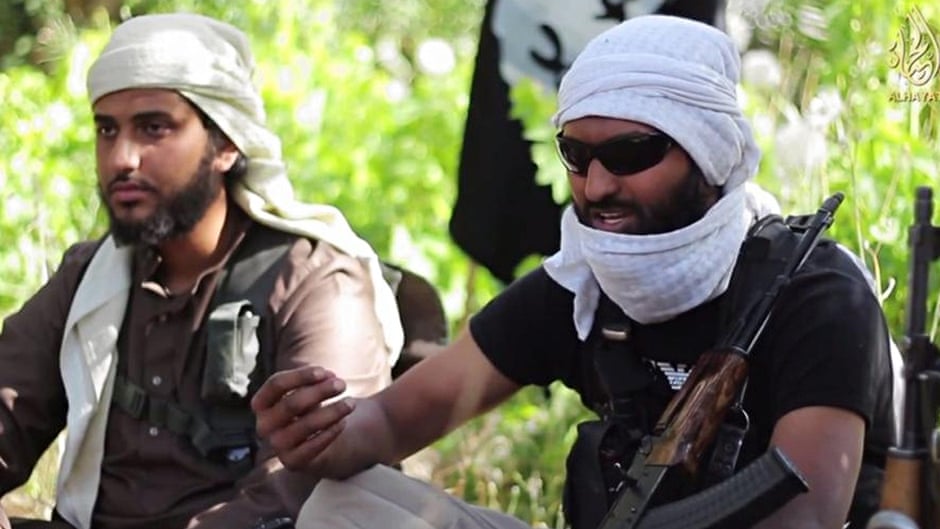
RobotNickk [in comments]:
'Just a reminder - ISIS are not Syrian rebels, they are foreign controlled would-be imperialist invaders who came to Syria and the pretence of being helpers against Assad. Eight months ago the Syrian rebels finally had enough of their brutality and their seizing of liberated territory from rebel groups and initiated a war against them.
The rebels drove ISIS out of Idlib province and Western Aleppo province and out of Aleppo city. More recently ISIS, equipped with weapons captured in Iraq, have engaged in a successful counter offensive.
Meanwhile until the last few weeks Assad was content to leave ISIS in peace, doubtless hoping that they would help him crush the rebels. He has only started fighting them because they have been seizing his remaining bases in the east and capturing yet more large quantities of weapons. There are unconfirmed reports that they have just taken the air force base near Tabaqa in Raqqa province with the subsequent butchery of large numbers of Assad troops.
Assad has always wanted ISIS to become his main opposition so that he can look good in comparison and pose as the defender of civilization, and so gain Western support in his campaign to reimpose his Mafia gang rule over the whole of Syria.
In the meantime IS have done Assad's work by fighting the rebels and scaring off the West.'
Saturday, 23 August 2014
I demonstrated as an angry mob destroyed the U.S. embassy. I’m sorry.

Mohammed Alaa Ghanem:
'Ambassador Crocker and I share one thing in common: we have both seen the Assad regime’s brutal tactics firsthand. But while I responded by risking my life to sow the seeds of revolution as a pro-democracy activist, the ambassador has drawn closer to Assad, even though that could mean thousands of additional deaths of innocents at the hands of the regime. Some days, I wonder how the ambassador and I could have reached such radically different conclusions. But I will never regret my decision to seek the Assad regime’s overthrow, regardless of how many times I must face its hard-fisted brutality again.'
Assad Policies Aided Rise of Islamic State Militant Group

'The Islamic State, which metastasized from a group of militants seeking to overthrow the Syrian government into a marauding army gobbling up chunks of the Middle East, gained momentum early on from a calculated decision by Syrian President Bashar al-Assad to go easy on it, according to people close to the regime.
Earlier in the three-year-old Syrian uprising, Mr. Assad decided to mostly avoid fighting the Islamic State to enable it to cannibalize the more secular rebel group supported by the West, the Free Syrian Army,...'
Friday, 22 August 2014
West poised to join forces with President Assad in face of Islamic State

Cockburn is given the front page to smear the opposition in Syria as ISIS and excuse Assad his murderous spree. Shame on the Indie.
'Air strikes are not the only way in which the US, Britain and their allies among neighbouring states could weaken and isolate Isis, but in doing so they would necessarily undermine other rebel groups. Key to the growth of Isis and, in particular, the import of thousands of foreign fighters has been the use of Turkey as a point of entry.
Determined to get rid of President Assad, the Turkish Prime Minister Recep Tayyip Erdogan has kept Turkey’s 550-mile border with Syria open, giving the jihadists, including Isis, a safe haven over the last three years. The Turks are now saying Isis is no longer welcome, but Ankara has not moved seriously to close the border by deploying troops in large numbers.
A complete volte face by the US, Britain and their allies in their relations with the Assad government is unlikely because it would mean admitting that past support for the Sunni rebellion had contributed to the growth of the caliphate. Mr Freeman says that he doubted that “the liberal interventionists and neoconservatives who had pursued regime change in Syria were capable of reversing course. To do so would require them to admit that they bore considerable responsibility for legitimising pointless violence that has resulted in the deaths of 190,000 Syrians.” '
Revolution, narratives, and solidarity
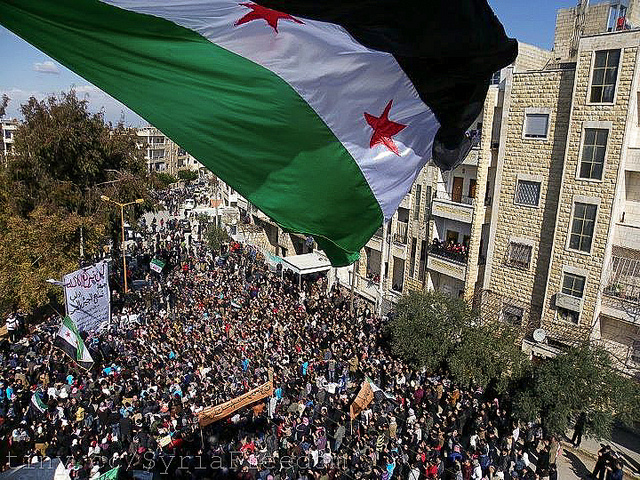
' “It was a miracle” – Yassin-Kassab insisted on the issue of sectarianism – “that, in a country in which sectarianism was kept alive to divide and rule for so many years, a non-sectarian freedom movement was born in 2011. The regime has an interest in the Alawi minority being scared of a sectarian conflict in order to secure their loyalty.” Talking about the situation he had witnessed on the ground, Yassin-Kassab then described what in his view has now become the day-to-day “normality” for the Syrian people: “as a journalist, you don’t need a fixer to find you an ‘interesting’ story: every single woman, child or man has a traumatising story of repression to tell. Torture, death, house burnings, people killed in front of their relatives, bombs falling on schools, hospitals and crops: it’s not special, it’s the normality.” '
Australia going to 'unthinkable' lengths to return Syria detainees
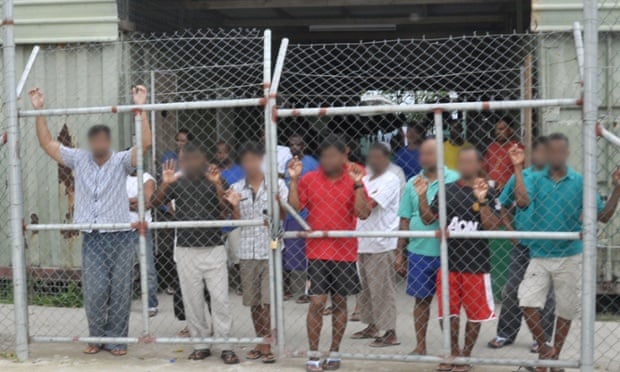
' “I was very open and frank with the transferees [asylum seekers], I described the options that they have and I was clear that they would not be settled in Australia or a third country. I did say that if they chose to return home the department would work to get them home safely, with no guarantee of any time frames. The transferees were visibly upset and quite anxious, they were quite adamant that I would be sending them home to their death.”
It is understood none of the five Syrians on Manus Island went ahead with the repatriation. A number of them have been on a long-term hunger strike and all were split up within the centre to “keep them quiet”.
“There isn’t a ‘mere likelihood’ that these people will be persecuted on returning to Syria. It isn’t even a ’50/50 chance’. There is an absolute certainty that these people will be harmed or killed upon their return, and the government’s reaction is to push them to go home without even listening to their claims for asylum.” '
Fathers of ISIS

Ziad Majed:
'ISIS, an abominable, savage creature, is thus the product of at least these six fathers. Its persistency depends on the continuation of these aforementioned elements, particularly the element of violence embodied by the Assad regime in Syria. Those who think that they should be impartial toward or even support tyrants like Assad in the fight against ISISism fail to realize that his regime is in fact at the root of the problem.'
Power To The People
Just now on BBC News. Henry Crumpton: "The best allies we have are the people in Syria and Iraq, and we need to find ways to empower them." "And more weapons, into the hands of the people we think will use them correctly?" "That is correct. Bashar al-Assad does not represent the Syrian people. We need to reach out to the local leaders and empower them. The US has a lousy record, in Afghanistan, Iraq and Libya."
In Aleppo, Bread Lines and Disenchantment with the FSA
Steven Sotloff:
'The FSA first marched into Aleppo promising to end the arbitrary arrests carried out by the regime of President Bashar al-Assad and to restore public order after months of fighting. But residents say it has proved ill-equipped to solving such seemingly simple problems as distributing bread and fuel.'
This is what happens when a revolution is stalled. Sotloff wrote on Twitter a couple of months later:
'The FSA first marched into Aleppo promising to end the arbitrary arrests carried out by the regime of President Bashar al-Assad and to restore public order after months of fighting. But residents say it has proved ill-equipped to solving such seemingly simple problems as distributing bread and fuel.'
This is what happens when a revolution is stalled. Sotloff wrote on Twitter a couple of months later:
'If #70000 dead isn't #redline enough, whats a few dozen by#chemicalweapons? Not advocating anything in #Syria but after 2yrs stop tiptoeing.'
[https://twitter.com/stevensotloff/status/327528104912367616]
[https://twitter.com/stevensotloff/status/327528104912367616]
"ZOMG OBAMA TRAINED ISIS!!!1!"
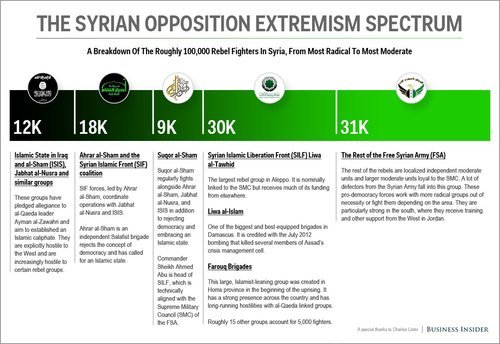
'It’s a sad day in professional journalism when reputable corporate outlets ape ignorant conspiracy-mongering by twits like Mark Steel who claimed that the U.S. is bombing the same people it trained, but here we are.
"The Terrorists Fighting Us Now? We Just Finished Training Them" is the tantalizing headline of Souad Mekhennet's article in The Washington Post.
We can agree with this article’s subtitle, "the enemy of our enemy is not our friend" without resorting to sleight-of-hand tricks and deliberately confusing different revolutions in different countries and conflating all angry Muslims with beards and guns regardless of ideology, sect, group affiliation as one big potential Daesh.
This last point is especially insulting because it is predominantly Sunni Muslim fighters from the Free Syrian Army and Islamic Front who have been the vanguard of the war on Daesh, having lost 7,000 men in the fight since January 2014 after Syria’s civilian freedom fighters got fed up with torture, assassinations, and public executions by Daesh and launched a second revolution.'
An Arab counterrevolution in decline

When someone is blaming Qatar for ISIS, it is to deny the Syrian revolution, because it is to cast the armed defence to Assad's attacks, Qatar doing as much as any country to support the Free Syrian Army in that mission, as some foreign military conspiracy by America's allies.
'The counterrevolution reached its climax in 2013, after the abortion of democracy in Egypt, faltering steps of political transition in Tunisia, Libya and Yemen, and the success attained by a sectarian alliance in halting the progress of the Syrian revolution and the abortion of the popular uprising in Iraq. Because Turkey decided, in the first year of the Arab uprisings, to align with the camp demanding change and democratic transition, because a broad spectrum of Arab opinion viewed what had become known as the ‘Turkish Model’ with admiration, and because Qatar played a visible role in granting financial, media and moral support to the revolting countries, both Turkey and Qatar were targeted together with the Arab revolution countries.
The rapid and easy victory of the 2013 coup in Egypt puffed up the Arab counterrevolutionary movement with arrogance, confirming the belief in its main centres that it was capable of achieving miracles and in re-establishing the status-quo ante in the Arab world. The counterrevolutionary forces acted without any reservations, made no attempts at subtlety or discretion, and did not bother to consider the immense destruction, countless victims and the amount of blood spilt as a result of the tumultuous suppression of the will and aspirations of the people.'
Note 31/3/25, link originally posted August 2014, but appears here as February 2015.
Subscribe to:
Posts (Atom)