Thursday, 28 March 2019

The art of Syria's revolution


 'In 2013 Sana Yazigi, a Syrian graphic designer from Damascus, launched the online archive The Creative Memory of the Syrian Revolution, consisting of works created by Syrian artists during the uprising.

 "From the early days of the revolution," Yazigi says, "I was amazed to witness an incredible outpouring of artworks. I didn’t want them all to disappear, to be forgotten. I wanted to keep a record. There was a sense of urgency, a need to document what was going on."

 “When I moved to Beirut in 2012," Yazigi says, "I began writing, recording and collecting [stories of the Syrian people]. When I saw the sheer amount of material being created, I surrounded myself with a team to gather it all together.”

 The website documents paintings, music, graffiti, videos and cartoons among others, constituting an exceptional wartime archive. “Little by little, a list of works was drawn up," says Yazigi. "We were all running from the régime at the time, working anonymously in an atmosphere of mistrust and fear. Many of the artists were anonymous too. We’d discover their works on blogs and on Facebook. We documented everything we came across to add to the archives."

 “Over time, I emerged from anonymity and started contacting the artists," says Yazigi. "Most were enthusiastic about the project. Even today, we are still discovering works which were never made public at the time, for fear of reprisals.”


 The Creative Memory of the Syrian Revolution continues to grow. The site’s second in-house production, MAP, links archive material to locations across Syria, connecting documents with dates, categories, keywords and authors. The website’s user-friendly second version introduces the Syrian people, giving voice to the dreams and tragedies of the revolution.

 One initiative, Idlib Walls, archives all the graffiti from the city of Saraqib found online. More than 360 artworks are presented on a timeline which is periodically updated.

 Yazigi says she will continue her mission. “Ultimately, we’d like to see our archive enter the national archives, because once the war is over, the history of the revolution must be given back to the people of Syria. The archive is part of our collective memory. The revolution has brought about clear social and historical changes”.

 In addition to the websites, there is also a book and a travelling exhibition. The Story of a Place, the Story of a People, 2011-2015 is a collection of words and images retracing the uprising in each of 50 locations. The text describes the early days of the revolutionary movement, as well as the dynamic forces that would see it spread.'

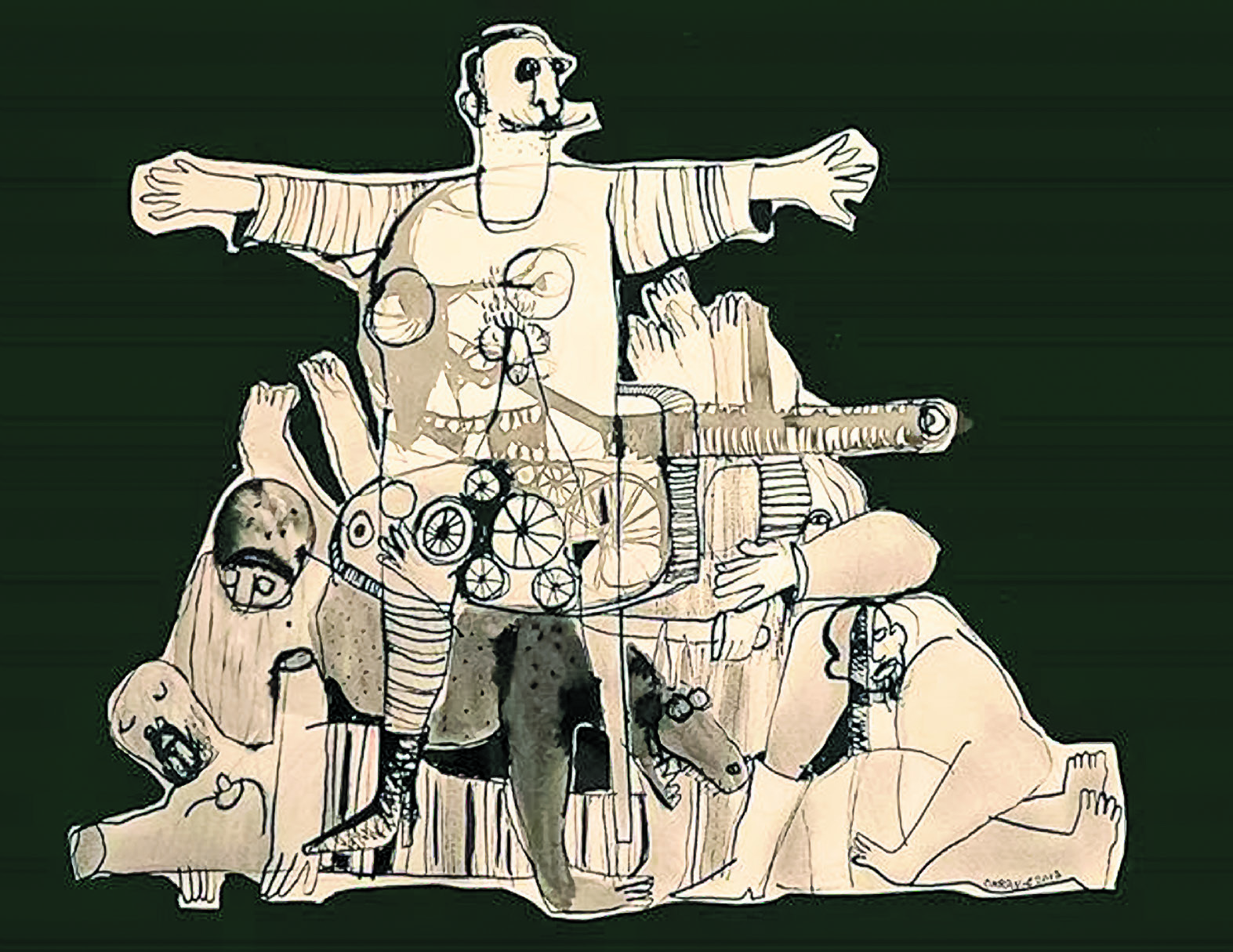
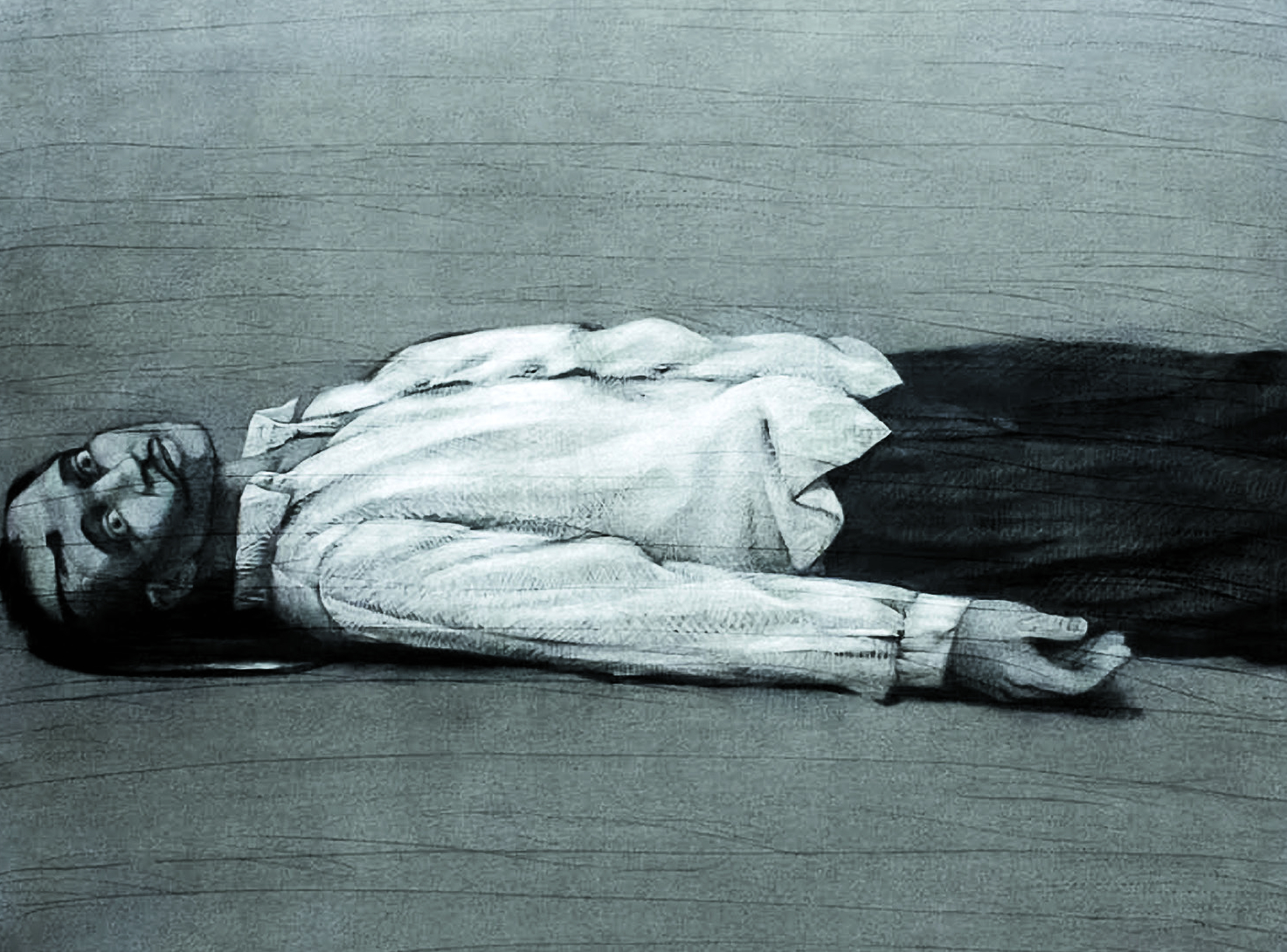
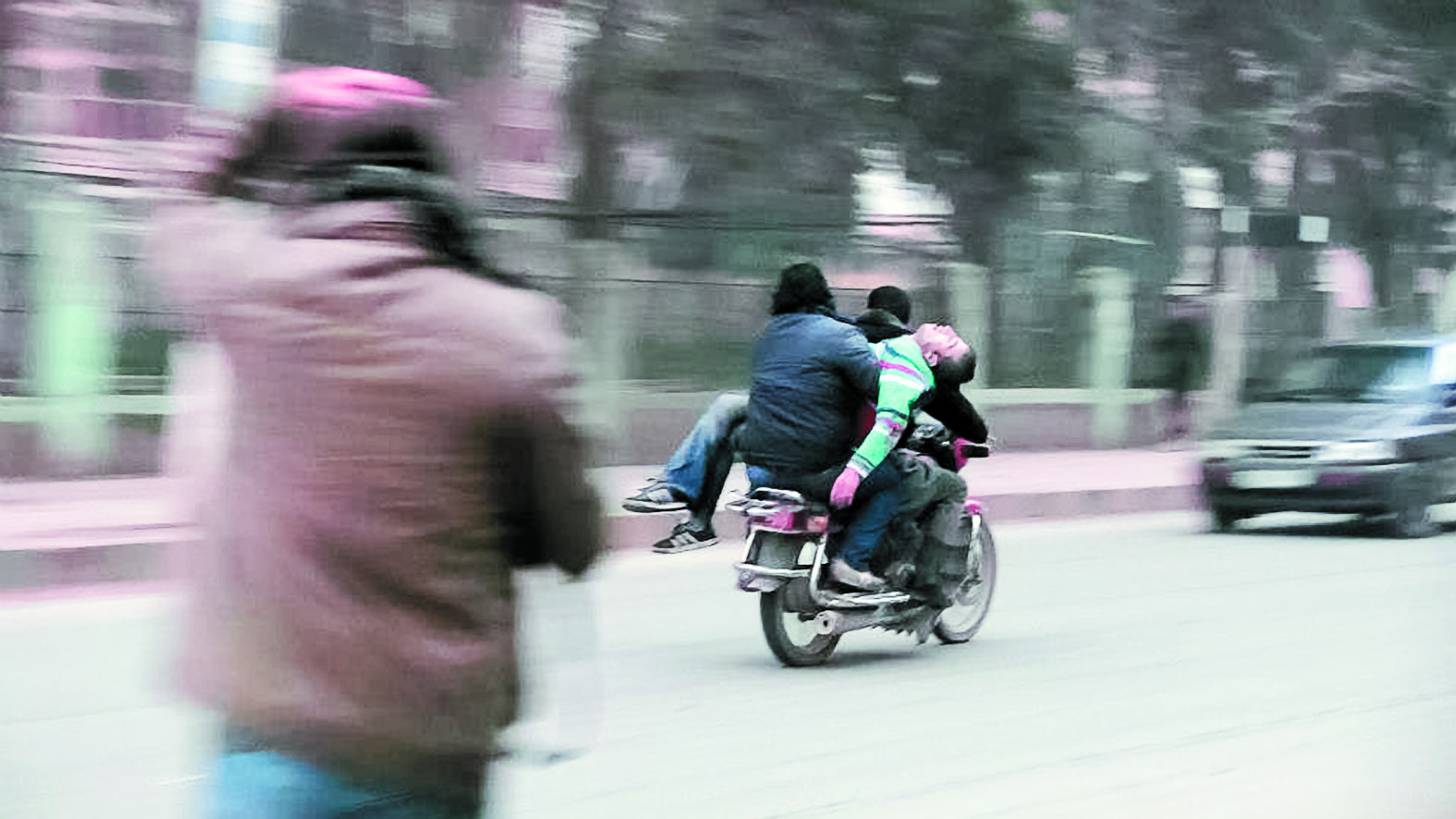
Mohamad Omran's 2013 drawing From al-Bayda To Ras al-Nabeh: in April 2011, government security forces and the pro-government Shabiha militia entered Bayda, arrested the male citizens and humiliated them.Youssef Abdelke's 2012 drawing A Martyr From Dara - in February 2011, 21 children were arrested for drawing anti-Assad slogans on a school wall
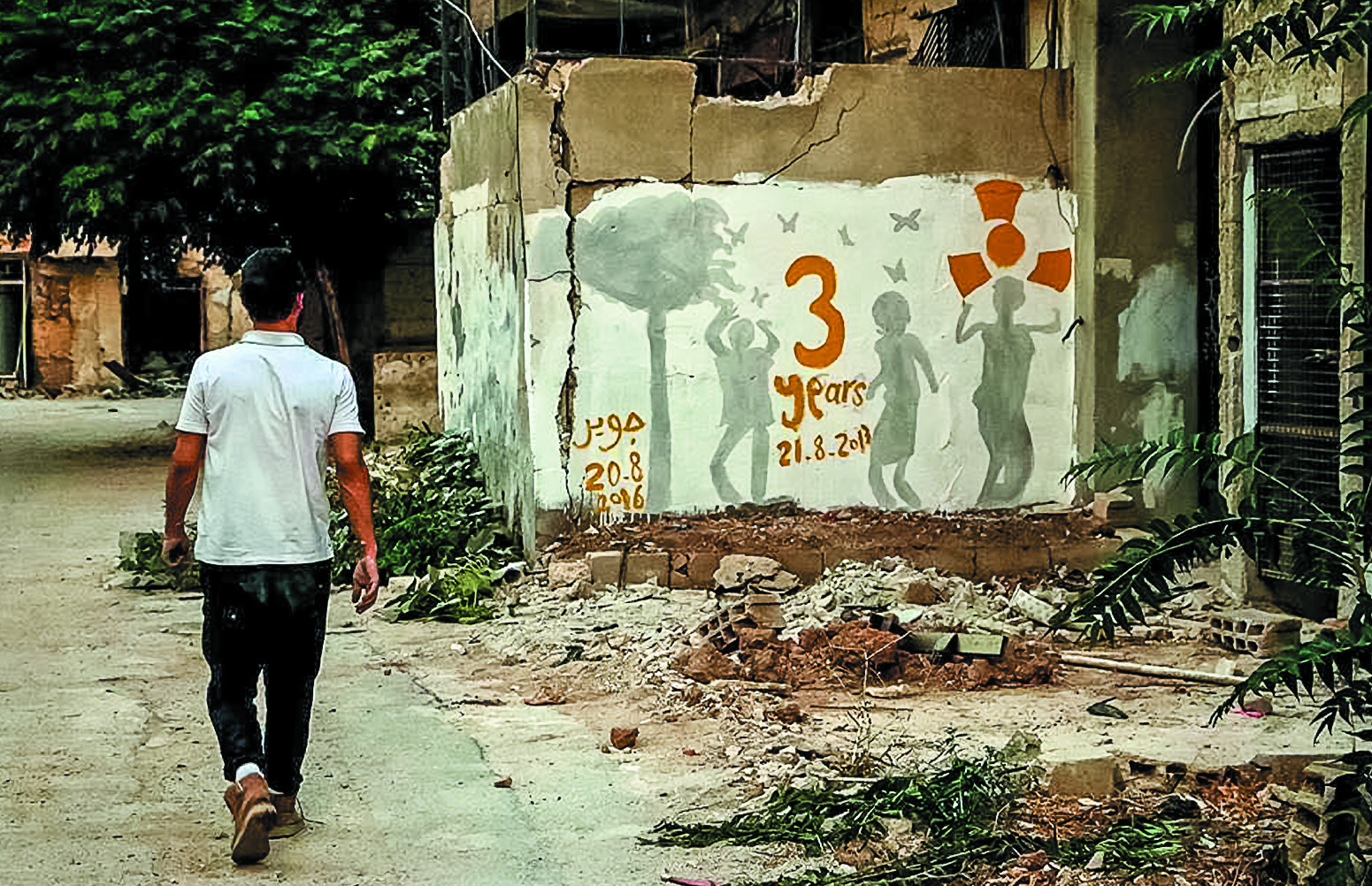
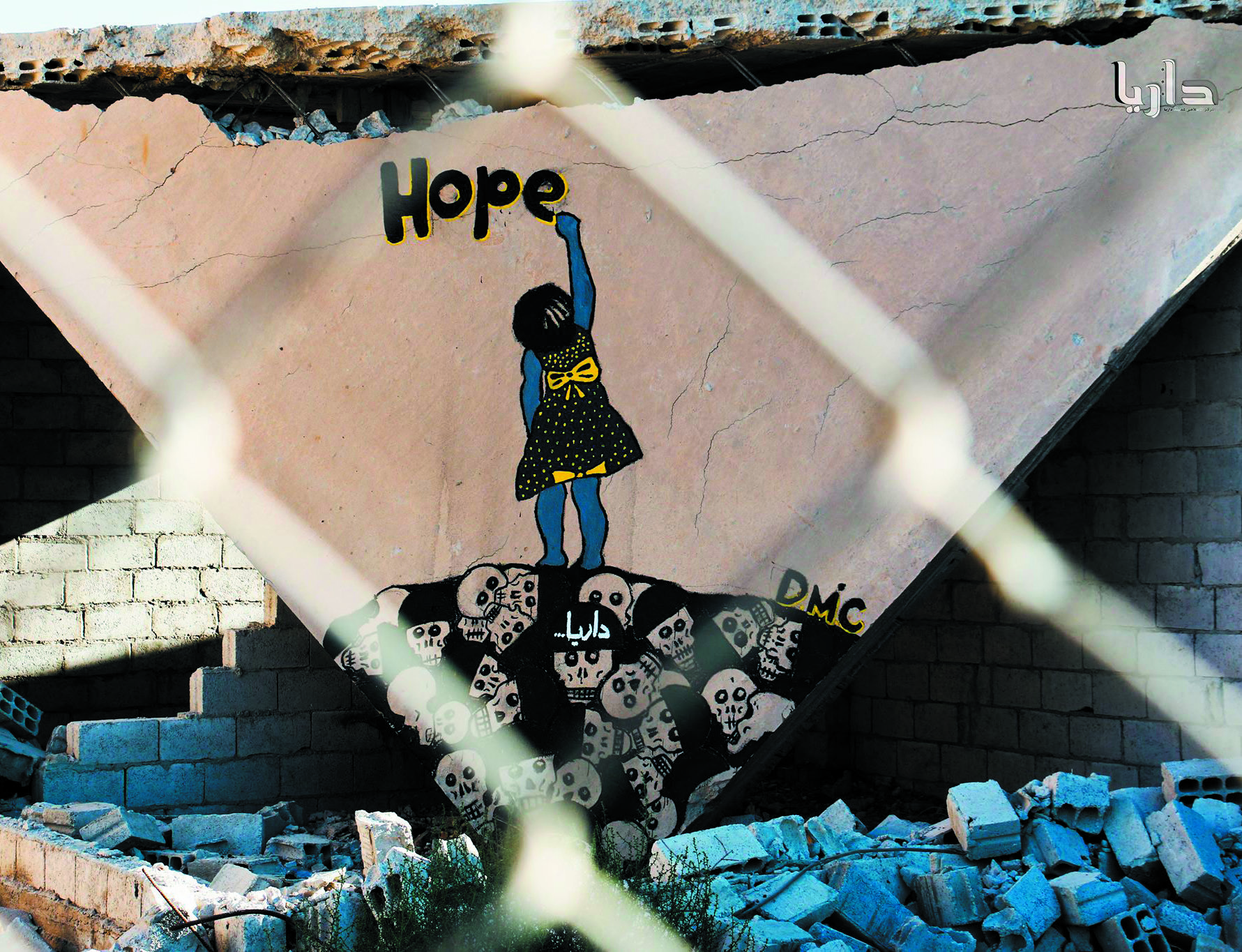
The 2016 mural 3 Years by unknown artists on a wall in Jobar, Damascus - rights groups say hundreds of people died in the suburb in a chemical attack in 2013Hope, painted on a wall in Daraya in 2014
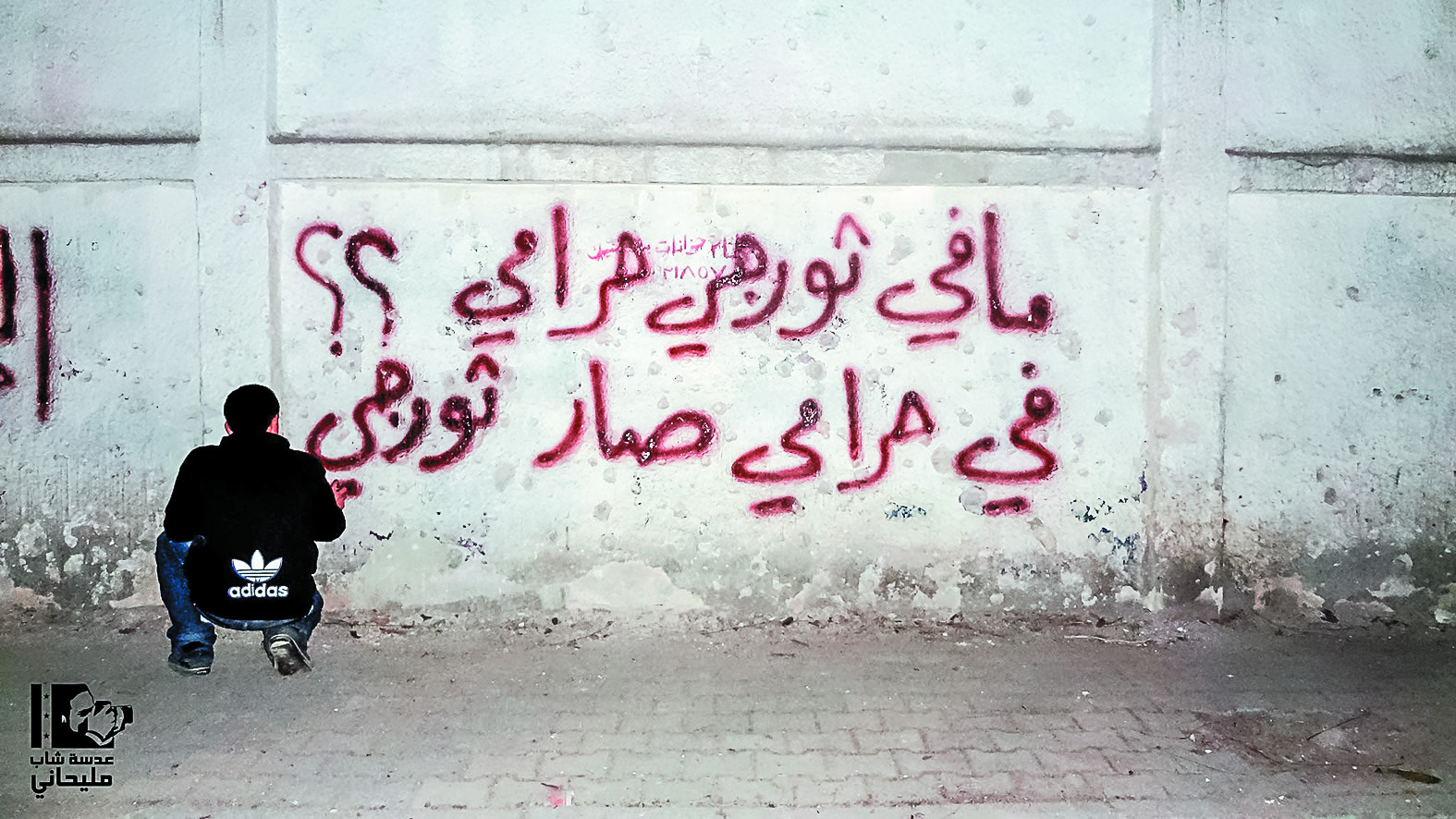
Untitled photograph by Ahmad al-Khalil from 2013 - despite government crackdowns, the inhabitants of Manbij continued to demonstrateAn activist scrawls, “There are no thieving revolutionaries... only thieves who have become revolutionary” - in al-Malihah in 2013 as it faces a humanitarian crisis
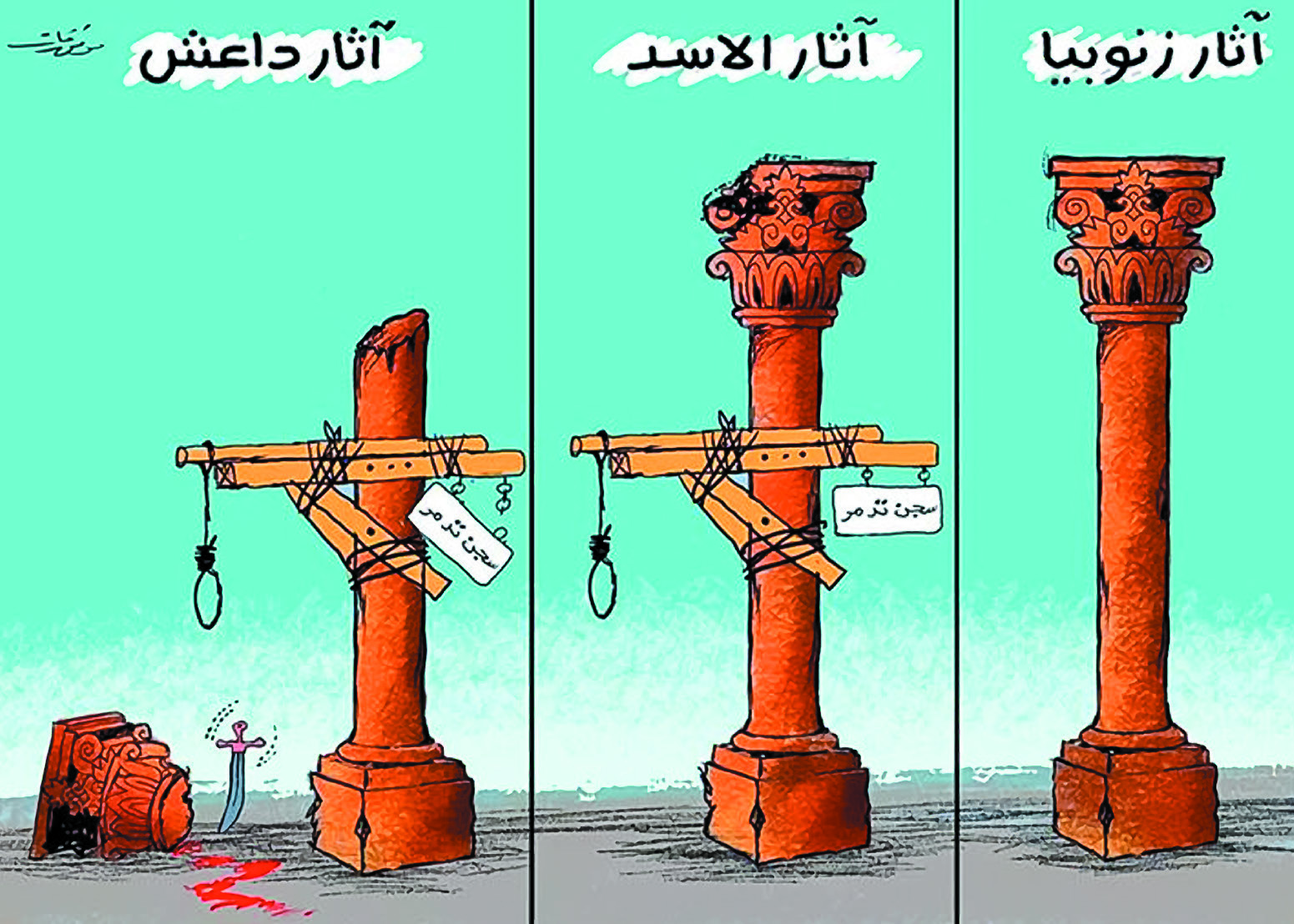
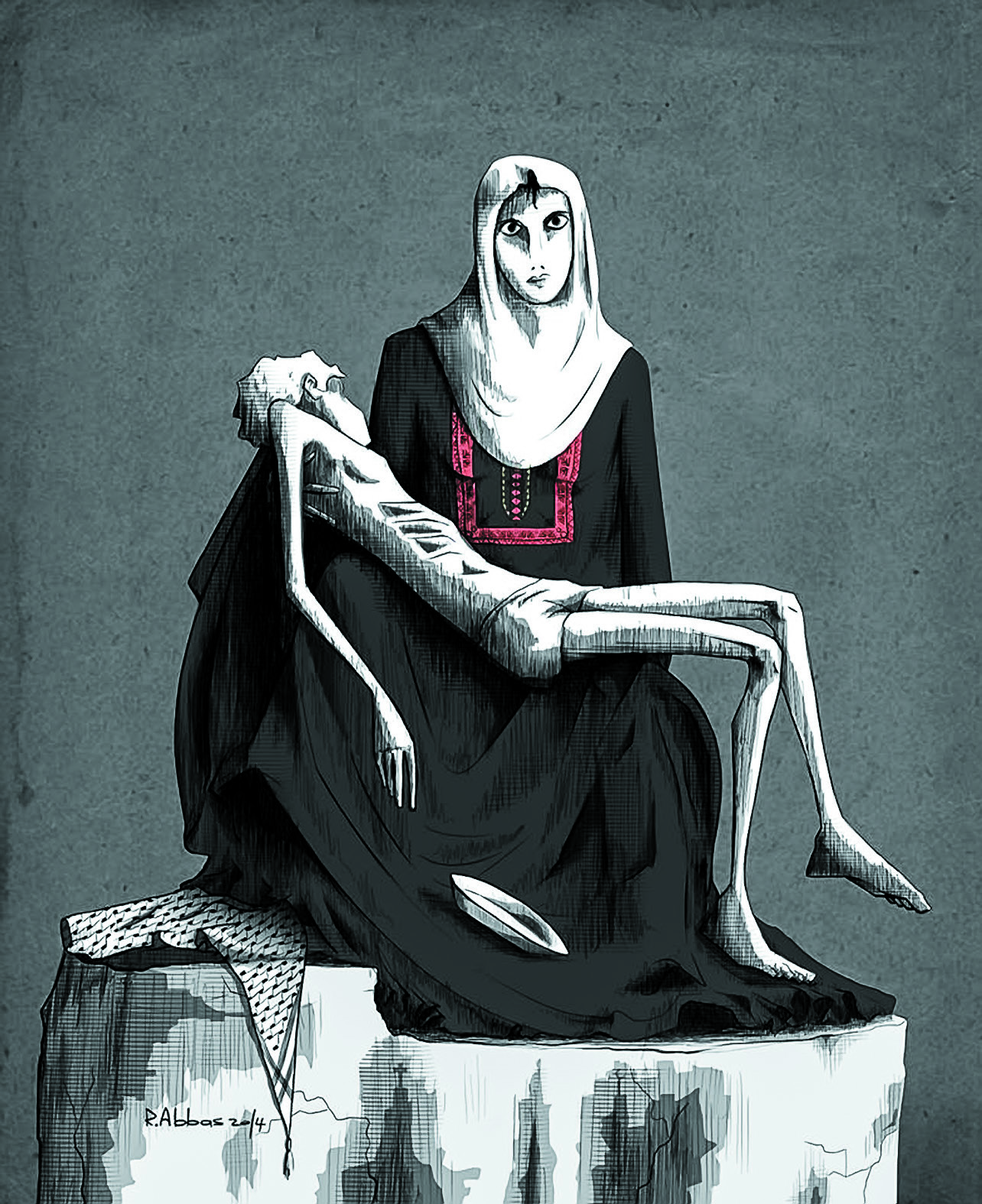
Mwafaq Katt’s cartoon Palmyra from 2015. The first marches in Palmyra took place in April 2011 at the funeral of a soldier, executed for refusing to fire on a protestRami Abbas’s drawing No Mercy from 2014 - in July 2012, the funeral for demonstrators killed at Yarmouk refugee camp was marked by unprecedented protests in Damascus

Saturday, 23 March 2019

Pianist in the rubble


 'For four years, Aeham Ahmad played a soundtrack to a devastating war. In the Palestinian refugee camp of Yarmouk, on the outskirts of Syrian capital Damascus, he wheeled out his piano to perform in the streets, often surrounded by children or neighbours looking for an escape from suffering and drudgery, during a long siege where many starved.

 “I tried to make my piano a bridge to transfer [what was happening],” he says of videos filmed to show the world outside what Yarmouk’s sorry residents were going through.

 Ahmad – who had never left Syria before 2011, when the war began – would address the camera, listing off problems, such as a lack of water or a plea for aid packages. Then, he would sit at his instrument – suddenly calm and concentrated, surrounded by rubble.


 Videos of Ahmad were broadcast through social media, reaching people across the world. As Syria’s initially peaceful revolution turned into a protracted and bloody conflict, his videos were held up as proof of resilience, strength and the power of music in times of turmoil.

 Ahmad is now a refugee in Europe. His new memoir, The Pianist of Yarmouk, reveals a principled man with a history more complicated than any footage could have conveyed.

 When we meet this week, in a small seventh-floor room in Penguin’s London headquarters, close to the Thames, the slight 30 year old shows me his scars. He has one on his forehead and another on his hand, where a tendon was severed by shrapnel and sewn back together by a carpenter, who agreed to operate on him because the doctors had all fled.

 Mentally, Ahmad is also scarred: he thinks constantly of people he left in Yarmouk, which the UN branded a “death camp” last year; and Zaineb, a young girl murdered by a sniper, as she sang beside him.


 Ahmad’s piano was eventually burned by Isis. His family’s music shop, which housed thousands of instruments – 1,200 ouds, 600 guitars, and pianos – was bombed to pieces by Syrian régime forces.

 In 2015, unable to carry on any longer, the pianist finally fled Syria, crossing Turkey and risking death on the Mediterranean, before arriving in Germany. His wife, two young sons, and parents have now joined him.

 For Ahmad, creating the memoir was a kind of therapy. It took him four months to speak everything out loud, while working with writers who helped him hone detail that was at times almost physically painful to remember. “It was difficult and great,” he said.

 “I tried to describe everything that happened in a very clear mind, but it wasn’t clear for me until now. I tried to write a life story about my family, Yarmouk, people, the community, and I tried to write also the life story of the Syrian people. I tried to focus not too much on politics, but I tried to [explain] our opinion of politics.”

 Ahmad’s finished book is a love story: to musicianship, but also to his dedicated father, a blind violin player, who pushed him to play music; to his mother, who sang sweetly every morning before the war began; to his wife and children; and to his community of Palestinian-Syrians, torn apart by an eight-year conflict.


 In Syria, music – like sport – has become a tool of war. In late 2017, I visited the Damascus Opera House. A vast building, it’s located on the same roundabout as Syrian state media, close to the music school where Ahmad took lessons growing up.

 By this, they clearly meant support for Syrian President Bashar al-Assad, whom the opera house is named after.

 One notable example of music as propaganda happened in 2016, when the Syrian régime, with Russian help, reclaimed Palmyra from ISIS. Afterwards, a Russian orchestra was flown to perform among the ruins. For refugees following the war from abroad, this symbolised the ever-closer relationship between Russian president Vladimir Putin (who was beamed in to the concert live, from Sochi), and Assad.

 For Ahmad, it was sinister. Even before the war, he says, music might not have been as political, but it wasn’t free.

 “Everything will be under the control of Assad. Every piece that you play. You know we have a lot of Kurdish musicians not allowed to play Kurdish music before the revolution, and a lot of people would like to compose a lot of things not really in the politics of the Syrian régime, [so] they are not allowed to play it.”

 When protests broke out in 2011, peaceful demonstrators composed revolution songs on the streets. The régime responded with brutality and the protests spread.


 Soon afterwards, Ahmad became a YouTube star. Initially, he was anxious about being recorded, and astonished when the videos began to go viral. Later, he realised that the internet gave him a kind of freedom, bridging the gap between his Palestinian camp in Syria, and Europeans, who took a growing interest in his actions.

 In the end, it was music that saved him. With fame came offers of assistance. “I get a lot of help in Germany… Without this help I couldn’t go on with life.”

 Even in Europe, Ahmad feels certain he’s being monitored by Syrian security. “They follow me, I’m sure… They follow me on Facebook.”

 Like many other Syrian refugees, Ahmad knows if he goes back to Syria he could be detained and tortured in régime prisons. His brother Alaa is already missing in one; he was arrested at a military checkpoint near the start of the war.


 The Pianist of Yarmouk is also dedicated to Alaa and Syria’s other political prisoners, including another friend who was tortured to death. Ahmad speaks passionately of them and his frustration that Europeans don’t understand Assad is one of the biggest threats, even if street fighting stops again.

 Ahmad speaks of the so-called Caesar photos, a cache which was smuggled out of the country in 2013 and shows the bodies of more than 28,000 people murdered in Syria’s prisons.

 Growing rhetoric that Syria is safe because Assad is regaining territory is reckless and dangerous, Ahmad says. Pushing refugees to return means many more will die.


 In Germany, Ahmad also struggles.

 “I fight against the image: refugee. What is a refugee?” he asks. “We are not refugees. We are names and not numbers.”

 Ahmad said he’s battling guilt, which can hit particularly hard when he’s on a stage, playing for European audiences, night after night. “I fight against myself because suddenly when you play every day a concert you feel you are a star, and I am not this one, and I don’t like to be this one,” he said.

 Now, Ahmad’s collaborating with Spanish and German musicians. After two years of anxiety, where he was unable to compose music, he was reunited with his parents. Now he can write again. “It’s coming really from my heart without any plan… I was lost for two years, but now it’s changed (since) my father and my mother [came] here.”

 The pianist says he’s grateful music has given him a platform to speak on behalf of Palestinians and Syrians. “I am not tired of saying things again and again and again. I am tired, but I am responsible.”

 He’s enjoyed bringing Syrian music to a wider audience, though admits his busy schedule shields him too, blocking bad memories and thoughts about the past. “Finding a new life is not easy… That’s why I play every day, to not think.”

 “Music can make people forget what happened,” he reasserts, later. “Music can’t stop the war, but at least [it] can stop the war in the mind.” '

Sunday, 17 March 2019

The people's revolution will end only with victory


 Abdul Baset al-Sarout:

 'We swear by God, we won't remain silent over the blood of the martyrs. We swear by God, to protect our women and children and martyrs and land, until our last drop of blood. Until our last drop of blood. Until our last drop of blood. We shall be victorious, or die. As God is our witness.

 Well, the revolution is entering a new year of sacrifices. I'm here today in Maarat al-Numan, to mark the anniversary of the Revolution of Freedom and Dignity. A revolution of new life, an eight year old revolution entering its ninth year. With every year, there are more sacrifices, more blood, more martyrs, and more destruction. This increases our determination and commitment to the principles of this Freedom and Dignity Revolution, till the last drop of blood.

 Today in Maarat al-Numan, we renew our vows to the revolution we began eight years ago. The revolution shall continue as long as this people has the will. The people's revolution will end only with victory.'


 Hadi al-Abdullah:

 'I swear that we won't abandon the revolution. We won't abandon the detainees. I swear to God we will not betray the blood of our martyrs, or the cries of our detainees. As God is my witness.

 We chose Maarat al-Numan to renew the vow to our revolution in its eighth year, because the town is in our hearts. Every stone here has its story for us. The town has a special type of attraction for us. It has proven to be the revolution's unbreakable stronghold, and its good people are the rebels. They had us loving Maarat al-Numan more and more.

 We are telling the world that we will continue, even if the entire world conspires against us. Even if all the world's criminals and blood-suckers come here to kill us, our only option is to rise from the rubble, and say "We are continuing." We won't betray our martyrs or detainees. I'm here today to tell Raed, Hammoud, and Trad, that I'll try to remain loyal to the path they took. We won't leave, we won't retreat. This revolution will continue until all its goals are achieved.'


 Unknown Revolutionary:

 'Even if all the olives disappear, the revolution shall continue until victory, God willing. No matter the betrayal by others, and no matter how much they support Bashar. As long as an inch of land remains unliberated, we stand and say: "Damn your soul, Hafez Assad." '

Eight years of revolution, and a struggle that will not perish


 Hadi al-Abdullah:

 "May peace be upon you. Greetings to you all. This era shall not end. Eight years of revolution, and a struggle that will not perish. Eight years of revolution is such a long time; we lived together through sweet and bitter days. We have laughed and cried. We have experienced joy and sadness.

 With the death of each martyr, and each massacre, we would swear never to betray the cause or stray from the path. We all swore the martyr's oath: to not stray from the martyr's path, or change, or betray our values. Our demonstration today is the greatest proof of our loyalty to the martyrs.

 Eight years have seen the numbers grow, and there is no criminal who hasn't come here and added to his crimes. But with every outrage, we would rise from the rubble and pledge to keep going. To continue, to never abandon this revolution. We will never abandon this revolution, until our souls leave our bodies.

 Eight years and no one defended us against the one who kills us. Eight years and the world has been unable to judge this criminal. Eight years of revolution and we will keep going. While we shall blame no one for leaving our path, no one should blame us for deciding to continue.

 I advise everyone not to abandon this revolution. This revolution is the noblest thing, the highest value that a human can hold dear. We will not give up this revolution. We will renew it. I swear by God. We will not abandon this revolution. We will not abandon the detainees. I swear by God Almighty, we will not betray the martyrs. We will not betray the prisoners' cries of pain. I swear by God, for the martyrs, we would give our souls and our blood."

Mass demonstrations in north of Syria to revive revolution


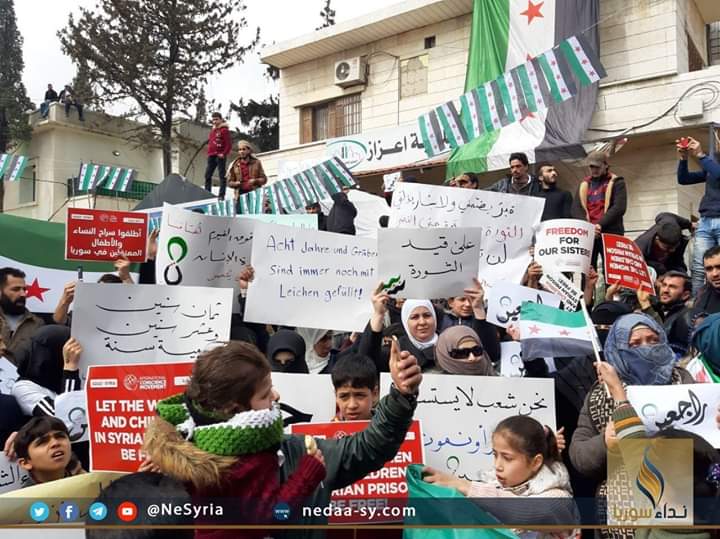
 'Thousands of demonstrators took to the streets on Friday in the north of Syria on the 8th anniversary of the Syrian revolution, chanting anti-Russia and Assad militia slogans and confirming that the resistance is their choice against the continuous offensive launched on Idlib by the Assad militias.

 The anti-regime protests took place in Idlib city and in Idlib countryside’s cities and towns, including Kafr Nabl, Harem, and Binnish.

 The demonstrators asked the international community to force Assad regime to release the detainees.

 Similar anti-regime demonstrations took place in ِal-Bab, Azaz and as-Safira cities in Aleppo countryside where the demonstrators said they aimed to show solidarity with their fellow Syrians in Idlib.

 Significant participation of women and children was noted in Azaz demonstration.

 Idlib is the largest part of Syria controlled by opposition with a population swollen by Syrians who were displaced by the Assad regime and its allies’ advances in other parts of the country.'

Daraa protests show city remains outside regime’s orbit

Father’s shadow. A young boy rides his bicycle in the southern Syrian city of Daraa with a gate behind him ornated with images of Syrian President Bashar Assad (L) and his late father Hafez Assad, last August.  (AFP)

 James Snell:

 
'Demonstrations took place in the southern Syrian city of Daraa to protest something symbolic.

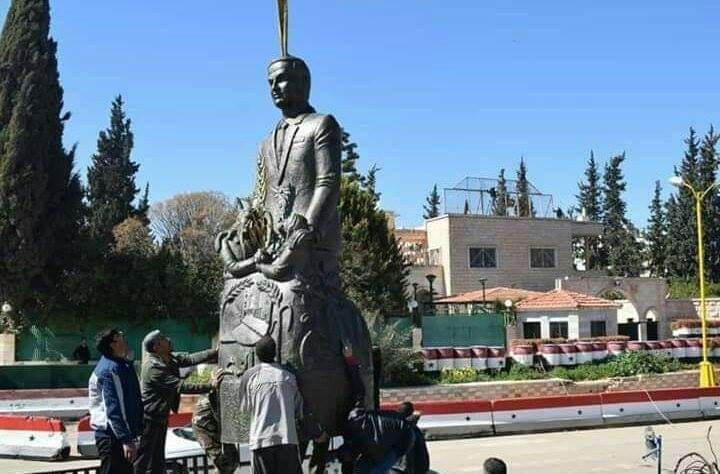
 In the former heartland of Syria’s revolution, protesters gathered March 10 to oppose the refurbishment of a statute depicting Hafez Assad, the father of Syria’s hereditary president, Bashar Assad.

 Although protesting is hardly alien to Daraa, given its position in more than a decade of open defiance of the Assad régime, this demonstration seemed to mark something new, coming, as it did, after southern Syria was reconquered by the régime and its allies last year.

 In other fallen cities, waves of arrests followed their capture and political dissent is heavily controlled, supervised by a state concerned about any criticism that could undermine its survival and claim to legitimacy.

 However, this protest took place under the auspices of the régime’s “reconciliation” programme, in which former rebel groups were substantially disarmed but remained in positions of influence in exchange for giving up their struggle against the state. This was under the auspices and with the support of the Assad régime’s Russian backer.


 Analyst Ryan O’Farrell said: “When the régime started its offensive, Russia had already been negotiating with important local figures, often tribal heads, to secure the peaceful surrender of towns, which was a huge factor in how quickly Daraa fell.

 “In some of them, the rebels were strong enough to get Russia to agree to local autonomy deals whereby the régime would not have a security presence inside the towns, which would still be held by [Free Syrian Army] FSA units, though they had to surrender their heavy weapons.”

 The contrast between locations that retained tenuous autonomy and those that did not is striking.

 “Protests have only been happening in these towns where the régime doesn’t have the kind of security presence that could crack down on them violently, while other towns have seen mass arrests, conscription campaigns and the other forms of repression that the régime carries out everywhere,” O’Farrell said.


 The Daraa protesters brought out old slogans opposing the régime while standing in continued opposition to its political project and were joined, as analyst Elizabeth Tsurkov pointed out, by “leaders who brokered the deal to surrender Daraa [and] now have ties to Russia: Adham al-Akrad, Abu Sharif Mahameed [and] Adnan Maasalameh.”

 The presence of the men seemingly signalled that this political activity was not prohibited. In these areas “people there can continue protesting and will continue to do so until the régime responds,” Tsurkov said.

 “We’re already seeing people taking precautionary measures, by covering their faces for example,” she said, adding that “there is a great fear that they will be interrogated eventually by the régime.”

 “Right now there is this space in which they can protest thanks to the protection of Russia and these commanders of factions that reconciled with the régime but this can be changed at any moment. This space for dissent can collapse at any moment,” Tsurkov said.

 “In my personal assessment, the current situation is not sustainable. Russia will not stay in Syria forever to protect these rebel factions.”

 Listing other areas where Russian presence gave way to régime reprisals, Tsurkov noted “when Russia leaves the area, the régime is free to do whatever it wants.”


 In Idlib and parts of Aleppo governorate, where the régime and its allies hold no territory, protests continue. They are defiant and showy and less spontaneous than the recent demonstration in Daraa.

 Protesters in what some call “free Syria” run many risks and face trouble from local Islamist groups and militias but chanting anti-régime slogans remains an activity that does not invite punishment.

 “Amid a campaign of arrests and disappearances in Daraa, it is likely the protesters face grave risk, although the régime is probably more likely at this stage to enact retaliation privately — through abductions — than to actively disperse protests of this size,” US analyst John Arterbury said.

 “The potential return of an organic protest movement in Daraa… testifies not only to the deep unpopularity of the régime but to the resilience of civilians willing to put their lives at risk following years of wartime privations and a life lived in an authoritarian state,” Arterbury commented.

 Even with the presence of local commanders and the perhaps temporary licence afforded by Russian protection, the protesters know they face tremendous risks in engaging in any political activity that is not officially sponsored and does not meet official sanction. Reprisal will likely come, now or later, as the régime grows in strength and lets its promises lapse.

 However, Arterbury notes: “Protests in Daraa perhaps more directly challenge the régime’s fundamental power structure and its claims to legitimacy rooted in returning Daraa to its control.” '

The Syrian revolution through a rebel's eyes


 'In the dusty backyard of a small house with cracks down its walls sits Obada Dabbas, cooking eggs.

 Despite suffering from old wounds, a broad smile is drawn across his face.

 Dabbas's story is the story of the Syrian revolution. He has at turns been protester, detainee, rebel fighter and one of 14 million Syrians who have been displaced from home.

 Though it has been eight years since demonstrations against Bashar al-Assad’s government began on 15 March 2011, those early days of the revolution, a time when protests were toppling autocrats across the Arab world, are seared into his memory.

 Dabbas's hometown, Daraya, became rebellious soon after the first demonstrations began in southern Syria's Daraa.


 Known as the "city of grapes," the Damascus suburb had a reputation for the sweetness of its fruit and beauty of its trees.

 It is purportedly the site of Paul the Apostle's vision on the road to Damascus, and many of the city's residents had their own Damascene conversion when protests began sweeping through Syria like wildfire.

 "The aim of the demonstrations was to secure public freedoms, allow multi-partyism, curb violations by the security services and put an end to the ruling family's monopoly on power," Dabbas says from al-Dana, a small town in northern Idlib province, the opposition's last redoubt.


 Dabbas was 19 then, working as a carpenter building furniture. Every Friday, he and his friends would help organise protests in mosques, raising banners decrying corruption and handing out fliers promoting the revolutionary movement.

 Thousands gathered to chant slogans against Assad, whose presidential palace could be seen atop a hill just a handful of kilometres away.

 "The Syrian army and security forces stood for hours waiting to break up the demonstrations by force," Dabbas says.

 "We distributed water and roses to them, but to no avail. We were confronted with live bullets and were arrested randomly."


 While handing roses and bottled water to the soldiers deployed to quash a protest - a peaceful gesture that became an iconic image of the early days of the revolution - Dabbas's cousin Khairou Dabbas was arrested.

 Soon after, on 24 February 2012, Dabbas himself was also detained.

 Walking to the mosque to pray, he was intercepted by soldiers. They took his ID card and mobile telephone, on which they found a photograph of one of Daraya's dead wrapped in the green, white and black of Syria's revolutionary flag.

 That photo condemned Dabbas to 74 days of detention under the notorious Air Force Intelligence Directorate - time spent between overcrowded cells and solitary confinement.

 "I underwent five sessions of interrogation and torture, each lasted about four to five hours. I cannot forget the cries of tortured women."

 During the last interrogation session, his captors blindfolded him, took his thumb and pressed it on a sheet of paper, making him implicitly sign a confession the contents of which he was not told.

 "I was released in deplorable condition at 3 in the morning, barely able to reach my house and cross hundreds of checkpoints."

 Despite his gruesome experience, Dabbas was one of the lucky ones. His cousin Khairou was not.

 On Dabbas' phone is a picture of Khairou, and as he gazes at it a grave sadness descends on the otherwise lighthearted man.


 Khairou's death in detention was recently confirmed by the Assad régime.

 He joins one of Dabbas' brothers as a victim of Assad's notorious prisons. Another brother detained by pro-government forced is yet to be accounted for.

 According to the Syrian Network of Human Rights, 128,00 people have been arrested or detained by the Syrian government since 2011. The group estimates 13,983 people, at least, have died under torture in Assad’s prisons.

 "The government has resorted since the crisis in 2011 to a systematic practice of arbitrary detentions and enforced disappearances of a harrowing scale in order to silence its opponents - journalists, civil society activists, human rights lawyers," said Lynn Maalouf, Middle East research director at Amnesty International.

 "It is an issue that has affected every single community in the country and will no doubt bear its scar on the society’s fabric for generations to come."


 The heavy-handed tactics of Assad's forces only succeeded in angering the people of Daraya more. Residents took to arms and tried to wrest the city from the soldiers arresting protesters en masse.

 In the summer of 2012, the Free Syrian Army rebels took control.

 However, with Daraya only some 10km from Assad's seat of power in Damascus, the Syrian government was not going relinquish the suburb easily.

 Between the 20 and 25 August, Assad's forces stormed the city.

 "It was a day like the Day of Resurrection," Dabbas recalls. "The smell of blood rose from the entire city of Daraya after the Syrian government forces invaded the area from all directions."

 The city was subjected to four days of continuous bombardment, and all contact with the outside world was cut off.

 "News coming from different neighbourhoods told of how the Syrian government forces conducted mass killings in brutal ways as they progressed and combed the buildings.

 "Nothing could be done other than wait for an unknown fate. The Syrian army was driving young men, women, children and old people into cellars, then throwing grenades at them or setting them on fire."


 Totally surrounded by Assad’s forces and trapped, Daraya's residents had no other choice but to hide and hope for the best.

 "It was hard to forget the sound of the bullets and the screams of women and children. They drove young people out of the houses and tortured them to death."

 Terrified, Dabbas tried to hide wherever he could, in places such as water tanks and sheds. But the growing realisation that his family too was at risk drove him home to seek them out.

 "I watched the street through a bullet hole in the wall of the house. I saw dozens of soldiers storming the neighbourhood, carrying sharp objects stained with blood."


 The sight became too much for Dabbas to bear.

 "In fact I am not a hero, I lost my consciousness completely.

 "When I woke up, my family told me that the soldiers did not enter the house. They shot at the building's door and ordered all the young men to leave, threatening to demolish the building if they refused. After most of the young men were arrested they left."

 Worried the soldiers would return, Dabbas and his family moved to a different house, only for the forces to congregate outside that one too.

 "The soldiers were about to enter the house, but they were busy chasing young men running through the fields. I was even more appalled by the news that many of my friends and relatives had been brutally killed."

 As many as 500 people were killed in the assault, one of the bloodiest of the war.


 After the massacre, Dabbas saw no other option but to take up arms and join the Martyrs of Islam battalion of the FSA.

 By November, the rebels had taken Daraya back and the government had laid siege to the suburb. Little did Dabbas and his comrades know Daraya's siege would last for four long years.

 Over the course of the war, sieges have been a brutal weapon used by Syrian government forces, the opposition and the Islamic State militant group.

 According to Siege Watch, a monitoring organisation, 2.5 million Syrians have suffered under sieges between 2012 and 2018, when the last were broken.

 In the Damascus countryside, Assad's forces kept several urban areas such as Daraya under total lockdown, depriving them of food, medicine and other necessities.

 "The siege strategy flourished and spread because it was effective for its perpetrators," Siege Watch noted in its final report issued this month. "Today, the Syrian government and its allies have reasserted control over all of the areas they once besieged."


 Dabbas and his Martyrs of Islam did fight back, however, and tried to keep lines of communication open between Daraya and the neighbouring rebel-held town Moadamiyah.

 In the process, Dabbas was severely wounded.

 "We were targeted by a tank shell and I was hit. I felt that I had been killed, I was thinking about whether I was going to meet my brother, and whether the victim does not feel his wounds after death."

 Sounds of gunshots broke Dabbas from his daze.

 "I tried to crawl and search in the dark for survivors around me. I found an extended hand and tried to awaken the owner, but it was not connected to the body."

 Dabbas, who suffered shrapnel wounds in his eyes and feet, was rescued from the fray and taken to a hospital.

 "The doctors told me that I would lose my sight. I do not know how I was cured. It's a miracle."


 According to Dabbas, the battles waged in the Damascus countryside were more ferocious than any other across the country.

 Ill-equipped and lacking any kind of professional training, Daraya's rebels fought against, among others, the seasoned fighters of the Lebanese group Hezbollah.

 "We fought very fierce, face-to-face battles," Dabbas recalls.

 "The distance between the Syrian government forces and the opposition was no more than a kilometre, and we fought street to street."


 Eventually, the rebels cracked.

 In August 2016, the Free Syrian Army negotiated a withdrawal agreement with Damascus, handing Daraya to Assad in return for safe passage to opposition-held northern Syria.

 Green buses, which would become notorious as more and more rebel-held areas fell, pulled up to take the rebels and the rest of Daraya’s residents away.

 "I cannot describe the feeling of leaving Daraya, the city where I was born and raised. Which I fought for, and lost so many of my friends. It was the city that carried us in its difficult times," Dabbas says.

 "Parting from Daraya was like parting the spirit from the body. All those destroyed houses, witness to the criminality of the Syrian government, and Daraya's steadfastness.

 "I wish I could die in Daraya, and be buried under its land forever."

 Daraya's residents arrived in Idlib province to a hero's welcome. They had surrendered, but only after holding out for more than four years, starving, outgunned and alone.

 "We did not give up, we did not surrender our weapons and equipment, and we basically had no heavy weapons."


 Alighting from their green buses, Daraya's residents found a whole new world within their own country.

 "When we reached the north it looked like a fortress that could not collapse, because there were vast areas, wide and large fronts," Dabbas says.

 "There were thousands of fighters in the north and many heavy and medium weapons any fighter would dream of. We hadn't seen equipment like this except with the Syrian government."

 Around four million Syrians now reside in Idlib province, most of them displaced from around the country.

 Daraya was the first significant rebel centre to negotiate passage to Idlib. But by New Year 2017, east Aleppo had fallen. After that Eastern Ghouta near Damascus, then Daraa, the cradle of the revolution.

 Idlib is now a hodgepodge of civilians from every region. Dialects and cuisine from across Syria can be found mingling together.

 But it is also home to rebel fighters of varying degrees of militancy, including Hayaat Tahrir al-Sham (HTS), formerly linked to al-Qaeda.

 "The makeup of the opposition factions is very chaotic, even though they are all sons of one land. I do not know why they are scattered with different affiliations," Dabbas says.

 Dabbas decided to take a course in medical care, and he now works in a centre in al-Dana, tending to wounded fighters.

 "Having been wounded twice in the past, I preferred to take a field ambulance course," he explains. "The fighter must have knowledge of everything to help himself or his friends on the battlefield."


 Many in Idlib see a battle approaching, especially with the rising violence in the south.

 Dabbas says he will be ready if and when that happens.

 "If there is will, we can resist the régime for years, as we resisted in Daraya with only Kalashnikovs," he asserts.

 "All the north needs is the will to fight and nothing more, then we will be able to withstand." '
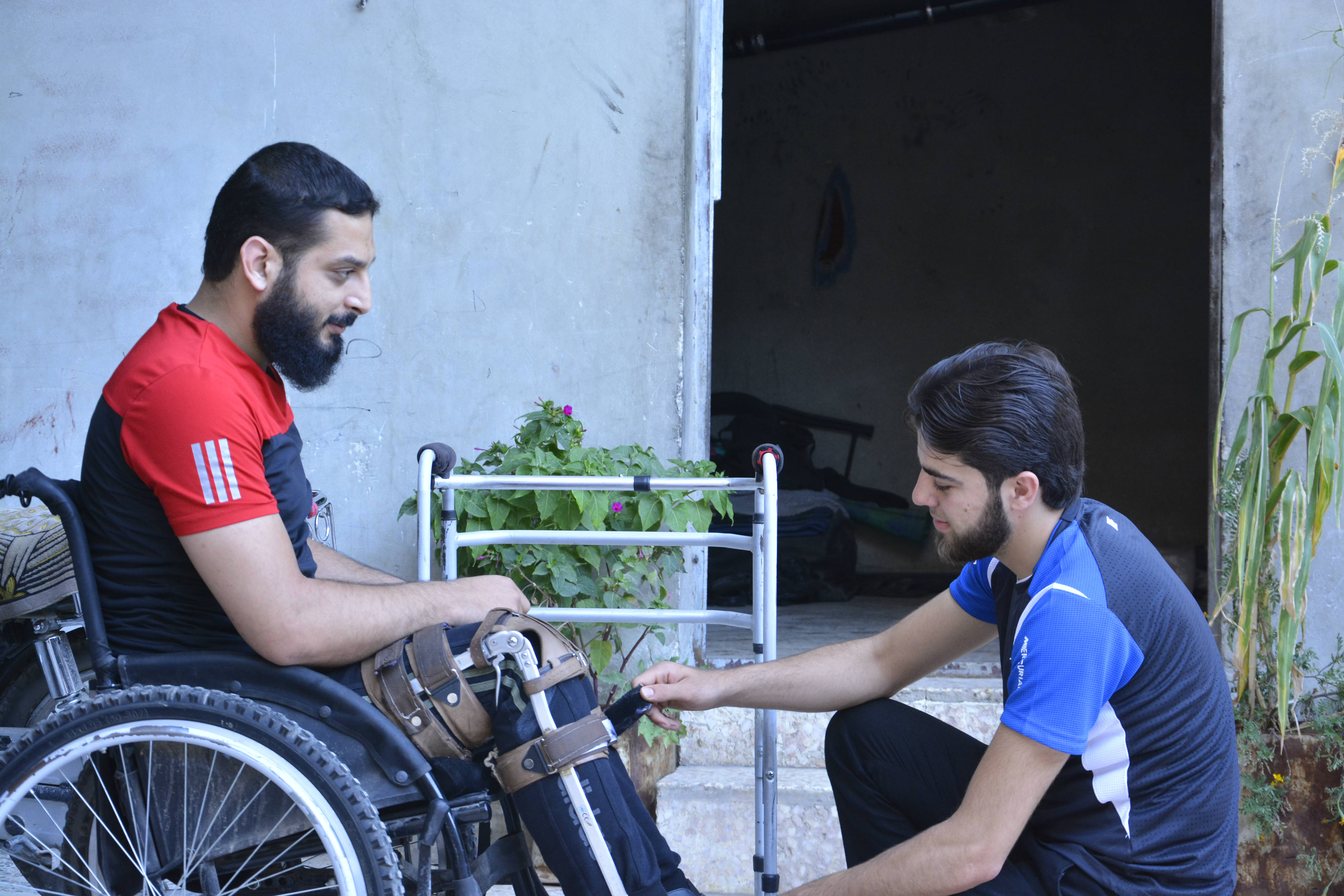
Dabbas tends to a wounded rebel fighter, in nothern Syria's Dana (MEE/Harun al-Aswad)

Wednesday, 13 March 2019

It is an occupation by Russia and Iran


 Mouaz Moustafa:

 'It's really hard to sit here eight years in. We thought that when these protests cam out, calling for freedom and democracy, for the God-given rights we enjoy in the West, the United States, in Europe, and elsewhere, didn't think the brutality of the régime would be to this extent. But the winners right now are Iran, Russia, Hezbollah, extremists and their propaganda. Not the Assad régime. General McMaster, the former National Security Adviser to President Trump, said that 80% of on the ground troops for Assad are Iranian militias. It is the Russian air force that has bombarded and targeted civilians. So the winner isn't Assad. It is an occupation by Russia and Iran of our country because its people came out calling for their dignity.

 Assad is merely a puppet. He's a puppet of Tehran, and to a lower degree, of Moscow. If you look at the areas he controls right now, he's unable to govern. Even some of his loyalists have been critical of the régime. They have to be careful, because anyone who shows any criticism, even loyalists of the régime, are tortured to death in some of the worst dungeons. Even though he has the Russian air force and Iranian ground troops, he still has not taken over the entirety of Syria, and even those in the "reconciliation" areas that came under régime control, have come out in protests in the last 48 hours, calling for democracy. He's there now, but he's more of a puppet than anything, and I think the Syrian people will still call out for their democracy, for their freedom, for their rights of self-determination, as long as they have the power to do so, despite the fact that the world has deserted Syria, has deserted our Never Again moment.


 What's shocking is the Assad régime, Jamil Hassan who heads his Air Force Intelligence Branch, at one point announced that there are three or four million arrest warrants still out. Those refugees who essentially came back on the basis of guarantees that nothing would happen to them. were either arrested, killed, or forcibly conscripted to go kill their own people. The conditions in Assad's jails since Caesar - an incredibly brave humanitarian hero, not just a Syrian national hero, that brought out almost 55.000 pictures of men, women, children and elderly tortured to death - that systematic machinery of death, continues. It continues to kill people, it continues to torture people in the most sadistic ways. I was talking to a Holocaust survivor, and he mentions that he's hearing from victims of Assad's régime about the sadistic torture; he can't imagine that this is sort of OK in this century, that we allow this to happen, knowing we have the documentation, having someone like Caesar, a defector who documented on behalf of the régime what happened, and showed the world.

 It is mind-boggling that we aren't doing more to stop him, and what's more disturbing is that the Assad régime probably holds more American citizens than any state or non-state actor in the world. So I call on President Trump, who has had a success record in bringing Americans home, to bring every American held by the Assad régime home, and to hold him accountable for what he's doing to his own people. There are a large number of foreign nationals being held in Syria today. The American families for the most part have decided not to go public, but I could point to one amazing family, who decided the bring their case publicly, the family of a man called Majd Kamalmaz, who is a humanitarian therapist, who was arrested when he went to visit his elderly family in Syria, he spent less than 24 hours there before he was arrested. This American citizen continues to be held by the Assad régime, as does Austin Tice, an amazing journalist. There are quite a few other who have not decided to go public yet, but even one American is one too many and they need to be home yesterday.


 There are two ways to go. Either the world can continue to do nothing, and the Assad régime will slaughter millions. You have in Idlib, a province with three million people, one million of them children. You have countless civilians who continue to be targeted, and you have hundreds of thousands of people who are being tortured to death. If we do nothing about it, this will continue, this will empower more extremists. ISIS, al-Qaeda and others will point to this and say it shows the world doesn't care about the Syrian people, and try to recruit. And the Assad régime is very smart about manipulating and utilising extremists.

 There is a ray of hope. There is a Bill in the United States Congress, called the Caesar Civilian Protection Act. It has passed the House three times. It has passed the House of Representatives on a voice vote. It has passed the Senate in a different form. I call on members of Congress, of the House and Senate, to put this at the President's desk at the nearest possible opportunity. I know the White House is in support of the Caesar Bill, which calls for the protection of civilians. I also call on the President, who has done this in the past, to continue to raise the alarm about Idlib, to continue to make it clear that Iran, Russia, and the Assad régime, cannot murder civilians in Idlib province which has the potential to double the number of refugees in Europe. I call on everyone, all human being, to know, that sometimes when the Holocaust happened we should all have been calling for the bombing of the railroads so that six million Jews don't get murdered. When Rwanda happened we should have stopped the machetes being shipped. When it comes to Syria, civilians are targeted, and men, women, and children, are tortured in prisons. It is our obligation to raise our voices, to do all we can, to put a stop to the killing.'

Tuesday, 12 March 2019

No, of course Syrian refugees can't go home


 Abdulwahab Tahhan:

 'When the Syrian uprising against Assad began back in March 2011, the protesters demanded reforms such as equality and freedom of speech.

 Now, nine years into the conflict, these demands still stand and there have been no reforms.

 Instead, Assad's régime stands accused of human rights violations against its civilians, and US Congress is pushing to introduce more sanctions on the Syrian régime based on the Caesar report which documents the number of civilians tortured to death in Assad's prisons.

 Last month, two members of Assad's régime were arrested in Germany based on a report that they were involved in torturing civilians in prison back in 2012.


 Despite all these documented violations, some media outlets still choose to focus on the return of Syrian refugees, and promote an image of a normal country, ignoring all the red flags, violations and risk of persecution these refugees might face on their return.

 In November 2018, the Lebanese minister of state for refugee affairs, Mouin Merhebi stated that about 20 Syrian refugees who returned from Lebanon to Syria had been killed by régime forces.

 Moreover, Rami Abdul-Rahman, director of the UK-based Syrian Observatory for Human Rights, stated that around 700 were arrested when they crossed the borders and went back home, though not all of them remained in prison.

 The practice of incarceration is however very common by the Syrian régime, and those who leave prison do not necessarily live freely.


 Last year, Sally Hayden and Ziad Ghandour reported for The Irish Times that those who returned where detained at the airport and had their passports confiscated, while others were sent to prison, later conscripted and taken to the front lines to fight.

 In a country when law is on the side of those connected with the régime, there is no guarantee they'd be protected by presidential amnesty or any laws that might otherwise guarantee their safety.

 In a TV appearance, Syrian Republican Guard General, Issam Zahreddine once infamously threatened those who had fled Syria and since returned, telling them they'd regret their decision.

 This general is now dead, by his mentality prevails.

 When I was a university student in Aleppo, I had to attend a two-week mandatory military training camp one summer. We were given a military uniform and boots and were told to show up at the camp on our own. At the entrance, the colonel, who goes by the name Abu Saqer shouted at all the students, ordering us to duck. He took some soil and scattered it over our heads.

 Swearing at us, he intoned, "your worth is less than this soil!" People serving in the army had, and still enjoy a status above civilians, and often practiced such violations without ever being questioned.


 Syria is no longer fit for normal life.

 The gas, electricity and petrol crisis in Assad-controlled areas make life very difficult even for supporters of the régime. Following the fall of Aleppo in December 2016, the city was devastated, drawing comparisons with WWII Stalingrad.

 It remains perilous to live there: A couple of residential buildings have since collapsed, putting more civilians at risk of sudden death.

 And then there are the recent, horrific allegations of kidnap for ransom and body parts, which have become common in régime-controlled areas. Many I speak to in Aleppo describe how unsafe they feel, especially given the 'disappearances'.


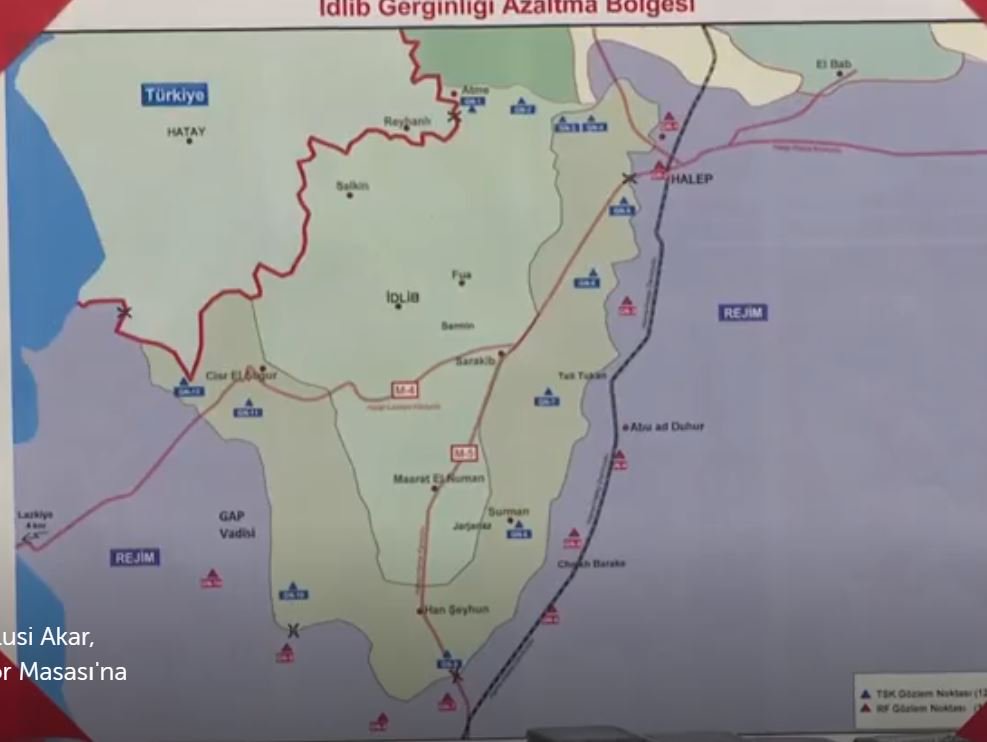
 In Idlib, where according to the UN around 3 million now live, the majority are displaced from all over Syria, and the régime continues to violate the Russian-Turkish de-escalation zone, carrying out air and artillery strikes.

 In one week alone, Airwars - an independent monitoring organisation based in London - reported that 16 civilians were killed in these airstrikes, including women and children.

 In the East of the country the situation is no better; the US-led coalition's air campaign is ongoing and civilians are trapped between IS snipers and mines, and coalition airstrikes reportedly killing up to 120 civilians in a week.


 Assad's régime is notorious for torturing civilians to death in its prisons. Save the Rest campaign and others advocate on behalf of those who are missing in Assad's prisons and demands their release.

 Layla Shweikani, for example, a 26-year-old Chicago native was detained in Assad's prison and tortured to death for helping refugees and displaced people in Syria. The family learned about her death two years after she had died.

 This practice is common by the Syrian régime; many families learn about the death of their loved ones in prison years after they were arrested.

 The Syrian Network for Human Rights, based in Qatar, estimates that over 118,000 have been arbitrarily arrested since March 2011.


 Despite all of this, some journalists happily go to Syria on a régime issued visa, surrounded by régime minders as they interview people on the street about how safe they feel.

 By promoting this image that the country is safe for refugees to return, despite the fact that many members of the present régime are facing allegations of human rights violations, these outlets act as a mouthpiece for a régime responsible for the death of hundreds of thousands of civilians.

 When Twitter's CEO tweeted photos of his meditation trip to Myanmar last year, it backfired, and he was widely accused of being a mouthpiece for a government that oppressed and killed thousands of Muslims and is accused of ethnic cleansing.


 Concerning Syria, western journalists with a powerful platform are at best ignorant of a régime accused of killing hundreds of thousands, and at worst whitewashing the most brutal crimes of a generation.

 I am reminded of Stuart Hall, a Jamaican-born British citizen who migrated to the UK when he was still a child and later became a professor in Cultural Studies. He wrote that all of his tutors asked him, "When are you going back home?" when he was lived in Britain and went to school there.

 I am a Syrian refugee living in London, and I still wonder why people are obsessed with sending me home, while I am paying my taxes and contributing to society.

 Is it not obvious that we are fleeing the bombs, and that Europe could be the safest place? For now, at least, returning home is not an option.'

Monday, 11 March 2019

Syria Will Never Be Stable With Assad in Power


 'In March 2011, tens of thousands of enraged Syrians gathered in the southern city of Daraa to attend an anti-government demonstration. There a group of protesters toppled a statue of Syrian President Bashar al-Assad's late father and predecessor, Hafez al-Assad. Days later, hundreds of Syrians climbed on top of the rubble of the statue, shouting slogans denouncing the Assad régime, which by that time had begun using violence to crush popular protests calling for political reforms. Still, despite the régime's brutality, the Syrian people had hope for a better Syria, one that was a little freer, a little more prosperous. Then the mass slaughter began.

 Eight years later, after killing some 500,000 Syrians and displacing millions more, Assad won. Indeed, barbarity won. With the support of Russia and Iran, the Syrian president is still in power, and will remain so for the foreseeable future. But victory is not enough, apparently. Supporters of the régime are now rubbing the Syrian people's faces in the dirt, erecting the statue of Hafez in the same spot where protesters tore it down.

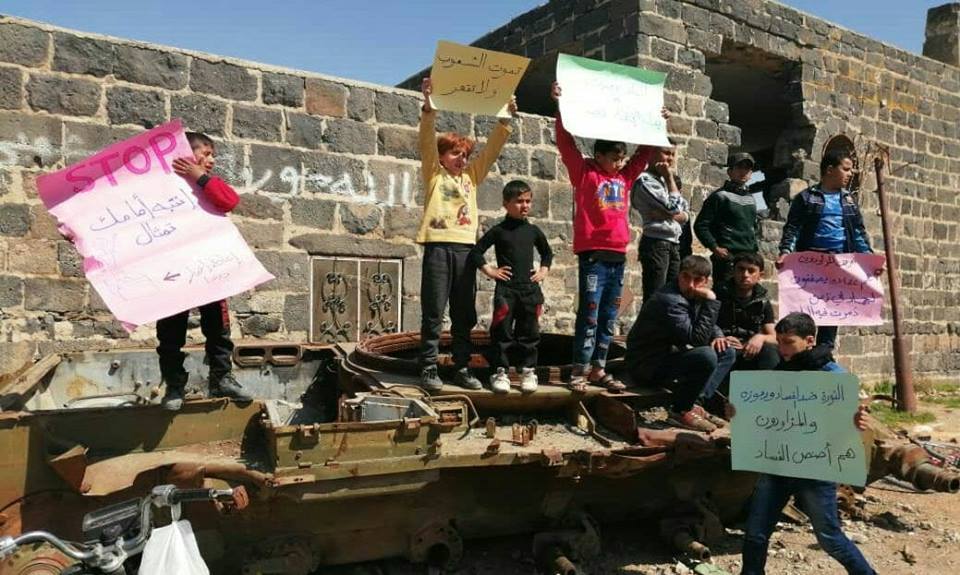
 In response, hundreds of Syrians took to the streets in Daraa, the cradle of the Syrian uprising. "Syria is ours, not for the house of Assad!" the protesters chanted, walking through the old quarter of the city. "Long live Syria, down with Bashar Assad!" others chanted, as well as, "Your statue is from the past, it's not welcome here!"


 Security forces closed off the area to prevent residents from other parts of Daraa from joining the protests.

 The latest demonstrations are a reminder that a Syria ruled by Assad will never be stable. Some commentators and politicians have argued the opposite for years, claiming that, while Assad may be brutal, he is necessary to ensure stability and to prevent Islamist terrorists from taking control. This notion, often articulated as some deeply intellectual notion of hard-nosed realism, is deeply misguided.

 The Syrian people will never accept the Butcher of Damascus, whose régime probably raped, tortured, or murdered their friends and families, as their legitimate leader. What's more, their desire to topple Assad has not gone away, nor has their rage. Yes, the régime has defeated opposition forces through shocking savagery, which can crush and deter them for a time. But that is no recipe for a stable and sustainable—let alone prosperous—situation, especially today, when social media and other new-age technologies make political movements so much easier to spread.

 Even now, there is evidence that the protests in Daraa will continue and grow. "There have been small, peaceful protests after prayers on Friday for a few weeks now," one resident of Daraa told the Telegraph by What's App, another tool that can help the opposition organize and solicit outside help. "But the Russians are in charge of everything, so everyone's scared."

 "But," the resident added, "people are testing the limits now, seeing how far we can push back."

 On cue, protests continued Monday in the nearby town of Tafas. Residents protested against the régime's corruption and brutality, including its shelling of Idlib.


 The Syrian people have been demoralized, their homes leveled, but their spirit and dignity seem to remain intact. Moreover, their level of hatred for the régime is a powerful force, one that should not be underestimated. And Assad continues to provoke that rage, even after conquering most of Syria. Just look at Syrian refugees who have returned home. Some of them have disappeared into the country's notoriously brutal prison system. No one is safe from the régime's persecution.

 More broadly, the situation that sparked the Syrian conflict is still in place: a brutal régime is oppressing its people, who want better lives and a more responsive government. The key difference now is that the Syrian people want the Assad régime thrown into the sea, not to institute reasonable reforms, as they wanted in March 2011.

 Beyond the Syrian people, recall how the Islamic State grew in power in Syria after the American surge in Iraq in 2007-2008. The terrorist group waged an insurgency in Iraq, as it is doing now, and then moved into Syria following the outbreak of the Syrian conflict. It gained strength from revenue courtesy of the oil fields in eastern Syria, but also from thousands of disgruntled Sunnis opposed to the Assad régime. And there is the small detail that Assad strengthened ISIS and other terrorist groups to discredit opposition forces and ensure that Western countries did not intervene against him. ISIS is going back to its old playbook in Iraq. It is not that crazy to imagine a similar sequence of events happening again.

 Assad's survival also risks a region-wide war in the Middle East. It is no secret that Assad has allowed Iran to entrench itself militarily throughout Syria, which the Islamic Republic has sought to make a forward operating base against Israel. As Iran and its proxies continue to threaten Israel, and as Israel responds with military strikes against Iranian assets in Syria, the two sides move closer toward a large-scale conflict, one that could be disastrous for the entire region. While Assad remains in power, this dynamic is sure to continue to hold, forming a storm cloud over the Middle East. The question is if and when the cloud opens up, and it begins pouring.

 It is not just a moral stain on humanity for Assad to remain in power, but also a major threat to American and allied interests. But now there are reports that some European countries want to recognize that Assad won the Syrian conflict and help him reconstruct Syria. Under no circumstances should any Western country do such a thing. Rather than help the Syrian people, Western money for reconstruction will further entrench Assad's control over Syria, enrich those who committed war crimes, and bolster those who would do harm to the United States. Put aside morality for the moment: Assad is no force for stability; he is a walking time bomb.'


Embedded video

Syrian forces use sexual violence to humiliate men


 'Assad régime forces are using widespread sexual violence to humiliate and silence male prisoners, psychologists and a monitoring group said Monday, offering a rare window into a form of abuse rarely discussed by its survivors.

 Eight years after the start of Syria’s uprising, more than 100,000 detainees remain unaccounted for, most of them in Assad régime custody. According to the United Nations and human rights groups, torture and abuse are systematic, and thousands, if not tens of thousands, of those detainees are probably dead.

 But while many forms of abuse are well documented, the men who emerge from régime cells — often after years of neglect in near-total darkness — rarely discuss the levels of sexual violence they encountered, and little psychological help is available for survivors.


 According to a report released Monday by Lawyers and Doctors for Human Rights, a Syrian rights group, security forces have used rape and enforced sterilization, as well as the tying, burning and mutilation of men’s genitals, to force confessions and submission.

 The abuse has taken place at checkpoints, on journeys to prison and inside interrogation rooms, the group said. Several men said their jailers inserted a water hose into their anus and turned on the tap, causing the prisoners’ bodies to swell up.

 There are no accurate statistics for the scale of the sexual abuse inside Syrian custody, in part because survivors are scattered around the world. Former detainees also are often hesitant to report such abuse, particularly when they come from conservative communities in which discussion of sexual violence is taboo.


 But of 138 people interviewed by the LDHR, more than 40 percent reported some form of sexual assault. That figure rose to almost 90 percent when describing instances of forced nudity ordered by their prison guards.

 “What is revealed is extensive, pervasive and brutal sexual violence against Syrian political prisoners across time, government security agencies and their detention centers,” the group said. The testimonies were accompanied by medical evaluations. Where possible, experts in treating sexual violence then cross-checked the details from the survivors’ accounts and the evaluations.

 In interviews, dozens of men formerly held in régime prisons, particularly in Damascus, have described how they were ordered to strip before being severely beaten, or how they spent days lying naked alongside other prisoners in packed and squalid cells. Others reported extreme forms of sexual abuse involving mechanical tools or sharp objects.


 “These were moments when you didn’t recognize yourself as a human,” said one man, speaking on the condition of anonymity out of fear for his family’s security in a régime-held area. “As I lay there, it wasn’t that I wanted to die. It was that I wished I’d never existed.”

 These accounts by survivors describe historical cases of abuse, but there are few indications that the practice has stopped. More than 2,000 Syrians have been detained since November, most of them by régime-linked forces, according to the Syrian Network for Human Rights.

 It remains unclear how many have been sent to detention facilities, rather than being forcibly conscripted. But recently released detainees say the pace and scale of abuse inside régime prisons and security branches remain unchanged.

 The legacy of sexual abuse can be devastating, and trauma can last years after release. More than three-quarters of the men interviewed described depression, flashbacks and nightmares since they left prison.


 Psychologists in Gaziantep, a city in southern Turkey and a hub for Syrians fleeing the war, have recorded cases of suicide that they believe to be linked to sexual abuse experienced in régime custody.

 “Coming from conservative societies, these men often leave feeling destroyed and humiliated as men,” said Jalal Nofel, a Syrian psychiatrist who works with former detainees in Gaziantep. “The patients we see often believe that they cannot recover from that.”

 He said, “A man from Douma did not speak to his family for three days upon his return, and then he killed himself. We only learned his full story from cellmates after his death.”

 There is scant help available for rehabilitation of former detainees, as needs outstrip the capacity of international and local humanitarian groups working in Syria and in countries hosting the war’s refugees. And men are far less likely to seek help than women.


 In their interviews with the LDHR, survivors said they had often chosen isolation, in some cases forgetting details about their family lives while being unable to shake flashbacks from their time in jail. One man likened himself to a small bird. Another man, identified only as Abdullah in the report, told a researcher that he lived in constant fear.

 “The soul has died, doctor,” he said.'

Sunday, 10 March 2019

New Assad statue triggers protest in Daraa


 'Hundreds of Syrians in the city of Daraa protested Sunday at the erection of a new statue of Bashar Assad's late father, nearly eight years after the original was toppled at the start of Syria's civil war. Demonstrators and witnesses said residents walked through the streets of the war-ravaged old quarter of the city calling for Assad's overthrow, days before the eighth anniversary of the start of the conflict. This is the largest anti-régime protest to be held in any area outside of opposition control since the first year of the Syrian uprising.

  Daraa was where peaceful protests against 40 years of autocratic Assad family rule began in 2011, and were met by deadly force, before spreading across the country. The Syrian army, aided by Russian airpower and Iranian militias, recaptured Deraa from rebel forces in July on its way to regaining control of the bulk of Syrian territory. But since then, residents of Deraa say disaffection has been growing as Assad's secret police once more tighten their control.

The régime had given schools and government employees a day off Sunday to attend a pro-régime rally to inaugurate the new bronze statue of late President Hafez Assad, erected on the site of a previous statue felled by protesters. But a group of youths protesting in Daraa's old quarter carried a placard reading: "It will fall. Your statue is from the past, it's not welcome here."

 Lawyer and activist Adnan Masalma said: "People have gathered without organization and to peacefully demonstrate over just demands."

 After Daraa surrendered to régime forces last summer, many residents chose to stay put rather than head to remaining rebel-held areas in northern Syria, where tens of thousands of others displaced from recaptured areas have gathered.

 "The country has been destroyed and, instead of reconstruction, we place memorials," read another protest placard.

 The Syrian authorities have reinstalled several large statues of the elder Assad after military victories that have seen his son regain most of the territory once held by rebels. Many residents of those areas now complain that services have not been fully restored, while young men fear being conscripted into the army to fight the remaining rebels. There has been a spate of attacks on army checkpoints in Deraa province, which the authorities blame on rebels operating covertly.'

Friday, 8 March 2019

Syria rallies demand release of jailed women, children

Syria rallies demand release of jailed women, children

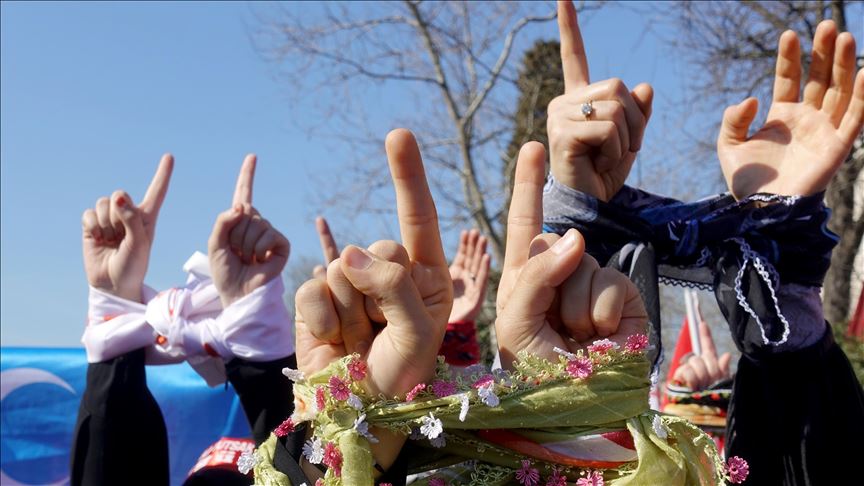
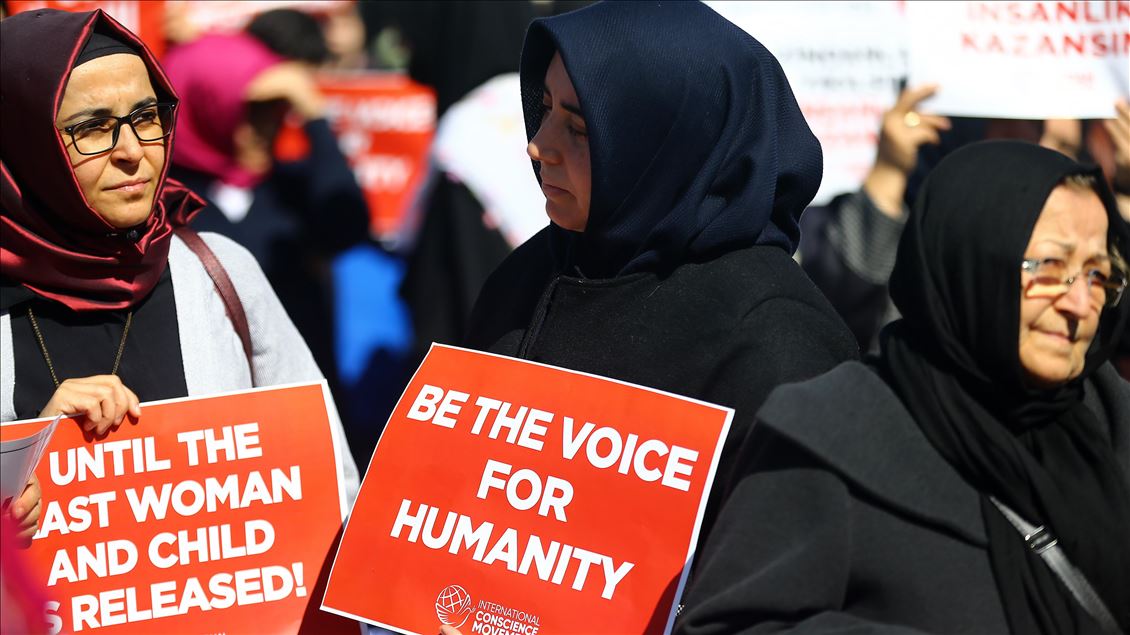
 'As the world marks International Women’s Day, demonstrators in northwestern Syria are urging the international community to take immediate action to secure the release of women and children still languishing in Syrian prisons.

 Friday’s demonstrations were organized in support of the Conscience Movement, an alliance of individuals, rights groups and organizations who demand the release of women and children from the jails of Syria’s Assad régime.

 Rallies were held in the towns of Azaz, Al-Bab, Cobanbey and Bizaah in Syria’s northeastern Aleppo province.


 According to the Conscience Movement, more than 13,500 women have been incarcerated since the Syrian conflict began in 2011, while more than 7,000 women remain in detention where they are reportedly subjected to torture, rape and sexual violence.

 Marwa -- a female Syrian engineer who did not give her full name due to security concerns -- called for the immediate release of jailed Syrian women and children.

 “As relatives of those who are still behind bars, we came here today to demand their release,” Marwa said. “We hope these rallies will help achieve that objective.”


 Maryam al-Ali, a young girl who attended the rally in Bizaah, said her father had once been jailed by the régime.

 “My father was held in an Assad régime prison for a year and a half. He was finally released two years ago,” she said.

 “But his friends still remain in prison and we are demanding that they be freed without delay,” she added.

 The Conscience Movement was founded last year after an all-female international convoy made global headlines by raising awareness about the abuses suffered by female prisoners of the Assad regime.

 In March of last year, the 55-bus convoy made a three-day journey from Istanbul to Turkey’s southern Hatay province near the Syrian border, where 10,000 women staged a massive rally marking International Women's Day.'

Fleeing régime fire, Syrians desert northwestern town


 'During a lull in régime bombardment, Abu Abdo al-Sarmani drove a pickup hurtling into his wrecked hometown in Syria’s Idlib province to grab his family’s belongings a day after they fled. The northwestern town of Khan Sheikhoun is supposed to be protected by an internationally brokered cease-fire deal, but increased shelling and airstrikes by régime forces last month have left its streets near empty.

 “There was a truce and everything quietened down, and then suddenly the bombardment picked up again and we could no longer stay,” Sarmani said, wearing a maroon bomber jacket.

 “The bombardment was so close ... I spent two hours hiding in the bathroom,” the 36-year-old said, describing the events that pushed his family to flee last week.

 Khan Sheikhoun lies in the Idlib region, the last major bastion of opposition to President Bashar Assad in Syria.

 In September, rebel backer Turkey and régime ally Russia inked a deal to set up a buffer zone around the region, part of which runs just south of Khan Sheikhoun.


 Sarmani said he, his wife and three daughters escaped Khan Sheikhoun last week because of the bombardment, but also because the town has become unlivable.

 “There’s no work, no more people about, no hospitals, no doctors, no pharmacies, no basic infrastructure for living,” said the accountant, whose family has relocated to Sarmada, 100 kilometers north.

 Outside Khan Sheikhoun, two lone donkeys stood in a field of bright green grass, as shelling sent a grey cloud billowing up into the sky.

 “We hope we won’t be displaced for long,” Sarmani said, standing by a pickup truck loaded with a large plastic rug, pillows, and a cooking gas canister.


 Eight years into Syria’s civil war, the Damascus régime has gained ground against rebels and militants with Russian military backing since 2015. It now controls nearly two thirds of the country and has taken back control of most of the main commercial arteries.

 But a section of the highway linking the capital to the northern city of Aleppo remains out of its reach as it runs through Idlib, including through Khan Sheikhoun.

 At least 46 civilians including 18 children have been killed in bombardment on the town since the start of February, the civil defense says.

 Elsewhere in Khan Sheikhoun, 29-year-old Ahmad Faraj and his family brought out what remained of their belongings from a temporary home shot through with rocket fire.


 In their pickup, the farmer from the nearby village of Zaka piled blue plastic chairs, and bags of pistachio husks his family would later burn for heating.

 “When we came here about three months ago, the town was safe,” Faraj said, dressed in a zipped dark blue hoodie.

 But “for a month, there has been violent bombardment ... The war planes have started up again,” he said.

 In order to stay close to his land, Faraj, his wife and child had headed to Morek, a town in the nearby buffer zone.

 They hoped Turkish observers deployed there under the September deal would earn them some protection, but said conditions were likely to be tough. “Running water, sewers, electricity - there’s absolutely none of that,” he said.'


 "Turkey begins patrolling with armoured vehicles the countryside of Aleppo, Hama and Idlib (part of the de-escalation zone) in order to stop the SAA shelling on civilian areas."
[https://twitter.com/Kyruer/status/1103927692292837379]

 "Turkish army convoy patrolling in Southern Idlib today to prevent régime shelling on civilians. There was no régime shelling today."
[https://twitter.com/worldonalert/status/1104029455935332353]


 Note 11/8/25, worldonalert link broken.

How one Syrian is saving lives in the Greek island camps


 'Omar Alshakal is 24 years old, but when he speaks it seems like he's a hundred.

 "When I was in Germany I sometimes stopped looking at the boys with backpacks in front of the high school," he said. "Or those who crowded at the entrance to the university. I looked them and I suffered. Not just because they could study and I could not, but because they were my age and lived like 20-year-olds. And I lost my light heartedness, forever, eight years ago, when the Syrian war began."

 He carries the burden of war on his shoulders; a wounded body and an indelible memory, the loss of loved ones, the failure of revolutionary expectations, the escape.


 He speaks while drinking a hot coffee on the island of Samos, after a morning spent distributing winter clothes to the thousands of migrants in the main facility here, as well as those living in informal arrangements in a field and forest that surrounds the facility.

 Thousands of women and children are here. Even when the temperature drops below zero, many walk in the mud without shoes; the lucky ones have slippers.

 Omar has a tired face, worn out from smiling to all the children in the camp. His smiles mask his despair.

 "Eight years ago I lost my life," he said. "After being a year in Germany I realised that I had to help others. In Germany I was not doing anything that was not for me, but for the ones in need. I felt useless. So I returned to Greece and founded Refugee for Refugees. I feel more useful; people here have nothing. The hardest thing to explain when talking about migrants is that these people - like me - were not born like that. They were not born poor and dirty. The war and the escape made them poor and dirty. I, like them, up until eight years ago had a house, some friends, a school. Then suddenly we did not have anything any more. That's what brought us here, asking for help, asylum."


 Omar was born and raised in Deir ez-Zour; he left Syria for Lebanon in 2010 to work as a lifeguard. When the uprising began, he returned home and was arrested by Assad's army in the early days of the protests. When he recalls that time, he remembers prisoners beaten to death.

 After the prisons of Assad, he says, you no longer distinguish between life and death.

 He became a volunteer, driving ambulances for the rebels. As an activist, he believed in the revolution, he wanted a new, free Syria.

 In 2013, his ambulance was hit by a bomb. The paramedics and the six wounded in his vehicle were all killed. Omar escaped with his life, his leg seriously injured.

 After using a wheelchair for a few months, Omar travelled to Turkey, where a doctor recommended he venture onwards to Europe for treatment.

 To 20-year-old Omar, "Europe" was the Greek coast. Thousands of people were attempting the same journey, so one day Omar and two of his friends tried their luck - but not in rubber boats, like the others. Omar and his friends started swimming. It was a 14-hour swim from Turkey to Kalymnos.

 "I realised I was still the good swimmer I was when I was a lifeguard in Lebanon. And then I was not afraid to die. A piece of me had already died forever."


 Once he arrived in Greece he realised his onward path would be hard: he was repeatedly turned back at the Macedonian border, he slept on the street in Athens, with other Syrians like him. Then, finally, he found transport to Germany, and waited eight months for his documents to be ready. It was now May 2015.

 Omar lived in Rostock for a while. The government had provided him with a place to live and he volunteered at a local NGO that cooked food for the refugees.

 One night he woke up to the sound of the police breaking down his door. He was arrested and held at the local police station. They suspected he was linked with the Islamic State group.

 It was a farcical situation. The very man who had risked everything to escape from Deir ez-Zour, who carried both the physical and invisible scars of a fierce war, was arrested on suspicion of being an IS supporter.

 "I felt like going crazy," he says.

 After a few weeks he received a letter of apology: we were wrong, we received false indications. Two months later, Omar left Germany. He wanted to help his people.

 At the beginning of 2016, he returned to Greece, at the peak of the migration crisis. The EU and Turkey were about to sign the pact that created holding facilities on the Greek islands, turning them into de facto prisons. Thousands of people would be held in humiliating conditions awaiting the assessment of their asylum application.

 Omar started to help those in need, to help those who crossed the sea. He volunteered for several organisations. Then he decided to build his own.


 He began to collect clothes, toys and shoes and help migrants, first on the island of Lesbos and now also on Samos, where he is building a warehouse for shoes and basic necessities with other volunteers.

 "This cold [weather] is an emergency, we do our best to give everyone clothes for the winter," he said.

 "There are thousands of people in tents, for them living outside or inside is the same. The situation is terrible, they have no electricity, water, toilets, showers. Their conditions are not safe, at night it is very dangerous for women especially, when they need to go out to urinate they are not safe at all. And for children it's the same, there are hundreds of children with summer clothes and there's a lot of wind. The night is terrible."


 Omar is affectionate with all the children who line up in the early morning. He wears a hat shaped like a bear, tells jokes, teaches the youngsters a few words of English - but at the same time remains strict: one piece each, everyone has the right to be clothed.

 "No one can understand how living in a tent is," he said. "It is a loss of dignity to live in a place where you feel you are worth less than nothing. I believe that Europe cares more for animals than for these people. And I strongly believe that children and families will never forget the time spent here. Before the war, we had normal lives, schools, houses, friends. And then we lost everything. We had only a dream, to be welcomed and helped. But once here people don't even receive a tent."


 Omar helps a woman who has just escaped from Syria with her two sons. She arrived on the island with $150. She found no space in the official detention facility, and bought a tent with the little savings she had. For two days she did not eat, she told Omar. "When you have a house, you do not imagine how your life could be in a tent, in the middle of winter," he said.

 "I am pretty sure that the Greek government has prepared an emergency plan for the cold, for their streets, for their schools. But they did not think about the emergency for migrants living in the cold. I say this because last year we had the snow in Lesbos and someone died because of the snow, guys died, freezing. And despite that, this year there are no winter plans. Winter is not an emergency, it is not difficult to predict. It depends only on the calendar."

 Omar does not know what his future holds, but every day he wakes up to help those in need.

 "If you let people live like this for months or years, you can not talk about humanity," he said. "I do not think this Europe is human." '

Monday, 4 March 2019

The teachers of Idlib on the impossible struggle to educate

Teacher Abdulkafi Alhamdo, in front of a bombed-out school in Aleppo

 'Abdulkafi Alhamdo is an English teacher in Syria. He loves Coleridge and Shakespeare and is currently teaching his students Joseph Conrad’s Heart of Darkness. In 2016, he was evacuated from Syria’s very own heart of darkness – Aleppo – where he taught traumatised school children in cellars and bombed-out buildings throughout the siege, even as they starved. Now he lives and works in the rebel-held north-west province of Idlib, where he and fellow teachers are struggling with few resources and little support to educate the next generation, those who will shape the future of Syria.

 Idlib, the largest province in Syria to remain outside the control of Bashar al-Assad’s régime, has seen a steady increase in bombing raids by Russian and Syrian jets and the arrival of refugees fleeing from other war-ravaged zones, which – according to Alhamdo – makes the ongoing work of Syria’s teachers all the more vital. “We want education to continue because we don’t want these young children or students to think of guns,” he says. “Without schools, they would carry guns but, because of their attendance at school, they are students.”

 According to Anna Nolan, director of the human rights group The Syria Campaign, at least 2.5 million locals and refugees are now packed into Idlib, which has been described as “a kill box”. There is great humanitarian need and no state education, but Nolan says that remarkable efforts are afoot on the ground to preserve civil society, with teachers organising their own schools and university classes, often working voluntarily without pay to build an extraordinary patchwork of DIY education.

 Some have set up their own after-school clubs offering formal lessons, creative arts and vocational training, while others forced out of buildings by armed rebel groups are teaching classes in the open air and on WhatsApp. “There’s a real determination,” says Nolan. “What we hear again and again is that they know that education is the key to the future and this is the generation that will rebuild Syria. The depth and creativity of the services being provided is incredible.”


 Many of the teachers now working in Idlib are themselves displaced, among them Alhamdo, who fled Aleppo with his wife and young daughter and nothing else. In Idlib, the bombs are still falling – “There’s always bombing. This is our life,” says Alhamdo – but it’s nothing like his experience in Aleppo. “Aleppo was something unusual,” he says. “Every day when I went to school to see my students – they are like my children – I just check who is absent, who is alive and who is not, and then I start teaching them. We would stop many times because there were bombings. For one or two hours, we go to a cellar then, after the bombing stops, we go back again to our class and teach. If the bombing was heavy, we let our students go home.”

 In April 2015, Saad Al-Ansari school, where Alhamdo was teaching, was hit by a rocket. He was returning from the playground when an explosion ripped through the building, killing four teachers and three students and injuring dozens more. “My heart jumped out of my body,” he recalls. “I saw the students running out, blood on their faces. They were in trauma, crying: ‘Did you see my little brother? Did you see my sister?’ They did not know what to do. Most of them were running out without shoes, without their books. I went inside and saw blood everywhere.”

 From that point on, the large-scale schools were abandoned and teachers organised their classes in small, makeshift schools in local neighbourhoods, so that the children did not have so far to travel to school and – should another rocket hit – the number of potential victims would be fewer.

 “When you teach in such circumstances, you are more psychologist than teacher,” says Alhamdo. “You have to be so careful about their trauma and their personal stories. When there’s heavy bombing, you tell the children they are heroes because they are still learning. It was a very, very difficult job.”

 The children, traumatised by their experiences, found it hard to concentrate, but their teachers tried to preserve some normality for them. They still sat their public exams, hidden in cellars away from the shelling. “The conditions were very, very bad, but we could not let the war or their situation affect their progress. They are the future of Syria for us.”


 Now in Idlib, he is teaching linguistics and the modern novel at the Free Aleppo University in the Idlib countryside to students who have fled from regime-held areas. The university opened in 2016 as one of the country’s few remaining centres of higher education. On days when shelling is intense and the danger is too great, students have lessons via WhatsApp, and some medical students have lectures online from doctors in the US. “I am proud of my students and I’m proud of teaching … My students are my heroes,” says Alhamdo.

 In one recent incident, students and teachers resisted an attempted takeover of the university by the armed military faction Hay’at Tahrir al-Sham (HTS). When they refused to sign the university over, HTS threatened the university and prevented them from using the building for lectures, so Alhamdo and his colleagues took their lessons outside. “It might not be safe for me as a teacher but we cannot surrender.”

 In Atmeh, a village in the north of Idlib near the Turkish border, Sawsan Abbar has opened the “Read and Rise” primary school for girls. Her husband is the headteacher. The school is attended by 120 girls, all of whom have been displaced from their home towns and cities by the war. There are few teaching resources so Abbar and her colleagues have to be creative, sourcing materials from the internet and printing them out for their students.

 In the absence of so much else, the school has taken on a central nurturing role in the children’s lives. “Some of the kids call me and other teachers Mama or Auntie,” says Abbar, adding: “What keeps me awake at night is aerial bombardment. We have to skip school sometimes and it’s very worrying.”


 Meanwhile, in the city of Maarat al-Nu’man, also in Idlib province, teacher Mariam Shirout has set up her own after-school provision for children in the area. In the morning she teaches in the city schools that are still functioning – they were once state schools but have been taken over by non-governmental organisations (NGOs) – and in the afternoon she opens the doors to her own school for children aged four to 15. It is called Bilelem Nartaqi, which means “with education, we advance”. It started small in 2013 but has grown and now educates between 150 and 200 children from all over the city.
Advertisement

 “Education is the backbone of the area,” she says. “No matter what happens, I will be working until the last minute. When I see the children coming to the centre under the bombardment because they want to spend time with their friends and me, I can’t think about stopping anything, ever.”

 Shirout and five colleagues teach reading, writing, mathematics, English and Arabic. They also provide extracurricular activities including drama and singing and vocational training such as sewing. “My school also provides psychological and social support to the children to help them deal with the traumatic experiences they are going through.


 “The shelling can really affect their work,” she says. “They are trying to be ambitious and believe they can continue with their work, but sometimes they have to stop for a few days because the shelling is unbearable. They are really afraid. Sometimes the schools stop for around 10 days or a month because of the intensive shelling.”

 Shirout, who is single and has no children of her own, says her pupils are becoming adults prematurely. “They just want to survive. They are always distracted, always thinking of something else. Their minds are always busy. They love school. They want to come, but they are still really distracted and that makes it hard to learn.

 “I worry about my students all the time – not just about their physical safety but their mental health and their future. The education services available are not enough – it’s like a sticking plaster. If the situation continues as it is, the future of most of the students will be lost.

 “My students are not children any more. We can’t ask them what they want to be in the future. The future is not clear.” '