Tuesday, 1 October 2019

Syria’s economic struggle


 'War has both gutted Syria’s economy and reconfigured the economic activity that remains. While swathes of the country have been destroyed and depopulated, others have absorbed their people, businesses, and economic capacity. Dozens of businesspeople across Syria testified to this chaotic transfer of wealth, which has spurred limited economic growth even as it introduces new forms of socioeconomic dysfunction.

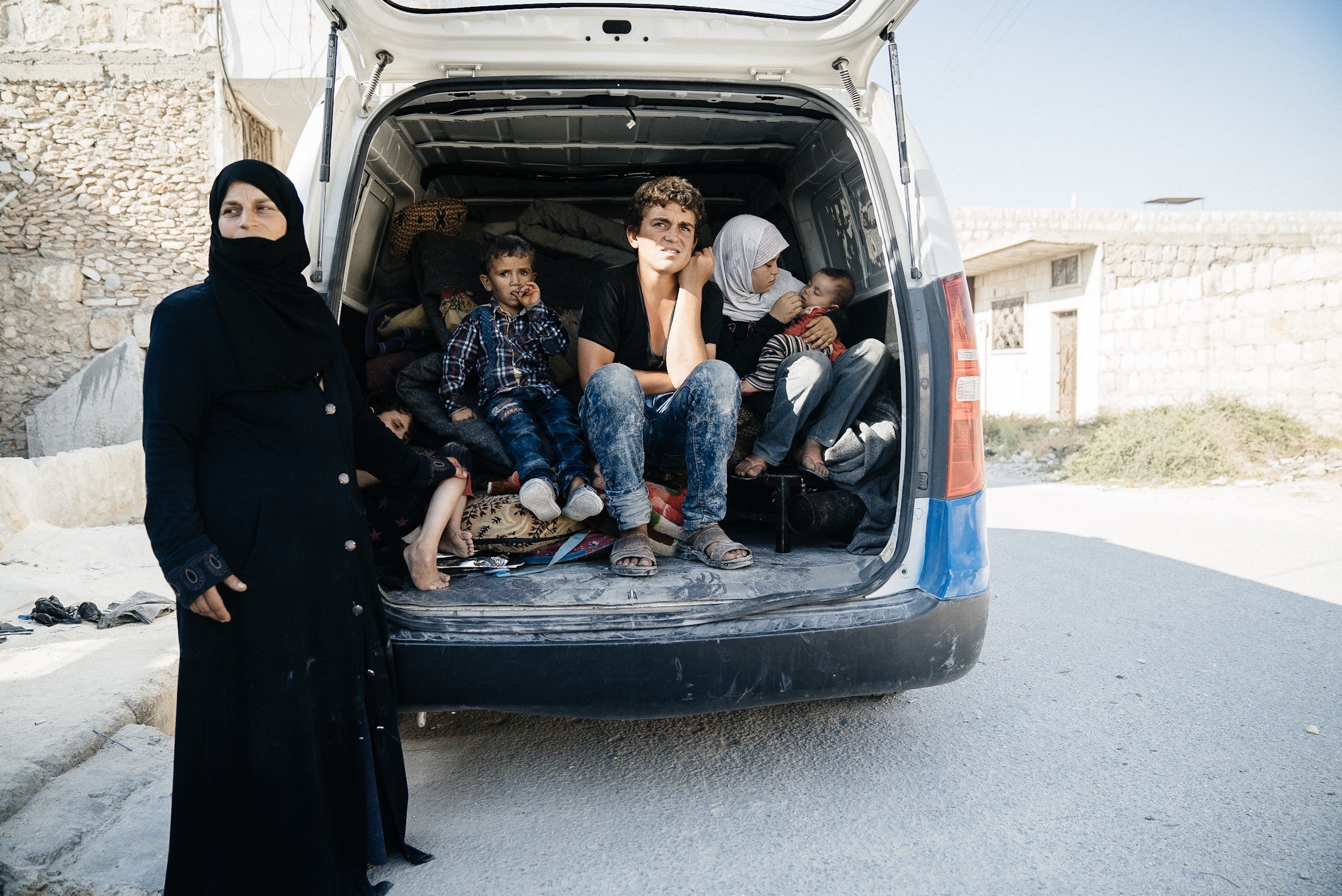
 Syria’s coastal cities are perhaps the starkest and most consequential embodiment of this trend. Having remained comparatively stable throughout the war, the cities of Latakia and Tartous absorbed wave upon wave of displaced people from Homs, Aleppo, and Idlib—an influx that both strained and buoyed the region’s economy in a time of stagnation. A hotel manager in Tartous—whose economy has for decades relied on tourists visiting the coast’s Mediterranean beaches—stressed the paradox: “The period from 2012 to 2017 was a bad time for tourism. But even so, all the hotels and resorts were rented out by displaced families.”

 Newcomers included traders and industrialists from Aleppo and Homs—two erstwhile transit hubs and manufacturing centers laid low by siege and bombardment. Such individuals frequently brought their small- and medium-sized businesses with them, palpably accelerating the region’s economic activity. A resident of Latakia described how a street that comprised only shuttered shops before 2011 now buzzes with activity, thanks to Aleppans who rented and re-opened every last storefront.


 This upsurge in commercial activity marks a major historical shift, as Syria’s economic center of gravity had long been distributed along the north-south axis from Aleppo to Damascus. That shift has triggered multiple disruptions, not least in the form of competition between the newly arrived and pre-war laborers and businesspeople: “Carpenters from Homs and Aleppo work harder and are more experienced than the locals here,” said a Homs native who moved his furniture shop to Tartous in 2013. “So they compete with the locals and often push them out of the labor market.”

 Another fault-line divides established elites and wartime profiteers seeking to launder their wealth in the regular economy. This particular schism takes on an unmistakable sectarian hue, as predominantly Alawi nouveaux riche break into markets historically controlled by Sunnis and Christians. Yet this shift also fuels pragmatic collaboration, in a symbiotic relationship where longstanding business figures contribute their expertise while upstarts supply fresh cash and connections to the security apparatus. A Christian restaurant owner in Tartous city summed up this dynamic, in a tone that conveyed his own sectarian bent:

 “Historically, Sunni families have run Tartous’ restaurants, coffee shops, and hotels. Christians ran wine stores as well as those restaurants serving alcohol. In the last two years, more and more Alawi security officers and militia leaders bought restaurants, cafes, and wine shops from Sunnis and Christians.

 I’ll leave Syria someday soon and expect to sell my shop to an Alawi. I’ve received multiple offers from Alawis already. They have plenty of money to buy it, but can’t run it like I do: I have much experience making high quality food and wine, and these people have money only. As a result, you see Alawi officers buying up restaurants but keeping Sunnis and Christians as managers and chefs, while most of the waiters and cleaning staff are young Alawis.”


 Although some coastal Alawis have successfully cashed in on Syria’s conflict economy, most have been plunged into misery and work menial jobs simply to get by. A community that was downtrodden before the war has been further impoverished by Syria’s overall economic malaise, as well as the death, disappearance, or debilitation of countless young men who formed the backbone of the régime’s security apparatus. The result is a complex tapestry of inequality and frustration: While the coast’s established business owners chafe at rising competition from displaced people, an expanding Alawi underclass finds itself more neglected than ever—despite sacrificing tremendously in defense of the régime.

 Those displaced from Homs and Aleppo also converged on the city of Hama, in central Syria. The latter was largely spared by the conflict, and thus took on growing importance as an administrative hub: As the provincial capitals of Idlib and Raqqa fell from government control, Damascus relocated those cities’ state offices (along with staff and resources) to Hama, which thus became the de facto capital of three provinces. Meanwhile, the city’s strategic positioning—at a crossroads between areas controlled by the régime, the rebels, and the Kurdish Autonomous Administration—rendered it a hub for transit and trade. An Aleppan industrialist, speaking from his factory just south of the city, recounted his own move:

 “I came to Hama in early 2014 when the clashes in Aleppo reached [the industrial zone of] Sheikh Najjar. Hama is a stable city with a perfect location. I know hundreds of traders and industrialists who were displaced from Aleppo and restarted their businesses here. Lots of traders from Homs, Idlib, and Raqqa also opened companies in Hama and now buy their materials from Hama-based suppliers.”

 A textiles trader and Hama native echoed this point, noting the irony that locals often seem to benefit from new arrivals even as they resent them:

 “My profits increased more than tenfold during the war. Every day, there are traders and shop owners from Raqqa and Idlib who come to buy garments and textiles in bulk to sell in their hometowns. My brother has a real estate office and most of his clients are displaced people. My brother-in-law has a big ice cream shop, which also mostly sells to displaced people. Everyone here is making money off the displaced, even while complaining about them.”

 This uneasy growth represents, in part, the inheritance of Hama’s bloody history. The city bore the brunt of the régime’s repression of a Muslim Brotherhood-led insurgency in the 1980s, and still bears the scars. This legacy helped deter Hamwis from fully casting their lot with the 2011 uprising, and continues to shape a tense relationship between original residents and newcomers—many of whom are civil servants employed by the state. “Hamwis don’t trust these outsiders,” remarked a grain trader and member of a deep-rooted Hama family. “They consider them loyalists and informants.” Political sensibilities overlap with social schisms between Hama’s urban, conservative population and displaced constituencies that tend to be more rural and secular. “The people of Hama are very religious,” added the same trader. “The newcomers are Sunni like us, but they’re not devout.”

 Those tensions are further informed by a historic strain of competition between Hama and Homs, which lies just 45 kilometers to the south. In a striking mirror-image of the present, it was Hama’s destruction allowed Homs to flourish in the 1980s and 1990s. Today, Homs—which was at the vanguard of Syria’s 2011 uprising—remains economically paralyzed following its own ruinous showdown with the régime. Some Homsis look bitterly at their northern neighbor, which has profited from the very war for which they paid dearly.


 Meanwhile, Homs itself has been reorganized in ways that add to many residents’ frustration. As the régime’s siege and military campaign flattened swathes of the city’s predominantly Sunni western quarters and commercially vital old souq, Homs’ internal center of gravity shifted toward its mostly Alawi eastern quarter. The latter has witnessed its own miniature boom, as fighters and militia leaders have sought to reinvest their spoils. An NGO worker from an Alawi neighborhood described the area’s transformation:

 “Eastern Homs has thrived, but in a very brittle way. It’s mainly militia figures who open a shop with the few thousand dollars they made looting, despite having no idea how to run a shop. They go out of business and are replaced by someone else who doesn’t know, either. The whole system is based on theft, but at this stage there’s nothing left to steal. So decline is coming.”

 Much of Syria’s wartime growth feels similarly ephemeral, as entrepreneurs rush to spend ill-gotten gains in response to rapidly changing demands. “Just as trade and services produce quick money,” remarked a Syrian economist, “construction is absorbing a lot of cash—but that will create a bubble.” By contrast, Syria’s industrial sector—integral to any large-scale recovery—has bleak prospects, for lack of investment, expertise, and government support. “Industry will be a hellish sector to work in for years to come,” added the same economist. “Reviving the industry would take partnerships between the nouveaux riche and those old industrialists with expertise.” For now, many of the latter remain in exile.


 Amid this economic free-for-all, Syria’s state—far from providing structure or guidance—contributes to the turmoil. A degraded and cash-strapped government abstains from all but the most perfunctory forms of governance, focusing instead on funding itself in ways that push the country deeper into a downward spiral. At the heart of Syria’s crumbling state is its embattled bureaucracy, which is so severely underpaid and under-resourced that civil servants can only live by taking on multiple jobs and engaging in diversifying forms of petty corruption. At best, well-intentioned government employees do their jobs inadequately as a result. A government firefighter described his situation:

 “The government wants soldiers, not employees. They don’t really care how ordinary citizens are living. Our salaries don’t exceed 20,000 pounds [approximately 40 dollars], so really we’re working for God more than anything else. I’m the leader of a fire brigade and I still have to work as a taxi driver and depend on support from my family. Everyone in the brigade has another job.

 The state bought our fire suits through a corrupt contractor, and you can tell the suits are basically plastic. In a serious fire I think they would melt on our bodies. We only have one driver for our firetruck, so if he’s not around when we need him, there’s nothing we can do.”


 This deterioration has diverse and far-reaching implications for an economy originally built on socialist principles and which still relies on intensive state intervention in sectors such as industry, energy, trade and agriculture. Even in some areas it has controlled throughout the conflict, the state has retreated from a host of essential functions such as providing key subsidies and ensuring core municipal services like waste management. A state-employed agronomist remarked on the declining support to agriculture on the Syrian coast:

 “Greenhouse farmers in Latakia and Tartous are mostly from families with ties to the army, security services, and loyalist militias. Those farmers have been calling for the government to supply them with heating oil, chemical fertilizers, and pesticides. The government has given them nothing.”


 Where the state retains positive economic functions, it does so in selective and self-serving ways. In 2019, for example, Damascus reasserted its traditional role in purchasing wheat at fixed prices from private farmers, despite the latter’s concentration in areas controlled by the Kurdish Autonomous Administration. This move—and its extensive coverage by state media—was eminently political, reflecting Damascus’ effort to reestablish economic influence in northeastern Syria while reducing its own reliance on imported wheat. In another telling example, a resident of the Damascus suburb of Harasta noted that his neighborhood, unlike many others, had been cleared of rubble and now enjoys free, 24-hour electricity. Indeed, it is adjacent to the strategically vital M5 highway and contains or abuts multiple military sites. A top-tier régime crony is rumored, moreover, to have slated the area for redevelopment.

 As the state retreats, citizens are left to navigate an ad hoc process of privatization in which the government intervenes to extract resources—in an extreme version of Syria’s liberalization drives in the 1990s and 2000s. Municipal councils in Douma and other ruined areas of Eastern Ghouta provided a stark illustration in late 2018: “If people want to remove rubble, they must rent bulldozers from the municipality at their own expense,” said a real estate broker from Damascus. “The municipality deals only with the main roads. Municipal workers are known to damage buildings by removing rubble carelessly, so people prefer to do it themselves anyway.”


 The bureaucracy’s shrinking capacity coincides with its growing propensity for graft. Syrians from all walks of life—including civil servants themselves—consistently grumble about a metastasizing culture of corruption. They occasionally joke that Syrian society is now responsible for subsidizing the state, in a stark reversal of the Baath régime’s socialist roots. A factory owner described this dynamic, and the resulting disruptions:

 “Government employees now meddle in everything. A low-level employee from the Electricity Directorate can walk into my factory and inspect every inch of it without giving a reason. The same is true of employees dealing with water, phone lines, taxes, health, environment, local administration, and customs.

 Just a few days ago, four employees from customs came to my factory shouting and demanding to see our entire facility, even the kitchen. I asked why they were being so rude; they responded that they have the authority to check anything and arrest anyone. Eventually I paid a bribe. Before that, a committee from the Environment Directorate came to the factory to check if we were using harmful substances. If I hadn’t bribed them, they could easily have fabricated a report and shut my factory down.”


 The state’s extractive tendencies extend from the bottom to the top. Even as government bodies have largely ceased to function as architects of economic policy, they continue to interfere in sectors that present opportunities to siphon money back into state coffers. “The régime is making life harder for everyone,” said one businessman. “As a manufacturer, I was recently required to purchase a million stickers from the government to place on my products to prove they were made in Syria. It cost me 14 million pounds [approximately 30,000 dollars] at a time when I’m already struggling to break even.”

 These simultaneous processes of withdrawal and interference are particularly evident in the import-export sector. As Syria has become increasingly isolated and unproductive, exports have plummeted and reliance on imports from neighboring states as well as from Russia, Iran, and China has deepened. Among other problems, this trade imbalance piles onto the shortage of foreign currency reserves created by American and European sanctions.

 Damascus has coped with this pressure by micromanaging the flow of imports, concentrating rights with select individuals and ratcheting up various fees. In the most striking example, the much-anticipated reopening of Syria’s border crossing with Jordan in late 2018 ushered in a brief uptick in trade which was quickly stifled by a reported eight-fold increase in dues on trucks transiting from Jordan. From Damascus’ perspective, such restrictions limit private importers’ ability to expend foreign currency and increase prospects for high-level corruption. Yet they also cancel out the revenues from partial trade normalization, while undermining the very exporters Syria needs to bring in foreign currency. An exporter of foodstuffs described his difficulties:

 “The Central Bank now demands that we sell back our dollars to the government at the [artificially strong] official exchange rate of 435 pounds. In the gray market, the rate is 615 pounds—and that’s the rate at which we buy all our raw materials. That means we lose almost 200 pounds on every dollar. We are working for a government that gives us nothing in return: no subsidies, no materials, nothing.”


 By and large, Syria’s most vital economic allies are only adding to these structural failures. On one side, Moscow and Tehran are vital to keeping Syria’s economy afloat, through desperately needed shipments of fuel and wheat alongside an overall strengthening of trade relations as all three countries seek to circumvent Western sanctions. Cheaply-made Russian and Iranian products have gradually permeated Syrian markets. China has remained a key trading partner, but likewise has shown no tangible movement toward large-scale investments.

 On the contrary, Russia and Iran look to recoup their expenditure in Syria by appropriating growing shares of its remaining assets, in a process that amounts to mortgaging the country’s economic future. Most striking is Russia’s deepening influence over Syria’s oil, gas, and phosphate resources. An oil engineer from Homs described this process:

 “In early 2018, Russian companies started entering Syria’s oil and gas sector. Those companies signed contracts with the Syrian government whereby they will invest in and operate oil and gas fields, taking about 25 percent of the profits—while previously the Syrian government ran everything and took all the revenues. Russia wants to monopolize this sector and pushes the government not to issue contracts to any non-Russian companies.”

 Syria’s seaports also represent prime real estate for Russian and Iranian encroachment. In early 2019, Syrian authorities granted a Russian company a 49-year lease on the commercial port of Tartous, drawing criticism even from loyalists who accused Damascus of giving away vital economic infrastructure. Tehran has reportedly been vying for a similar role, through discussions between the Syrian government and an Iranian company seeking to take over management of Latakia’s seaport. If successful, this takeover would both entrench Iran’s economic influence and invite new sanctions-related woes. A manager with an international shipping company described the risks:

 “The Iranian bid for the port puts the Syrian government in a difficult position. It’s very hard for the government to say no, but it’s impossible for them to say yes: Giving an Iranian company control of the port is like shooting yourself in the head, because Western companies cannot deal with the Iranians. They would immediately have to stop shipping there.”


 Syria’s hollowing out goes beyond jaw-dropping figures on death, destruction, conscription, and displacement: It has eroded society’s very ability to regenerate what was lost.

 Syria’s agricultural sector provides a window into Syria’s self-perpetuating downward spiral. Rural communities across Syria have proven remarkably adaptable throughout the war and small-scale agricultural production has shown signs of bouncing back faster than more capital-intensive spheres like industry and energy. Yet farmers from Deraa to Homs to Hassakeh underscore the enduring challenges posed by plummeting human capital—from unskilled laborers to specialized professionals. A farmer in rural Hama lamented crippling emigration:

 “You can’t have farming without farmers. I would guess that a third of our village has left. And the situation remains unstable, so people are continuing to leave. I personally plan to emigrate with my family in the coming months. Most others have similar plans. I can’t honestly say that I think anyone will be left in a few years. If emigration continues at this pace, it will wipe out the area’s agriculture entirely.”

 An ongoing brain drain has likewise pared down government institutions—responsible for bolstering agriculture and other key sectors—in ways that further complicate the prospects for recovery. “Our qualified accountants and managers left for Turkey, the Gulf states, and Europe,” said an employee with Syria’s Agricultural Bank, a government entity extending loans and subsidies to farmers. “Low government salaries discourage university graduates from coming to work for state-run banks, when they could make double in the private sector. New employees are mostly the widows and daughters of martyrs.”

 “I have no dreams or plans,” said a third-year student in Damascus University’s Faculty of Agricultural Engineering. “My only dream is to avoid military service. Male graduates have two options: Join the army or leave the country.”


 Compounding this issue is the degradation of the education sector, which has itself been drained of human and financial resources while sinking deeper into its own cycle of corruption and mediocrity. “Instructors have very low salaries, so they’re focused on finding bribes or gifts to support their families,” said the same student. “Some will sell students the answers to an exam in exchange for a smartphone or a bottle of whisky.” A professor in the same faculty added:

 “Since 2011, about a third of my faculty’s professors left the country. Young professors fled to avoid military service. Older, experienced professors emigrated because they found better opportunities abroad, or simply to get their conscription-aged sons out of Syria. Graduation rates are very low, because male students don’t want to graduate: They deliberately fail in order to delay military service.”


 This pattern, whereby the gutting of Syria’s work force is reinforced by the degradation of essential support structures, is replicated across all sectors. A plastics manufacturer in Aleppo’s industrial zone of Sheikh Najjar described his predicament:

 “Factory owners are trying to reopen, but face huge challenges—from the shortage of electricity and fuel to the lack of trained working hands. All the experienced workers have been displaced to rebel-held areas or Turkey. When I talk with other industrialists, they tell me they want to reopen but they can’t find male workers—and, when they do, security services come and arrest them. Before 2011, I had two hundred workers. Today I have twenty men and a few women and children who work in cleaning, packing, and making tea and food for what’s left of the crew.”

 Indeed, the devastation of Syria’s male work force has had the transformative side-effect of thrusting women—and, to a lesser extent, children—into the forefront of economic activity, as families find ways to make ends meet in the absence of male breadwinners. Women have thus assumed an expanding role in virtually every sphere, from the civil service to manual labor to entrepreneurship. “Women play an increasingly prominent role in small-scale business, start-ups, and NGOs,” said an academic in Damascus:

 “It’s less risky for a woman to be in such a position: She’s not at risk of conscription and can move more easily across checkpoints. Meanwhile, 70 percent of those employed at my university are women.

 I’m fearful for the sustainability of this development in the long-run. On one hand, small-scale businesses run by women are largely dependent on funding related to foreign aid programs—they aren’t self-sustaining. On the other, society’s view of these changes is worrying. Men will admit that women working is, for now, the only choice. But there’s this perception that the issue is out of their hands, which exacerbates tensions within families and society. So there’s still much work to be done on this front.”


 Moreover, Syria’s continued stagnation places women at the center of an economy in which most can aspire to little more than survival. The imperative to fight for even a minimal stream of income often locks women and men alike into a sort of wartime limbo, where they cannot so much as return to the hometowns from which they were displaced. A woman in the Damascus suburb of Jaramana explained that she would like to return to her hometown of Qadam, but remains anchored to Jaramana by the need to keep working:

 “I currently live off cleaning jobs, in a school during the week and in private homes on weekends. I can’t return to Qadam because I won’t be able to find such work there. If I did go back, I would have to commute to Jaramana via three different buses, so would spend all my time and money on the road.”

 Syria’s sprawling complex of foreign-funded aid programs aims to rein in such hardship, including through a wide range of capacity building and employment-generating interventions. Such programs, however, often incur unintended side-effects: Well-paid jobs with UN agencies or NGOs tend to suck talent out of other sectors and into a job market whose very existence depends on political decisions taken in faraway capitals. In the process, the aid sector has created another tier of wartime nouveaux riche, whose high salaries are as integral to Syria’s fragile economy as they are galling to the majority who remain mired in poverty.'

Under Siege Inside Idlib — The Last Rebel Stronghold

Idlib Syria

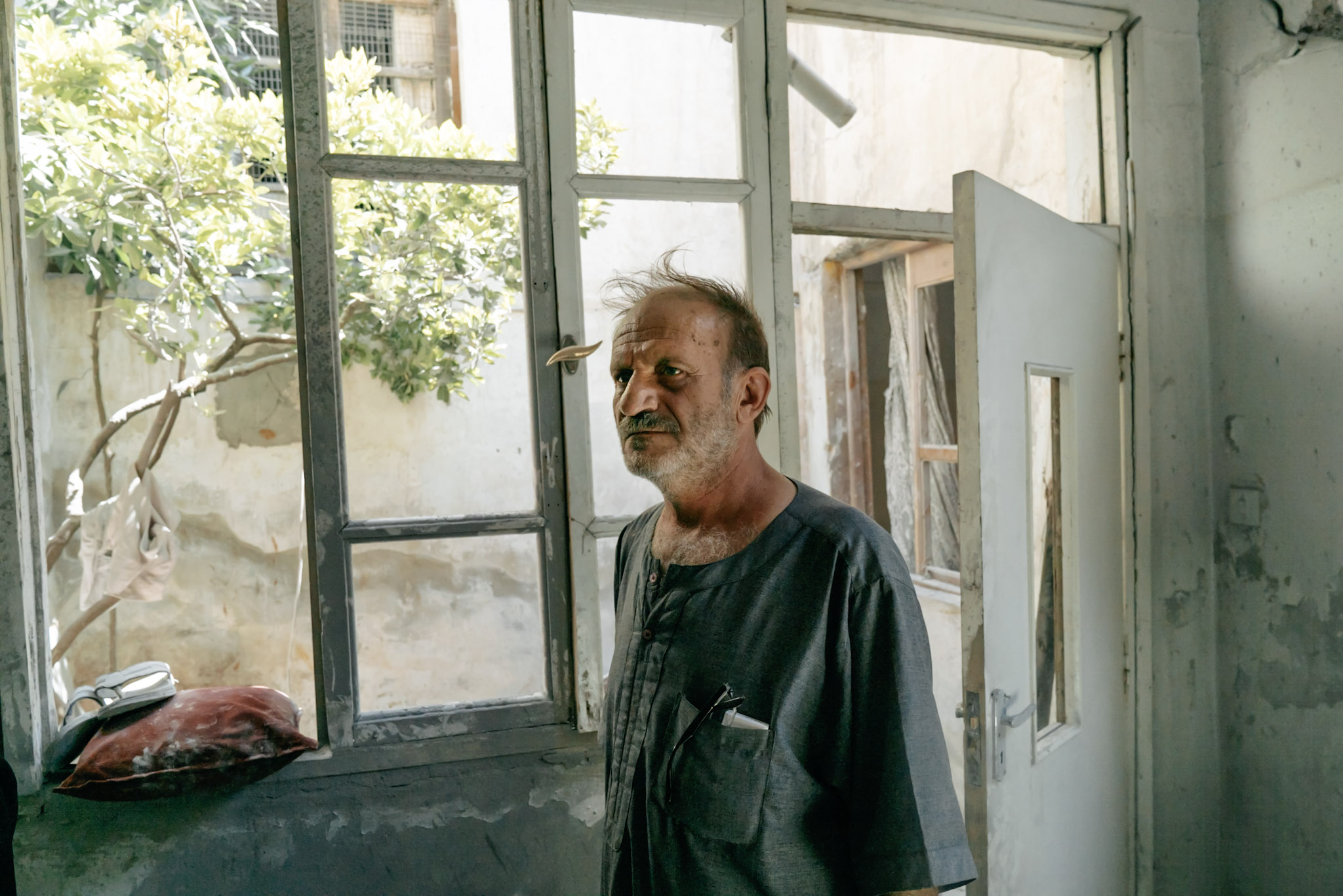
 'Mohammed Sadder was sitting outside with his eldest son in the midday heat when a shell from government-held territory tore through the air and struck his family home.

 His wife, mother, and daughter had been laying out lunch on the living room floor.

 The 62-year-old dug through the dust and rubble, yelling out for any signs of life from his family inside. When he found his wife and mother, they were badly injured, but his 5-year-old daughter Islam had been killed.


 Later that evening, with his wife and mother in the hospital, Mohammed carried Islam’s body a few hundred yards down the road to a hill where hundreds of other bodies are buried. He dug her grave with his bare hands, and collapsed next to the small mound of dirt, not wanting to leave her side.

 Since late April, the Syrian régime and its Russian allies have launched near-daily airstrikes and shelling throughout the province of Idlib, the last rebel stronghold left after 8 years of bitter civil war. While Syrian President Bashar al-Assad claims he is targeting rebel terrorist groups, it’s clear that civilians like Mohammad are bearing the brunt of a relentless and indiscriminate bombing campaign.


 More than 700 civilians, including 300 children, have been killed since the latest offensive began. More than 400,000 more have been displaced in the same time frame, according to the United Nations. Meanwhile, the Syrian Civil Defense teams work round the clock to help struggling families move away from neighborhoods that are still being shelled.

 “It’s an indescribable fear,” said Rajaa Hamdu Kazmuz, a mother of seven. The fighting continues even as Russian, Turkish and Iranian leaders have agreed to multiple ceasefires to end the violence in Idlib Province.

 Kazmuz and her seven children spent the last few weeks sleeping in a makeshift bunker beneath their house, hoping to escape the worst of it until the next lull in fighting. But the shelling has only ramped up in recent weeks, and she’s looked on in horror as several of her neighbors have been killed. They’re currently living without electricity, and basic goods have become hard to get hold of. Her children are afraid to even walk outside.


 So they packed up their belongings in mid-September and drove 60 miles towards Turkey, praying that Syrian President Bashar al-Assad’s bombs wouldn’t reach them there.

 But they’ll face another set of roadblocks on the Turkish border, where displaced Syrians have flooded in by the thousands in recent months. Facing the mounting humanitarian emergency on his border, President Recep Erdogan has warned global leaders that he’ll throw his country’s gates open, sparking fears that another refugee crisis could reach Europe’s borders.

 But few solutions appear readily available. On September 19, the UN voted on a resolution to work towards a peaceful resolution in war-battered Idlib, but China and Russia, killed it, all but assuring the violence in Idlib will continue indefinitely.


 Those in Idlib who cannot afford transport to safer areas, have resigned themselves to their fate.

 The day after burying his 5-year-old daughter, Mohammed shoveled out enough rubble so he could sleep in a corner of what’s left of his home.

 “Where would we go?” he asked, “I don’t even have enough for a cab fare... We’ll clean it up and continue living here.” Pointing to a grave adjacent to his daughter’s, he added, “That’s my spot. If Allah wills it.”

Idlib Syria

The doctors refusing to flee Idlib’s deadly front line


 'The blood forms pools on the floor of a whitewashed operating room. Two men pose for a photo with their table of metal instruments, unable to smile.

 It’s late at night after a long day of airstrikes on Syria’s northwestern Idlib province. The two doctors have been operating on the wounded for hours.

 “This is from a day where we were working from early morning until late at night, treating injuries,” said Dr. Haitham Diab.

 Diab is a surgeon in one of the few hospitals close to the front lines in Idlib that is still operational. He said it was hit by an airstrike in July, but the damage was minor.

 In another photo, Diab can be seen crouched down in a corner of the hospital in a set of wrinkled green scrubs, exhausted. Packages of medicine, gauze, and other supplies lie stacked on metal shelves to his side.


 Diab is among the healthcare workers still doing their job in the midst of a four-month air, artillery, and land campaign waged by Syrian government and allied Russian forces in and around rebel-held Idlib – areas home to an estimated four million people.

 Despite the dangers, many doctors are working under fire with limited supplies, even as more patients need help.

 At the peak of the bombing last month in the southern part of Idlib where he works, Diab said the hospital’s 20 doctors were performing some 40 emergency operations every day.

 Civilians and civilian infrastructure, including hospitals and health clinics, have been hit hard by the offensive.


 Several doctors said the places where they work have been bombed, including the hospital where Diab operates alongside Shaker al-Hamido.

 After an airstrike hit just outside their house several months ago, al-Hamido, a doctor from southern Idlib, said he sent his wife and toddler-aged children north to the Syrian-Turkish border so they could stay somewhere safer.

 “Of course I’m afraid,” he said, but he continues to live and work in the area.

 Among the bombed hospitals are those that voluntarily registered their coordinates with a UN-run no-strike list, which was shared with Russia, Turkey, and the United States as part of a deconfliction mechanism supposed to prevent such facilities from being targeted.

 Al-Hamido and Diab said their hospital had shared its location with the UN.


 The UN says a total of 51 medical facilities – such as hospitals, ambulance points and clinics – have been damaged as a result of attacks since the offensive began.

 At least 14 sites hit by the end of July had shared their coordinates as part of the UN mechanism, according to a tally provided by the Syrian American Medical Society, or SAMS, a US-based group that supports medical facilities in rebel-held areas in Syria.

 Eleven of those sites match incidents recorded by the Armed Conflict and Location & Event Data Project (ACLED), a group that monitors and maps conflict.

 The UN’s emergency aid coordination body, OCHA, which runs the deconfliction system, declined to verify the detailed listings, saying the parties to the conflict were responsible for their conduct under international humanitarian law (IHL) and investigating violations.

 Civilian infrastructure, and medical facilities in particular, enjoy special protection under IHL regardless of whether or not they were “deconflicted”.


 From 27 April to 15 September 2019, ACLED’s latest information, records 69 incidents affecting health workers and patients in northwestern Syria, mainly aerial bombing and shelling by Syrian government and allied Russian forces.

 The Syrian American Medical Society has provided a partial list of strikes on sites whose coordinates were on the UN’s no-strike (or “deconfliction”) list through the end of July.

 Among the hospitals bombed out of service this year was one situated outside Ma'arat al-Nu'man, a town in southern Idlib province. Wassel Aljork, a general surgeon, treated patients there until an airstrike hit it several months ago.

 The hospital, which once served more than 100,000 residents of the surrounding countryside, according to Aljork, is now a pile of rubble.

 When he and other doctors went to survey the wreckage, they found that none of their equipment could be salvaged.

 After the bombing, Aljork left his nearby hometown, where he ran a makeshift clinic out of his house, and headed north. He now works in a hospital near the border with Turkey, where hundreds of thousands of people have fled in search of safety.


 The UN announced earlier this month that it would launch an investigation into attacks on hospitals and other civilian sites, although some doubt how effective it can be.

 “An investigation won’t stop the attacks, but at least it might put some pressure,” says Mohamad Katoub, a doctor and spokesperson for SAMS. The organisation supports some 43 healthcare facilities in Idlib province, according to its website. “We have many concerns about the safety of our medical staff,” he added.

 Some facilities have been built to survive bombardment. Dr. Ahmad al-Bayoush, who specialises in internal medicine, spoke earlier this month as missiles flew overhead. His hospital was moved underground, he explained, to protect it from the bombs.

 Still, the hospital has been hit once already and al-Bayoush worries it could happen again: “The missiles are still flying over us,” he said.


 Those who fled north leave behind dozens of ghost towns in their wake, according to a report published in May by REACH, an organisation that analyses humanitarian data.

 But civilians are still living in southern Idlib; mostly people too poor to afford the cost of transportation out of the area.

 And doctors are running low on supplies to treat them, including some basic medicines like antibiotic creams. “There’s a lot we’re running out of, for surgeries [and] for medical exams,” said Diab. “We’re just working with what we’ve got.”

 The shortages can be deadly. Last month, a man arrived in the operating room having lost his legs in an airstrike. His stomach had been torn open by the blast.

 “We didn’t have enough blood on hand to give him,” said Diab, recalling how the patient died while his wife and children were outside the room. “They were waiting to hear any good news,” he said.


 Al-Hamido said the scale of patients’ injuries is so severe there is often little he can do to save them, even when supplies are on hand.

 One patient sticks in his mind in particular: a pregnant mother who arrived in the operating room in May, after a bomb left her head riddled with shrapnel. The wounds were too deep to save the mother, so al-Hamido and other staff performed a Caesarean section on her in an attempt to save the baby. Despite their efforts, both the mother and child died soon after.

 “I couldn’t save anyone,” al-Hamido said. “I sat down and cried like a child.”

 “This psychological pressure – it’s going to kill us,” he said.

 As pro-government forces continue bombing the area, he and others say they fear what could be in store for southern Idlib, where they work.


 Last month, the Syrian army took the city of Khan Sheikhoun, along a key highway in to the south in Idlib, and doctors worry about their fate if there is a further advance northwards.

 They fear further bombs on their hospitals, but also possible government arrest.

 Late one night, after a shift at the hospital, Diab said he was determined to stay, regardless.

 “What else can we do? There is a lot of bombing still happening,” he said. “We’re staying here. As long as there are still people [getting injured], we’ll continue working.” '

Al-Zerbeh Primary Health Center in southern Aleppo after an airstrike on 30 August 2019.

Monday, 23 September 2019

Bus turns into classroom in war-hit Syrian village


 'Near the village of Hazano in northwestern Syria, children come running through the olive groves every morning to meet the bus that brings school to their improvised tented camp.
“These children can’t go to school, it’s too far from where they are,” said Farid Bakir, a local programme manager with Syria Relief, the charity that launched the bus project.


 In Hazano camp, the children get in line and hope to be among those who squeeze into the bus for a few hours.

 A whiteboard is installed in the back, a thick carpet laid on the floor and a few dozen small desks, also used as chairs, are re-arranged depending on the activity.

 The ceiling is too low for the teacher to stand fully upright but Hussein Ali Azkour, a young boy wearing a yellow T-shirt, is enthusiastic about his classroom-on-wheels.

 “The difference between a normal school and the bus, is that the bus is air-conditioned. It’s better than a thousand schools,” he said.

 “When we fled here, there was no school and they started bringing the buses. If these buses were to stop coming, we would have no education and learn nothing.”


 The buses cater only for ages ranging from five to 12 and include classes in Arabic, mathematics, science and sometimes English, as well as singing and drawing.

 Since the project was launched in May, around 1,000 children have benefitted from the bus programme, Bakir said.

 That’s a drop in the ocean of problems children, who represent more than half of the Idlib region’s three million inhabitants, are facing.


 According to Save The Children, the heavy bombardment since late April has damaged or otherwise impacted 87 educational facilities, while a further 200 are being used as shelters for those the violence displaced.

 The UK-based NGO says some parents have been pleading with them to shut down schools for fear they would be targeted in regime air strikes.

 “As the new school year starts, the remaining functional schools can only accommodate up to 300,000 of the 650,000 school-age children,” it said.


 Ragheb Hassoun’s children are among the few who have been fortunate enough to receive a few hours a week of lessons through the bus project, but he says the situation is not tenable.

 “We want something permanent — a school on the land where we live,” the 28-year-old said.

 He and his family have been displaced several times since the start of the conflict in Syria eight years ago.

 Hassoun said he would be happy if his children could at least go to school during normal hours in a tent at the camp.


 This is what children have in a larger camp near Dana, north of the city of Idlib, where the local school is housed under two large UN tents.

 The conditions are dire however, with camp manager Hammud Al Sayah explaining initial planning was done for 50 children, yet attendees now top 375.

 Books — or with bags strapped to backs — pupils are squeezed around black desks, while those unable to find a seat perch cross-legged on the floor. Children who are four or five years apart attend the same classes.

 “The pressure is huge,” Sayah said, admitting that the schooling conditions have a serious impact on the quality of education.


 At 10 years of age, Abdel Razaq knows that his education is being compromised.

 Standing in front of the white tent he has come to call his school, he said he dreams of a big building “where the number of children in each class is lower.” “And where we could sit comfortably and hear what the teachers are saying.” '

A displaced Syrian child peaks out of a bus window that was converted into a classroom in the village of Hazano, in Idlib province, northwestern Syria, September 15. (AFP)

Saturday, 21 September 2019

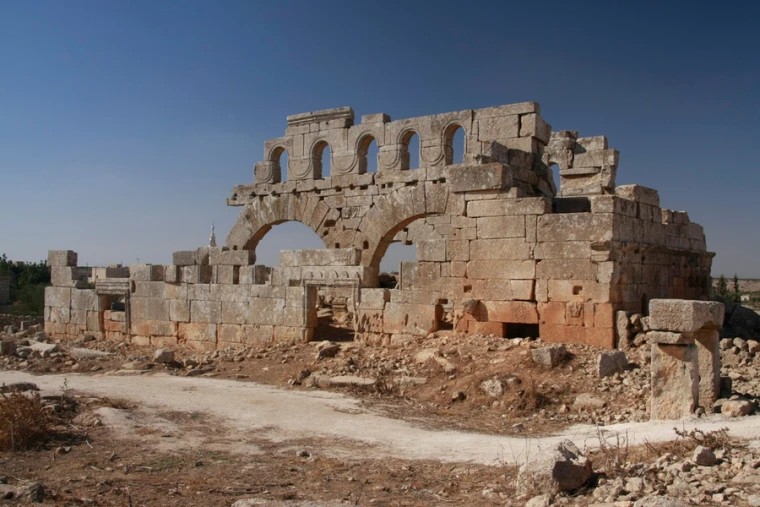
Régime/ISIS Stand Against Return of Palmyra’s People


 'In 2015, Islamic State of Iraq and Syria (ISIS) captured the renowned city of Palmyra, which was then under the control of the Syrian régime. The subsequent battles between ISIS and the Syrian régime over Palmyra led to the devastation of the modern city and the displacement of its 100,000 inhabitants.

 The majority of the civilians who were displaced did not manage to go back because of their fear of reprisals from the Syrian régime militias and the continued presence of ISIS militants in the surrounding desert. The return of these local people to Palmyra will be a cornerstone in any attempt to rehabilitate the ruined city and revive its tourist industry after the war. But the obstacles to that return show no sign of being resolved.


 Following the battles between ISIS and the Syrian régime, many of the displaced people avoided taking refuge in régime-controlled areas, fatigued by living under a repressive régime and distrustful of how they would be treated as internally displaced people. Only a small minority were allowed to stay in Homs, while the majority of these displaced people were dispersed between the governorate of Idlib and the al-Rukban refugee camp.

 Since 2015, the régime militias, accompanied by other Iranian militias and Russian military advisers, have commandeered different houses in the city of Palmyra for use as military bases. Some locals who made it back to Palmyra recently found militias that spoke a foreign language occupying their homes. These locals avoided conflict with the foreign fighters even though some of the foreign fighters were living in their houses and using their furniture. The locals’ response was to avoid confrontation and leave Palmyra.

 Despite the régime’s state media claiming that it is encouraging locals to go back to Palmyra, this return is happening on a very small scale and only for those who have connections with the régime and fought alongside its national defence militias. Encouraging these particular people to go back is an attempt to strengthen the régime’s presence in Palmyra, enabling it to withdraw some of the militias from Palmyra to fight at the frontlines in Hama and Idlib.

 Palmyrenes who live in al-Rukban refugee camp, who were promised amnesty by the régime if they return to Palmyra, have been arrested, some killed, while others have been conscripted into fighting with the régime’s militias. Those who returned from Idlib without permission have been exposed to arrests and disappearances.

 Incidents like these and the previous experiences of living under the régime will continue to play in an important role in deterring people from going back even if they live under extremely difficult conditions in al-Rukban refugee camp and the rural areas of Idlib.


 Since the beginning of its activity in Syria, ISIS has been active in the mountainous areas to the north of Palmyra. When the group captured Palmyra in the middle of May 2015, it executed approximately 500 locals, including Khaled al-Assad, the director of the Department of Antiquities in the city, accusing them of being collaborators with the régime.

 Although ISIS has been driven out of Palmyra, the group continues to have a strong presence in the surrounding desert, particularly in the mountain of Abu Rujmain, which has deep natural caves which makes it suitable for hiding. The group’s active militias in this area have arrested and killed many Palmyrene sheep herders and truffle gatherers.

 Moreover, using hit-and-run attacks, the group has killed dozens of Syrian army soldiers around Palmyra since their withdrawal from the city in 2017, and captured some of their armoured vehicles and machine guns.

 During its lifespan in Syria, the group attracted more than 150 youths from Palmyra itself who became active members in the group, providing intelligence and logistical information about the city and its inhabitants. Even régime loyalists, protected by the régime’s militias, returning to Palmyra would be concerned that their identity could berevealed to ISIS by these local members.

 These local members of the group played an important role in creating a ‘death list’ before ISIS captured Palmyra in 2015 and 2016. They also have knowledge of the desert routes that enabled the group to capture Palmyra, which could potentially enable them to sneak into the city and kidnap some of its people.

 The continued presence of ISIS militias in the surrounding mountainous areas of Palmyra and the local members among its ranks are constant reminders of the group’s ability to retake the city, which it did in December 2016 when they massacred dozens of locals, accusing them of being supporters of the régime.


 The return of local Palmyrenes to their hometown in the near future seems far-fetched. Régime loyalists who live in Homs and Damascus are terrified about the prospects of ISIS resurging and taking over their city again, while those who oppose the régime are certain that they will be persecuted by the régime militias if they go back. The recent cases of arrests and disappearances of returnees from Idlib and al-Rukban refugee camp shows that the current régime is not keen on allowing people to return to Palmyra unless they constitute part of its support base.

 The régime has announced on more than occasion that it wants to restore the archaeological site and activate the tourist industry in the city. However, unless the official plans to rebuild the world heritage site are accompanied by sincere action from the Syrian state to allow the safe return of local people regardless of their political background, any attempt to rebuild Palmyra will founder.'

Sunday, 15 September 2019

Idlib chaos forces displaced Syrians into strange dwellings


 'Inside a rusty, abandoned bus in north-western Syria, Ms Umm Joumaa washes a silver tray and glass teacups, light pouring into her makeshift kitchen through broken windows.

 Around her, towels, bedsheets, clothes and plastic bags hang from wires that stretch across the smashed-out vehicle where the 44-year-old widow lives with her six children.

 "We used to live in Al-Shariaa," she said, referring to a village in the north-western province of Hama.

 "My home was hit once, and then hit a second time, while we were living there," she added, saying that this forced her to flee to olive groves in the neighbouring province of Idlib.

 Now, she lives in the village of Birat Armanaz in western Idlib, in a bus riddled with holes, its interior cleared of all furnishings.

 "We cleaned the bus and I settled here with my children," said Ms Joumaa, whose husband was killed seven months ago by artillery fire from the Syrian regime.

 Her set-up is rudimentary: Foam mattresses and thick blankets are arranged at the rear, while a kettle and basic utensils are stored inside a plastic crate.

 Water containers and firewood are propped against the mangled front bumper.


 In a tight cave near the Turkish border, Mr Abu Ahmad and his young son chip away at stone walls with metal rods and hammers.

 The 49-year-old father of three has dug a cave for his family in the village of Kafr Lusin, three months after fleeing bombardment of his hometown of Termala, south of Idlib.

 "I had dug a cave in Termala where we were living throughout the revolution, so I had the idea of digging a cave here as well," Mr Ahmad said.

 "There, I dug a cave out of fear of air strikes and bombing, but here, it's out of fear of the cold," he added.

 Mr Ahmad said the cave is a better place to live than a tent, especially in winter or during periods of heavy bombardment.

 "The tent does not protect you, not in summer or winter," he said.

 "I want to make this cave big enough for my whole family," he added, his face red from hours of hard labour.


 Sitting cross-legged on a large green carpet on the cave's floor, his wife lamented her losses.

 "We spent our entire lives working, struggling, building - and then, in an instant, a war plane destroyed our house with one missile," said Ms Khadija, pillows and mattresses stacked behind her.

 Overhead, a green water cooler hangs from a metal rod.

 A handful of cooking utensils are kept in a plastic container and, besides a few spices and pickles stored in water bottles, there is not much else.

 "Look around, this is where I live, this is my life," she said. "This is the alternative to a home." '

Wednesday, 11 September 2019

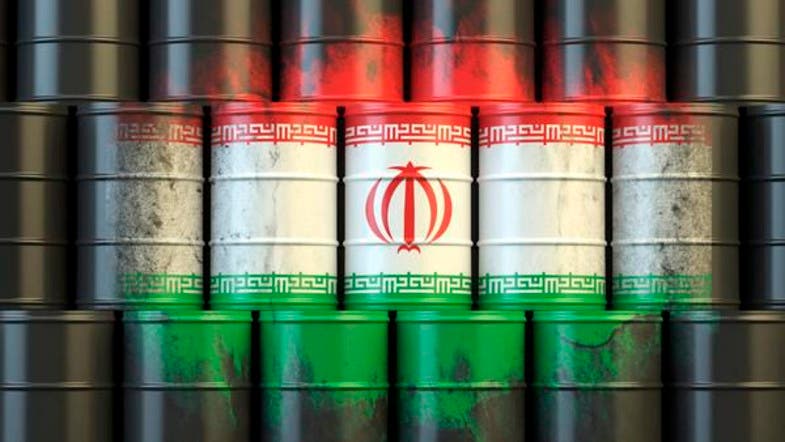
Iran supplies oil to Syria’s al-Assad in return for influence


 Bassam Barabandi:

 
'Iran’s supply of oil to the al-Assad régime allows it to continue killing Syrian citizens and buys Iran influence in Syria and the region.

 The ongoing disputes surrounding the Adrian Darya I, the Iranian oil tanker previously detained in Gibraltar and now thought to have offloaded its oil in Syria, has brought renewed attention to Tehran’s supply of oil to the al-Assad régime.

 Through this supply line, Iran has tightened its control over the al-Assad régime, which needs Iranian oil to demonstrate it can run the country and to provide its supporters with basic daily needs such as gasoline and electricity.


 Syria has suffered from fuel crises over the years, driven by overreliance on Iranian oil. In 2015, the government’s introduction of rationing following electricity shortages provoked rare criticism from loyalists, who accused the government of corruption and being unable to run the country. This year, this crisis has worsened, with continued fuel shortages, especially during winter 2019 when millions of Syrians did not have enough fuel to cook their food or heat their homes.

 These crises served as an Iranian lesson to the régime – proving that it depends on Iran to survive, not only militarily but also economically. Since losing control of the Syrian oilfields to ISIS in 2012, the al-Assad régime has been reliant on Iran for fuel. From 2013 to late 2018, Iran shipped an average of two million barrels a month to the Syrian régime. Iran allowed the régime to defer payments. As a recent report on the oil crisis written by a Middle East Institute macroeconomics expert, Karam Shaar, concludes: “Without a steady supply of crude oil from Iran, the régime of Bashar al-Assad would have faced a complete economic collapse.”

 In return, the régime has granted Iran important economic, cultural and military investments in Syria. Economically, Iran has been investing in Syrian infrastructure ranging from building and managing ports to collaborating with the régime on telecommunications projects. It recently gained a contract to build 200,000 housing units in a south Damascus suburb. Culturally, the al-Assad régime has allowed Iran to promote Shiism; al-Assad issued a decree authorizing the teaching of Shiism in Syrian schools and opened the country’s first Shiite public school in 2014. Militarily, Iran not only has access to Syrian régime military bases, but satellite images from Image Sat International recently suggested that it is also constructing the largest military base in Syria, the Imam Ali compound, close to the Iraqi border.

 Al-Assad has also allowed Iran to have its own militias and to establish pro-Iranian groups in Syria similar to Lebanon’s Hezbollah and Iraq’s al-Nujaba. These Iranian proxies will be too strong for any future Syrian government to combat – even if al-Assad remains in power.


 And there are signs that Iranian influence in Syria is expanding. Hossein Salami, the newly appointed commander of Iran’s Islamic Revolutionary Guard Corps (IRGC), has called for the IRGC to expand against its “enemies” in Syria, while Iranian chief of staff Major General Mohammad Baqeri said that his country is building a new naval base on the Syrian coast. The Syrian régime has reportedly given an Iranian company close to the IRGC the contract to build a new port in the city of Tartus, which could be the destination for future oil shipments.

 These benefits, which far exceed the direct financial profit from selling oil, explain the importance Iran placed on freeing the Adrian Darya 1 from its detainment in Gibraltar.

 Tehran used all available means to try to regain control of the tanker, including bullying and threats connected to its nuclear program. It officially pledged that oil would not go to the Assad régime. But it did. The ship changed its name and flag and then headed toward Syria, contrary to all of Iran’s written pledges to the British authorities. For those who still trust Iran’s pledges, the Adrian Darya incident exposes the untrustworthy nature of the régime.

 In response, the US sanctioned Adrian Darya 1 and its captain for enabling the IRGC to “ship and transfer large volumes of oil … to fund the régime’s malign activities and propagate terrorism.”


 International efforts to break al-Assad’s supply line should be supported. If Iran continues to be able to move freely in Syria under the cover of supporting the Assad régime, it can be expected to try to extend its control over Syrian resources, including close to the Israeli border. The more entrenched Iran is in Syria, the stronger its hand is to blackmail the international community in any upcoming negotiations.

 Preventing Iran from propping up the al-Assad régime with oil is in the long-term interests of the Syrian people and the wider Middle East because it undermines the malign Iranian project to dominate the region.

 The policy of sanctions therefore must continue.

 The US should also convince regional countries and the international community of the importance of finding a solution to the Syrian crisis, which restrains Iranian behavior without giving Iran financial incentives. Enriching Iran allows it to continue funding its proxies and solidify its influence across the region.

 Consequently, the international community must approach the reconstruction of Syria with care. Any investment, however small, by the international community, UN, or NGOs in infrastructure or aid projects in the areas controlled by the Syrian régime will only benefit the Iranian project, especially considering it helps relieve Iran and al-Assad from sanctions pressure. The régime is not only selectively reconstructing loyal areas, but it continues to control which areas receive UN aid. For example, when it previously denied aid to rebel-held Eastern Ghouta.

 Instead, alongside sanctions, the international community should press the régime to implement Security Council resolution 2254 - which calls for a political settlement in Syria and is the first step to a solution, including the withdrawal of all foreign powers from Syrian territory. Only then, and once malign Iranian influence is fully confronted, can Syria begin its reconstruction.'

Tuesday, 10 September 2019

Régime destroys olive trees, crops in recaptured areas


 'Syrian régime forces began a new form of retaliation against local residents in the city of Kafr Zita in the northern Hama countryside by cutting down olive trees in the city.

 The area is known area rich in olive and pistachio trees which are estimated at 1 million trees.


 Mohammed Nayef, a citizen of the area said that the régime has prevented people from reaching the city, much of which has been reduced to rubble by régime bombardment.

 "We do not know what the real goal of the régime’s militia by cutting down trees in the agricultural land surrounding the city – perhaps for fuel," he said, although he deemed the felling of trees in the area a ‘retaliatory act’.

 "If they [residents] are able to return to Kafr Zita later, they will only find destroyed houses and fallen trees."


 Madin Khalil, the head of the local council, explained that the régime forces started to fell trees in the area north of Kafr Zita, pointing out some of these trees are between 15 and 70 years old.

 Khalil added that these forces also burned wheat and barley crops during their military operations in the northern countryside of Hama and southern Idlib.

 "Many houses were burned in both Kafr Nabuda and the surrounding towns. The régime forces are deliberately vandalizing and damaging everything. It is normal for those who killed, robbed and destroyed property to burn trees and cut them,” a refugee in the area said.


 These practices were also seen in the northern countryside of Homs. Ali al-Hussein, 56, from the area, said that the régime forces burned 100 olive trees in 2015.

 Bashar al-Assad's régime has recently launched an offensive, recapturing areas in north Syria.'

This satellite image provided by Maxar Technologies on Tuesday, May 28, 2019 shows significant damage to Habeet, Syria on May 26 as a result of a government offensive against the last rebel stronghold in the country. The images, provided to the Associated Press by the Colorado-based Maxar Technologies show fire still raging in olive groves and orchards during harvest season around Kfar Nabudah and Habeet, two villages on the edge of Idlib province where fighting has focused. (Maxar Technologies via AP)

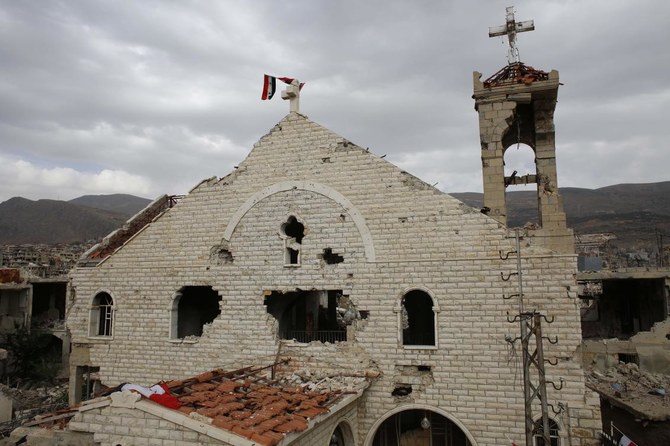
Syrian churches targeted by Assad forces

Ancient church in Brad, Syria, before bombing of the site in March 2018. Via Shutterstock.

 'A new report alleges that forces loyal to the régime of Syrian President Bashar al-Assad are responsible for the majority of targeted attacks on churches since the country’s civil war began in 2011.

 In a report released September 9, the Syrian Network for Human Rights says that they have evidence of the Assad régime targeting of churches, mosques, and religious sites in Syria between March of 2011 and September of 2019.

 “While the régime claims that it has not committed any violations, and that it is keen on protecting the Syrian state and the rights of minorities, it has carried out qualitative operations in suppressing and terrorizing all those who sought political change and reform, regardless of religion or race, and of whether this causes the destruction of the heritage of Syria and the displacement of its minorities,” said, SNHR chairman Fadel Abdul Ghany on Monday.


 The report identifies several attacks on religious targets, included bombings of houses of worship that were not near any military installation or equipment, and the transformation of houses of worship into centers for military operations.

 The report, entitled “Targeting Christian Places of Worship in Syria is a Threat to World Heritage,” is the result of more than eight years’ work in Syrian towns and villages and obtaining reports from people on the ground and from activists, SNHR said. Sources included firsthand accounts of attacks, medical personnel who treated casualties and victims, and local activists with documented evidence of the attacks.

 SNHR report presented a list of 124 attacks on Christian “places of worship” since March of 2011.

 Seventy-five of the attacks—60 percent—came from pro-Assad forces against 48 separate Christian sites. Those forces included the Syrian army, security forces, local militias, and Shiite foreign militias.


 Thirty-three of the attacks were reportedly conducted against 21 houses of worship by factions of the armed opposition; 12 attacks were conducted by extremist Islamist groups including ISIS and Hay-at Tahrir al Sham.

 The Aleppo governorate saw the highest number of attacks on Christian churches, according to the report, followed by the Homs governorate and then the Damascus suburbs.

 The Syrian régime forces were responsible for the highest number of attacks in the Homs governorate, with 27 incidences, and a further 20 incidents in the Damascus suburbs. Opposition forces were responsible for 24 incidents in the Aleppo governorate, according to the report.

 The targeting of churches in Syria falls within the “wider context” of military forces “targeting the vital centers” of opponents, Ghany told reporters on Monday. Those targets also include other civilian institutions, including hospitals and schools.


 Bishop Nicholas James Samra of the Melkite Eparchy of Newton told CNA that “the situation is very convoluted” in Syria and urged caution in interpreting the report's findings.

 Samra said that many Christians in the region still see Assad as the best prospect for their their own security.

 “The big fear of the Christians—the majority—is if he [Assad] goes, who will come in? And that is the big, big fear”


 While both sides targeted Christian churches, the Assad régime attacked these sites more effectively with better weapons, the report claimed.

 According to evidence taken from several of the attacks—shrapnel, photo analysis, determination of which forces were controlling the area at the time of the attack—the régime was found to have attacked more churches despite a greater capacity to target specific facilities, and a lesser chance of accidentally hitting a church while shelling a neighborhood.

 The régime also systematically justified attacks on churches by publicly saying they had become operation centers for opposition forces, Erica Hanichak of Americans for a Free Syria told reporters on Monday.


 The report said that some churches suffered multiple attacks; the Church of the Lady of Peace in Homs was attacked seven times by Syrian government forces, and the Church of Saint Takla in the Damascus Suburbs was attacked four times.

 The armed opposition attacked the Roman Orthodox Church of the Holy Cross in Damascus four times, as well as churches in Aleppo during fighting with the régime forces there in 2012 and 2013.

 Some churches were attacked several times by multiple entities; the Armenian Church of Independence in Raqqa was attacked three times, twice by ISIS and once by Syrian régime forces. The Church of St. Samaan in the Aleppo suburbs was attacked once by Syrian régime forces, once by the al Nusra Front, and once by factions of the armed opposition.

 Six of the attacks by régime forces were in response to attempts to turn churches into military installations; ISIS did that twice with churches, the report noted.


 In July, Pope Francis sent a letter to Assad, imploring him “to protect the lives of civilians and preserve the main infrastructures, such as schools, hospitals and health facilities” in the province of Idlib where the régime forces had been fighting rebel forces.

 Régime forces had been blamed for the bombing of civilian targets, including markets and hospitals, and of using chemical weapons against civilian populations.

 Michelle Bachelet, the UN High Commissioner for Human Rights, has previously drawn attention to the targeting of civilian buildings by the régime, calling it “highly unlikely” that such attacks were accidental.

 Pope Francis’ July 22 letter said that “what is happening” in Idlib “is inhuman and cannot be accepted.” '

Friday, 6 September 2019

Can a dish and a tale help Syria's displaced integrate?


 ' “Women of Aleppo had been strong, independent and right next to their man — particularly in the Syrian revolution,” said Umm Karamwa as she stuffed zucchini with minced meat and rice.

 “Aleppo women played a vital role in the revolution, alongside men. They worked in nursing and tended to the wounded from the Free Syrian Army (FSA). They participated in demonstrations and in civil, relief and educational activities under the banner of the Syrian revolution,” she told 20 women, all of whom are part of a project that aims to integrate internally displaced women into their new surroundings in Atareb, a town in the western Aleppo countryside.

 Born and raised in the neighborhoods of eastern Aleppo, Umm Karamwa, a housewife, was forced to move to Atareb in 2016 when the régime forces took over their area, which prompted thousands of pro-opposition civilians to leave their homes for the Aleppo countryside, under control of the FSA. She has been living in Atareb, 25 kilometers (16 miles) west of her city, since 2016.

 Umm Karamwa then knowledgeably spoke, with some nostalgia, to the women about Aleppo’s rich heritage including the Citadel to the covered market and other aspects of Aleppo's archaeological heritage. Some of the women were locals; others were displaced from different governorates.


 All participants tell their stories — often a mix of their personal lives, heritages and beliefs — in “A Dish and A Tale” sessions, which aims to integrate the newcomers with local women. The speaker often starts with an introduction then talks about all the things that interest her, from the role of women in the Syrian revolution to the traditions she grew up with. The displaced women have touching stories to tell on how they felt when they left behind their homes, such as what they could have taken with them and what they left behind. Others listen and ask questions.

 After or during the “tale,” each woman shows others how to make a special dish, which they eat together afterward. Umm Karamwa’s session was the second gathering of “A Dish and a Tale,” and she decided to cook stuffed zucchini (al-mahashi).

 “To talk and cook is a wonderful idea,” she said. “I got to make new friends and learn about different cultures in Syria. While I made al-mahashi, the others helped me to stuff zucchini with rice and meat. I found out we make stuffed zucchini differently from the women of Damascus and Homs. We add a lot of spices, while they just add mint to the stuffing."

 In the first session, held July 20, the speaker had been Umm Mohammad, a 50-year old housewife who lived with her grandchildren. They all came from Homs.

 “I was very happy to be part of this initiative. I had the chance to meet women from different Syrian governorates and we shared our concerns of displacement and the suffering we went through. I told them about our social customs in Homs, the way we make grilled kibbeh [meat patties], which is one of our specialties. They really liked it,” Umm Muhammad said.


 Lina Mustafa, coordinator of the initiative, told how food and conversation have built bridges among the women. “First, women introduce themselves and talk about their hometowns and their work. They also discuss the role of women in the Syrian revolution, their participation in the demonstrations, raising banners and other activities in their areas before they had been forcibly displaced.”

 “During the first session, Umm Mohammad talked about Homs — Syria’s third-largest city and a key battleground. Homs was dubbed “the capital of revolution” in the uprising against Bashar al-Assad. She showed the onset of the demonstrations against a backdrop of a slideshow showing photos and videos during the revolution in the squares of Homs, with a focus on women’s roles in helping the peaceful, wounded protesters. The photos depicted some of the customs and traditions in Homs, the city’s archaeological sites, and the famous dishes and ingredients. The attendees then joined Umm Mohammad in the preparation of grilled kibbeh (meat patties), and then [they all] lunched together,” Mustafa said.


 Muhammad Shakrdy, director of the Atareb Civil Center, said the "Volunteer to Build” team launched the initiative. “This social activity also seeks to help displaced women cope with the bitter reality of being away from their homes and adapt to a new social milieu,” he said.

 “The idea of the initiative came up as displaced Syrians from different governorates flocked into the FSA-controlled areas in northern Syria, particularly in the countryside of Aleppo and Idlib. We had to find a way to help women integrate into the hosting communities. We also wanted to challenge any stereotypes held by the locals in Atareb in the western Aleppo countryside vis-a-vis the displaced,” he added.

 “Twenty different women attend every session. They include both local and displaced women. A woman tells the story, customs and history of her hometown with a focus on the role of women in the revolution against the Syrian régime in every gathering. The meeting also includes a Q&A session. At the end, the attendees cook a meal, which would be the specialty of a Syrian town or village. We already held two sessions, one on the city of Aleppo and the other on the city of Homs. In the upcoming sessions, the attendees will talk about Damascus, Deir ez-Zor and Raqqa,” Shakrdy said.


 Hanan Orabi, director of the Office for Women and Child Welfare, a division of the Council of Free Aleppo Governorate, said she was also a guest in the initiative. “The idea is wonderful and aims to strengthen ties between locals and displaced women; [it] brings hope into the hearts of families who are still feeling homesick,” she said.

 Another invitee, social activist Asmaa Mohammed, agreed that the combination of food and conversation worked and could be a model for other towns that host displaced people. “This kind of initiative is very important for social integration in the hosting communities. Other towns in the Aleppo countryside should follow suit to help the displaced families feel more welcome in their new communities,” she said.'

Tuesday, 3 September 2019

Syrian father who lost twins to poison gas uprooted again


 'When Abdel Hamid al-Yousef lost his 9-month-old twins in the poison gas attack that hit the Syrian town of Khan Sheikhoun in April 2017, the world witnessed his heartbreak and grief in the video of him cradling their lifeless bodies in his arms, bidding them farewell in the chaotic aftermath of the attack.

 Determined to continue with his life despite the pain, he has since remarried, and now has a one-year-old daughter who brings much needed joy to what remains of the family. But tragedy keeps chasing the 31-year-old former shopkeeper.

 Many displaced persons like al-Yousef fear that a government win will bring little relief — or sense of closure.

 Al-Yousef recently fled Khan Sheikhoun again, joining tens of thousands fleeing heavy airstrikes and bombardment as government forces swept into the town, on the southern edge of the country's last rebel stronghold in the province of Idlib.


 He now lives among thousands of other internally displaced Syrians in a settlement near the Turkish border, worried he will never be able to go back to the hometown he left behind.

 "I buried the most important thing I have in my life there, my children and my siblings. I used to find some relief by visiting them twice a week at the grave," he said. "I cannot do that anymore."

 Most of all, al-Yousef fears the takeover by Bashar Assad's forces of Khan Sheikhoun means that any leftover evidence from the April 2017 toxic gas attack will now be erased forever.

 "The biggest fear now, after régime forces and the Russians and allied militiamen took over Khan Sheikhoun is that they will tamper with the evidence with regards to the chemical weapons attack and distort the facts," he said.

 The attack in opposition-held Khan Sheikhoun in the early morning of April 4, 2017 left residents gasping for breath and convulsing in the streets and overcrowded hospitals. Nearly 90 people were killed in the attack, one of the deadliest in years.

 Days later, the U.S. fired 59 U.S. Tomahawk missiles at the Shayrat Air Base in central Syria, saying the attack on Khan Sheikhoun was launched from the base. It marked the first western airstrikes on targets of Assad's government since the start of the conflict in March 2011.


 From his tent in the displaced settlement near the Turkish border called "Mokhayyam al-Karamah," Arabic for "Dignity Camp," near the town of Atmeh, al-Yousef recalls that fateful day when he lost his twins, Aya and Ahmed, his wife Dalal and 16 other relatives.

 It is a story he has told dozens of times, about how Khan Sheikhoun residents woke up at half-past six in the morning to the sound of explosions. How people started running out of their homes and onto the street, trying to help each other. How he told his wife to take the twins to safety outside. The people he saw foaming at the mouth and nose.

 He recalls how he ran to his brother's house to find him and his family dead. His other brother and nephew, also dead. His niece who was around 13, also dead. He lost consciousness and woke up four hours later to be told that his twins and wife had died. They were among the 89 people who died from what experts have determined was an attack using sarin, an outlawed nerve toxin.

 In footage filmed by his cousin that was widely circulated later, al-Yousef, 29 years old at the time, is seen seated in the front seat of a van cradling his twins, holding them in each arm. He stroked their hair and choked back tears, mumbling, "Say goodbye, baby, say goodbye."


 Al-Yousef keeps photos and videos of the attack's aftermath on his phone that he flips through from time to time.

 He sits on the floor and plays Lego with his 11-month-old daughter, whom he named Aya, after his first daughter. Her hair is in curly pigtails and she is wearing a sleeveless yellow T-shirt with the words "Love" printed on it and a heart in the middle.

 Al-Yousef said that after spending some time in Turkey for treatment after the gas attack, he then chose to return to Khan Sheikhoun, held by rebels.

 He decided to try and build a new life and a new home. He got married and had Aya. He gradually found some happiness.

 But then government troops began an assault on Idlib and the nonstop bombardment of Khan Sheikhoun returned. A new wave of civilian displacement began. As the bombardment got unbearable and the troops encircled the town, he decided to leave, fleeing with the masses to safer areas near the Turkish border.


 "The final days felt like I was saying goodbye to everything I hold dear to my heart. I had already lost my children and now I've lost my country. My situation has become very, very tragic," he said.

 Al-Yousef wants the bloodshed to end. As a well-known witness and survivor of the chemical weapons attack, he says he gets frequent threats from the government side, but says he'll never stop talking about what happened. He wants accountability.

 "I want to send a message to Western countries to shoulder their responsibility and protect the lives of remaining civilians," he said.'

Sunday, 1 September 2019

Ceasefire just gives régime a breather, say Idlib residents


Zouhir al-Shimale:

 'Residents of northern Syria say they have no faith in the temporary reprieve brought by a Russian-led ceasefire in Idlib as they say shelling hasn’t stopped and the memories endure of previous such deals in other areas subjected to government offensives.

 Many of the nearly 3 million civilians sheltering in Syria’s last rebel-held area of Syria were displaced from elsewhere in the country following previous government offensives.

 Those who lived through such fighting say that similar ceasefire deals made little difference on the ground as shelling continued and government forces used the brief pause to regroup and renew the offensive days later.


 “I do not know what to say,” said Sara Mawlawe, 29, a teacher in the Idlib town of Saraqib southeast of Idlib city. She was displaced from Eastern Ghouta, a suburb of Damascus, after the régime onslaught there in March 2018.

 “The Russian-Syrian régimes are playing with the international community and us like [we’re] dull. Attacking when they want to, ceasing fire to rest and reload their weapons whenever they want,” she said.

 Ms Mawlawe said Russian-backed forces would not stop until they recaptured the areas they wanted, regardless of the international community.

 “This truce is a setup scheme to orchestrate more attacks against civilians,” she said. “Since I came from Eastern Ghouta last year, the ceasefire and battles are almost identical.”

 She pointed to identical attacks against hospitals, infrastructure, civil defence centres and displacements camps.

 “Not only the attacks and ceasefires are the same since Eastern Ghouta or Aleppo, the world’s leaders and media coverage have also been the same,” she said.

 “Condemnation and draft resolutions against the Syrian régime always vetoed by Russia. Can anyone give me one reason to be optimistic or think this one will end our agony?”


 She added that while the area of Idlib where she is now sheltering was relatively peaceful on Sunday, they could hear warplanes overhead and explosions in the distance.

 “We do not know if the truce is still on track or it has been cancelled."

 On Saturday, the Syria and Russia declared the cessation of hostilities – the second since August 1 – but it was swiftly violated the Syrian military who announced on government media that they were starting attacks against “terrorists” in north Syria.

 Ms Mawlawe works with a relief organisation facilitating aid to internally displaced people in the region. She is a volunteer cook and distributes essential items with the local council of Saraqib.

 “Even though the truce will not last, the international organization ought to stand up for the hundreds of thousands of refugees who lost everything," she said. “Some families have not eaten a meal for more than three days, or are without shelter. The humanitarian crisis is at critical levels and needs the intervention of international organizations”.


 Sami Souqe, 33, is a carpenter but lost his home in the bombing of Aleppo three years ago. He has been living with his family of three children in the outskirt of Marat Al Noman, south of Idlib city.

 His house has been destroyed and his nine-year-old son, Khaled, is still in intensive care after suffering critical wounds to his back.

 His other two children and wife were displaced again now sleep under the open sky, homeless and without assistance while he waits near Turkish border hospital in Bab Al Hawa to hear news of Khaled’s condition.

 “We are defenceless and harmless, why are the same attacks and truces happening over and over,” he asked. “And there’s no response or movement whatsoever by the West to end the ongoing atrocities.”

 He too didn’t believe the ceasefire was an attempt to ease the humanitarian situation or stop the clashes.

 “The declared halt only serve the régime, to reorganize their fighters and move more militants and ammunitions towards Idlib’s frontline to destroy and recapture more towns. It has been happening for years,” he said.

 “In 2016 we had the same scenario when dozens of ceasefires were announced and broken again and again by the régime, fooling rebel forces and the international community with the fake willingness to [hold] peace negotiations.”


 Mr Sami took part in a protest on Friday at the Syrian border with Turkey, calling for Ankara to open the closed crossing to allow civilians to flee the grinding bloodshed of the Idlib campaign.

 "We are exhausted and need this war to come to an end, we pray for it every day to come true," he said.'

Idlib massacres echo in Istanbul

Image result for national hero of syria

 'Syrian activists on Saturday denounced the massacres and violations by the Russian and Iranian occupation forces and Assad's militias in Idlib and condemned the negative attitude of the international community towards them, during a press conference organized by the "Arab Society" and the "Syrian League" volunteers team in the Turkish state of Istanbul.

 The dissident Syrian astronaut, Mohammad Fares, called during the conference for the international community to stand by the Syrian people and their revolution, urging the UN Security Council to intervene to stop the systematic killing against the Syrians, denying the existence of terrorists among the people of the Syrian revolutionaries, stressing that terrorism was fabricated under the Assad régime in trying to suppress the voice of freedom.

 Fares added that the Syrian revolution started peacefully and that its people took up arms only after it was imposed on them so that the "free people'' would not be annihilated by Iran, the Russians and Assad's militias, while urging the Syrians and the Turks to unite to confront the attempts to attack the two brotherly peoples.


 For his part, dissident Colonel, Ahmad Hamadeh said that the attitude of the international community is negative towards the massacres have been committing against the Syrian people, as the Assad régime, Russian and Iranian militias have been using all types of weapons, including internationally prohibited and chemical weapons, pointing out that Russia used 320 types of weapons, in the bombing of northern Syria, the latest the fighter jets SU-57 and SU-35.

 He added that the bombing is the only logic understood by the Russians, Iranians and Assad's militias, stressing that they destroyed more than 80 percent of the infrastructure of the areas that revolted against the Assad régime.

 Hamadeh pointed out that the Russians were the ones who failed the Sochi agreement by bombing northern Syria, stressing that the number of medical points and hospitals that were targeted in the last campaign amounted to 49 points, and the entire villages in Idlib countryside were exterminated, which forced the residents to evacuate and to move out into the open or areas.


 The number of victims during the military campaign on northern Syria reached more than a thousand civilians, including hundreds of children and women, and the bombing of communities resulted in the displacement of about one million people amid difficult humanitarian conditions.'


 Note 15/8/25, link broken.

Monday, 26 August 2019

I survived the 2013 chemical attack on Ghouta


 Ameenah Sawwan:

 'Six years ago, I was living in Muadamiyat al-Sham in the Damascus suburbs of western Ghouta, which at that time was under siege by the Syrian régime. My whole family of 12 had moved to the basement of our house due to the incessant bombardment by Syrian régime fighter jets and helicopters.

 It was early morning on the August 21, I couldn't sleep so I went online and started going through the latest news posted on social media. Almost immediately, I came across freshly uploaded videos from Zamlka, Ein Tarma and Irbin in eastern Ghouta showing people spasming and fainting, their eyes rolling back and foam coming out of their mouths. I couldn't believe it - this was just 20km away from my house.

 I woke my family up and told them the news. They began panicking and couldn't believe what I was telling them. They kept asking me if I was sure of what I was saying. Then, at about 5am, information circulated online that Muadamiyat al-Sham had also been attacked with chemical weapons. I told a friend: "That's not true, I live there, you must mean Eastern Ghouta." I was wrong. Chemical weapons had been dropped on my town and we had not realised because it was not that close to our house.

 We had heard whistling explosions, louder than usual, but thought they were ground-to-ground missiles. For two years we had been bombed with all sorts of weapons - how do you recognise the sound of a chemical attack?


 I decided to go outside and one of my neighbours told me that the news of the attack was true. I saw people running in the streets, shouting and crying, and trying to get those affected by the gas to the field hospital. I did not see the missiles that released the chemicals but I could feel the effect of the gas - my eyes began to burn.

 I went back to the basement and told my family there had been a chemical attack nearby. When my sister-in-law heard the news, she began to cry uncontrollably, clutching my one-month-old niece, and asking me, my parents and my brother to help her daughter survive.

 We had heard that chemical weapons are dense gases so we decided to go upstairs to the ground floor where we thought we would be safer. Then shortly after, a mortar shell landed in our garden, exploding and causing some damage to the house. The régime clearly did not want anyone to survive that day.

 We did not know what to do. Should we stay upstairs and risk being bombed, or should we stay in the basement and risk being gassed? There were no guarantees that we would be safe. We did not know if more missiles would come or even if it was possible to be affected and not realise. Everything was chaotic and no one knew what was happening.

 The régime continued to hit us with air strikes, mortar shells and missiles throughout the day.


 I had previously volunteered at the field hospital and knew they would need help, so at approximately 7am I headed there. It was not much of a hospital really - it was only a 300 square metre room in a basement, but it was all we had.

 I was barely able to make it because of the constant shelling. I was trying to walk close to the walls to avoid the shrapnel but every time a missile exploded, I would check myself to see if I was wounded.

 When I finally reached the hospital, I saw people lined up in the street in front of it. They were spasming violently, foaming at the mouth, and their eyes were rolling back. There was a man hosing them down with water but they looked like they were close to death.

 I went inside and started to wash people and take off some of their clothes. I was instructed to put towels soaked with vinegar and lemon under their noses. We did not know what we were doing and whether it was helping at all. All we knew was that something terrible had happened and we were alone, left to deal with hundreds of dying people.

 I still remember how helpless everyone felt. We were losing a lot of people, but we were still doing CPR and trying everything we could to save them. I saw a whole family die, one after the other. Eventually, the bodies of the dead had to be moved to nearby houses as there was not enough room for them, as casualties kept arriving.


 At some point, I saw a doctor standing in the corner of the room holding a 10-month-old baby. He handed the baby to me as he was struggling to stand. I tried to wash the baby, I tried CPR on him, nothing worked. It was the darkest moment that day for me. I wished that it was a nightmare and that I would wake to find out that it had never happened. The baby died along with his parents. We were all crying, looking around, lost, not knowing how this was going to end.

 The shelling was intensifying and we were starting to get dizzy from the secondary effects of the chemicals.

 One of the doctors asked me and another volunteer to go to the nearby house and give atropine injections to the people inside. The doctor said the inhabitants were presumed dead but perhaps they were still alive, perhaps the injections could help. When I arrived, the house was silent. I recognised many of the people lying inside. We were crying and giving them the injections one by one.

 They were dead, but I was hoping that maybe we were wrong, maybe they were in a coma. I was feeling dizzy, and my eyes were burning but I did not want to ask for medical treatment when people needed it more than I did.

 After we saw that we could not help those people, I went to other houses to try to save others. In one of the homes, I was shocked to find my best friend. He was alive but completely disoriented. He was hallucinating, trembling; it took him more than 10 days to come to his senses and realise what had happened.

 In the early afternoon, I walked home, unable to see as my eyes were still burning from the gas.


 That day a total of 1,127 people were killed in the attacks on Ghouta, an unimaginable war crime. People had gone to sleep the night before and never woken up. My family and I survived, but death continued to rain from the sky. Eight days later my brother, his wife and their son Ahmad were killed by a mortar shell.

 This week, we commemorate the sixth anniversary of the massacre; we mourn the dead and remember their families who still await justice. The attack on Ghouta was not the first and it was not the last. Despite the outrage and the mock chemical disarmament under the supervision of its ally, Russia, the régime continued to use chemical weapons against its own people with impunity. The Syrian Network for Human Rights has documented 217 such incidents between December 2012 and May 2019. The régime alsocontinues to use banned weapons in its offensive on Idlib.

 For those of us who have lost family members to the régime crimes, it has been incredibly frustrating to watch the international community ignore our calls for justice. It is high time it takes action to end these horrors in Syria. Until it does, we will continue to campaign and tell our stories.'

Thursday, 22 August 2019

Syrians in Idlib baffled by offer of humanitarian corridor


 'As its bombardment of Idlib province continued on Thursday, the Syrian government announced it had opened a “humanitarian corridor” for civilians who want to leave the rebel-held enclave.

 Whether such an exit can transport Syrians to safety or not, however, is unclear; with many pouring scorn on the proposal as they flee the government's assault and shelter from its arsenal.

 Civilians would be allowed to leave Idlib’s southern countryside and the north of neighbouring Hama province through the corridor in the town of Souran, Damascus' statement said.


 However, Ahmed al-Sheikho, media director for Syria’s Civil Defence in Idlib, said that there are effectively no civilians left in Idlib’s southern countryside to use such an exit.

 “The majority of people who fled the Khan Sheikhoun and Maaret al-Numan countrysides have chosen to flee north, towards the Turkish border,” Sheikho said.

 Souran, located in Hama’s northern countryside, is considered the first line of defence for government forces stationed on the doorstep of the city of Hama.

 “The corridor is located in an area already void of civilians. How will the régime receive the people it’s been accusing of supporting terrorists?” activist Massoud Sayyah said.


 More than 80,000 people have been displaced from the Maaret al-Numan eastern countryside since Monday due to the government and Russia’s escalating violence.

 Abbas Jomaa, a civilian preparing to flee the Maaret al-Numan area, likened the current situation to “doomsday”.

 “I have not yet heard of the opening of a corridor. All we hear is the sound of bombings and warplanes,” Jomaa said.

 Like Jomaa, several displaced people were surprised to hear that a corridor had been opened up for them when the road to the exit has been cut off by pro-government forces in the first place.

 “How can I leave to the side of those who destroyed my village? Even if there were people who would have wanted to use the corridor, they can’t because the road is blocked,” said Jomaa.


 Pro-government forces have escalated their offensive over the past week in the last opposition-held bastion in Syria, and have steadily chipped away at towns and villages in Idlib’s south.

 Syrians in opposition-held areas are deeply sceptical and mistrustful of government corridors. Many doubt their security once in Bashar al-Assad-held territory. Others worry they will become moving targets as they make their way out of rebel areas.

 One civilian recalled how he chose to flee to Idlib when the government opened a humanitarian crossing in his native Eastern Ghouta during a punishing offensive last year.

 “And I would still choose to stay in Idlib today rather than go to a régime area,” he said, wishing to remain anonymous.

 The local councils of Kfar Zeita and Latamneh in northern Hama said in similar statements on Thursday that the offensive has emptied their towns of residents.

 “Government corridors are a farce and a publicity stunt. I never have and never will cross to régime areas,” said a displaced civilian, who wished to be named Abdel-Rahman Qaytaz for security reasons.

 Hassan al-Shawa, vice president of Idlib’s civilian council, echoed Qaytaz and said he believed that the corridors are “a message from the régime to prepare the world for a new wave of displacement, killings and destruction”.


 On Thursday, the government bombing campaign pounded towns east of the key rebel-held town of Maaret al-Numan, including Jarjanaz, Deir al-Sharqi and Tallmannis; where a man and a child were killed and 10 people were wounded.

 Opposition fighters on Tuesday pulled back from Khan Sheikhoun - one of the province’s largest towns - a strategic win for Assad's government that places pressure on Turkey, which has forces stationed in the nearby town of Morek.

 Morek has been cut off from its supply line after government forces attacked and paralysed the highly strategic M5 Damascus-Aleppo highway, down which a Turkish military convoy was heading to the town.

 Turkish state media reported on Thursday that Ankara had sent further reinforcements inside northern Syria.

 A military convoy was heading from Khirbat al-Jawz crossing towards a Turkish observation point in the town of Jisr al-Shughour in Idlib, Turkey's official Anadolu Agency reported.

 Earlier, two Turkish officials told the Reuters news agency that Syrian government forces opened fire on one of Ankara's observation posts on Thursday, without specifying which of Turkey's 12 posts in northwest Syria - set up under an agreement with Russia and Iran - was hit.'

Monday, 19 August 2019

Testimony of three detainees in Assad prisons


 'Mohammed Eyad, former Syrian detainee, has unveiled with a heavy heart the details of his suffering in the Air Force Intelligence prison in the capital, where he had been held for four years between 2012-2016.

 “They were very painful years,” says Mohammed, who preferred to use a pseudonym as his current circumstances do not allow him to reveal his real name. In one of our meetings with him in Muadamiyat al-Sham, the western suburbs of Damascus, Mohammed was not the only one to speak, joined by Marwan and Massoud, two other detainees who were united by the scenes of "unbearable cruelty" in the regime's jails.

 Massoud was arrested at Al-Arbaeen checkpoint on the eve of the outbreak of the major battle the regime launched against Darayya and Muadamiyat al-Sham in November 2012 and was released at the end of the fifth year of the revolution, too. Marwan, despite the short time he spent in prison (not more than two months), lived a bitter experience that made him think he spent more months in imprisonment.

 “In that prison, I got to experience the horrible method the jailers forced us into. It was painful and frightening at the same time,” says Muhammad Iyad, “In which the jailer orders two of the prisoners to torture one another by beating his face. Once a young man from the city of Darayya was the victim, one of his friends was forced to beat him in this way for hours until he died."


 This talk of death led Massoud to recall another method that parallels it in brutality. "On holidays, the jailer would come in and mockingly wishes us happy holidays. ‘I will choose a number of you to get Eidiyah (gift as part of the celebration of Eid) he would say... choosing about 15 people… We were surprised by this apparent change in treatment. But, after only a quarter of an hour things started to get clearer. The poor young men were tortured, hit with a nylon hose on their feet until they all died."

 Marwan, who was imprisoned after the truce between the regime and the rebels of the Muadamiya early 2014, says his arrest was surprising. He passed through the Damascus barriers easily, but at the al-Jadida checkpoint near the capital he was arrested without any reason.

 “I stayed for 8 days in a solitary cell. Then they led me to a hall that was not more than 50 meters long, filled with dozens of prisoners. The surprise was not in the narrowness of the room, but in the prisoners. There were six bodies of detainees who died as a result of torture, malnutrition and disease.”

 "In fact, many of the internees were about to die as a result of medical negligence. For the rest of the time I stayed in the hall, other people died, the bodies living with us for several days, and when the number increases, the jailers come to take them away. It's been a terrible time, I can not imagine how I lived without going mad,” he continues.


 The three witnesses preferred not to publicize their real names because of their security conditions. Mohammad and Massoud recounted their experiences in the Air Force Intelligence prison adjacent to the cities of Darayya and Muadamiyat al-Sham. Marwan was detained in the 215th branch, one of the worst branches of the regime’s security, if not its worst.'

Sunday, 18 August 2019

Assadist captured pilot says orders given to burn land


 'The Assadist pilot, who was captured on Wednesday (August 14), said, the task of his fellow Assadist pilots was to conduct the scorched land policy before the Assad ground forces could progress towards any town or village in the Idlib countryside.

 Speaking in pictures posted by Hayet Tahrir al-Sham (HTS), Assad Lieutenant Colonel Mohammad Ahmad Suliman, said, Russians gave orders and plans to Brigadier Suheil al-Hasan (The Tiger) to launch attacks on Idlib's town and villages.

 "Brigadier Suheil's campaign depends on the scorched land policy. When he intends to storm any axis or village, the task of the airforce is to burn that axis before he makes any progress. And thus he will advance towards a neutral land," the captured pilot said.

 HTS earlier on Wednesday posted footage of what its militants said was the Assadist pilot whose plane was shot down.

 "My name's Lieutenant Colonel Mohammad Ahmad Suliman. I serve in the Brigade 70. While I was conducting a "Ramz Bayreq Mission" in the east Khan Sheikhoun, my plane was downed. I'm now captured by the opposition fighters," he said.

 Hundreds of airstrikes were conducted on Idlib countryside, killing more than 1000 civilians, injuring dozens of thousands and displacing 400.000 of the population to the north of the major opposition-controlled area.'