Thursday, 5 January 2017

Girding the forces of change


 Akram al-Bunni:

 'The first misunderstanding: many say that the military defeat of the rebels spells the end of the political revolution. They are mistaken. Anyone who believes that the conquest of Aleppo will stabilise the Syrian regime is deluded. For Assad's rule by violence is not capable of creating a future for Syria. This failing is due not only to the atrocities the regime has committed. Nor can it be found in the instinctive belief that the course of history is preordained, or that the rule of law and justice will sooner or later inevitably prevail against injustice and violence.

The war in fact goes on: large areas are still outside the regime's control. Assad has been greatly weakened by sustained, bloody battles and interventions from outside. When he finally took Aleppo, it was mainly Islamist groupings that were defeated. And their objectives have nothing to do with the Syrian revolution and its quest for democracy.


 Most important of all, however, is that the original reasons for the revolution – the oppression of the people and the corrupt political system – have remained unchanged. On the contrary: during the years of war, given the continuing violence perpetrated by the regime, the need for political transformation has become more apparent than ever.

 How can a society that has been oppressed, torn apart and scattered across the globe ever hope to regain its vitality and cohesion without fundamental political change? Only profound transformation is capable of paving the way for a just political system: a system that serves the people rather than imposing itself on them through violence and terrorist acts.

 Only in this way can the future rulers in Damascus gain the confidence of the world community. And without their support it will be difficult to deal with the aftermath of the conflict and to resolve the humanitarian issues.


 The second misunderstanding can be summed up with a famous quote: ′success has many fathers, but failure is always an orphan′. Major opposition figures are thus distancing themselves from the defeat of the rebels in Aleppo and putting the blame on others.

 It is of course completely understandable and justifiable to critically analyse a defeat in order to learn from the mistakes made. But that should not lead us to seek blame for the current situation in Syria only among the opposition, despite the fatal discord in its ranks. That would be like chasing down the victim instead of the criminals.

 If we confine our analysis exclusively to the opposition, we ignore the responsibility borne by the regime and its allies. It was after all the regime that insisted on seeking a military solution through the excessive use of force. And conveniently enough, the world community at the time proved unable to protect the civilian population and enforce a political way forward.

 Nevertheless, it is still important to not only consider the circumstances at the beginning of the Syrian revolution, but also to investigate the role of the opposition in the course of the conflict. Conspicuous in this connection is the opposition's ongoing internal fragmentation and ideological clashes. Its authority dwindled precisely at the moment when the opposition should have been leading the people's movement and quashing the rise of fundamentalist currents.

 Moreover, the opposition failed to provide sufficient support to peaceful factions of the revolution and popular movements. It relied too strongly on assistance from outside, obeying the commands of foreign stakeholders.

 The opposition was not active enough in terms of propaganda, either. It should have openly publicised the suffering of the Syrian people in order to force the international community to take action and to press forward to find a solution to the conflict. The opposition's greatest failure, however, is that it did not manage to present itself as a viable alternative to the status quo, as an option that respected plurality and a democratic culture.


 The third misunderstanding arises from being unable to distinguish between a dynamic Syrian civil society and the various jihadist groupings. The latter have done the revolution great harm by using the uprising for their own ends. They founded their own emirate and forced people exhausted by war to submit to their fundamentalist world view under the threat of the most savage punishment.

 "Syria remains free and Nusra must go!" shouted the demonstrators in Aleppo, Idlib, Hama and other towns in response to the attempt by Jabhat Fatah al-Sham (formerly al-Nusra Front) to seize their banners and apprehend or even murder activists. This is a clear sign that the Syrian people do not accept the jihadists and the role they have assumed. Yet care is needed here; after all, should the fundamentalists get out of control, further violence and sectarian conflicts could be the outcome.

 Many of the jihadists on the battlefield clearly represent only the interests of their financial backers, or are acting out of purely selfish motives. Each time a defeat loomed, many of them managed to save themselves through negotiations. They then left the civilians to their fate.
All of the above raise the question of whether the scenario in Aleppo might soon be repeated. How is the defence of the territories that still remain beyond the control of the regime being organised? Will the insistence on military solutions and the tolerance of radical groups be more likely to strengthen or weaken the further course of the revolution?

 Are there still any political and cultural elites left that wield the power to create a new form of social cohesion across ideological boundaries? And will they be able to steer Syria's internal conflicts into non-violent channels?


 Fourth, one must distinguish between the revolution itself and its results up to now. The revolution was first and foremost a response to objective political grievances which erupted in demonstrations against despotism, nepotism and corruption. The people were crying out for their rights. Yet the response was torture, arbitrary detention and murder. On the other side are the phenomena that thrived in this fertile ground of oppression and steered the struggle in the direction of Islamism. This development has little to do with the quest for freedom and respect for human dignity.

 It would therefore be premature to now deny the revolution its legitimacy as a historical event just because it has not yet brought about the desired outcome. That would be tantamount to declaring the regime with its acts of violence as innocent, while at the same time neglecting the role played by regional and global stakeholders, which have likewise fought against and deformed the revolution.

 "We will return, Aleppo" says the writing on the walls of the devastated city. These words defy Assad's claim that his regime's military victory is now complete. They speak from the depths of the changes that have taken place during the years of the revolution. And they demonstrate that the hope which has taken root in the souls of the people is capable of reawakening the revolutionary spirit and girding the forces of change against the mistakes committed in the past. The opposition will then be able to face up to the new challenges in Syria despite all the difficulties involved.'

Wednesday, 4 January 2017

86 Journalists & Media Activists Killed in Syria in 2016


 'At least 86 journalists and media activists were killed and 123 others injured in Syria in 2016, a rights group has said. The group added that regime forces were responsible for the overwhelming majority of the deaths.

 In its yearly report about violations against journalists and media activists in Syria, the Syrian Network for Human Rights said that 41 journalists and media activists were killed at the hands of the Assad regime in 2016. They included a female media activists and four activists who died under torture in Assad’s prisons.

 Eleven journalists were killed in Russian attacks across Syria in 2016, while 20 more, including a female media activist, were killed at the hands of the ISIS extremist group. The PYD militias killed two journalists, while 4 more were killed at the hands of gunmen whom the SNHR could not identify.

 According to the report, 123 journalists and media activists were injured in 2016, including 33 who were injured in attacks by the Assad regime, 31 at the hands of Russian forces, 8 in attacks by ISIS, 2 in attacks by the PYD militia, and 6 in attacks that the rights groups said were untraceable.'

Woman risks life to treat war wounded


 'Deraa – The perils of working in a war zone have not deterred one Syrian woman from taking to the streets to treat those injured in the ongoing conflict.

 Um Faris, 38, says she has been volunteering as a medic since the beginning of the Syrian revolution in 2011. The trained nurse and mother of three says she felt an obligation to use her skills to help others - despite the dangers.

 "At the beginning of the revolution, I treated the demonstrators in the streets. The medical staff in the area were frightened of the regime and the constant arrests. Injured people were left in the street and no one would dare approach them or treat them. We started taking them to hidden homes and treat them there," she said. "For a long time, we worked in secret, until I was arrested once, twice, three, up to six times. After that, we stopped going to any area that had regime checkpoints, we only worked in the liberated villages. I also returned to my job in physiotherapy, along with treating the injured."

 She is now an active member of the White Helmets, a civil defense group that rushes to the sites of air strikes or rocket attacks to search for, rescue and treat survivors.

 The volunteer group says it has rescued more than over 78,000 people from attacks in Syria and relies on donations and aid agencies for medical supplies and equipment.

 Also known as the Syria Civil Defence, the White Helmets was nominated for a Nobel Peace prize and was among the winners of the Right Livelihood Award in 2016.'

Tuesday, 3 January 2017

“Our Fates Are Linked”


  Robin YassinKassab:

 
'Leila al-Shami and I felt that the story of the Syrian revolution and counter-revolutions was being told very badly in the West. Commentators of both left and right were ignoring Syrian voices from the ground in favour of inaccurate and often orientalist grand narratives. They saw the struggle as one between a secular regime and jihadists – although the regime was the main generator of sectarianism in Syria, and the jihadists were of marginal importance until the latter half of 2013. (When they did become important, it was largely as a result of sectarian policies pursued by Assad and his Iranian backers.) Or they saw it only as a proxy war. Certainly by now there are several proxy wars being fought in Syria, but the uprising was Syrian, and came in response to Syrian conditions.

 Big name journalists who spoke no Arabic and went nowhere in Syria without a regime minder were telling a story we couldn’t recognise. We wanted to amplify the voices of the revolutionaries – community activists, intellectuals, fighters, refugees – who were at the heart of events, who were doing remarkable things in the most difficult of circumstances, and who were being ignored. Our book is built around interviews with such people. It also aims to give social, historical, political and cultural context to the story – something which journalistic accounts almost inevitably fail to do.

 Leftist commentators insisted on seeing the popular uprising as a Western regime change plot, despite all the evidence, and so they robbed millions of revolutionary Syrians of their agency. They made a bad analysis of the situation, a state-based analysis which imagined that Russian and Iranian imperialism could positively balance American imperialism. I always thought leftism was about supporting oppressed classes in their struggles against oppressor classes, not about supporting one set of expansionist, aggressive and authoritarian states against another in an imagined chess game. But it seems I was wrong. Leftists have also been confused, to say the least, by the fact that this was happening in an Arab, Muslim country. Too many leftists quickly began repeating the ‘war on terror’ tropes of the right – that all these rebels were al-Qaida, that the Muslims need a strong man to rein in their dangerous culture, and so on. It’s not surprising that the right got away with claiming that every Syrian refugee was a potential terrorist when much of the left had spent the previous years explaining that the democratic uprising for social justice in Syria was really a matter of the US whipping up the jihadist masses against a glorious resistance regime.


 The prevalence of conspiracy theories, the willingness to believe Russian propaganda, and so on – we are seeing this phenomenon equally on the left and the right. This brings together many people who voted for Trump and many who would vote for Jeremy Corbyn in Britain. (As the revolutionary thinker Yassin al-Haj Saleh said, “I’ve failed to discern who is right and who is left in the West from a leftist Syrian point of view.”) It signals a profound cultural and political rot. The blatant lies told by Bush, Blair, and their loyal media in the run-up to the occupation of Iraq is one root of the problem. People drew the correct conclusion: that they couldn’t trust what their leaders told them. This scepticism is good in itself, but if it isn’t accompanied by developed analytical tools, and access to real information, then it leads people into a grey zone where nothing can really be known and absolutely anything can be believed.

 Hannah Arendt wrote, “The ideal subject of totalitarianism is not the convinced Nazi or the dedicated Communist but the person for whom the distinctions between fact and fiction, and true and false, no longer exist.” This is more relevant than it ever has been.


 Russia’s savage bombing has been a game changer. With Russian planes and Iranian-backed ground troops, Assad has largely succeeded in driving the revolution out of the cities. The urban areas were the strongholds of democratic organisation, so in a real way the revolution is being destroyed. If the revolutionaries can’t hold territory, they can’t organise local councils, independent trades unions, women’s centres, free newspapers, and so on. Once there were almost 800 local councils. Now there are less than 400. These were the achievements of the revolution, and they are being lost.

 The revolution is still strong in Idlib province, but the fighting men there tend to be dominated by Salafist or jihadist factions like Ahrar al-Sham and Jabhat al-Nusra whose politics contradict the revolution’s democratic aims. Local councils and Free Army brigades control large areas of southern Syria, but they have been militarily neutralised by the refusal of Jordan and the US to allow a weapons supply through the Jordanian border. Northern Aleppo province is also held by Free Army groups and local councils, but in the presence of the Turkish army, and in the context of territorial conflict with both ISIS and the PYD.


 None of this means the war is over. Millions of Syrians fear returning to the country while Assad remains in power. Millions more are too traumatised or have lost too much to stop fighting. Syrian nationalists are outraged by the foreign occupation. Sunnis are outraged by the occupation of Shia militias. The war will continue, but may well shift towards guerrilla and terrorist tactics. Jihadist factions are likely to become stronger as the democratic option is destroyed.

 Having said that, the streets of liberated Syria are still full of people protesting against Assad, Nusra, ISIS, Iran and Russia, and for freedom, dignity and social justice. Syrian revolutionaries keep surprising me, against the odds. I don’t see how now, but perhaps their persistence will win out in the end.


 Hafez al-Assad sided with the pro-Zionist Maronites in Lebanon in 1976, preventing a victory by leftist and Palestinian forces and ensuring the long continuation of the war. He killed tens of thousands of Palestinians at Tel Zaatar and other camps in Lebanon in his attempt to neutralise and control the Palestinian movement in the 1980s. Despite all the confrontational rhetoric, the Assads kept the border with the occupied Golan Heights secure for Israel. During the revolution, Bashaar al-Assad’s regime has tortured hundreds of Syrian-Palestinians to death, and is in large part responsible for the destruction, starvation, depopulation, and occupation by ISIS, of Yarmouk camp, the largest Palestinian community in Syria. Bashaar’s regime also tortured Maher Arar and other ‘rendered’ suspects for the Bush administration.

 Hizbullah certainly did fight Israel in the past, and it was wildly popular amongst Syrians at the time. Now it is roundly despised by most Syrians and Arabs, and by some Lebanese Shia too, for its counter-revolutionary, sectarian and murderous role in Syria on behalf of its sponsor and guide, the Iranian state.

 Even if Assad and Iran were primarily interested in liberating Palestine, this would not justify their slaughter of the Syrian people. And they are not interested in liberating Palestine. They use Palestine as propaganda and leverage to serve the consolidation and expansion of their own power. This much is obvious when the facts are considered.


 Syria was in many ways a lovely country. Foreigners who visited generally loved it, and Syrians were very proud of it. Syria has a fine climate, one of the world’s great cuisines, unparalleled historical riches, and a diverse and friendly population.

 It was also, beneath the surface, a tragic country, one which had suffered enforced poverty and dislocation under first Ottoman and then French imperialism, then bitter class oppression, and then sixty years of dictatorship in which a new ruling class of security officers and loyal businessmen coalesced. All forms of government exploited sectarian, ethnic, regional and tribal differences amongst the people, the better to control them. The Baathist dictatorship in particular ruled by violence and fear. About 30,000 people were killed in Hama in 1982, and thousands of dissidents disappeared in the regime’s torture prisons. Civil society was crushed.
Despite the extreme repression, Syrians produced some remarkable poetry, music, drama and films. And dissident thought continued to surface, particularly in the brief and abruptly aborted ‘Damascus Spring’ in 2000, after Bashaar al-Assad inherited the dictatorship from his father Hafez.

 Bashaar shut down the political and social opening. Instead, he ‘opened’ the economy. In effect this meant a set of neo-liberal and crony capitalist reforms which enormously enriched his own family and friends while impoverishing large swathes of the population. This was the context for the 2011 uprising.


 I think real engagement with actual struggle tends to wake people up from their abstract theories. I hope in the coming difficult time there will be reflection on how and why the Syrian revolution was misunderstood in the West. The lessons people draw there may well help them to meet the challenges of the new period.

 Walter Benjamin said, “Behind every fascism is a failed revolution.” We live in a truly globalised world, whether we like it or not. Counter-revolution in Syria – via terrorism and a refugee wave – is feeding into a dangerous rise of nativist and exclusionary politics both east and west. The victory of propaganda and false assumptions in the Syria narrative war feeds into the victory of propaganda and false assumptions in such debates as Brexit and Trump versus Clinton.

 Our fates are linked. Understanding leads to general understanding. Ignorance produces more countervailing ignorances. A defeat in one place produces defeat in another. This also means that a victory in one place makes victory more likely elsewhere.'

Monday, 2 January 2017

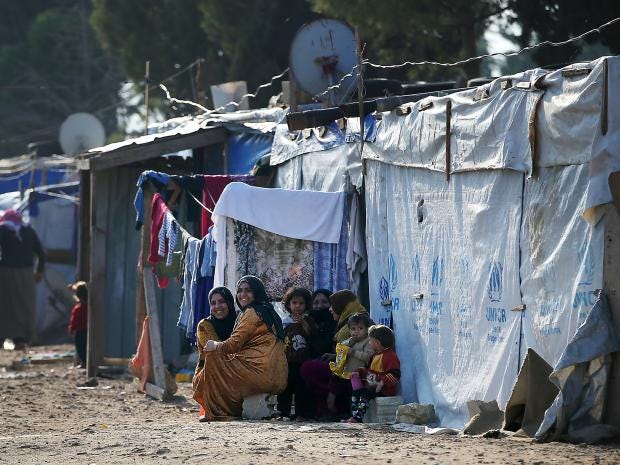
Refugees in Turkey & Lebanon can never return to Aleppo

syria-situation-16.jpg

 'The fight for Aleppo is all but over, and already voices are crying out for refugees to go home to their “liberated” city. But for the Syrians who have escaped the country – the 2.7 million in Turkey, more than one million each to Lebanon and Europe and beyond – the turmoil and human tragedy will continue. For to be associated with the revolution in any way, as aid worker, teacher, doctor, activist, or journalist, means you can never go home. Refugees fleeing Isis rule can no more go back to government areas than vice versa.

 What would refugees be going back to? Much of eastern Aleppo (and Homs) has been reduced to acres and acres of rubble lying in piles and piles of dust. Reports of children stuck alive under rubble, and of 82 men and women shot in their houses by government forces, are yet more war crimes to add to a long list with a UN spokesman calling it a “complete meltdown of humanity”.

 “My name is on a list,” has become a frequent refrain of Syrian refugees in Turkey, and given as the main reason they cannot go back – most often a government blacklist, but of course there are also Isis and al-Qaida linked-Jabhat al-Nusra (now rebranded Jabhat Fateh al-Sham) lists too.


 Nouriman, from Douma on the outskirts of Damascus, said she saw her house bombed in front of her eyes. She managed to salvage her cooking pots from the wreckage of her kitchen. The 46-year-old then risked her life to go back to rescue her nephews, who had been orphaned. Her son-in-law had been a photographer, and her brothers also active in the revolution.

 “I could only flash my face at them,” she told me from her sitting room in Reyhanli, on the Syrian-Turkish border, describing how she travelled with the rebels in convoys and then by bus through Syrian government checkpoints, terrified she would be recognised and arrested.

 Others fled with their children after defecting from the army. Mustafa Hilaq left Damascus with his children for rebel held areas and now looks forward to taking his son to school and playing badminton with him in Turkey. Radwan, 24, fled after his friend was arrested for helping internally displaced people under government controlled Aleppo – he knew he was next. He has settled and opened a computer repair shop on the Turkish border – the calm where he sees a therapist to deal with his severe anxiety.


 Refugees in Turkey have long known that, should Assad prevail, they cannot go home. Last summer’s migration crisis was largely triggered as Russia joined the Syrian air force bombing schools, markets and hospitals using precision strikes as well as cluster bombs as many assumed, rightly, that chances for a rebel military victory were ever slighter.

 Winning Aleppo may be lauded as a victory for Assad. But make no mistake, this bloody war is far from over.'

Local Syrians say Assad must go


 'Ghoufran Allababidi was born in Aleppo, the ravaged city that was recently taken over by Assad’s forces, which preceded the cease-fire. She moved to the United States in 2000 and works as an interpreter, helping fellow Syrians by working with Integrated Refugee and Immigrant Services and Catholic Charities.

 Since what she calls the “revolution” began in March 2011, “we’re trying to raise awareness of what’s going on over there.” Since the revolution started, however, Iranian-backed Hezbollah fighters have joined the fighting, which has erupted into full-scale civil war.

 Allababidi, Stanley Heller of West Haven, administrator of Promoting Enduring Peace, and other peace activists have met with staff members of U.S. Sen. Richard Blumenthal, D-Conn., and want to pressure legislators to support the rebels with humanitarian aid.

 “It’s really always been sweet talk that gives us hope, but nothing really happens,” Allababidi said of the leaders of the United States and the United Nations.

 Allababidi, who has had several cousins disappear under Assad, spoke of the millions of refugees in Jordan and Turkey and how at least 80 percent of Syrians want Assad removed. “For me personally, I don’t prefer to see any American soldiers on Syrian soil,” Allababidi said. “But we would like good action to help the Syrian people to get their freedom.”

 Of the cease-fire, which went into effect at midnight Friday, Allababidi said, “I’m very optimistic, even though we don’t trust the regime. … I think Russia won’t leave [Assad] as president.”


 Heller said, “There’s been a number of cease-fires and they don’t seem to last because the regime really is intent on taking everything back and they say this again and again. … We think the opposition should be helped with food and supplies. We’re not calling for weapons.”

 He also called for the United States “to collect the names of the people doing the worst abuses. They’ve been deliberately and systematically targeting medical facilities.”

 Heller said Syrian activists in this country are seeking “airdrops of food to these starving areas. The U.N. said there were a million people under siege. … The U.S. Air Force said they could do it back in January. … They’re just waiting for the call.”

 “There had been a sanctions bill, the Caesar [Syria] Civilian Protection Act,” Heller said. “That act actually passed the House without opposition in the middle of November.” It’s been referred to the Senate Foreign Relations Committee but no other action has been taken. It was named for a photographer who used the pseudonym Caesar and took thousands of pictures of slaughtered Syrians. The bill would increase sanctions on the Assad regime and those doing business with it.


 “If we are looking for a peaceful life for the Syrians, whoever is left, then he should be out,” Allababidi said of Assad. “He is winning too many parts of Syria, but people have lost enough and they are willing to give up more for him to be out.” Electric power and clean water are in short supply. Half of the hospitals have been demolished, Allababidi said.

 She said that among the suffering are the Syrian children. “Only 6 percent are receiving education and if you look at the future of those children, I would not be optimistic.”

 Allababidi also is wary of President-elect Donald Trump’s intentions. “I’m not very optimistic about what’s going to happen,” she said. “He mentioned that he’s not going to be against Assad because Assad is fighting terrorists, but I don’t believe that.”

 Allababidi said that besides humanitarian aid, her message is “raising more awareness … so the politicians can be pushed to do something. We need to do something. We need action.” '

Sunday, 1 January 2017

No less than 28 Breaches on the First Day

Syrian Network For Human Rights

 'SNHR has published the report: “No less than 28 Breaches on the First Day following Ankara Ceasefire Agreement” which documents the breaches that were recorded in the first 24 hours following the commencement of Ankara Agreement.

 The report draws upon the monitoring and documentation processes in addition to speaking to survivors, victims’ families, or with eyewitnesses to some of the incidents.

 The report sheds light on every breach committed by the parties that are bound by the truce agreement (Government forces, Russian forces, and armed opposition factions) in areas under the control of armed opposition factions and areas under a joint control (armed opposition factions and Fateh Al Sham Front). The report doesn’t include any combat operations in ISIS-held areas.

 The report monitors 28 breaches – 19 combat operations and nine arrest operations all of which were committed by the Syrian regime forces. Most of the breaches took place in Damascus suburbs governorate where 14 breaches occurred followed by Hama governorate with six breaches, and then Homs and Idlib with four breaches each.

 The report stresses that all the breaches taking place on the first day were committed by the Syrian regime and its ally on the ground the Iranian regime, which the report considers to be the most affected by any political agreement that aim towards a comprehensive settlement. 

 Furthermore, the report calls on the Russian regime, being a primary sponsor of the agreement, to apply pressure on the Syrian-Iranian regime in order to compel it seriously commit to the agreement’s provisions. Otherwise, the ceasefire will ultimately fail.'

Saturday, 31 December 2016

Surrender or die


 'Aleppo was not the first city to be besieged, nor will it be the last. On 23 December 2016, 12-year-old Mohamed al-Maleh in Madaya, besieged by the Syrian army and Hezbollah since June 2015, was shot in the head by a sniper while playing on the roof, severely injuring him.

 Al-Maleh is one of 1.3 million people trapped in besieged communities across Syria, primarily by the Syrian army and its allies. This does not include over 1.1 million others who are partially besieged or living in siege-like conditions, according to Siege Watch’s latest quarterly report on Syria.


 Prior to the Syrian government and its allies reclaiming eastern Aleppo, it has used similar tactics to win back opposition-held areas in and around other major cities in Syria, including the capital Damascus, as well as Homs, Syria’s third-largest city.

 Near the capital Damascus is the large opposition stronghold in eastern Ghouta. Though the siege of the area lasted for three years from 2013 and 2016, in a territory significantly larger than eastern Aleppo both in size and population, its complicated situation, both in terms of internal politics among the opposition factions, and the relationship between those besieged and government-held areas, kept it from taking centre stage in the media.


 Aron Lund’s analysis on eastern Ghouta for The Century Foundation indicates that several distinct features of this siege made it even more effective for the Syrian government and its allies.

 First of all, internal clashes between factions, including the notorious Salafi group Jaysh al-Islam, led to the fragmentation of opposition groups in the area. Moreover, the black market has been a major source of income for officials on the side of the Syrian regime, as smugglers and traders went in and out of the besieged territory from time to time.

 Outside of war strategy, this is an example of how the regime can benefit economically from sieges, as well as rhetorically; the Syrian government and Assad have been referring to the opposition as extremist Islamists and terrorists ever since day one, and the president has portrayed himself and his allies time and again as protectors of secularism and of ethnic and religious minorities in Syria.

 In Ghouta, over 200 civilians died due to lack of food or medical equipment between 21 October 2012 and 31 January 2015.


 While the lack of essential aid alone has caused deaths, the besieged territory is not without airstrikes and shelling from the Syrian army and its allies.

 On the morning of 21 August 2013, rebel-held Ghouta was on the receiving end of rocket attacks containing sarin gas. MSF reported that they received around 3,600 patients “displaying neurotoxic symptoms in less than three hours” that very morning. More than 1,000 civilians died.

 The siege of the Homs neighbourhood of Al-Waer came to an end with an agreement between the Syrian army and opposition forces on 1 September 2016, but not without years of suffering.

 In August 2016, warplanes dropping a flammable substance killed people in their sleep, including two siblings both under the age of three. Though their mother survived, she suffers emotionally and psychologically.

 One year prior to the Al-Waer agreement, during the truce negotiations, Al-Waer’s 75,000 residents, who have relied on growing their own food for some time, were astonished to receive “such a great quantity of aid”, which consisted of 14 trucks with food, blankets and clothes, and some basic medical supplies. The psychological impact of sieges drops the bar so low on what dignity looks like; after all, the two options are starve or surrender.

 The truce that ended the siege of Al-Waer involved the systematic evacuation - which resembles evictions, if anything - of civilians and fighters, including the injured, in exchange for the Syrian army to regain control of the area.


 Human Rights Watch Syria researcher, Hadeel al-Shalchi, has described these truces as using civilians as bargaining chips. In a phone interview, she explains the unethical foundation of these truces, saying: “The basis of these truces is using injured and sick people, dying people, as bargaining chips.”

 The lack of any meticulous monitoring has prolonged the sieges, and enabled those doing the besieging to impede aid deliveries.

 Reema Hibrawi, programme manager and analyst of The Syria Institute, says this is a cause for great concern: "If UN humanitarian aid is sent, it is insufficient. Few UN aid convoys go through Syrian government checkpoints and approvals, and the supplies support a fraction of the besieged population.

 "The majority of civilians do not have their basic needs met including food, medical or heating supplies. UN agencies are not monitoring and reporting aid inspection by the Syrian government which is limiting what people receive, and are not holding actors accountable for diverting aid."


 Indeed, we often read about aid from the UN, the ICRC, and Syrian Arab Red Crescent, but we never know what happens after those trucks arrive.

 Last September, in besieged Moadamiya, residents found their aid rendered unusable, as their food items were mixed with sand and glass by Syrian government forces, according to Siege Watch.

 Moreover, much of the aid that has come is not what the residents need. Residents in Darayya received a UN aid delivery, which included one bottle of lice shampoo for every two residents, and over a thousand sand-fly nets: items that are far from essential in a town devoid of basic foodstuffs and medicines.

 The sieges are thus prolonged, with a PR success for the Assad government, given the general assumption that (1) the aid being brought in is what the starving population needs, and (2) the aid is distributed equitably and the aid isn’t confiscated or tampered with.


 As besieged areas are attacked until its starving residents surrender, a new problem emerges. While the Syrian government with the help of Russia and other allies takes back areas they have besieged, its residents are being evicted under the guise of an evacuation, to Idlib, which is the remaining hub of the Syrian opposition.

 While the Syrian government has stated that it has been welcoming fleeing besieged residents with open arms, the UN reported that hundreds of men have gone missing while crossing from previously opposition-held eastern Aleppo to government-held Aleppo.

 There has been no guarantee from the Syrian government that the displaced will return to their homes, nor that those who flee to government territory will not be persecuted.

 Surely, such a situation can be described as a nakba - or catastrophe - equivalent to the one experienced by the Palestinians in 1948. And it doesn’t appear that this problem will be addressed anytime soon.


 Hibrawi from The Syria Institute does not expect this problem to be resolved, stating, "It’s difficult to see things ending well. Forced population transfers displaced thousands of people into Idlib province. Attacks continue to increase in Idlib along with Eastern Ghouta in Damascus countryside, Al-Waer in Homs countryside, and Aleppo western countryside. Lack of accountability also continues for the sieges across Syria and the recent forced population transfers."

 It would not be farfetched to say a siege of Idlib is in the works - an unnamed member of Hezbollah claims that the tactic will continue to be used, including in Idlib. So, let’s make it official: the deliberate starvation of people is a viable tactic in Syria, and there are no signs of it stopping anytime soon.'

Syrian activists languish in government jails


 'For the crime of providing food to displaced Aleppans, her friends say, activist Zilal Salhani became one among tens of thousands of political prisoners left to an uncertain fate in Syria's jails.

 Arrested at 19 by regime forces in Aleppo in July 2012, Salhani has now spent her university years in a series of shadowy government detention centres. She was convicted of supporting "terrorists", but according to friend Mohammad Shbeeb, Salhani was always peaceful.

 Before her detention, the Free Syrian Army had recently taken certain areas in and around Aleppo, prompting retaliatory government air strikes. Salhani, an engineering student who had been an active participant in civil demonstrations against the government of President Bashar al-Assad, took food to those displaced by the heavy fighting and helped them to find shelter, Shbeeb said.


 Noor, a former prisoner who was held in the same cell as Salhani in the overcrowded Adra prison outside Damascus for eight months before her release earlier this year, said conditions in the jail were unspeakable.

 "I cannot describe the injustices we faced in Adra," Noor, who declined to give her last name, told Al Jazeera.

 Noor, who now lives in neighbouring Turkey, was also held on "terrorism" charges after distributing food to displaced Syrians and handing out pamphlets in support of the country's civil uprising.

 "Civilian activists who took to the street at the beginning of the revolution were considered by the regime as very dangerous people, because they were against using weapons and tried to keep the resistance peaceful despite the regime trying to militarise it," said Kareem Hourani, a member of the Detainees Voice activist group.


 Noor said that Salhani's arrest had a significant effect on other activists.

 "Zilal was one of the first detainees in Aleppo, and other people joined demonstrations because of her arrest, so they are making an example of her," she said. "For us, it was a very big loss when she was arrested. We were so disappointed. She was so strong."

 Amid the appalling conditions in prison, Salhani's health had been suffering, Noor said. Breakfast, served at 10am, consisted of a slice of bread and either a segment of cheese or some jam, and the only other meal for the day, served at 6pm, was rice or bulgur with a potato or a tomato and a slice of bread.

 When the prison guards initially asked her to remove her niqab, Salhani refused, said Shbeeb, citing information from other prisoners. "It's bad for anyone to enter the prison, but it is even worse for girls. They looked at her like an animal looking at his prey."


 Shbeeb was himself arrested for attending a demonstration in 2011 and held for seven hours, during which time he was beaten and tortured.

 "A lot of our friends are still in prison. Some of them have been killed there," Shbeeb said.

 Noor said that her conversations with Salhani focused on their fate in prison, and on the disappearance each week of three to six women from their block - although such "political" discussions were banned inside Adra, punishable by beatings.


 In an effort to silence dissenting voices, the Syrian regime has painted the entire opposition as "terrorists", despite the pacifistic beliefs held by many activists. Yahya Shurbaji, known as "the man with the roses" because he met soldiers with flowers in the initial days of the uprising in Daraya, has been in jail since September 2011. Another Daraya activist arrested with him has since died in prison.

 "I can mention many names ... who adopted the methodology of responding to violence by distributing flowers and water to Assad's soldiers," Hourani said. "The regime was afraid of them because they were refuting its claims of fighting terrorists and armed people."

 Syria's policy of political imprisonment long predates the civil war. In one case from 2009, blogger Tal al-Mallohi was arrested at 18 for her online writings, held without charge for years, and ultimately sentenced in 2011 to five years in prison for "spying".

 There have also been rare rays of light, including the release last year of prominent human rights defender Mazen Darwish, who had been held for three years in government jails. Hourani believes that his release was made possible through international pressure.

 "[The international community] stood up for their justified cause, confronted the regime and demanded a cease to its farcical trials of activists," Hourani said. "That concrete pressure is missing in the cases of the other detainees." '

Friday, 30 December 2016

Syrians want to change the régime

“Revolution Brings us Together”


 'Activists call for demonstrations tomorrow throughout the liberated areas of Syria, under the slogan of "Revolution Brings us Together" to demand the unification of military efforts of the factions and commitment to the goals and principles of the Syrian revolution.

 "Ahmed Abu Azzam" one of the organizers of the demonstrations stressed in comments to ElDorar news network that the goal of launching this label on tomorrow’s demonstrations is to deliver messages to the Syrian resistant people, that revolutionaries in all fields are to serve them, through the reaffirmation of the revolution’s goals.

 It also aims to deliver a message to the faction leaders that the revolution is larger than the factional considerations and those current factions exist as a result of the people’s revolution, then tomorrow’s demonstrations plan to deliver messages to the honorable people of the world, that the Syrian people are in the revolution of the right against tyranny, and another message to the aggressors (the Syrian regime and its allies) that their criminal acts will increase the people’s insistence.

 The Syrian Revolution is characterized since its launch with the participation of large numbers of people in the demonstrations, during its first year, where some Fridays demonstrations’ participants reached up to two million demonstrators, the most momentum was in the city of Hama and the province of Idlib , Rif Dimashq and Daraa province..'

‘Painting on Death'

Akram Abo Alfoz decorates a Christmas tree in besieged Douma. December 24, 2016. Source.

 ' “We will stay here. Even if you scorch our land, we will stay in the cradle of civilizations to rebuild it again. We will make bridges from our bodies for the generations to cross to the future. We will build a new civilization from the ruins of our homes. We will make a Christmas tree from your shells and bombs, and light it for peace in our wounded Ghouta.”

 These are the words of Akram Suwaidan, or Akram Abo Alfoz as he prefers to be called. Abo Alfoz is a 37-year-old artist from the city of Douma, in the Eastern Ghouta region of Syria.

 Douma has been besieged by the Assad regime and its allies since the summer of 2014 (and partly besieged since October 2013) with an estimated 140,000 civilians still in the city out of a pre-war population of 500,000. In June 2016, some aid and food was allowed in, but the situation remains dangerous for residents, with one doctor telling the France-based international news agency AFP on October 3, 2016 that supplies were already running out.


 This has left many feeling like there's no hope. But Abo Alfoz chose to fight that feeling. Doing his part to tell the world of what is happening in Eastern Ghouta, Abo Alfoz paints on death, almost literally. He transforms objects of war into pieces of art.

 “Painting is a hobby that has been a companion since I was a child“, Abo Alfoz said. “It stays with me even when I get busy with other things. Before the Syrian revolution, I carried my paint with me everywhere. When the revolution started, I initially distanced myself from my art. But when it became an armed revolution, I tried to revive my inner olive branch to draw the world's attention to our culture, thought, love for life and hope. I wanted to draw the whole world's attention to what's happening in Syria in general and to my city Douma in particular. While the children of the world are waiting for their gifts and presents from Santa Claus our children are receiving their gifts from the Syrian Santa Claus in disguise, Russia, the Syrian regime, and Iran, and his sleigh in disguise of a Russian MIG aircraft. I wanted to show the entire world that we are people made to live and love life, and that our revolution is a revolution of thoughts and manners.

 The city of Duma was named the most dangerous city in the world in all aspects, the insane shelling by the regime and Russian air force claims the lives of many innocent people on a daily bases, beside the siege that has been ongoing since 4 years, and the power outage, water scarcity and communication outages in the city since that time in addition to becoming constantly psychologically overwhelmed, this feeling of psychological exhaustion that accompanies us through the difficulty of living.“


 The situation in Douma is indeed dire. With the fall of Aleppo to the Syrian regime being finalized, residents of Douma and the wider Eastern Ghouta region fear that they will be next. Tariq (not his real name), an English teacher in Douma, told Vice:

 “People are very afraid of obligatory evacuation, like what happened in other parts of the Damascus suburbs and now Aleppo.“


 Asked if he had a ‘message to the world’, Abo Alfoz replied:

 “The world no longer cares for our messages. We are being slaughtered for the past six years in front of everyone and it did not move them. The entire world let us down. I direct my message to the people of my own country and to everyone with a conscience and tell them that we are a people who live in death but nonetheless carry hope with us and in the work that we do. There will come a day when we will gain our freedom and dignity. There will come a day when we will gain what we went out fighting for.“ '

Tuesday, 27 December 2016

Assad, Hezbollah terrorists bombing Wadi Barada

 'BACKGROUND: Wadi Barada is a collection of 10x villages scattered around the source of the Barada river in a valley that lies between two mountain ranges. These villages are ( Ain Al Khadra (Bassemeh), Ain al Fija, Daer Mkaren, Kafaer Azzeat, Daer Kanon, Alhuseineah, Kafar Alawameed, Burhlia, Efreh and Souk Wadi Barada)

 The area has been liberated and under opposition control since early 2012, though under an intense military situation as the regime controls the mountains around it.

 100,000 civilians have been besieged in this area for 3 years. Truces have been previously reached with the regime, but were breached 6x times in the past.


 CURRENT SITUATION: Regime forces recently initiated a heavy bombardment campaign targeting villages in Wadi Barada. Syrian Civil Defence views this campaign to be taking the same course as the Aleppo operation, an intense military escalation that will lead civilians to ask to be evacuated from their own home.

 The campaign started by bombing public institutions, mosques, civil defence centres, hospitals and medical points, putting them all out of service till the moment.

 On Dec 23rd, 2016, regime forces targeted Ain al-Fija village with more than 60x airstrikes and barrel bombs (including the use of incendiary munitions and thermobaric bombs) along with targeting civilians with SALW and sniper fire. 40x of these aerial attacks targeted Ain al-Fija springs (the source of the Barada River which supplies Damascus with fresh water) which caused diesel fuel to leak into water and also huge amount of chlorine substance (which is stored there to be used for purification).

 The campaign is ongoing at the moment, and communications with teams there is intermittent.'

Monday, 26 December 2016

The ‘Ghost City’ They Say Goodbye To


 'In the wake of the most violent attacks on the city of Aleppo in six years, civilians who are now forced to leave their home behind weigh in on the experience and what it means to them. Residents who endured the incessant bombing and violence, such as Thaer al-Halabi, state that it is only a ghost town, filled with the “shadows of friends lost to war,” that remains.

 Halabi, who was born in Aleppo and lived in an old home that had a courtyard shaded by vines which his family had lived in for centuries before him, raised his family and built a career there. For the past four years, he held strong in the hopes that Syrian president Bashar al-Assad would be taken down.

 “When we were forced to leave Aleppo it had already been destroyed completely. You didn’t see a city, only ghosts, in a ghost city,” said the 57-year-old engineer, who became a politician for the opposition, “I am very sad I have left our city, it’s at the centre of our hearts, part of our bodies. But because we need freedom we cannot live there.”

 The politician recounts how he had been imprisoned on three occasions by the government before the war, which caused him to turn against Assad when the uprising in Aleppo occurred and rebels took half of Aleppo. Halabi states, “We had freedom for four years.”


 Aleppo had once been the cultural and economic stronghold in Syria before the conflict beginning. Citizens note that in the early years of the fighting, it was not all devastation, horror, and violence in the rebel-held portions of the city.

 “Life went on amid the bombing,” said Sara, a 47-year-old teacher who also stayed in Aleppo until the enclave’s final days. “There were schools, businesses, shops, there were goods and people, entertainment, everything.”

 Young civilians, in particular, were able to experience liberties they had never once been able to during the period that portions of Aleppo were under rebel control. Activist journalist Rami Zein, who is also Halabi’s son, spoke about differences that existed in the government held and rebel-held regions of the city.

 “On the other side of the city was regular Syrian government that block everything they don’t want. On our side of the city it felt like you are in a place open to the world. Before the siege it was a great city, you had everything you need, could bring everything you need from the border [with Turkey], all kinds of trade, everything was there.”


 Once the war began to intensify, death and destruction became the norm. The city became the target of barrel bombs that were constantly dropped from helicopters onto civilian areas by the Assad regime to instill fear and force compliance.

 Soccer player Mohammed Khalifa’s sister was one of the earliest victims of the violence. The family moved from their house to get away from the heavy gunfire in their neighborhood, which was near to the front line. It was a barrel bomb that killed his sister, and the same bomb seriously injured his daughter who was then rushed to Turkey by ambulance for treatment. Once Khalifa reached the hospital, carefully making his way so not to become a target himself, a doctor at the facility mistakenly told him his daughter had also died.

 “I raced in to try to see her body,” he said, “and they told me she actually was alive but had serious head injuries. She survived, thank God, and is with me now.”

 The barrel bomb had also annihilated the business he and his family had set up, a small shop, but even though they experienced great loss and hardship, Khalifa’s family decided not to leave despite the intensification of violence.

 “I wanted to stay in Aleppo because of my commitment to the revolution and its principles; I started that way and won’t change until I finish,” said Khalifa stated, who was a member of the national soccer team, prior to the war beginning.


 The constant violence and bombing forced a sea of individuals and families out of the city to various refugee camps while those who stayed faced steady tragedy and loss.

 “We lost so many people not just to bombs and other weapons, but also because of displacement,” said Sara, who has three children.

 “We cannot talk about the war because our friend may be in danger, only hello, how are you and a few words, because Assad is watching everything,” said Halabi.'

Friday, 23 December 2016

What will happen if the revolution is defeated


 Basheer Nafi:

 'The Syrian revolution, just like other Arab revolutions, began as a peaceful and popular uprising. No one within its ranks wanted to resort to arms. Syrians were forced to defend themselves and their loved ones by the failure of the world to deter the regime and stop its bloody persecution. The Syrian revolution turned into an armed confrontation only after many months of mass rallies in March 2011 and only after army officers and soldiers began dissenting and forming the first Free Army cells for the sake of protecting the popular movement. The revolution was not a civil war and this is not what the Syrian people wanted it to be. It was never meant to be one segment of the people mobilising against the other.

 The revolution was, and it continued to be so for years, an expression of a big and wide popular movement aimed at building a new Syria, at regaining the freedom of the entire Syrian people and at establishing a democratic and just system. However, the revolution did become an armed national liberation movement and a civil war and the regime bears the primary responsibility for this. It vowed from the start to crush this popular movement with armed force and refused to meet the people half way. A meeting was held toward the end of March 2011 in the office of President Assad in Damascus. In that meeting, which was attended by a senior Hezbollah official in addition to Qasem Suleimani, the commander of the Iranian Revolutionary Guards Quds Force, the Iraqi minister of national security and the President’s brother Maher al-Assad, Assad said: “We taught them a lesson at Hama that silenced them for 40 years and I shall teach them a lesson that will silence them for 100 years.”

 Should the revolution be defeated and the status quo be accepted, the rule of the Assad regime will continue and the country will remain occupied by the foreign powers and militias. The Syrian majority will have to suffer under a regime that will be much more vicious and oppressive than it was before the revolution in the spring of 2011. The regime that perpetrated all these massacres will not commit to any genuine reforms. In other words, if the revolution stops, Syria will turn into a country of hell for the majority of Syrians, a hell that is more oppressive and much uglier than anything the Syrians witnessed over the past six years. The refugees will not return to their homes and Syria will witness an unprecedented sectarian demographic re-engineering process, something it has never before experienced. Even before the revolution came to an end, some circles within Hezbollah and inside Iran are already talking about the Shiite identity of Aleppo and about displacing the Sunni population from the west of Damascus to the Lebanese borders. Instability will not be confined to Arab countries but will also touch Turkey, which will find itself faced with a sectarian wall that will isolate it from its Arab neighbourhood in the south and with a Russian aerial siege that begins from the air bases in the south of Russia, the north of Georgia and the Crimean Peninsula all the way to the Russian control of the Syrian airspace.

 Continuing the revolution is not therefore a futile act, nor is it fighting on for the sake of fighting. With some patience and steadfastness, this revolution can still win. In fact, it has been standing on the verge of winning. The regime is living through its weakest moments since the eruption of the revolution, whether in terms of its military and economic capabilities or in terms of its control over the country and its aptitude to express the sovereignty of the state. This regime exists in no more than one third of the country and in that third it shares control on the ground with Shiia militias that poured in from several countries in addition to Iranian and Russian units. Even with all the support it receives from its allies, the regime is incapable of fighting two major battles at the same time. Tadmur illustrates the actual military power of the regime. It is not true that the Afghan militias alone undertook to protect the existence of the regime in Tadmur because the city had within it Syrian regular troops and Russian units as well. According to Russian reports, as soon as IS began its onslaught on Tadmur, the commander of the region’s forces and most of his troops fled. As a result, the Russians needed to launch an air strikes campaign that lasted for several hours just to secure the withdrawal of their own troops.

 Syria today is what Vietnam looked like in the early 1970s or Afghanistan in the mid-1980s. In both Vietnam and Afghanistan, the regime seized control of the country’s capital and ran a quasi-state and what may resemble state institutions. It spoke in the name of a small minority of the people and its existence was secured and protected by the presence of a massive foreign power. In both cases, there was no need for inflicting a decisive military defeat on the foreign forces; it was sufficient to exhaust them and make their presence unbearable, either as a result of the losses sustained continuously or as a result of the reaction of public opinion in their own countries. Unlike the situation in Syria, where revolutionary forces control vast stretches of land across the country, the resistance forces in those two cases were not able to secure their presence in tangible areas in South Vietnam and in Afghanistan until quite late in the war.

 There is no ambiguity or confusion about the options of the Syrian people, even in the aftermath of the occupation of Aleppo: either return to the life of enslavement and fascist minority rule or continue the revolution until victory is achieved. Victory is not only possible; there should be no doubt whatsoever that it is inevitable. Yet, the first condition for achieving this victory is to rebuild the military arm of the revolution under the banner of the Free Syrian Army and the emergence of a united political leadership with a clear vision for the future of Syria and its people.'

Thursday, 22 December 2016

Radio Alwan defies war to continue broadcasting


 'Putting a radio program to air is challenging at the best of times, but imagine putting a program to air from inside a war-torn country. That's exactly what the independent Syrian station Radio Alwan manages to do every day.

 "It started in 2013, after the revolution," Radio Alwan's deputy chief executive Sami al Joundi said. "We are the radio station for the Syrian people. We needed to cover what was really happening inside our country because the Syrian regime media was not correct."

 While Radio Alwan used to have offices in Aleppo and Idlib, it is now far too dangerous to operate in most of those regions.

 "It became very dangerous operating from inside Syria," says Mr Joundi. "Syrian regime and radical groups were targeting us. Al Nusra and other groups were attacking us. We wouldn't be able to continue if we stayed in Syria. We had to move our main office to Istanbul so we could continue doing our work."

 Mr Joundi said they try to speak with their staff every day to make sure they're alive and safe, but sometimes making contact with them is unnervingly difficult.

 "We call them every day," he said. "Sometimes we can't get through because the bombing has destroyed phone and internet lines, so it can be very nerve-racking."


 Radio Alwan covers news and current affairs. It hears from experts in psychology to give Syrian parents information about how to care for their children during the war, and technology experts who explain about how to get mobile and internet coverage during the fighting. There is a women's program, made by a Syrian woman in Idlib, as well as drama and comedy shows.

 "Our comedy show is being written, acted and edited from inside Syria," Mr Joundi said. "They make us laugh, we make them laugh, and we are able to broadcast this to our people in Syria."

 Radio Alwan's most popular drama series is called Sad Northern Nights.

 "It's a story about a Syrian family which many people can relate to," Mr Joundi said. "The main character is a single mother with her son. Her husband was killed during the revolution and she's trying to flee the country. Throughout her journey from the southern part of Syria she passes through many different locations and meets lots of different people. It's the same thing you hear in the news but in a different way — a less brutal way."


 Mr Joundi said it was difficult to remain hopeful considering what was happening inside his country.

 "The real story is being lost. People have started to forget why the Syrian people went out and started the revolution demonstrations in the first place. Instead, it's shifted to extremism. We're trying to not miss any details of what's happening in Syria and be on the side of the people only." '

Tuesday, 20 December 2016

We’ll never again believe your lofty rhetoric

 Abdulfattah Alkhaled:

 'The United States representative to the United Nations, Samantha Power, gave an impassioned speech last week asking Russian and Syrian representatives whether they felt “any shame at all” for their actions in Aleppo, and whether there is “no execution of a child that gets under [their] skin?” For Syrians, these statements were infuriating. Americans should be asked the very same questions. You, too, have blood on your hands.

 Over the past few years, you have deceived us with your empty promises. From the first day of the 2011 revolution to the most recent breakdown of a life-saving evacuation effort, the killing of Syrians has been met with consistent U.S. inaction, or worse: U.S. acquiescence to Russian aggression. While the Assad and Russian regimes are responsible for the vast majority of Syrian bloodshed, by no means should you feel entitled to lecture the world based on your supposed “moral superiority.” You have let us down again and again.

 After Rwanda and then after Srebrenica, you said, “Never again.” After Gaza you said nothing at all. Today, you can no longer rest on your hollow rhetoric celebrating freedom and equality. Today as Syrians, watching you glibly condemn a catastrophe that is partly of your own making, we ask if you feel any shame at all for your inaction.


 President Obama, you declared that if President Assad used chemical weapons against his enemies, he’d be crossing a “red line.” You watched him cross it. Aren’t you ashamed? Ashamed that your concern and care for the Syrian people evaporated at the first sign of difficulty and complication? Are you not embarrassed that “strategic overseas interests” trumped your willingness to take any and all steps necessary to stop the wanton death of hundreds of thousands?

 Do you and your spokespeople at the U.N. and beyond look in the mirror and think, “We encouraged the Syrian people to rise up, and then watched impassively as they were slaughtered for it”? Do you not feel cowardly for refusing to engage and confront Russian aggression beyond shallow public condemnations?

 And President-elect Trump, have you no shame in your public affirmation of Russia as the U.S.’s strategic partner in Syria? The same Russia that has joined the Assad regime in massacring the Syrian people. Are you not uncomfortable with stating publicly that the Assad regime is fighting Islamic State despite the evidence suggesting that Assad has actually facilitated the growth, expansion and survival of Islamic State?

 President Obama and President-elect Trump, your silence is deafening and has set a dangerous global precedent. You should be ashamed.


 Now it is our turn to lecture you. Next time you trumpet the American commitment to human rights, remember how far you have fallen. In the early days you claimed to support our protests as legitimate expressions of the desire for change. But you only supported us with words, not actions, and now activists in Aleppo are sending their final goodbyes before they’re executed, forcibly displaced, raped, tortured, or killed in an airstrike.

 The fall of Aleppo is only the beginning. Russia and the Assad regime have a far more ambitious end goal: complete military victory at any cost. The atrocities committed in Aleppo this week will undoubtedly be followed by similar cleansings in other areas.

 In the past, I might have ended such a letter by making specific demands for U.S. action and leadership. But now I know better. All I can do is loudly proclaim that Syrians are no longer blind to the emptiness and cruelty of U.S. foreign policy.

 This is your legacy, Obama, one that Trump seems happy to continue. Is there nothing that can shame you? Are there no acts of barbarism against civilians, no execution of a child that gets under your skin?'

Priority revenge


 Bente Scheller:

 'What happens if Assad falls? In discussions on this question, politicians and experts have occasionally raised the question of what an Islamist rebel victory might mean for Syria's ethnic and religious minorities and whether the Alawite minority – President Assad has an Alawite background – should then be protected from acts of vengeance.

 But unfortunately, the counter-question has been posed all too rarely: what about acts of vengeance carried out by the regime, should Assad win? Right from the outset, Assad's war against the protesting Syrian people has provided a foretaste of this. Long before it was clear how the conflict with the revolting Syrian population might end, the regime had already begun taking revenge. Whether it was the shots fired at peaceful demonstrators at the start of the conflict, the blanket deployment of barrel bombs, the massacres, or the arbitrary arrest of thousands still missing to this day, many of whom have been tortured to death: the violence of the Assad regime has targeted broad sections of the Syrian population.


 The regime arrested those injured during the demos while they were still lying in hospital beds. It continues to pursue Syrian doctors who remain true to the Hippocratic oath and treat the wounded regardless of their political views, while also targeting hospitals. All of the hospitals in eastern Aleppo have been destroyed, without exception. At the same time, the regime has cut off hundreds of thousands of citizens from receiving any kind of supplies or treatment, as the Syrian and Russian air forces inflict an unrelenting bombardment on those left trapped in the city. The message "surrender or starve" became "give yourselves up or die".

 The regime could not have made it much clearer that this was not about military gain and certainly not about tackling the much-talked about danger posed by the so-called Islamic State, but about teaching the civilian population a lesson that should be as painful as possible. That greater numbers of people did not give up as a result of the devastating conditions is because there was often no real choice: those who gave up risked being arrested or killed anyway.

 This can currently be seen on a large scale in Aleppo. The regime arrested men fit for military service after their escape from eastern Aleppo and took them to camps. It is thought as many as 2,000 were captured in the first two days of the latest major offensive alone. The Syrian civil defence force reported 45 deaths, shot by the regime as they fled. It is therefore absolutely outrageous that Germany, among other countries, this year began granting only subsidiary protection to refugees from Syria – protection that is only valid as long as the general war situation continues – because those affected are not being "individually persecuted". But it is clear that the regime does, if not exclusively, also pursue individuals. If your ID card states that you were born in a stronghold of the resistance this can be enough to get you arrested. Many are arrested to exert pressure on other family members – or simply, to give the regime more bargaining chips for a prisoner exchange.


 The West is already not that interested in the minutiae of the horror machine. This is partially due to a deep-seated cliche here of what persecution looks like and the common misconception that threatened minorities are always the victims. But that a well-armed minority with massive troop and weapon support from Russia and Iran wants to bomb and murder into subjugation – this is a scenario we struggle with. After all, while all this is going on, Europe's general line is (still) to demand Assad's resignation – and a helpless UN issues ever more urgent appeals to Assad and Russia to protect the civilian population. Geneva III, the international process to find a political solution, appears to have failed, as Assad and his allies are clearly pushing for a military outcome. But if the regime declares victory without negotiations, this will not be the end to violence in Syria.

 The Islamic State group still exists and will continue to flourish in view of the fact that the West permits Assad to remain in power. And if the regime unleashes its power on those that have opposed it over the years, this could be far more deadly than a potential guerrilla war waged by the extremists. Such a situation will not only affect those living in recaptured areas, but also refugees who are sent back to Syria. There are more than a million Syrian refugees stranded in Lebanon, who are tolerated but not recognised as refugees because Lebanon has not acceded to the relevant UN convention. The internal political pressure to be rid of these people is immense. Should Assad declare the war at an end, this could serve as a welcome pretext for deportation – in Europe too. So Syrian civilians will continue to die. Just out of the public eye.'

How will Syria's revolution be told?


 Mat Nashed:

 'Syria's dictator Bashar al-Assad wants the world to believe there are only terrorists in Aleppo. On Wednesday, he told Russia Today - the Kremlin sponsored news network - that the "West" was telling Russia that they are going "too far in defeating terrorists". He said that international pleas to stop the violence in Aleppo were merely western schemes to rescue terrorists. People from across the world have absorbed his propaganda, but civilians trapped in the conflict are telling a different story.

 Lina Shamy, an activist in east Aleppo, has uploaded several videos pleading the international community for help.She recently noted that Russia's initial failure to uphold their promise to evacuate civilians is just another example of why they can't be trusted. Activists like her have been targeted by the regime since the popular uprising started in March 2011. Medics also fear they will be killed for their commitment to saving lives. Four years ago, the Syrian government passed a new terrorism law that criminalises anyone who aids the opposition.


 Doctors have since been punished for treating anyone living in rebel held areas. Some have disappeared while others have been killed by snipers and security agents. The regime has further set ambulances on fire and systematically targeted hospitals, as reported by the Physicians for Human Rights, a non-profit in the US. And then, there are the White Helmets, a group of volunteers who have risked their lives to pull survivors out from under the rubble. The group tweeted Monday that the streets were mounting with dead bodies. They also pleaded for safe passage out of Aleppo, terrified that they would be executed if seized by the regime.

 Bashar al-Assad and his allies have stolen a page from America's foreign policy play book and performed it to perfection. They have used the label of terrorism to group civilians, opposition groups and extremists all under one umbrella. Assad and his supporters simply can't see civilians because they don’t want to.


 Syria's growing civil society has received little attention during five years of conflict. Local councils - created and run by activists - worked together to provide basic services to civilians living under rebel controlled areas. Teachers worked without salaries to give children a semblance of a normal life, and doctors stayed behind to provide urgent care to the injured. These were the sacrifices that thousands of people made in the pursuit of freedom.

 That said, it can't be ignored that rebel groups have also committed a myriad of human rights abuses. Foreign journalists have not been able to report in rebel held territory since 2014 due to the danger of the conflict and risk of being kidnapped. But the Syrian regime has committed war crimes on a systematic scale, all the while empowering extremists. So how will the history of the Syrian revolution be told?

 Popular opinion in the United States tends to assess the conflict as a battle against the Islamic State. The regime and their allies, of course, frame the conflict as an existential battle against terrorism. Self proclaimed anti-imperialists across the globe have read the conflict as an American plot to impose regime change - a perspective that is simply untrue when assessing US ambitions in the conflict. Experts may even refer to the Syrian war as President Barack Obama's greatest foreign policy failure. But what about the voices of civilians and activists who are dead or still trapped in Syria: Will history remember what they stood for?'

Sunday, 18 December 2016

Forced to Leave, Aleppo Evacuees Tell of Their Pain


 'Death in Aleppo was personal for Modar Sheikho. He lost his sister to government bombing early in the revolt. His brother was killed last month. And as they looked for a place to bury him, another airstrike killed his father. Still, Shekho held out in the besieged city as long as he could. When he finally was forced to evacuate Friday, he made a video bidding farewell to the city.

 "We were asking for our freedom. This is what we get," he said against a backdrop of bombed-out buildings and thousands of people waiting for buses to take them away from Aleppo.

 But even in his first hours of exile, the 28-year-old nurse longed to return.

 "My soul is torn out more with each step away from Aleppo."


 Of the more than half-dozen residents and activists that AP has maintained regular contact with in recent months, only one said he felt disillusioned with the rebellion. Most seemed haunted by the city's struggle, saying they can't let go of their dream to create a Syria without Assad. They said they will continue their anti-government activities somehow from wherever they end up.

 One gynecologist who had refused to leave her patients said her husband forced her to flee to a government-controlled area for safety. Farida said she could not stand living for even two days in the government-controlled sector and fled to the countryside, where the rebels are in control.

 "Despite how hard it was under siege and bombardment, I was at peace with myself," she said. Farida's husband, also a doctor, followed. But she is still angry at him for forcing her to leave, adding: "I can't continue my life with him."


 Sheikho left on the first day of the evacuation, which was monitored by the Red Cross. He and thousands of other holdouts boarded green government buses with portraits of Assad in the windshield and were taken to rebel-controlled areas.

 "It is very painful that I separate from my city of 28 years," Sheikho said. "I hope it is quickly liberated so I can return to it."

 On the first day of the government's big ground offensive three weeks ago, Sheikho and his family sought a new home to avoid intense bombing. Like many others, his family was caught on the road by the bombardment, and his brother was killed on the spot. He and his father had to search for a cemetery because Aleppo was running out of burial space. In the process, his father — a prominent professor of Arabic — also was killed.

 Four years earlier, an airstrike killed his sister outside the hospital where she worked as a nurse.

 After mourning his father and brother, Sheikho had told the AP: "We are all on the road to death. May God accept them as martyrs." '